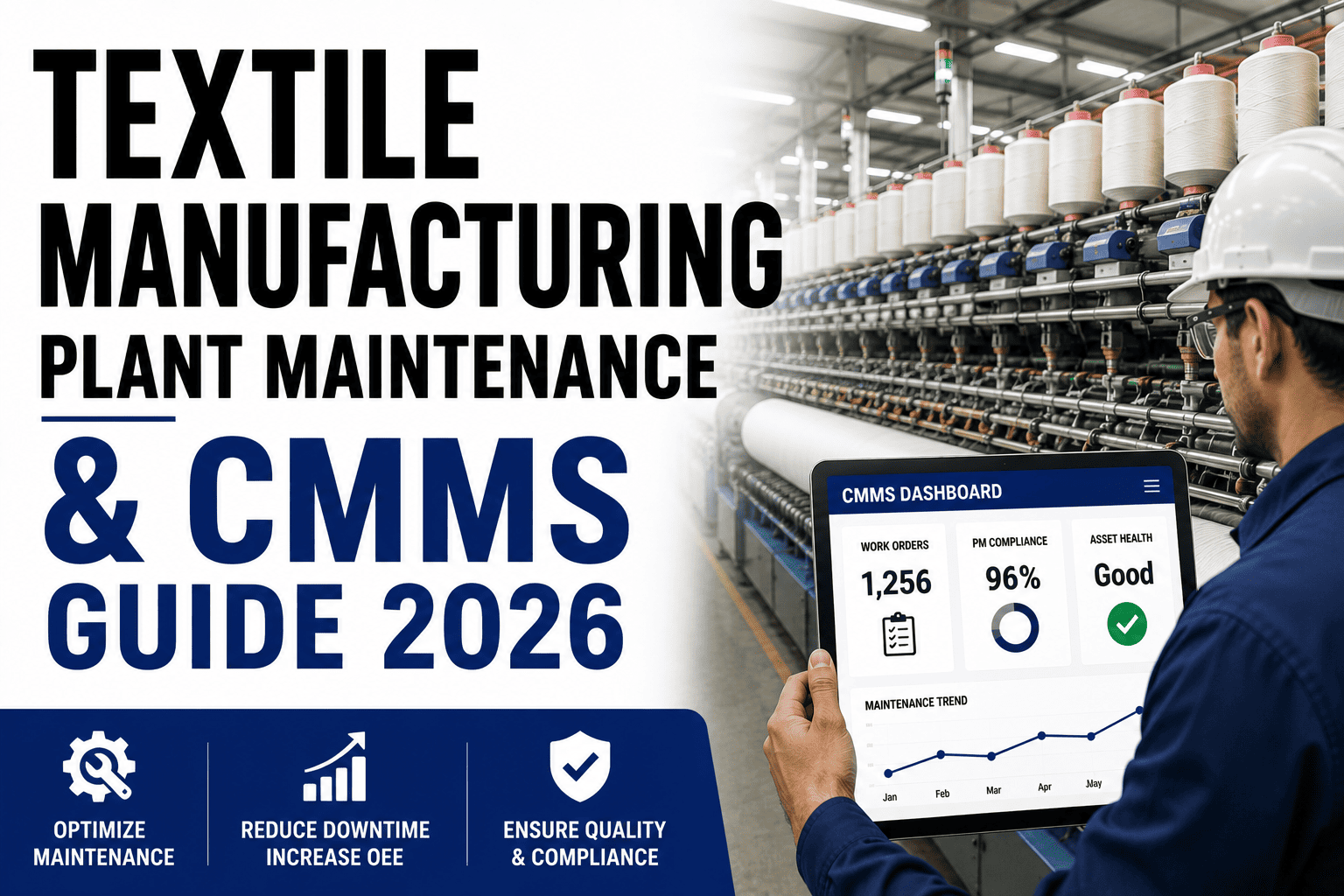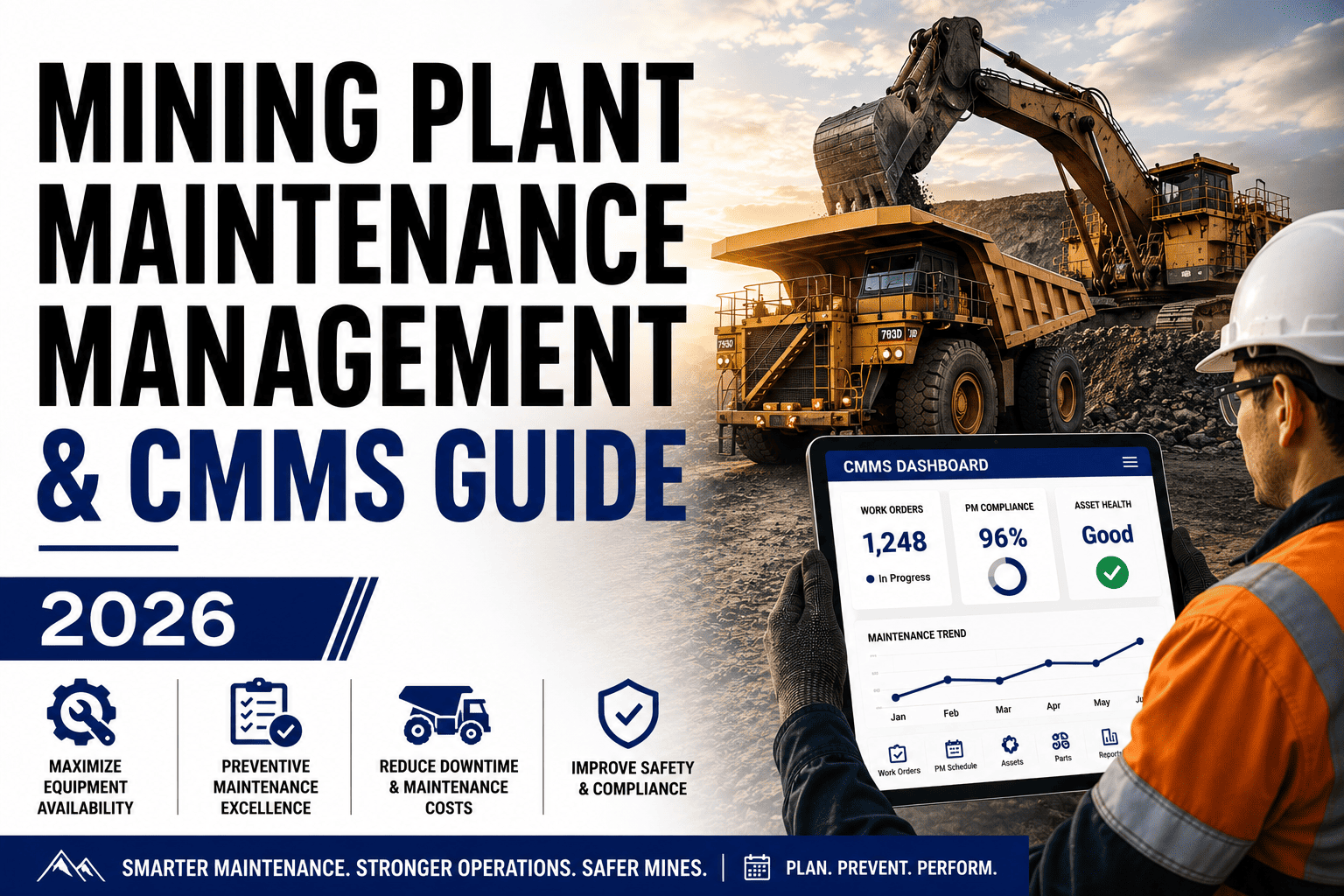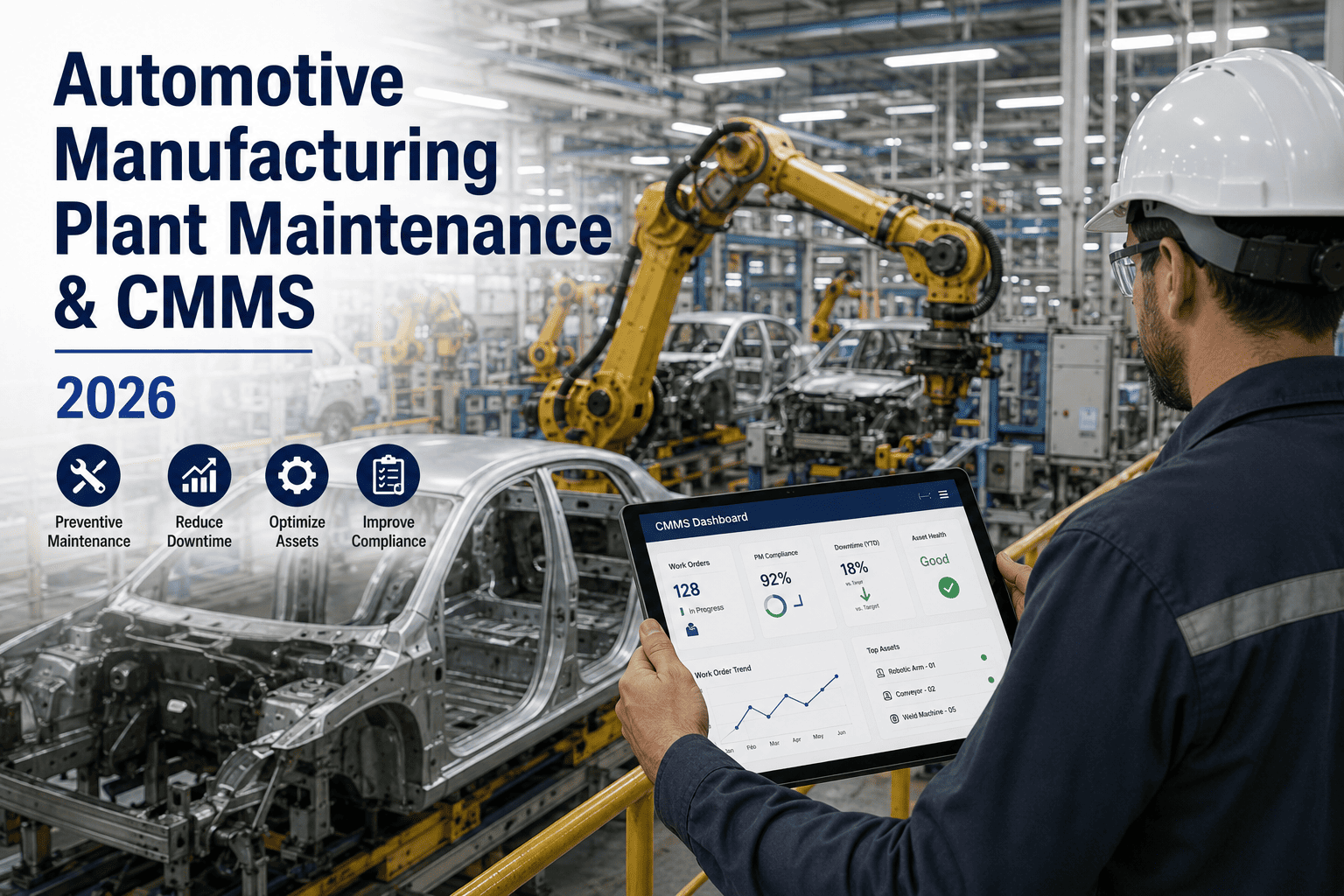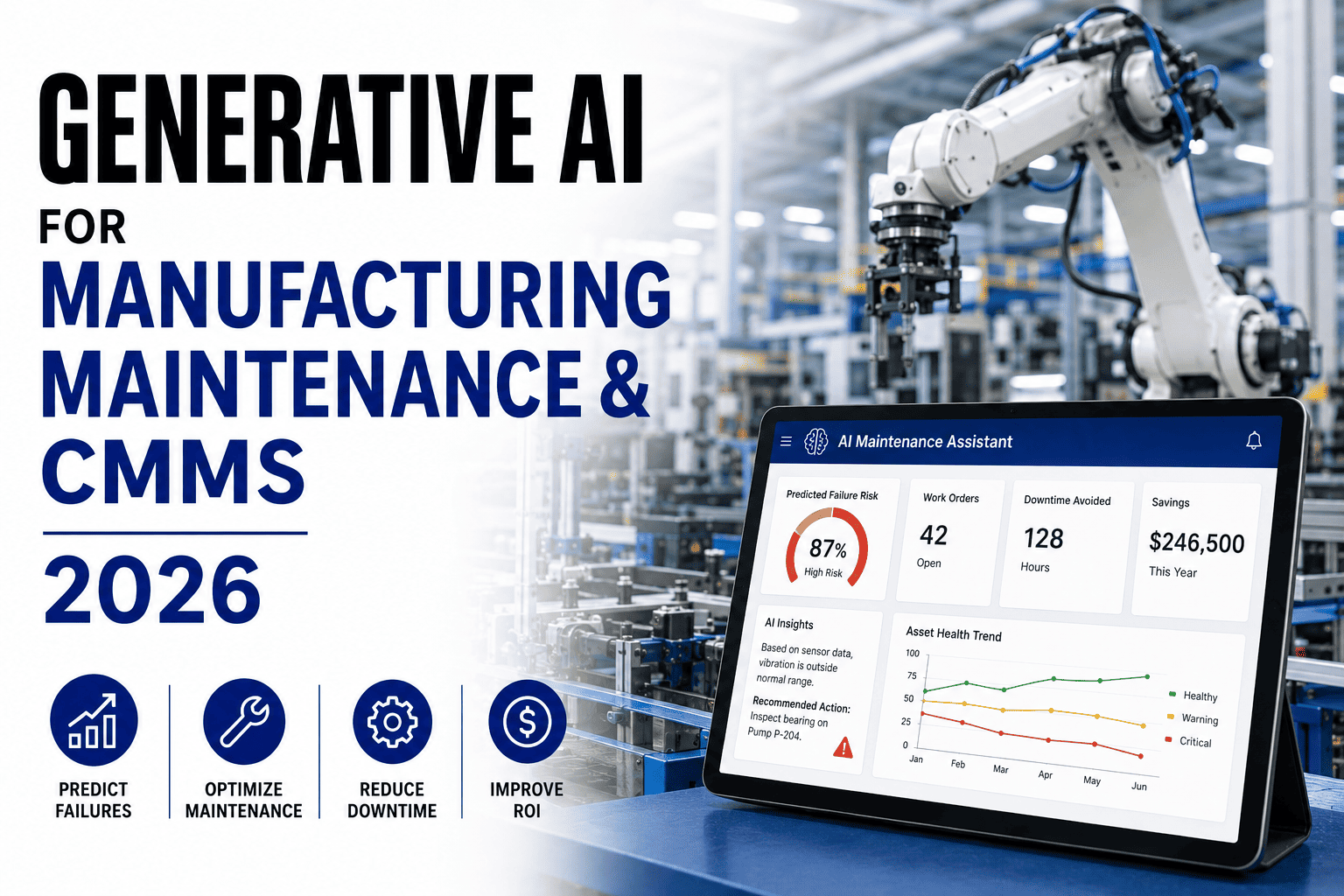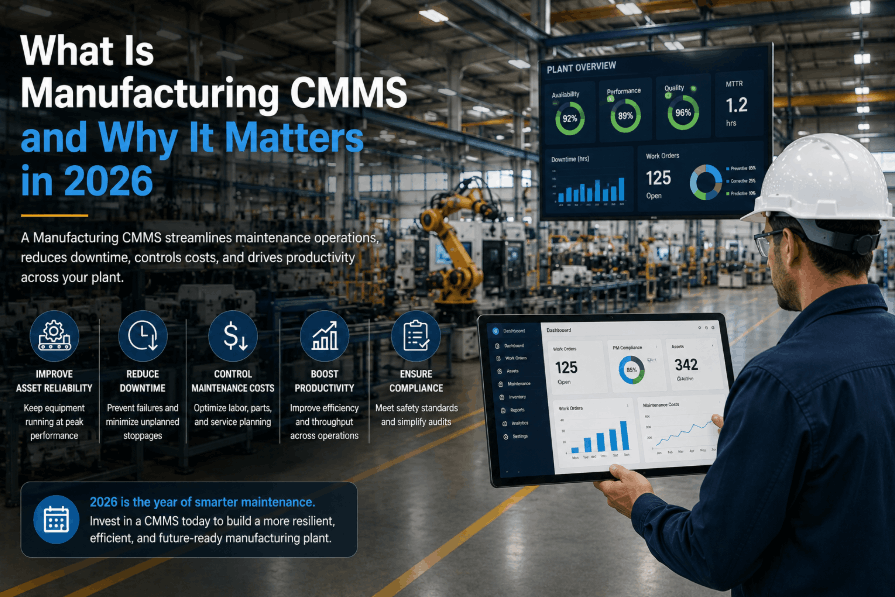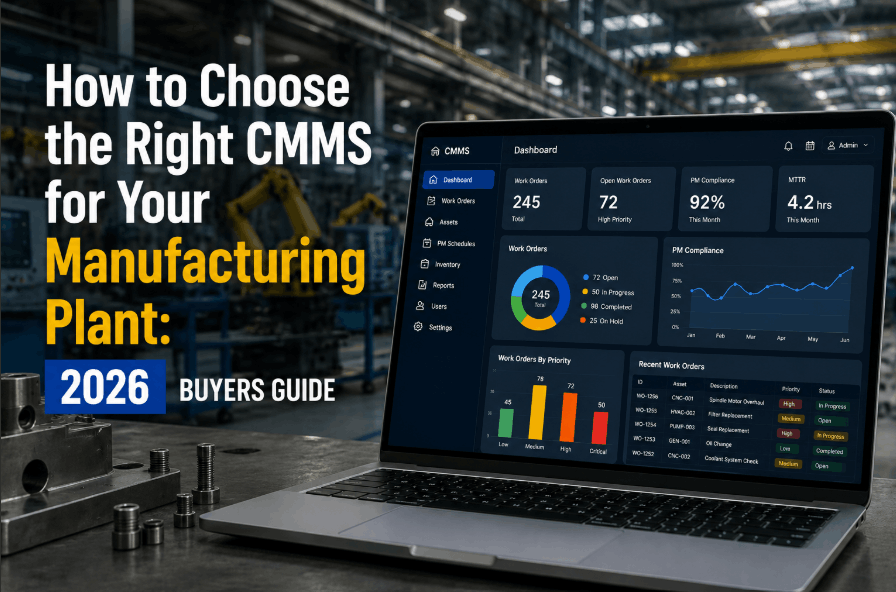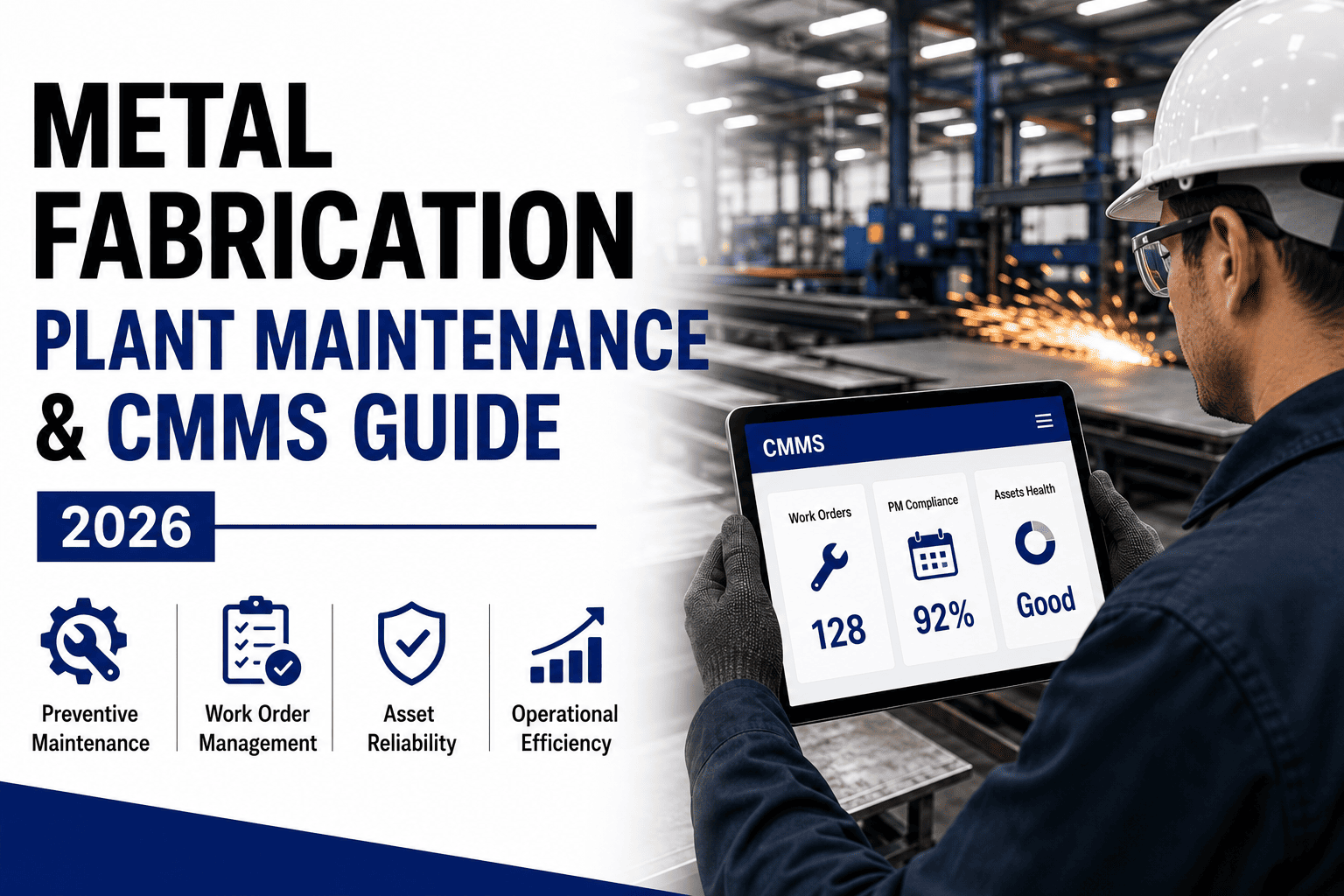
Metal fabrication maintenance in 2026 demands a unified approach to managing diverse equipment fleets — from CNC machining centers and laser cutters to press brakes and welding stations — each with distinct preventive maintenance (PM) requirements that reactive processes simply cannot handle. A purpose-built metal fab plant CMMS like OxMaint consolidates work orders, equipment histories, and PM schedules into a single AI-driven platform, helping maintenance planners eliminate spreadsheet sprawl, reduce unplanned downtime by 30–50%, and maintain audit-ready compliance records. Whether you operate a high-mix job shop or a dedicated production facility, implementing a modern fabrication maintenance CMMS transforms how reliability teams manage assets, track spare-parts inventory, and schedule critical upkeep. Ready to replace reactive firefighting with predictive precision? Start Free Trial and see the difference on your shop floor today.
Is your fabrication plant losing $4,200 per hour to reactive maintenance?
Unplanned downtime on a single CNC machining center or laser cutter can halt an entire production line. OxMaint's AI-powered CMMS for metal fabrication predicts failures, automates PM schedules, and keeps every asset — from press brakes to welding cells — running at peak OEE.
Metal fab PM schedule: what to maintain and when
A 180-asset fabrication plant spending $42,000 annually on reactive repairs typically cuts that figure by 40% within twelve months of implementing structured PM. Below is the maintenance cadence every metal fabrication CMMS should automate for the four highest-impact equipment categories.
CNC Machining Centers
- Daily: Spindle warm-up cycle, way-lube level check, chip auger inspection
- 500 hrs: Grease ball-screws, inspect tool changer alignment, verify coolant concentration (8–10%)
- 2,000 hrs: Spindle vibration analysis, axis backlash measurement, hydraulic pressure calibration
- 6 mo: Replace coolant, clean heat exchanger, calibrate probing systems
Laser Cutters
- 8 hrs: Clean protective lens, check assist gas pressure, inspect nozzle wear
- 40 hrs: Replace focus lens, clean resonator mirrors, verify beam alignment
- 500 hrs: Replace laser gas, inspect cutting head seals, calibrate beam profiler
- 2,000 hrs: Full resonator service, chiller descale, replace delivery fiber (if applicable)
Press Brakes
- Shift: Wipe ram guides, check back-gauge accuracy, inspect punch holder wear
- 40 hrs: Lubricate ram gibways, test tonnage monitor, inspect hydraulic hoses for weeping
- 500 hrs: Change hydraulic fluid, replace filter elements, calibrate crowning system
- 12 mo: Geometric alignment (ram parallelism ≤0.04 mm/m), full hose replacement audit
Welding Equipment
- Daily: Inspect torch consumables (tips, nozzles), verify gas flow, check ground clamp connection
- Weekly: Clean wire feed liner, inspect drive rolls, test wire feed speed calibration
- 250 hrs: Replace liner, service wire spool brake, inspect power cable insulation
- 1,000 hrs: Full power source internal cleaning, PC board inspection, output current calibration
How much does reactive maintenance cost a metal fabrication plant?
Industry benchmarks show that reactive repairs cost 3–5 times more than planned maintenance when you factor in labor premiums, expedited parts, and lost production. Use the formula below to calculate your own exposure — then see how a fabrication maintenance CMMS closes the gap.
Metal fabrication CMMS vs. spreadsheet maintenance: what changes
Most fabrication plants start with Excel or paper work orders — and outgrow them the moment a second shift is added or a critical asset goes down at 2 AM. Here is how migrating to a metal fab CMMS compares across the metrics that matter to reliability leaders.
| Maintenance Metric | Spreadsheets / Paper | OxMaint CMMS |
|---|---|---|
| PM schedule compliance | 45–60% (missed PMs go unnoticed) | 92–98% (auto-triggers + escalations) |
| Mean time to repair (MTTR) | 4.5 hrs average (parts hunting) | 1.8 hrs (spares pre-staged via BOM) |
| Asset history visibility | Scattered across files and email | Full chronological record per asset |
| Spare parts stockouts | 22% of work orders delayed | Under 5% (auto-reorder triggers) |
| Audit readiness (ISO 55000) | Days of manual report compilation | One-click compliance dashboards |
| Predictive failure alerts | Not possible | AI-driven anomaly detection on IoT data |
How to roll out CMMS in a metal fabrication plant in 90 days
Job shops face a unique challenge: a high-mix equipment fleet where every machine may run a different process on a different schedule. This phased timeline ensures your metal fab plant CMMS goes live without halting production.
Asset hierarchy & criticality ranking
Import all assets into OxMaint — CNCs, lasers, press brakes, welders, compressors, material handling — and assign criticality scores based on production impact and replacement lead time. A typical 180-asset plant completes this in 3 weeks using OxMaint's bulk import and auto-categorization tools.
PM schedule migration & BOM linking
Convert OEM manual recommendations into automated PM triggers (runtime hours, calendar days, or cycle counts). Link bill-of-materials to each PM task so technicians arrive with the right filters, lubricants, and consumables staged — cutting average PM execution time by 25%.
Go live, predictive enablement & KPI baselining
Cut over from paper/spreadsheet to mobile work orders. Enable OxMaint's AI anomaly detection on connected assets (vibration, temperature, current draw). Baseline OEE, MTBF, and PM compliance — most plants see measurable improvement within the first 30 days post-go-live.
See OxMaint on your assets — book a 30-min demo
Walk through a live metal fabrication CMMS environment configured for CNC, laser, press brake, and welding equipment. We'll show you exactly how PM automation and AI-driven predictive alerts fit your plant.
How OxMaint solves metal fabrication maintenance challenges
OxMaint was built for the complexity of metal manufacturing — where a single plant may run 15+ equipment types across multiple shifts. Here are four concrete capabilities that deliver measurable outcomes for fabrication reliability teams.
AI-Driven Predictive Maintenance
OxMaint ingests sensor data from CNC spindles, laser resonators, and hydraulic systems — then flags anomalies 7–21 days before failure. Plants using predictive alerts report a 30–50% reduction in unplanned downtime and $50K–$200K in avoided repair costs per major asset annually.
Automated PM Scheduling
Trigger PMs by runtime hours, cycle counts, or calendar intervals — not memory. OxMaint auto-generates work orders, assigns technicians, and stages parts. Fabrication plants achieve 92%+ PM compliance within 60 days, eliminating the "run-to-failure" culture that drives 3–5x repair premiums.
Spare-Parts Inventory Automation
Each work order carries a linked BOM so the right filters, hydraulic fluid, and torch consumables are pre-staged. Auto-reorder triggers at min/max thresholds cut stockouts from 22% to under 5% and reduce parts carrying costs by 15–20% — critical when a $40 filter holds up a $15K spindle repair.
Real-Time OEE & Compliance Analytics
Live dashboards track OEE, MTBF, MTTR, and PM compliance across every asset class. One-click ISO 55000 and audit reports replace days of manual data compilation — giving plant managers the visibility to justify maintenance spend and prove reliability gains to leadership.
"We cut unplanned downtime 41% in the first quarter after moving from Excel to OxMaint. The AI caught a spindle bearing failure three weeks before it would have wiped out a $12K assembly. The software paid for itself on that single catch."
Metal fabrication maintenance & CMMS — frequently asked questions
What is the best CMMS for a metal fabrication plant?
The best metal fabrication CMMS supports mixed-equipment fleets (CNC, laser, press brake, welding), offers runtime-based and calendar-based PM triggers, links spare-parts BOMs to work orders, and provides AI-driven predictive alerts on connected sensor data. OxMaint is purpose-built for this environment — you can Start Free Trial or book a guided demo to see it configured for fabrication assets.
How often should I perform preventive maintenance on a laser cutter?
Laser cutter PM intervals depend on usage: clean the protective lens every 8 hours of cutting, replace the focus lens and check beam alignment every 40 hours, replace laser gas and service the cutting head every 500 hours, and schedule a full resonator service with chiller descale every 2,000 hours. A CMMS automates these triggers based on actual runtime so nothing is missed.
How much does a CMMS cost for a metal manufacturing facility?
Most cloud-based CMMS platforms for metal fabrication range from $35 to $75 per user per month, with enterprise deployments reaching $1,500–$5,000 monthly for large multi-site operations. However, the real question is ROI — plants typically recover the annual subscription cost within 4–6 months through reduced downtime, lower repair premiums, and optimized inventory. OxMaint offers a 14-day free trial with no credit card required.
Can a CMMS handle both CNC and welding equipment maintenance in one system?
Yes — a modern fabrication maintenance CMMS is designed to manage diverse asset types within a single platform. OxMaint lets you create equipment-specific PM templates (spindle vibration analysis for CNCs, liner replacement for welders), assign different technicians by skill set, and still roll up OEE and compliance metrics across the entire fleet in one dashboard.
How long does it take to implement CMMS in a fabrication plant?
A typical 100–200 asset fabrication plant goes live in 60–90 days: 30 days for asset hierarchy setup, 30 days for PM schedule and BOM migration, and 30 days for technician training and go-live. OxMaint's bulk import tools and pre-built fabrication PM templates compress this timeline — many plants are operational in 45 days. You can Book a Demo to get a tailored implementation plan for your facility.
Stop firefighting. Start predicting.
Join the fabrication plants that cut unplanned downtime by 37% and PM compliance gaps by 50% in their first six months with OxMaint. Your assets, your data, your schedule — live in 45 days.
Free 14-day trial · No credit card required