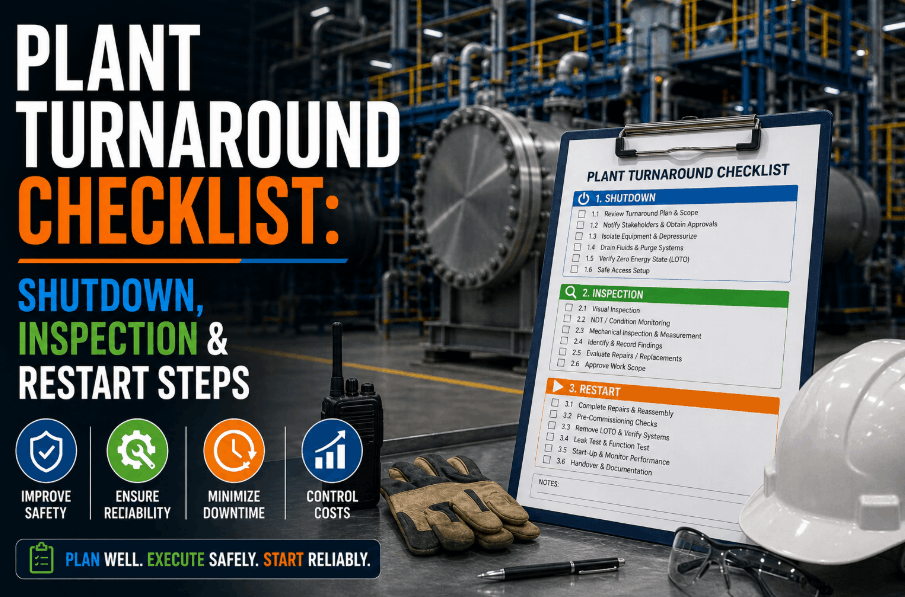
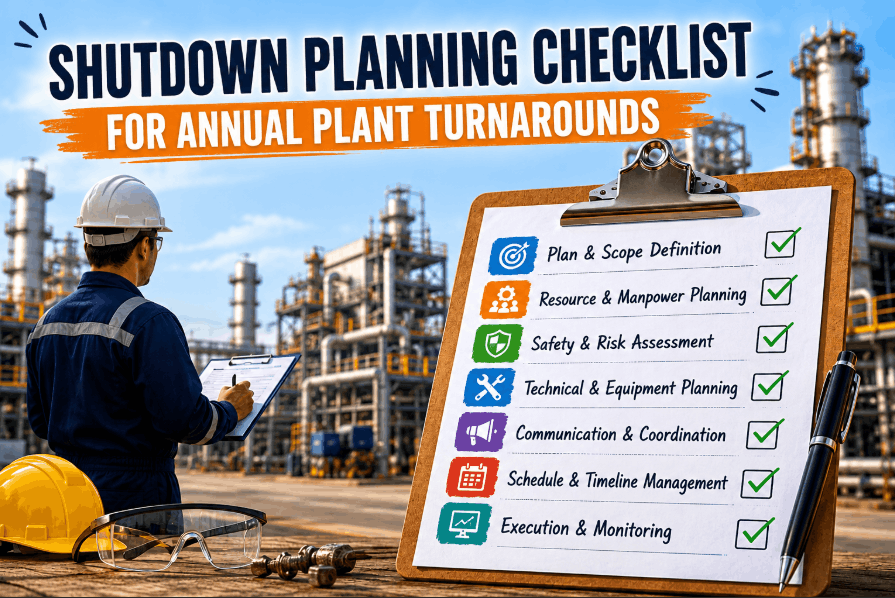
Plant turnarounds are among the most complex, high-risk maintenance events in industrial operations — compressed timelines, concurrent workstreams, and zero margin for missed steps make structured planning the difference between a smooth restart and a costly overrun. Studies consistently show that unplanned turnaround extensions cost industrial facilities $1M–$5M per day in lost production, yet 70% of overruns originate from poor pre-shutdown planning and inadequate punch list discipline. Sign Up Free with OxMaint's CMMS platform to digitize your entire turnaround workflow — from scope freeze and permit management to inspection tracking, punch lists, and mechanical completion sign-offs — giving your turnaround manager real-time visibility across every work front before first wrench turn.
A complete turnaround execution protocol covering pre-shutdown scope planning, equipment isolation, mechanical inspection tasks, punch list management, and safe restart procedures for refineries, chemical plants, and industrial facilities.
Turnaround success is determined months before shutdown day. Scope creep, undefined work packages, and missing materials account for the majority of schedule slippage — structured planning eliminates preventable delays before they occur.
Phase 02
Safe Shutdown & Equipment Isolation
Controlled, documented shutdown sequencing and verified energy isolation are non-negotiable prerequisites for safe work execution. Missed isolation points and incomplete decontamination are leading causes of turnaround fatalities.
Manage Every Turnaround Work Front from One Platform
OxMaint centralizes turnaround work orders, permits, inspection records, punch lists, and mechanical completion sign-offs — giving your team real-time progress visibility and preventing the missed steps that cause costly schedule overruns. Book a Demo to see the full turnaround management workflow.
Turnaround inspection windows are the only opportunity to assess internal equipment condition. Incomplete inspection execution or poorly documented findings leave reliability risks unaddressed until the next outage — often years away.
Phase 04
Mechanical Completion & Punch List Management
Punch list discipline separates facilities that complete turnarounds on time from those that slip into restart delays. Every open item must be categorized, owned, and tracked to closure — outstanding Category A items block startup authorization.
Phase 05
Safe Restart & Commissioning Procedures
Restart phase carries elevated risk as systems are re-energized with modified equipment configurations. Disciplined startup procedure execution and real-time fault response prevent the incidents that cause post-turnaround process trips.
Phase 06
Turnaround Close-Out & Lessons Learned
Close-out documentation and structured lessons-learned capture determine whether the next turnaround improves or repeats the same planning gaps. Facilities with structured close-out processes reduce subsequent turnaround costs by 15–20%.
KPIs
Turnaround Performance Indicators
Swipe left to see remaining columns
Performance Indicator
Measurement Approach
Target Value
Review Interval
Schedule Performance Index
Earned value divided by planned value at milestone dates
Above 0.95
Daily during TAR
Work Order Completion Rate
Completed WOs divided by total planned WOs
Above 98%
Daily during TAR
Punch List Cat A Closure
Open Cat A items at startup authorization
Zero
Pre-startup
Scope Growth Percentage
Added work orders divided by original scope count
Under 10%
Weekly during TAR
Lost Time Incident Rate
LTIs per 200,000 manhours worked
Zero
Daily during TAR
FAQs
Plant Turnaround Questions
How far in advance should turnaround planning begin?
Major turnarounds require 12–18 months of planning lead time for scope definition, long-lead material procurement, contractor selection, and schedule development. Smaller planned shutdowns need at least 3–6 months for adequate preparation.
What is the difference between Category A and Category B punch items?
Category A items are safety-critical or mechanically essential deficiencies that must be resolved before startup authorization can be granted. Category B items are acceptable deficiencies that operations formally accepts as safe to run with — they must still be scheduled and tracked to closure post-startup.
How does OxMaint support turnaround management?
OxMaint manages the full turnaround lifecycle — work order registry, permit workflows, inspection records, punch lists, mechanical completion sign-offs, and KPI dashboards — providing real-time visibility across all work fronts and preventing the coordination gaps that cause schedule overruns. Sign Up Free to explore the full platform.
What causes most turnaround schedule overruns?
Three factors account for the majority of overruns: late scope freeze causing last-minute material shortages, poor blind and isolation management extending deisolation time, and inadequate punch list discipline delaying startup authorization. Structured CMMS workflows eliminate all three.
How should statutory inspection compliance be managed during turnaround?
All statutory inspection due dates should be tracked in your CMMS against each asset. OxMaint automatically flags assets with overdue or approaching inspection due dates during turnaround planning so no regulatory certificates lapse during the outage window. Book a Demo to see compliance tracking in action.
Turnaround Management Platform
Every Work Order Tracked. Every Punch Item Closed. Every Turnaround Delivered on Schedule.
OxMaint gives turnaround managers a single platform for work order management, permit workflows, inspection records, punch list tracking, and mechanical completion sign-offs — replacing scattered spreadsheets with real-time visibility that keeps every work front on schedule from shutdown day to safe restart. Sign Up Free and run your next turnaround on OxMaint.