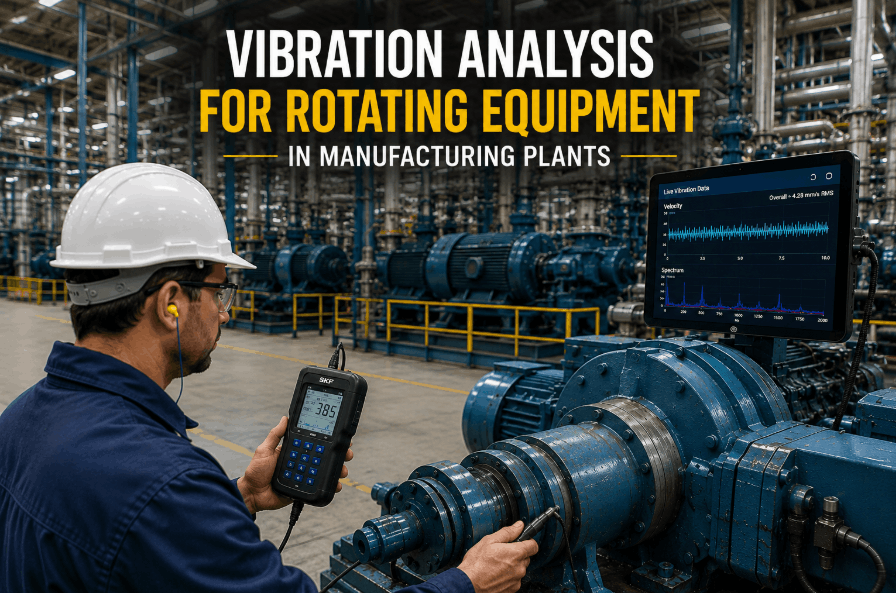
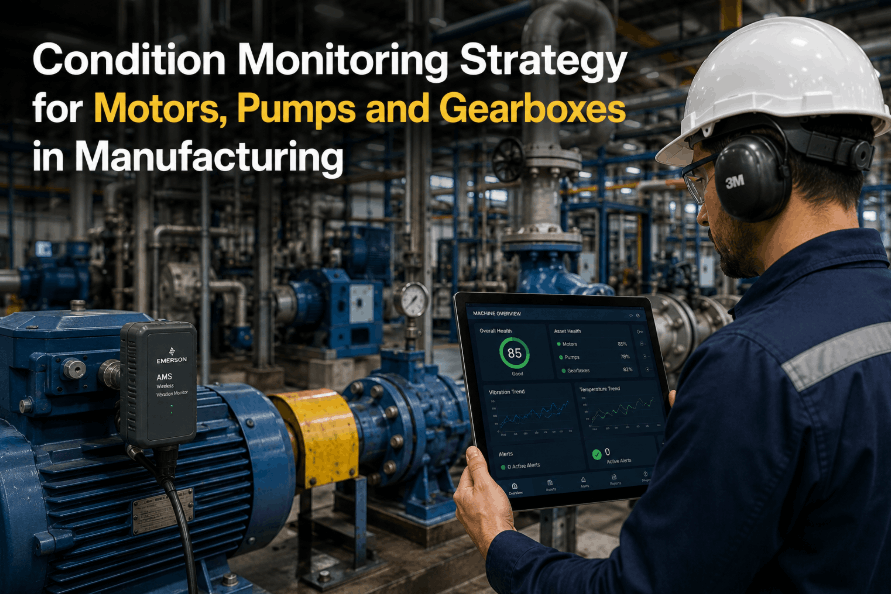
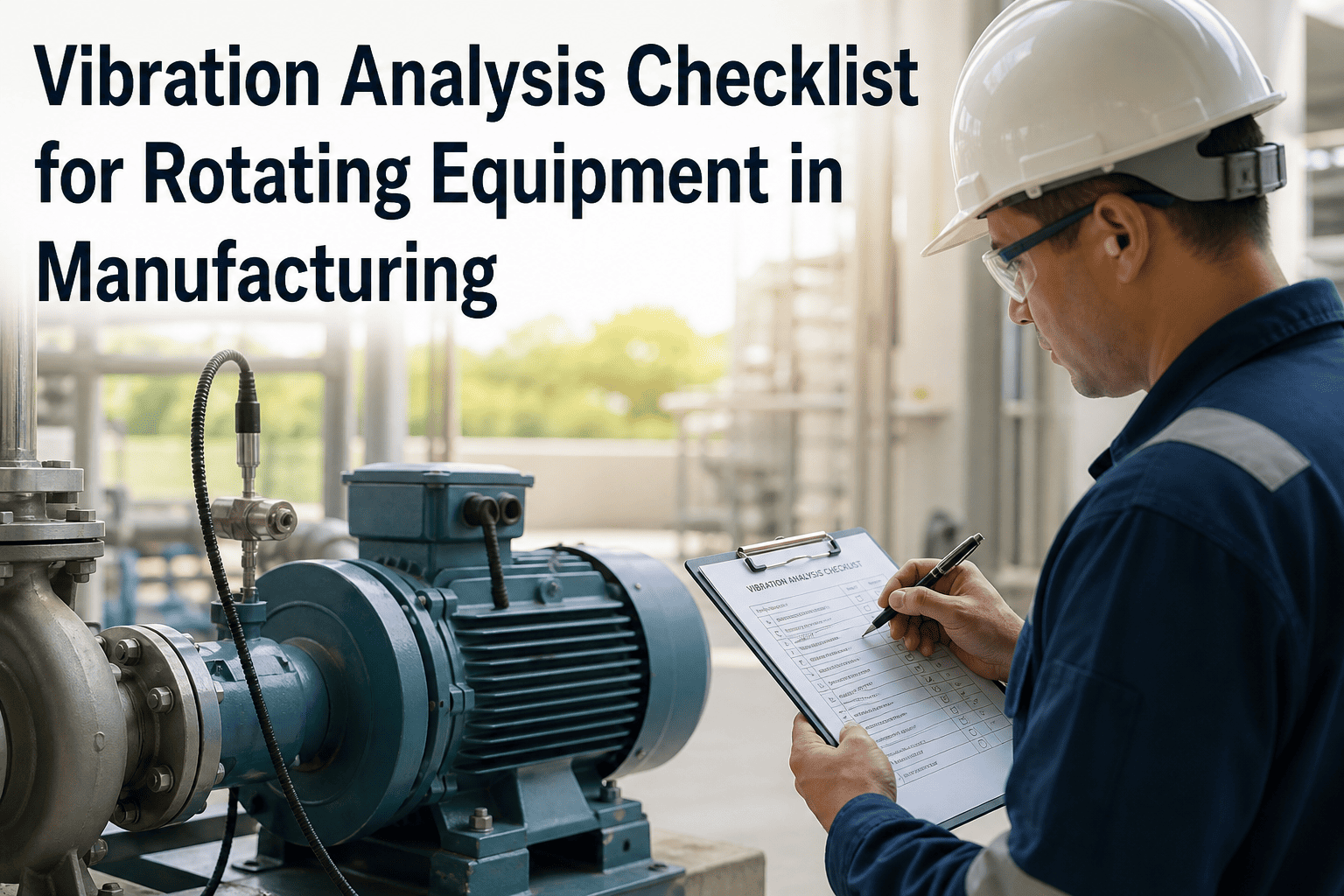
Vibration failures in rotating equipment rarely happen without warning — but most facilities miss the early signals. Bearing defects, shaft imbalance, and coupling misalignment each leave distinct vibration signatures detectable weeks before breakdown. Yet despite the clear returns, the majority of plants still operate reactively, paying five to ten times more per failure than a structured predictive maintenance program would cost. This vibration analysis inspection checklist gives reliability engineers and maintenance teams a structured, field-ready protocol covering every critical stage — from measurement point setup through fault diagnosis, trending, and corrective work order closure. Whether you manage motors, pumps, fans, gearboxes, or compressors, Sign Up Free to connect your vibration data directly into OxMaint's CMMS and start catching faults before they become failures. Teams already running structured programs report 50% reductions in unplanned downtime and 30% longer equipment life — results driven by consistent measurement, not guesswork. Book a Demo to see how OxMaint automates threshold alerts and work order generation from your existing vibration collectors.
Start Catching Faults Before They Cause Downtime
OxMaint connects your vibration routes, auto-plots ISO 10816 trends, and fires prioritized work orders the moment readings cross alert thresholds.
Equipment Survey & Measurement Point Definition
Reliable vibration analysis starts with a complete asset inventory and consistent measurement point layout. Without standardized locations, trend data becomes unreliable and fault detection degrades significantly.
Data Collection Procedures & Measurement Standards
Measurement technique affects reading quality as much as equipment condition does. Consistent contact pressure, correct operating conditions, and full spectrum capture are non-negotiable for valid fault diagnosis.
ISO 10816 Severity Classification & Threshold Configuration
ISO 10816 defines four severity zones from acceptable operation through dangerous conditions. Threshold configuration must account for machine size, foundation type, and production criticality to be actionable.
Fault Diagnosis & Root Cause Analysis
High overall vibration flags a problem but does not identify it. Spectral pattern recognition — frequency peaks, harmonics, sidebands, and phase relationships — is what separates imbalance from misalignment, looseness from bearing defects. Sign Up Free to access OxMaint's built-in diagnostic guidance library tied directly to each work order.
Trending Analysis & Predictive Planning
Single measurements reveal current condition. Trend history reveals fault progression rate and remaining useful life. Trending is what separates predictive maintenance from periodic inspection — and OxMaint makes multi-year trend charting automatic. Book a Demo to see trending dashboards in action.
Work Order Integration & Corrective Action Tracking
Vibration data without action is just archived numbers. OxMaint closes the loop — automatically generating prioritized work orders with fault descriptions, trend graphs, and recommended corrective actions the moment readings exceed alert limits. Sign Up Free to activate automated work order generation from your vibration routes.
Vibration Program Performance Indicators
| Performance Indicator | How It Is Measured | Target | Review Cycle |
|---|---|---|---|
| Route Completion Rate | Completed routes ÷ scheduled routes | Above 98% | Weekly |
| Asset Coverage | Monitored assets ÷ total critical assets | 100% | Monthly |
| Alert Response Time | Days from alert to work order creation | Under 3 days | Monthly |
| Predicted Failure Rate | Planned interventions ÷ total failures | Above 80% | Quarterly |
| Mean Time Between Failures | Operating hours ÷ failure events | Increasing trend | Quarterly |
OxMaint Automates the Entire Vibration-to-Work Order Workflow
Import readings from Fluke, SKF, Pruftechnik, and all major collectors. Plot ISO 10816 trends automatically. Generate prioritized work orders before faults become failures.
Vibration Analysis Inspection Questions
What is the difference between velocity and acceleration in vibration measurement?
Velocity in mm/s is most sensitive to low-frequency faults like imbalance and misalignment. Acceleration in g-force is required for high-frequency bearing defect detection. Best practice is to measure both at each point.
How often should vibration routes be collected on rotating equipment?
Critical equipment should be collected monthly, essential equipment quarterly, and general equipment annually. Any asset showing a rising trend or elevated alert should be moved to more frequent monitoring immediately.
Can vibration analysis predict the exact date a bearing will fail?
Vibration provides a failure window, not a precise date. Trend extrapolation estimates when the alarm threshold will be crossed. Actual failure timing depends on load severity and fault progression rate, which can accelerate unpredictably.
What ISO certification is required for vibration analysts?
ISO 18436 defines four certification levels. Category I covers data collectors, Category II covers analysts performing fault diagnosis, and Category III covers program managers and consultants. Each requires classroom instruction plus a practical examination.
Why do some repairs not reduce vibration levels after completion?
Incorrect diagnosis is the most common cause — for example, correcting alignment when imbalance was the actual fault. Installation errors, improper bearing fits, and multiple simultaneous faults where only one was addressed also prevent improvement.
How does OxMaint support a vibration analysis program?
OxMaint imports vibration data from all major collector brands, plots multi-year trend charts against ISO 10816 thresholds, fires automated alerts, and generates prioritized work orders with fault descriptions and recommended corrective actions — all without manual data entry. Book a Demo to see the full workflow.
Every Measurement Trended. Every Fault Diagnosed. Every Failure Prevented.
Join maintenance teams using OxMaint to run structured vibration programs that catch bearing faults weeks early, reduce unplanned downtime by 50%, and extend rotating equipment life by 30%.