Plant operations teams face a silent productivity drain: alarm floods. As industrial assets multiply across production lines, control rooms receive hundreds of alerts per shift — many of them redundant, low-priority, or flat-out false. Predictive alarm filtering cuts through this noise by applying machine learning and anomaly detection to rank, cluster, and suppress non-actionable alerts before they reach operators. For maintenance engineers and reliability teams managing chiller plants, compressors, rotating equipment, and utility systems, the ability to separate genuine fault signals from sensor drift or feature drift is the difference between proactive response and reactive chaos. Sign Up Free with Oxmaint and connect your asset health data to a structured work order system that acts on filtered, high-confidence maintenance signals — not noise.
Predictive Maintenance · Alarm Filtering · Alert Fatigue · Plant Operations
Cut Alert Fatigue and Act on Real Fault Signals — With Oxmaint
Oxmaint gives plant operations teams structured work orders, asset health tracking, and maintenance signal routing — so your technicians respond to real risks, not alarm floods.
Why Alarm Filtering Is a Critical Challenge in Plant Operations
Modern industrial plants generate telemetry from hundreds of sensors across rotating equipment, HVAC systems, utility infrastructure, and process lines. Without intelligent filtering, every sensor excursion — including benign anomalies from sensor drift, normal process variation, or false alarms from miscalibrated thresholds — lands in the same alarm queue as a genuine compressor fault or imminent bearing failure. Book a Demo to see how Oxmaint's work order and asset management platform integrates with predictive maintenance signal outputs to convert high-confidence fault alerts into traceable, assigned maintenance tasks.
Alert Fatigue in Control Rooms
When operators receive hundreds of alarms per shift, critical fault signals are missed or delayed. Alarm flooding is a leading contributor to unplanned downtime in process and discrete manufacturing plants.
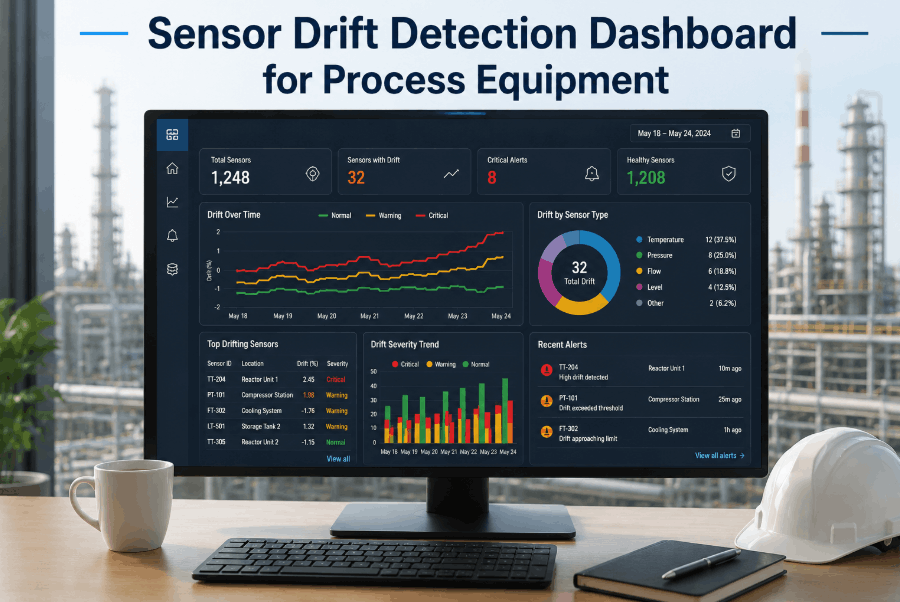
Sensor Drift and False Positives
Aging sensors, installation drift, and environmental interference generate persistent false alarms that erode operator trust in the alarm system — causing genuine signals to be dismissed alongside noise.
Feature Drift in Predictive Models
Machine learning models trained on historical operating patterns degrade over time as process conditions shift. Without model confidence scoring, prediction quality drops and false alarm rates climb silently.
Fragmented Alert Routing
Alarms generated by different monitoring platforms — BMS, SCADA, condition monitoring — reach different teams through different channels, preventing coordinated response and root cause clustering.
No Maintenance Signal Traceability
Even when a predictive model correctly identifies an early fault, the signal is lost if it isn't converted into a tracked work order. Asset health insights without maintenance accountability produce zero operational value.
Response Speed vs. Response Quality
Unfiltered alarm environments push operators toward fast, reflexive responses rather than deliberate, data-backed decisions — increasing the risk of incorrect interventions and missed root causes.
Predictive Alarm Filtering Framework for Plant Operations Teams
Effective alarm filtering in plant operations is not simply about suppressing alarms — it's about ensuring that the right signal, with the right data context, reaches the right person at the right time. The following framework reflects best practices for reducing alert fatigue while maintaining fault detection sensitivity across multi-asset plant environments. Book a Demo to see how Oxmaint converts prioritized maintenance signals into structured, mobile-accessible work orders for your plant teams.
Anomaly Detection and Pattern Recognition
Machine learning models monitor asset telemetry for deviations from established operating patterns — distinguishing genuine anomalies from normal process variation. Pattern recognition across multiple sensor streams reduces single-point false alarm rates and identifies developing faults earlier than threshold-based systems.
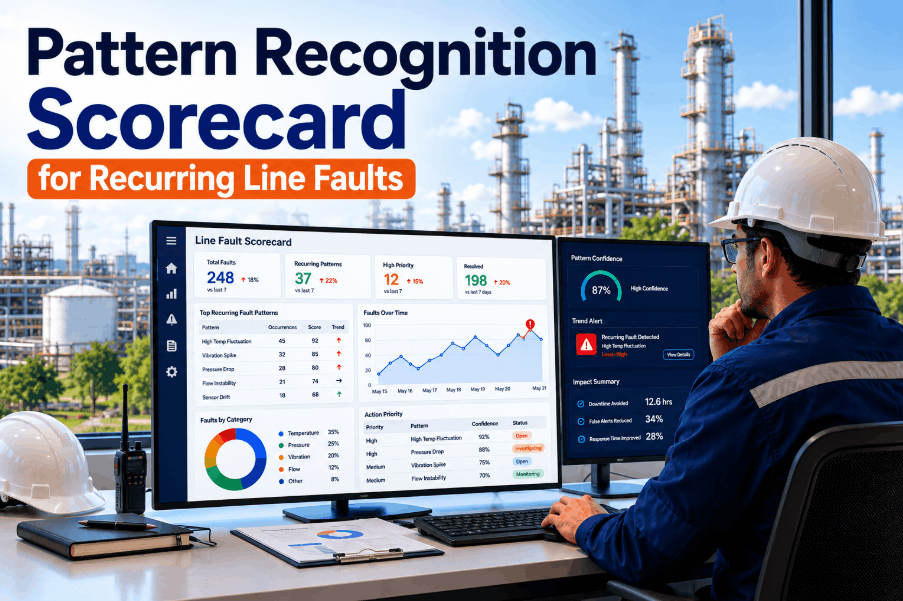
Signal Ranking and Model Confidence Scoring
Not all predictive alerts carry equal confidence. Signal ranking assigns priority scores based on model confidence, asset criticality, and historical fault correlation — surfacing the highest-urgency maintenance signals first and suppressing low-confidence predictions that would otherwise contribute to alarm flooding.
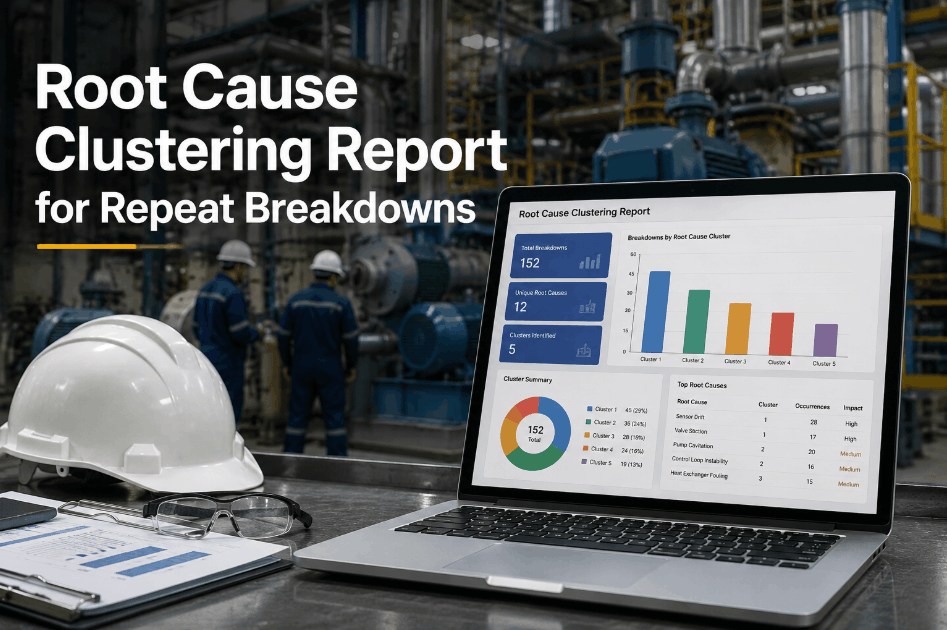
Root Cause Clustering and Fault Filtering
Multiple alarms from a single developing fault — such as rising vibration, elevated temperature, and increased current draw on the same motor — are clustered into a single maintenance event rather than generating three separate alerts. Root cause clustering reduces alarm volume while improving diagnostic accuracy for maintenance teams.
Forecasting and Remaining Useful Life Estimation
Predictive models that estimate remaining useful life give maintenance teams a time-based planning window rather than binary fault/no-fault outputs. Forecasting converts alarm filtering from a reactive noise-reduction tool into a proactive maintenance scheduling input — enabling condition-based work order generation in Oxmaint.
Alert Routing to Maintenance Work Orders
A filtered, ranked predictive alert only delivers value when it results in assigned, tracked maintenance action. Oxmaint serves as the operational layer that converts prioritized maintenance signals into digital work orders — with asset linkage, technician assignment, checklist completion, and photo evidence — closing the loop between prediction and action.
How Oxmaint Connects Predictive Signals to Maintenance Execution
Oxmaint is a cloud CMMS platform built for industrial and commercial maintenance teams operating across multi-asset, multi-site environments. While predictive analytics and condition monitoring tools generate filtered fault signals, Oxmaint provides the execution layer — turning those signals into assigned, trackable, photo-verified work orders accessible on any mobile device. Sign Up Free to connect your predictive maintenance outputs to a structured operations platform that your plant teams can use from day one.
| Alarm Management Challenge |
Without Filtering and CMMS |
With Oxmaint Integration |
| Alert volume |
Hundreds of unranked alarms per shift |
Ranked, filtered signals routed to work orders |
| False alarm rate |
High — sensor drift and model degradation undetected |
Confidence scoring reduces low-quality signal dispatch |
| Maintenance response |
Reactive, undocumented, verbal handoffs |
Digital work orders with assignment and photo sign-off |
| Root cause traceability |
Fragmented across teams and platforms |
Asset-linked records with full maintenance history |
| Multi-site visibility |
Site-level only, no consolidated dashboard |
Portfolio-level asset health and PM compliance view |
Most Common Alarm Management Failures in Plant Operations — And How to Prevent Them
Understanding where alarm management breaks down is essential to building a filtering strategy that actually reduces unplanned downtime. The failure modes below are common across process plants, discrete manufacturing sites, and utility-heavy facilities — and each represents a maintenance signal that could have been captured, filtered, and acted upon earlier. Sign Up Free to build a maintenance execution program in Oxmaint that systematically closes these gaps.
01
Threshold-Only Alarm Configuration
Fixed thresholds generate high false alarm rates during normal process variation. Without pattern recognition and anomaly detection, every threshold breach triggers an alert — flooding the control room with non-actionable noise and masking genuine fault signals.
02
02
Unmanaged Model Drift
Predictive models trained on historical data degrade as operating conditions shift — a phenomenon known as feature drift. Without regular model confidence review, prediction quality deteriorates silently, increasing false positive rates and undermining operator trust in automated alerts.
03
Siloed Alarm Platforms
When SCADA, BMS, and condition monitoring systems each generate independent alarm streams without cross-platform root cause clustering, maintenance teams receive duplicated alerts for the same developing fault — wasting response effort and delaying correct diagnosis.
04
No Maintenance Signal Handoff
A correctly filtered, high-confidence fault prediction that is communicated verbally or logged in a spreadsheet has no accountability trail. Without conversion to a tracked work order in a CMMS, the maintenance signal disappears — and the fault continues developing until breakdown.
05
Alarm Suppression Without Documentation
Suppressing nuisance alarms without documentation creates compliance gaps and hides equipment degradation trends. A structured CMMS links alarm suppression decisions to asset records — maintaining audit trails for both reliability reviews and regulatory inspections.
06
Reactive-Only Maintenance Culture
Plants that have never implemented structured PM programs struggle to trust predictive signals because there is no operational framework to act on them. Oxmaint's preventive maintenance scheduling creates the execution baseline that gives predictive alarm filtering a pathway to action.
Plant Operations · Predictive Maintenance CMMS · Alert Routing · Work Orders
From Alarm Flood to Actionable Fault Signal — One Platform for Your Plant
Oxmaint connects predictive maintenance signals to digital work orders, asset health records, and technician accountability — giving your operations team a clear, structured response to every high-confidence fault alert.
Frequently Asked Questions — Predictive Alarm Filtering for Plant Operations
What is predictive alarm filtering in plant operations?
Predictive alarm filtering uses machine learning, anomaly detection, and signal ranking to remove false alarms, cluster related faults, and surface only the highest-confidence maintenance signals — reducing alert fatigue and improving response quality across plant teams.
How does Oxmaint help with predictive maintenance signal management?
Oxmaint converts prioritized maintenance signals into digital work orders assigned to specific technicians, with mobile checklist completion and photo evidence — providing the execution layer that turns predictive alerts into documented, trackable maintenance actions.
What causes high false alarm rates in industrial plants?
High false alarm rates are most commonly caused by threshold-only alarm configurations, sensor drift, feature drift in predictive models, and lack of root cause clustering — all addressable through structured filtering and CMMS-based maintenance execution.
Can Oxmaint integrate with existing condition monitoring or SCADA systems?
Oxmaint supports asset data import and work order creation from external signals. Maintenance teams can receive filtered fault alerts from monitoring platforms and immediately create tracked work orders in Oxmaint — without switching systems.
How quickly can a plant operations team deploy Oxmaint?
Most teams are live within one to two days. Assets are uploaded in bulk, QR codes are printed and attached to equipment, and technicians begin submitting mobile work orders the same week.
Sign Up Free to start your deployment today.
What is the difference between alarm filtering and alarm suppression?
Alarm filtering ranks and routes signals based on confidence and criticality — keeping operators focused on real faults. Alarm suppression silences specific alerts entirely, which carries compliance risk if undocumented. Oxmaint maintains a full audit trail for both maintenance actions and suppression decisions.
Predictive Alarm Filtering · CMMS Platform · Plant Maintenance
Act on Real Maintenance Signals — Not Alarm Noise
Oxmaint gives plant operations teams the mobile work order platform, asset health records, and PM scheduling needed to execute on filtered predictive alerts — turning signal into action across every site in your portfolio.