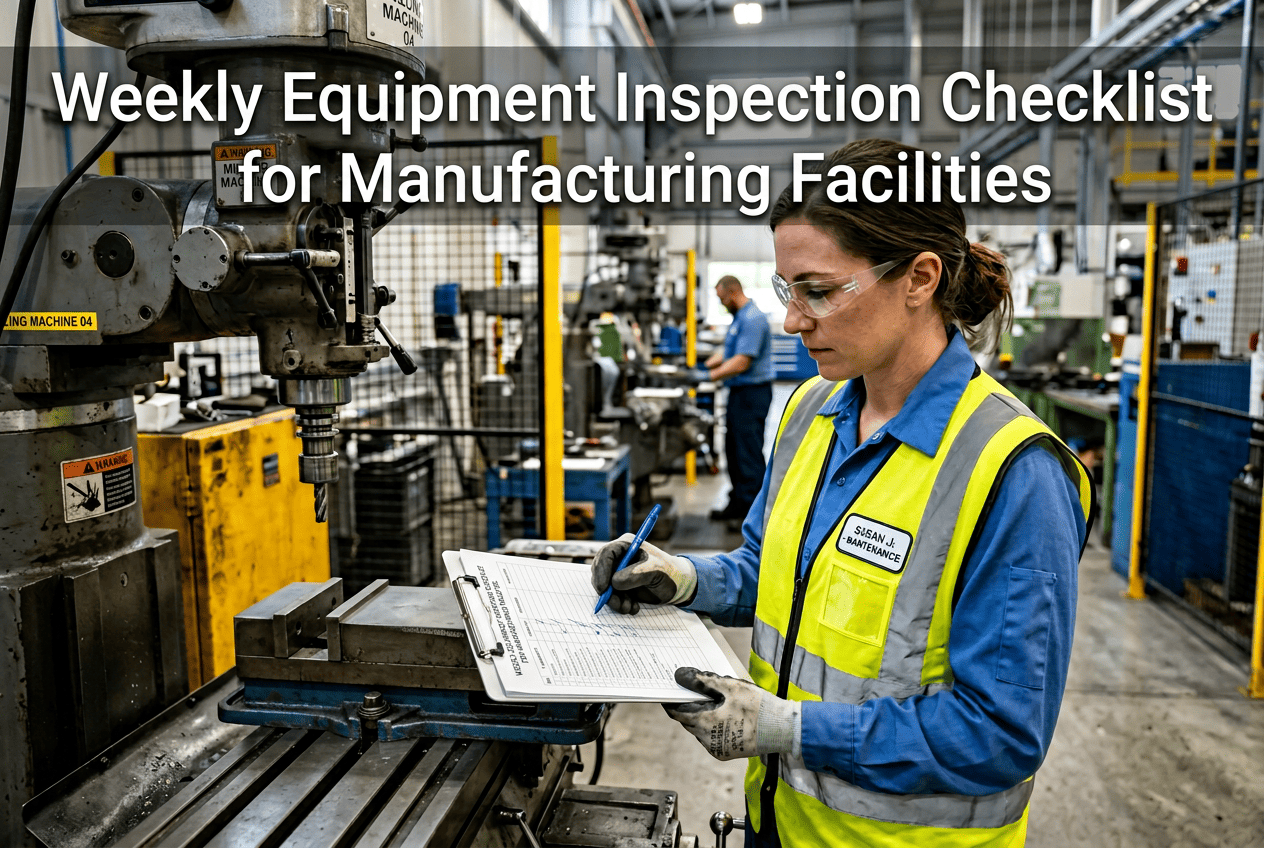
Every minute a production line sits dead costs the average Fortune 500 manufacturer around $532,000 in lost revenue, and the painful truth is that most of those stops are entirely avoidable. A bearing that seized at 2 a.m. was whispering warnings for weeks. A filter that clogged mid-shift had been accumulating dust since the last quarter. A conveyor belt that snapped and took down an entire assembly was running past its service interval by months. This is the exact gap preventive maintenance closes — a structured, scheduled, data-driven approach to catching small issues before they cascade into six-figure disasters. US manufacturers alone spend an estimated $222 billion annually on maintenance-related losses, and the facilities that have shifted to proactive programs report 52.7% less unplanned downtime and 78.5% fewer defects than reactive peers. If you're running a plant in 2025 and still fighting fires reactively, you're playing on hard mode — and a modern CMMS platform built for manufacturing is the simplest lever to pull first.
Reactive Only
Run-To-Failure
3.3x
More unplanned downtime
Wait for it to break, then scramble. Cheapest up front, catastrophic over time.
Preventive
Scheduled PM
20-40%
Longer equipment life
545%
Typical ROI (JLL study)
66%
Reduction in compliance risk
Plan work around calendars, cycles, and hours. The backbone of every modern plant.
Predictive
Condition-Based
25-30%
Lower maintenance cost
35-45%
Less downtime vs PM
10x
Increase in maintenance ROI
Sensors and analytics tell you when to act. The future, powered by PM foundations.
What Preventive Maintenance Actually Means On The Plant Floor
Preventive maintenance is the practice of performing routine, scheduled work on equipment before it fails — based on time intervals, usage counters, runtime hours, or condition readings. Instead of reacting to breakdowns, you anticipate wear and intervene during planned windows when production impact is minimal.
What It Covers
Routine inspections and visual checks
Lubrication, cleaning, filter changes
Calibrations and alignment corrections
Scheduled part replacements at set intervals
Wear measurement and tolerance checks
What It Is Not
Waiting for something to break first
Running machines until they stop working
Ad-hoc repairs without documentation
A paper binder that nobody updates
Only fixing what operators loudly complain about
The Four Types Of Preventive Maintenance
01
Time-Based
Calendar Triggered
Work is scheduled at fixed calendar intervals — daily, weekly, monthly, quarterly, annually. Simplest to implement and the most common starting point. Best for components with predictable age-related wear like gaskets, seals, coolants, and safety certifications.
Example: Monthly gearbox oil sampling on all CNC machines on the first Tuesday of every month.
02
Usage-Based
Counter Triggered
Work is scheduled based on operational hours, cycles, or units produced. Makes sense for equipment whose wear correlates to how hard it runs, not just how long it sits. Runtime meters, cycle counters, and production data feed the trigger logic.
Example: Replace forklift hydraulic fluid every 1,000 operating hours regardless of calendar date.
03
Condition-Based
Threshold Triggered
Work is scheduled when a measured condition crosses a threshold — vibration, temperature, pressure, lubricant contamination, thermal imaging. Requires inspection routes or sensors, but eliminates waste from changing things that were still fine.
Example: Bearing replacement triggered when vibration exceeds 2.5 mm/s RMS on routine quarterly route.
04
Predictive
Algorithm Triggered
Continuous sensor data feeds machine-learning models that forecast remaining useful life and pinpoint failure timing days or weeks ahead. The most powerful strategy, but builds on top of a solid preventive foundation, never replaces it.
Example: AI model forecasts bearing failure 11 days out based on vibration trend slope and temperature rise.
The Benefits That Show Up On Your P&L
What manufacturing plants actually report after 12-24 months of disciplined preventive maintenance
50-70%
Less Unplanned Downtime
Scheduled interventions catch failures before they halt production, shifting work into planned windows.
20-40%
Extended Asset Life
Routine lubrication, alignment, and inspection slow the wear curve and push replacement dates further out.
12-18%
Lower Energy Use
Well-maintained motors, compressors, and HVAC systems run efficiently instead of fighting friction and leaks.
78%
Fewer Defects
Machines held within tolerance produce parts within tolerance — quality improvements compound over time.
2-5x
Cheaper Than Reactive
Planned work avoids overtime, expedited parts, secondary damage, and the premium cost of emergency repairs.
66%
Lower Compliance Risk
Documented inspection trails satisfy OSHA, EPA, ISO 55000, and customer audit requirements in one pass.
Still Running PM From A Spreadsheet Or Wall Calendar?
OxMaint turns your maintenance program into a living system — work orders trigger automatically, technicians close tasks from their phones, and every intervention builds the data history that reveals what is actually failing and why. Start free, implement in days, see results in weeks.
Building A PM Program That Actually Sticks
Phase 1
Inventory Your Critical Assets
Start with the equipment that hurts most when it stops. Rank every asset by production impact, safety exposure, repair cost, and replacement lead time. The top 20% of critical assets typically drive 80% of your downtime cost — start there, not with the coffee machine.
Phase 2
Build Task Libraries From OEM Manuals
Open every machine manual and pull out every recommended maintenance task with its interval. Add your own institutional knowledge — the gasket your team always replaces at 2,000 hours, the belt that always slips after monsoon season. Standardize task names and estimated durations.
Phase 3
Set Intervals And Triggers
Match each task to a trigger type — calendar, runtime, cycle count, or condition threshold. Err on the side of more frequent inspection and less frequent replacement. ARC Advisory Group data shows 30% of preventive work is scheduled too frequently, wasting labor without preventing more failures.
Phase 4
Digitize The Schedule And Workflow
Move off paper, spreadsheets, and tribal knowledge. A
modern CMMS auto-generates work orders, assigns technicians, tracks parts used, captures photos, and maintains the compliance paper trail. This single step typically cuts administrative time by 30-40%.
Phase 5
Measure, Review, Refine Quarterly
Run the numbers every quarter — PM completion rate, schedule compliance, MTBF, MTTR, and backlog aging. Kill tasks that never find problems. Tighten intervals on tasks that keep finding failures late. Your PM program should look different 18 months from now than it does today.
The KPIs That Prove Your Program Is Working
Scroll horizontally to see all columns
| KPI |
What It Measures |
Best-In-Class Target |
Warning Sign |
| PM Completion Rate |
Scheduled PMs finished on time |
Above 90% |
Below 75% means schedule is unrealistic |
| MTBF |
Mean time between failures |
Trending upward month over month |
Flat or falling means PM is missing root causes |
| MTTR |
Mean time to repair |
Under 2 hours for minor failures |
Rising trend means parts and skills gaps |
| Schedule Compliance |
PMs done within their due window |
85% or higher |
Below 70% means program is overloaded |
| PM vs Reactive Ratio |
Planned work vs emergency work |
80/20 or better |
Below 60/40 means still firefighting |
| Backlog Aging |
Open work orders past due date |
Under 2 weeks average age |
Aging over 4 weeks signals capacity crisis |
| Wrench Time |
Tech hours on actual repair work |
55-65% of shift |
Under 35% means workflow is broken |
Why A CMMS Turns PM From A Burden Into A System
Automation
Work orders generate themselves on schedule or when sensor thresholds trip. Nobody forgets. Nothing slips through. The system is the memory.
Mobile Access
Technicians complete work orders, log parts used, scan barcodes, and attach photos from the phone in their pocket — no more paper trips back to the office.
Parts Management
Critical spares reserve themselves against scheduled work. Min-max reorder points trigger automatically. The stockout that killed last month's production becomes history.
Asset History
Every repair, every part, every downtime event attaches to the asset record. Patterns emerge. The machine that "just breaks sometimes" reveals its root cause in the data.
Reporting
MTBF, MTTR, PM completion, labor cost by asset — the numbers leadership needs land in their inbox every Monday morning without anyone building a spreadsheet.
Compliance
Audit-ready logs for OSHA, EPA, ISO, FDA, and customer inspections generate themselves. Proof of work is intrinsic, not something you scramble to assemble.
Frequently Asked Questions
How much does a preventive maintenance program cost to implement?
A cloud-based CMMS runs $20-50 per user per month for small to mid-size plants. Total first-year cost including training and setup usually lands between $8,000 and $40,000 for a 50-technician operation. The payback period typically falls between 4-9 months based on downtime savings alone.
Get a tailored quote based on your plant size.
How long before we see results from switching to preventive maintenance?
Work order completion and compliance metrics improve within 30-60 days. Unplanned downtime reduction shows up at 3-6 months as schedule compliance climbs above 80%. Full ROI typically lands between 12-18 months once the program stabilizes and catches its rhythm.
Is preventive maintenance the same thing as predictive maintenance?
No. Preventive maintenance runs on schedules and usage counters and does not require sensors. Predictive maintenance uses continuous sensor data and machine-learning models to forecast failures. Predictive is more powerful but requires a solid preventive foundation first — you walk before you run.
What percentage of our maintenance work should be preventive versus reactive?
World-class plants run 80% planned versus 20% reactive work, with preventive making up 60-70% of planned work. If you are currently below a 50/50 split, targeting 70/30 within 18 months is an aggressive but realistic first milestone to chase.
Do we need IoT sensors to run preventive maintenance?
Not at all. Most of the value from PM comes from simply executing time-based and usage-based tasks consistently. Sensors become useful once you have exhausted gains from scheduled work and want to move toward condition-based and predictive strategies.
Can a small plant with 5-10 technicians benefit from a CMMS?
Yes, especially small plants. Smaller teams have no buffer when something breaks, and institutional knowledge walks out the door with every retirement. A CMMS preserves that knowledge and multiplies the output of every technician you have.
Start with the free trial to see how it fits.
How do we convince leadership to invest in preventive maintenance?
Frame it as an insurance policy on your largest capital assets. Pull your last 12 months of unplanned downtime hours, multiply by your production rate and margin, and compare against the annual cost of a CMMS plus program implementation. The ratio is almost always 10:1 or better in favor of investing. Add the hidden costs leadership forgets — overtime labor, rush freight on parts, scrap and rework from unstable processes, missed customer shipments, and the retention cost of technicians tired of firefighting. Build a simple one-page business case showing current state, target state, and the gap. Most CMMS vendors will help you build this model during their demo; it usually pays for itself in the first quarter after implementation.
From Reactive Chaos To Proactive Control
Your Next Breakdown Is Already Being Scheduled. Get Ahead Of It.
OxMaint gives manufacturing teams the work order automation, mobile execution, parts management, and reporting muscle to move from reactive firefighting to predictable, measured operations. Join thousands of plants worldwide running smarter maintenance on the OxMaint platform.

.png)