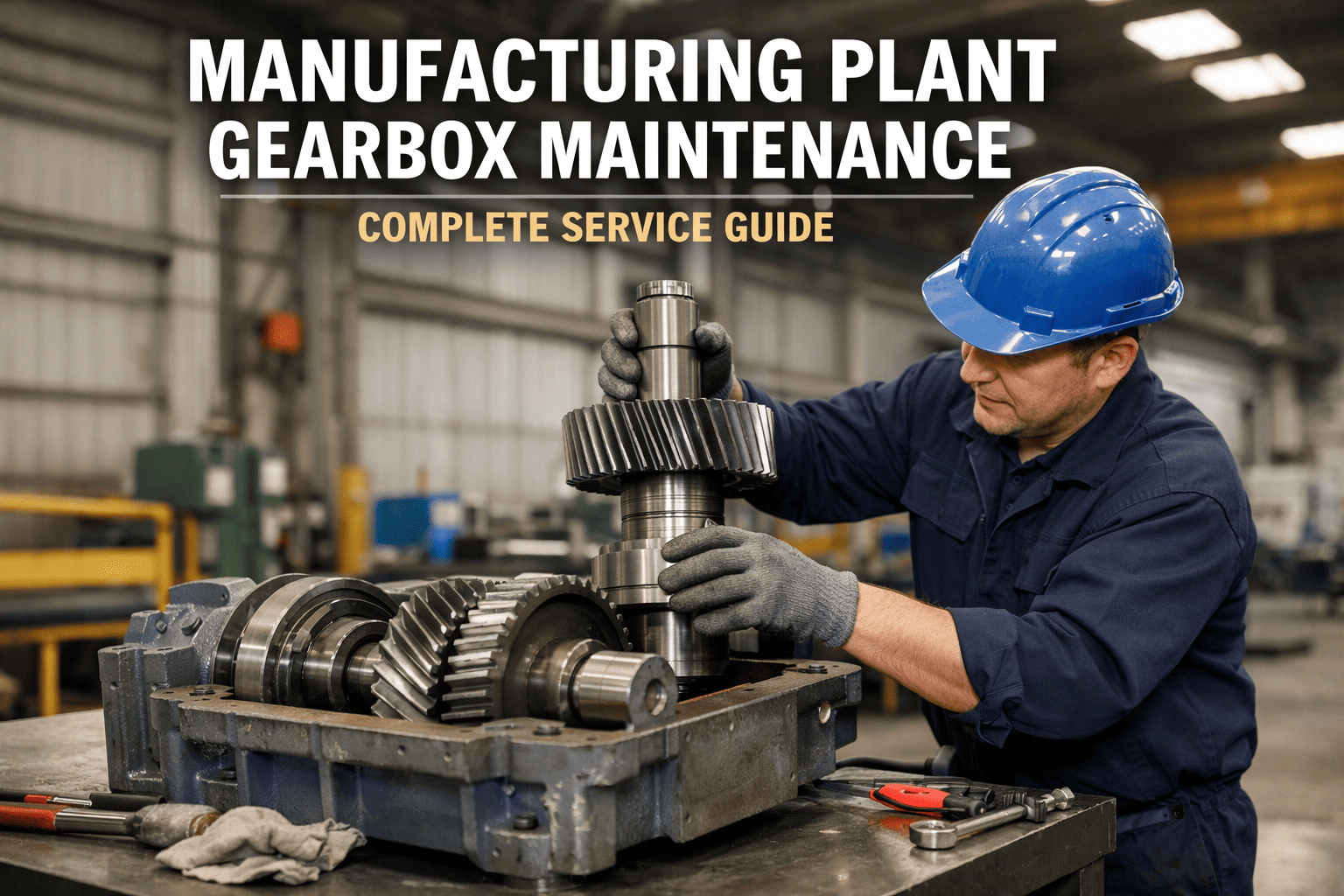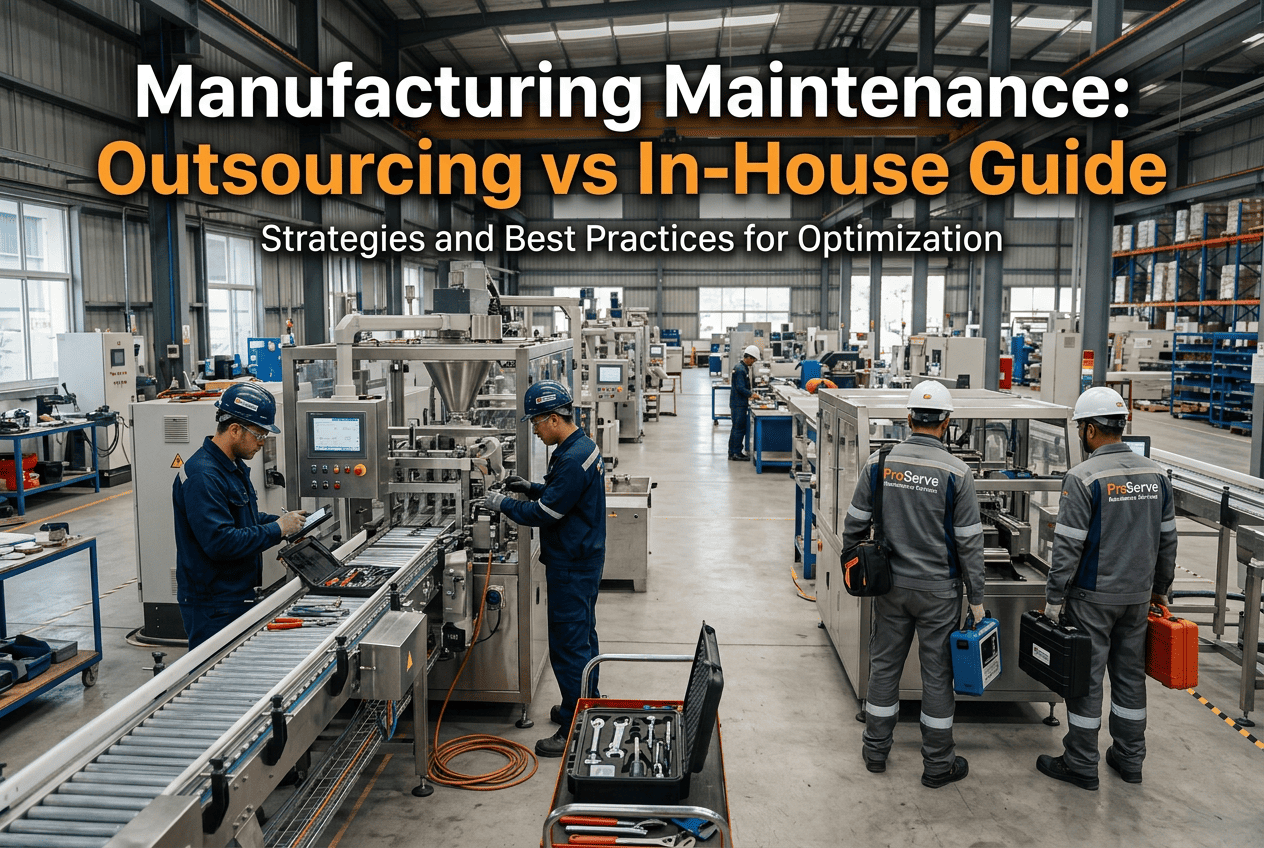
Every plant manager eventually faces the same question: Should we build a larger in-house maintenance team or bring in outside contractors for critical assets? The wrong choice creates downtime, quality problems, and hidden costs that do not show up on the first invoice. The right choice balances cost, control, and technical capability — but it depends entirely on your asset mix, shift structure, and tolerance for risk. Oxmaint helps plants track the real cost-per-hour of both models so you can make a data-driven staffing decision before a breakdown forces your hand.
Maintenance Strategy
Outsourcing vs. In-House Manufacturing Maintenance
Neither model is universally better. The best fit depends on asset criticality, production schedule flexibility, and whether you need deep institutional knowledge or variable-cost labor. Here is how to decide — with real cost and performance data.
34%
of plants outsource at least half of maintenance labor (Plant Engineering)
2-5x
higher cost for emergency contractor labor vs. scheduled in-house
48%
faster MTTR with in-house teams on complex assets with known history
Total Cost of Ownership: In-House vs. Outsourced
Direct labor rates tell only part of the story. The full comparison includes overhead, benefits, training, travel, minimum billing hours, and productivity differences.
In-House Technician
$38–52 /hour loaded cost
Base wage: $28–38/hr
Benefits + overhead: +35–40%
Training + PPE: +$3,200/year
Tooling amortization: +$0.75–1.50/hr
Best for: Daily PMs, emergency response on critical assets, institutional knowledge retention
Outsourced Contractor
$85–175 /hour billable rate
Standard rate (scheduled): $85–120/hr
Emergency/call-out rate: $150–250/hr
Travel + per diem: +$150–400/day
Minimum billing: 4–8 hours per visit
Best for: Specialized work, peak demand coverage, OEM-specific repairs
Quality & Response Time: The Hidden Performance Gap
Beyond cost, the real difference between in-house and outsourced maintenance shows up in how fast work gets done and how often repairs last.
Mean Time to Repair (MTTR)
In-House
2.4 hours
Outsourced
4.6 hours
In-house teams diagnose faster because they know asset history. Contractors start from zero on every visit.
First-Time Fix Rate
In-House
94%
Outsourced
81%
Contractor rework rates are higher due to lack of asset-specific failure pattern knowledge.
Emergency Response (Hours)
In-House
0.5–2 hrs
Outsourced
4–24 hrs
Contractor travel and scheduling delays add hours or days to emergency response times.
Decision Matrix: When to Outsource vs. When to Keep In-House
| Decision Factor | Better Model | Why | Key Metric |
|---|---|---|---|
| Asset Criticality (Tier 1) | In-House | Deep asset history reduces diagnosis time; institutional knowledge prevents repeat failures | In-house MTTR 40–60% faster on complex failures |
| Low-Criticality / Non-Urgent | Outsource | Variable workload does not justify full-time headcount; contractors absorb demand peaks | Outsource costs 15–25% less than in-house for non-urgent work |
| OEM-Specific Repair | Outsource | Contractors with OEM training have specialized tools and warranty protection | Contractor warranty covers parts + labor vs. in-house parts-only |
| 24/7 Emergency Coverage | In-House | Contractor call-out rates create unpredictable costs; in-house on-call rotation is lower total cost | In-house on-call is 60–70% cheaper per emergency response |
| Seasonal / Project Work | Outsource | Contractors scale up for shutdowns, overhauls, and capital projects without permanent overhead | Avoids 8–12 months of idle labor costs between projects |
| Knowledge Retention | In-House | Outsourced contractors carry zero institutional knowledge between visits | In-house teams build failure pattern libraries over years |
Plants that treat maintenance as a single model (all in-house or all outsourced) consistently pay more than plants that use a hybrid approach. The most cost-effective strategy keeps in-house teams for critical assets and predictable work, then layers contractors for specialized tasks, peak demand, and planned overhauls.
The Hybrid Model: Best of Both Worlds
Most high-performing plants maintain a small core in-house team and supplement with contractors. Here is how the staffing mix typically breaks down by plant size.
Small Plant
Under 50 employees, 1–2 production lines
One senior in-house technician + contractors for PMs, specialized repairs, and backup coverage
Medium Plant
50–200 employees, 3–10 production lines
In-house team of 3–7 technicians covers daily work; contractors for overhauls, projects, and niche skills
Large Plant
200+ employees, 10+ production lines, 24/7 operation
Full in-house team for most assets; contractors reserved for OEM-specific work, capital projects, and seasonal peaks
Optimize Your Maintenance Staffing Mix
Stop Guessing Whether In-House or Outsourced Saves You Money
Oxmaint tracks actual labor hours, contractor costs, and MTTR by asset — so you know exactly where in-house teams are more cost-effective and where contractors make sense. Get your plant's hybrid staffing recommendation.
How to Transition Between Models Without Downtime
Moving from one maintenance model to another is risky if not planned correctly. Here is a phased approach that keeps production running.
Phase 1
Audit & Document
Document all asset failure histories, repair procedures, and parts lists. Without this documentation, transitioning to contractors or new in-house hires will recreate knowledge gaps.
Phase 2
Parallel Run
Run both models side by side for 4–8 weeks. Your in-house team works alongside new contractors or new hires, transferring knowledge before anyone leaves or is reduced.
Phase 3
Phased Transition
Move assets in batches, not all at once. Start with low-criticality assets to test the new model, then move to Tier 2 assets, and finally Tier 1 critical assets.
Phase 4
Measure & Adjust
Track MTTR, rework rates, and total cost for 90 days after transition. Compare against baseline to validate the new model delivers expected improvements.
Plants that skip the parallel run phase experience 3x higher downtime during transition than those that maintain overlap coverage for 4–8 weeks.
Hidden Risks of Each Model
In-House Risks
- Fixed labor cost regardless of workload — idle time is pure waste
- Training costs for skills used only occasionally
- Vacation, sick leave, and turnover create coverage gaps
- Benefits and overhead add 35–40% to base wages
Outsourced Risks
- No institutional knowledge — contractors start from zero every visit
- Emergency call-out rates create budget uncertainty
- Quality varies widely between contractors and individual technicians
- Travel time billed as labor — you pay for windshield time
- Minimum billing hours inflate cost of small repairs
Frequently Asked Questions
How do we calculate the true break-even point between hiring a technician and using contractors?
Calculate total annual loaded cost of a new in-house technician (wage + benefits + training + tools + overhead). Divide by average contractor hourly rate for similar work. The result is the number of contractor hours per year that would equal one in-house technician. If you consistently need more than that many hours, in-house is cheaper. Oxmaint's cost tracking module automates this calculation using your actual labor and contractor invoice data.
What types of maintenance are almost always better to outsource?
Specialized work requiring OEM certifications (robotics, laser alignment, vibration analysis), annual or semi-annual overhauls, warranty-protected repairs, and one-time capital installation projects. Also outsource work that requires tools your plant does not own and will not use enough to justify purchase.
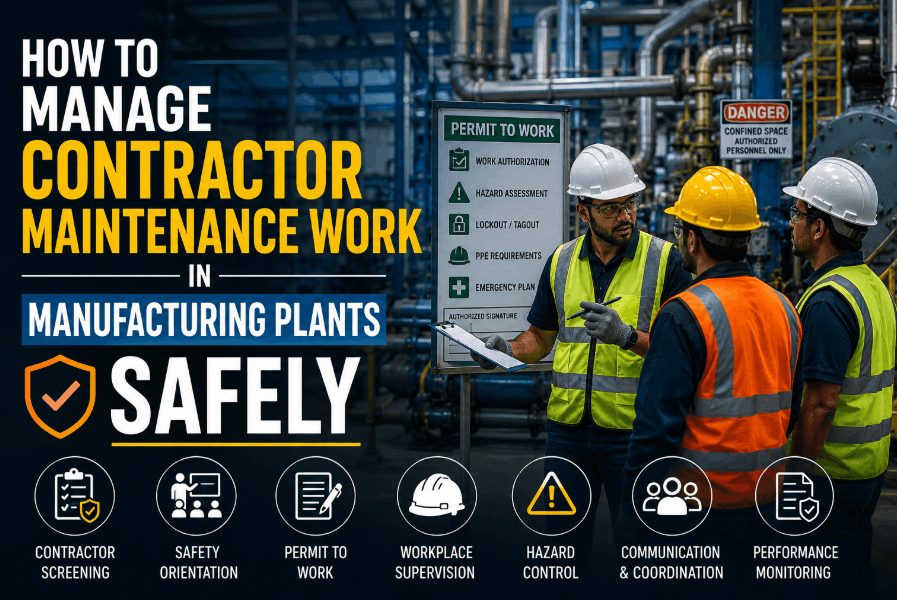
How do we manage quality and safety with outside contractors?
Maintain a pre-qualified contractor list with safety records, insurance verification, and past performance reviews. Require site-specific safety training for every contractor before they enter the plant floor. Use a standardized work order and sign-off process that documents what was done and any outstanding issues. Book a demo to see how Oxmaint tracks contractor performance and safety compliance.
Can a hybrid model work for plants with only one shift?
Yes. Single-shift plants are often ideal for hybrid models. Keep one or two in-house technicians for daily PMs and emergency response. Outsource larger repairs, projects, and any work that would require overtime or weekend shifts. This keeps your fixed labor cost low while maintaining coverage for routine needs.
How long does it take to transition from fully outsourced to hybrid model?
Typical transition takes 3–6 months. Month 1: document asset histories. Months 2–3: parallel run with contractors and new in-house team. Months 4–6: phased handoff of assets. The most common mistake is rushing the parallel run phase.
Make Data-Driven Staffing Decisions
Know Exactly When to Use Contractors vs. Your Own Team
Oxmaint gives you real cost-per-hour data for every asset, every technician, and every contractor. Stop guessing which model saves you money — see the actual numbers before your next staffing decision.