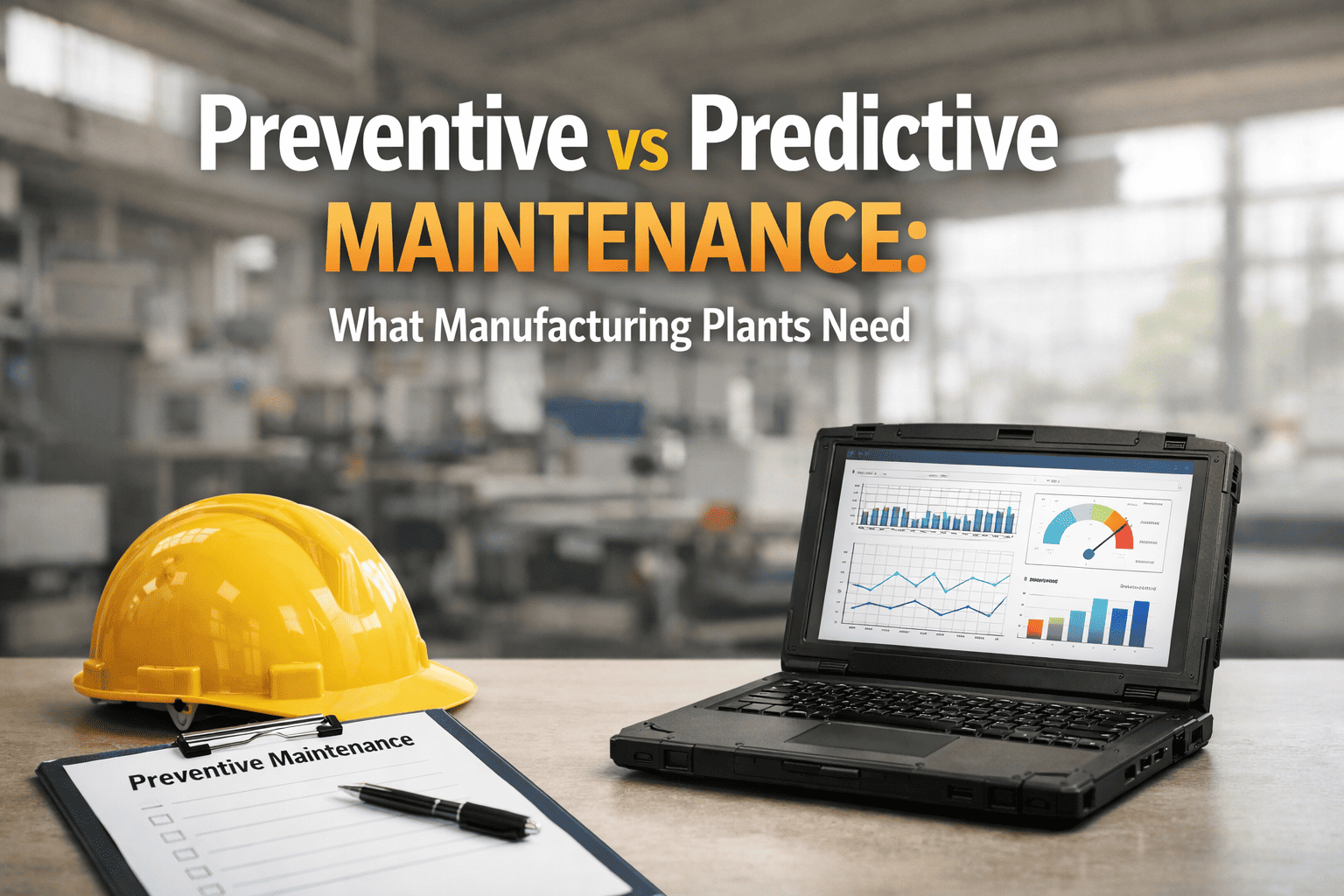
The debate over predictive versus preventive maintenance is not really about technology anymore — it is about money. In 2026, preventive maintenance averages $127,000 per unit per year on heavy manufacturing equipment. Predictive maintenance on the same assets averages $84,000. That is a $43,000 annual saving per unit before you count the downtime that predictive catches and preventive misses. McKinsey and the US Department of Energy both place predictive ROI at between 10:1 and 30:1 within 12–18 months of deployment. And yet 88% of manufacturing plants still run primarily on preventive schedules, with two-thirds of maintenance work still reactive or calendar-driven. The smartest plants in 2026 are not picking one strategy — they are matching the strategy to the asset, using predictive on the critical 10–20% of equipment that drives 80% of risk, and keeping preventive schedules on everything else. Start a free OxMaint trial to run both strategies in one platform with asset criticality scoring and ROI tracking built in, or book a demo to see how hybrid programmes deliver the best of both.
Predictive vs Preventive Maintenance: Which Is Right for Your Plant?
A practical, cost-grounded comparison of the two dominant maintenance strategies in 2026 — with a clear framework for choosing the right one per asset class, not per plant.
annual cost per unit
downtime rate
plants using it
annual cost per unit
downtime rate
ROI in 12–18 mo
The Real Difference: What Triggers the Work Order
Preventive and predictive maintenance both exist to stop failures before they happen. The difference lies in what triggers the next piece of work. Preventive fires a work order on a schedule. Predictive fires a work order on a signal. That single distinction drives every downstream difference in cost, downtime, parts inventory, and team workload.
Side-by-Side: The Full Comparison
The numbers below reflect 2026 benchmarks from McKinsey, the US Department of Energy, Siemens, Fluke, and HVI — across discrete manufacturing, process industries, and heavy equipment fleets. These are not vendor marketing numbers. They are what audited deployments actually deliver.
| Dimension | Preventive Maintenance | Predictive Maintenance |
|---|---|---|
| Upfront investment | Low. CMMS and scheduler. $5K–$25K/yr. | Higher. Sensors + platform + training. $50K–$200K start-up. |
| Annual cost per critical asset | ~$127,000 (heavy equipment benchmark) | ~$84,000 (–34%) |
| Unplanned downtime reduction | 30–40% vs reactive baseline | 50–75% vs reactive; 30–50% vs PM |
| Failure warning window | None — failures between schedules unseen | 2–8 weeks advance notice on major failures |
| Parts inventory impact | Safety stock required (20–30% buffer) | Just-in-time ordering; 20–30% inventory reduction |
| Emergency repair premium | Still ~25% of repairs are reactive | Reactive repairs drop to under 10% |
| Equipment lifespan extension | 10–20% vs run-to-failure | 20–40% vs reactive; 10–20% vs PM |
| Skills required | Standard maintenance technicians | Reliability engineers + data literacy |
| Payback period | 6–12 months (very fast) | 12–24 months (compounds over time) |
| ROI multiple (mature programme) | 5:1 vs reactive | 10:1 to 30:1 vs reactive; compounding |
OxMaint Handles Preventive Schedules and Predictive Signals Together
Asset criticality scoring, condition-based triggers, schedule automation, and ROI tracking — all in one workspace. Deploy preventive on day one, layer predictive on critical assets when you are ready.
Which Strategy Belongs on Which Asset?
The answer isn't a single strategy for your whole plant. It's asset-by-asset. Map each piece of equipment against criticality (impact of failure) and predictability (how well time-based maintenance actually works), and the strategy almost picks itself. Here is the tier framework that world-class maintenance teams use in 2026.
The 2026 Cost Math: What Each Strategy Actually Costs
Here is the total cost of ownership for a representative critical asset (one CNC machining centre rated at 4,000 annual run hours) under each of the three dominant strategies. The numbers include maintenance labour, parts, downtime-induced production loss, and expedited freight. They do not include the upside of extended asset life or reduced safety incidents.
Frequently Asked Questions
Do I have to pick one strategy for my whole plant?
What's the minimum investment to start a predictive programme?
Will predictive maintenance eventually replace preventive entirely?
How long before we see savings from switching to predictive?
Do we need a data scientist to run predictive maintenance?
Stop Choosing Sides. Run the Right Strategy on Every Asset.
OxMaint lets you build criticality-tiered maintenance plans — predictive on your A-tier assets, preventive on B, run-to-failure where it makes sense — all tracked in one platform with ROI rolled up by asset, line, and plant.