Quality Management System Software for Manufacturing (ISO 9001)

By Johnson on April 3, 2026

quality-management-system-software-manufacturing-iso-9001

Manufacturing quality is no longer a clipboard-and-checklist game. Every failed inspection, every recall, every ISO audit finding that slips through costs your plant real money—and real customers. OxMaint's quality management system software gives manufacturing teams a single platform to control ISO 9001 compliance, CAPA workflows, audit trails, and document versioning—so quality stops being reactive and starts being a measurable competitive advantage. If your team is still managing quality in spreadsheets or siloed tools, see what an integrated QMS can do for your facility.

THE QUALITY CRISIS IN MANUFACTURING
$8.1B
Lost annually by manufacturers to quality failures and product recalls

67%
Of ISO 9001 audit non-conformances trace back to document control failures

3.4×
More likely to lose a major customer after a second quality incident

40%
Of manufacturers still manage CAPA and corrective actions in spreadsheets
WHAT A REAL QMS COVERS

The Six Pillars of an ISO 9001-Ready Quality Management System

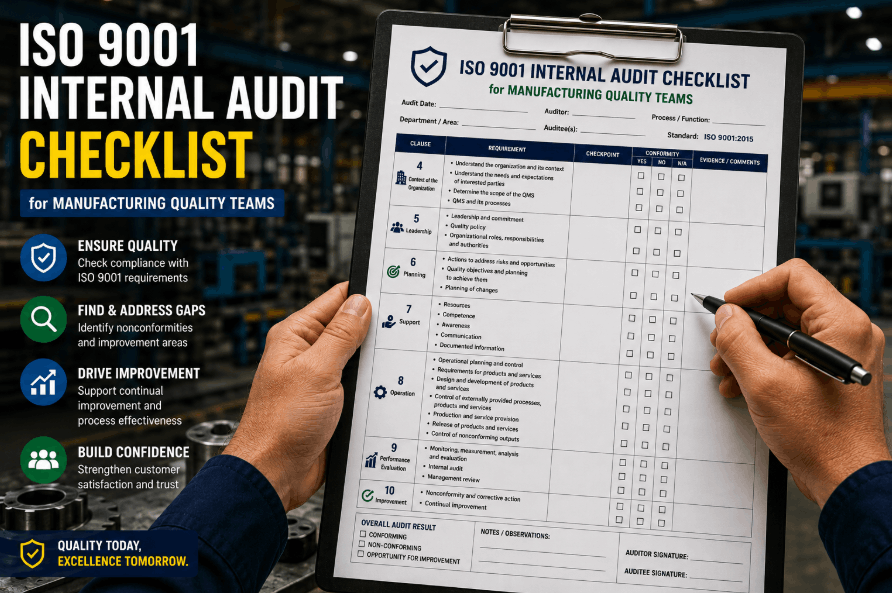
ISO 9001:2015 demands a process-driven, risk-based approach to quality. Here is what every pillar requires—and how OxMaint closes the gap.

01
Document Control
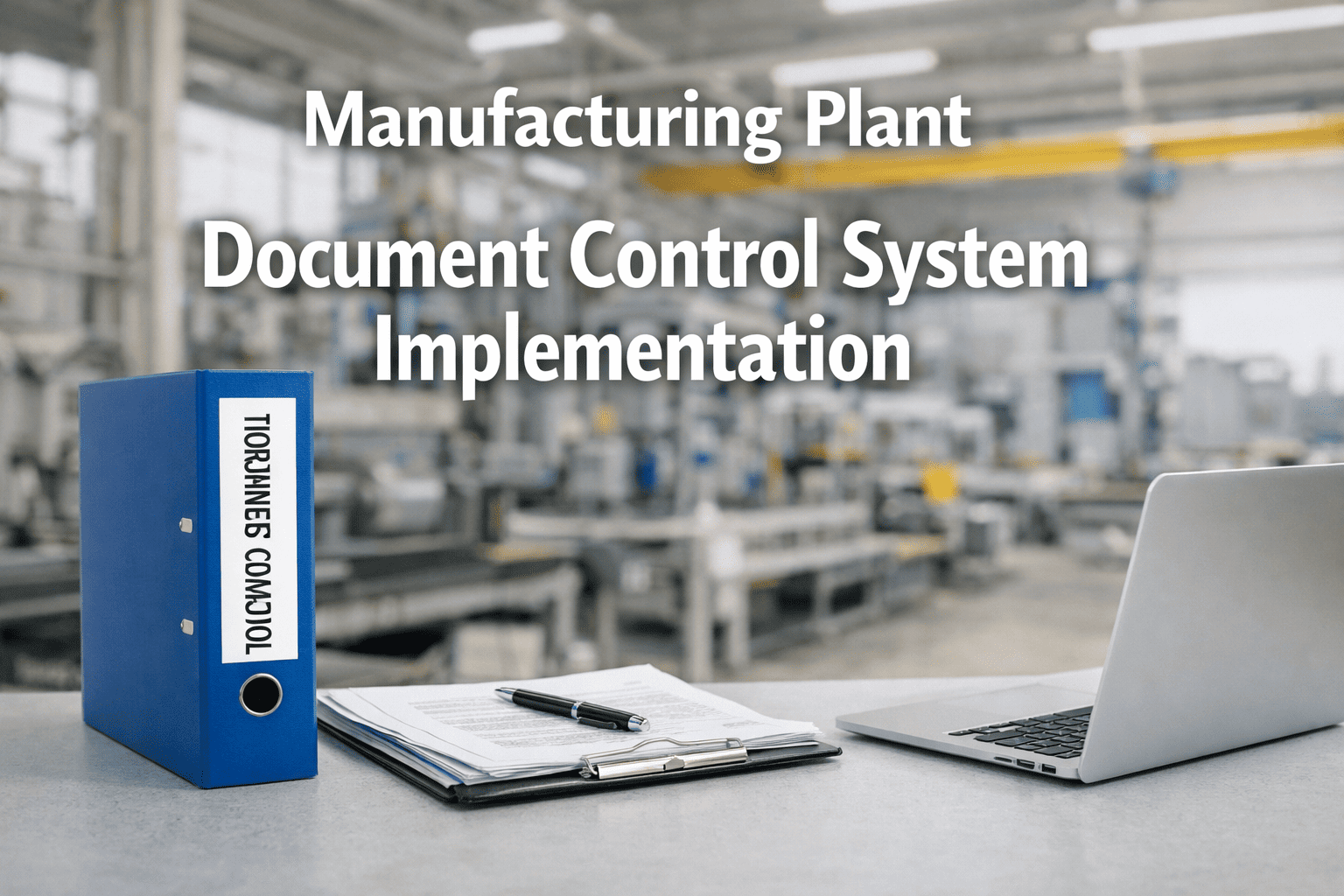
Centralized version control for SOPs, work instructions, quality manuals, and records. Eliminates outdated procedure use on the shop floor and ensures audit-ready traceability at all times.
02
CAPA Management
Corrective and preventive action workflows that capture root cause, assign accountability, track resolution, and verify effectiveness—closing the loop on every non-conformance before it recurs.
03
Audit Management
Scheduled internal and supplier audits with digital checklists, finding capture, and action tracking. Gives auditors instant access to records—no binder-hunting, no last-minute scramble.
04
Non-Conformance Tracking
Log, classify, and route every defect, inspection failure, or customer complaint to the right team with full photographic evidence, severity tagging, and status visibility across the organization.
05
Risk-Based Quality Planning
FMEA-aligned risk registers that connect quality planning to production processes. ISO 9001:2015 mandates risk-based thinking—this is how you document and demonstrate it to auditors.
06
AI Quality Analytics
Real-time defect trend analysis, CAPA resolution rates, and inspection pass/fail dashboards powered by OxMaint's analytics engine—turning quality data into decisions before problems escalate.
READY TO CLOSE QUALITY GAPS
Stop Managing ISO 9001 in Spreadsheets. Start Passing Audits with Confidence.
OxMaint brings document control, CAPA, non-conformance tracking, and audit management into one connected platform. Most manufacturing teams are audit-ready within weeks—not months.
ISO 9001:2015 CLAUSE MAP

How OxMaint Maps Directly to ISO 9001:2015 Requirements

Every clause of ISO 9001:2015 has a corresponding capability in OxMaint. Here is exactly where the standard meets the software.

ISO 9001:2015 Clause Core Requirement OxMaint Capability Coverage
Clause 4.4 Quality Management System & Processes Process mapping, SOP library, workflow documentation Full
Clause 6.1 Risk-Based Thinking & Planning FMEA templates, risk registers, preventive action workflows Full
Clause 7.5 Documented Information Control Version-controlled document library with approval workflows Full
Clause 8.5 Production & Service Provision Control Inspection checklists, work order linkage, real-time QC capture Full
Clause 8.7 Control of Nonconforming Outputs NCR log, quarantine tagging, disposition tracking, CAPA linkage Full
Clause 9.2 Internal Audit Requirements Audit scheduler, digital checklists, finding tracker, close-out reports Full
Clause 10.2 Nonconformity & Corrective Action CAPA workflow engine with root cause, 5-Why, and effectiveness verification Full
Clause 10.3 Continual Improvement KPI dashboards, trend analytics, improvement action tracking Full
THE QMS IMPLEMENTATION PATH

From Quality Chaos to ISO 9001 Certification: A Realistic Timeline


Week 1–2
Gap Assessment & Asset Setup
Map your existing quality processes against ISO 9001 clause requirements. Identify documentation gaps, missing CAPA workflows, and audit frequency shortfalls. Load your equipment and process asset list into OxMaint to anchor all quality records.


Week 3–4
Document Control & SOP Migration
Upload, version-control, and assign approval workflows to all SOPs, work instructions, and quality manuals. Replace paper-based procedures with digitally controlled records that are accessible to technicians on the floor in real time.


Week 5–6
CAPA & NCR Workflow Activation
Configure corrective action workflows with root cause capture, responsibility assignment, and effectiveness verification steps. Activate the non-conformance log and link NCRs directly to work orders and asset records for full traceability.


Week 7–10
Internal Audit Cycle & Pre-Certification Review
Run your first complete internal audit using OxMaint's digital audit checklists. All findings automatically generate CAPA actions. Generate your management review report from live dashboard data—exactly what your certification body will want to see.
PROVEN RESULTS

What Manufacturing Teams Achieve With OxMaint QMS

83%
Reduction in Audit Finding Recurrence
Plants using OxMaint's closed-loop CAPA system see audit finding repeat rates drop sharply because root causes are captured, verified, and monitored—not just logged and forgotten.
70%
Faster CAPA Closure
Automated assignment, escalation, and deadline tracking eliminate the manual follow-up overhead that lets corrective actions stall for weeks.
60%
Less Audit Prep Time
All records, approvals, and audit trails exist in OxMaint already. No scramble to compile binders or chase down signatures before your certification body arrives.
$340K
Avg. Annual Savings
From reduced scrap, lower rework costs, avoided recall expenses, and fewer customer complaints after QMS deployment on OxMaint.
SIDE BY SIDE

Spreadsheet-Based QMS vs OxMaint: The Real Cost of Staying Manual

Manual / Spreadsheet QMS
CAPA tracked in email chains — no accountability trail
Document versions controlled by filename (v2_FINAL_revised)
Audit findings logged in a shared drive folder
NCRs discovered in meetings, not at the point of failure
Quality KPIs compiled manually each month — always late
Certification prep takes 2–4 weeks of frantic documentation
No link between quality failures and maintenance records
OxMaint QMS Platform
CAPA assigned, tracked, escalated, and verified automatically
Controlled document library with approval workflow and history
Audit findings generate CAPA actions instantly in one system
NCRs captured at the source with photo evidence and asset linkage
Live quality dashboards updated in real time, always current
Audit-ready every day — records exist, nothing to compile
Quality events linked to work orders, assets, and maintenance history
FREQUENTLY ASKED

Quality Management System Software: Your Questions Answered

What is quality management system software and why does manufacturing need it?
Quality management system software digitalizes the processes required to consistently meet customer and regulatory quality standards—document control, CAPA, audits, non-conformance tracking, and continuous improvement. In manufacturing, manual QMS methods create accountability gaps, slow corrective actions, and expose facilities to certification failures. OxMaint's QMS platform replaces disconnected spreadsheets and paper systems with a single source of quality truth that keeps every team member aligned and every record audit-ready.
How does OxMaint help manufacturers achieve and maintain ISO 9001 certification?
OxMaint directly addresses the core ISO 9001:2015 requirements—document information control (Clause 7.5), non-conformance management (Clause 8.7), CAPA (Clause 10.2), and internal audits (Clause 9.2). The platform creates the traceability, evidence, and process documentation that certification bodies need to verify compliance. Book a session with our team to walk through how OxMaint maps to your specific certification scope and timeline.
What is CAPA software and how does it reduce quality failure recurrence in manufacturing?
CAPA (Corrective and Preventive Action) software structures the process of identifying root causes, assigning corrective tasks, tracking resolution, and verifying that the problem does not recur. Without structured CAPA, the same quality failures repeat because fixes are informal and unverified. OxMaint's CAPA module uses 5-Why root cause capture, automated deadline tracking, and an effectiveness check step—cutting repeat audit finding rates by an average of 83% across manufacturing deployments. Start your free account to activate CAPA workflows today.
How long does QMS software implementation typically take for a manufacturing facility?
Most OxMaint customers have core QMS functions—document control, NCR logging, and CAPA workflows—operational within 2 to 4 weeks. Full ISO 9001 audit readiness, including completed internal audit cycles and populated records, typically takes 8 to 12 weeks depending on facility size and existing documentation quality. Schedule a scoping call and our team will give you a realistic implementation timeline based on your current processes and certification goals.
Can OxMaint QMS integrate with existing manufacturing systems like ERP or MES?
OxMaint is built for integration with manufacturing environments, including ERP systems and maintenance platforms. Quality events link directly to work orders, asset records, and maintenance histories—giving quality managers full context on whether a defect stems from equipment condition, process deviation, or supplier input. Log into OxMaint to explore integration capabilities and see how quality and maintenance data connect in a single operational view.
YOUR NEXT AUDIT IS ALREADY BEING DECIDED
Every Day Without a Real QMS Is a Day Quality Slips Through the Cracks
OxMaint gives your manufacturing team complete ISO 9001 QMS coverage—document control, CAPA, audits, and AI-driven analytics—in a platform your team will actually use. Join manufacturers who stopped firefighting quality issues and started preventing them.

Share This Story, Choose Your Platform!