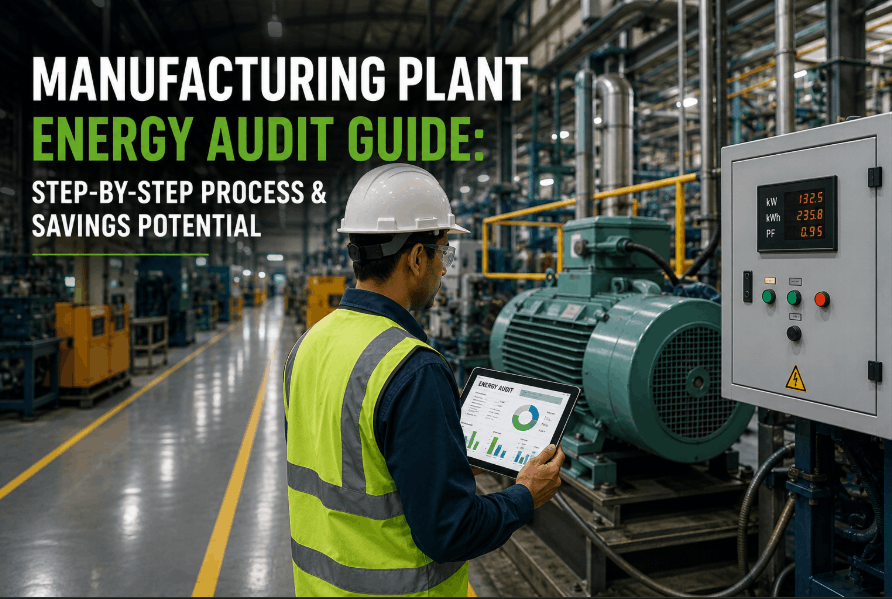
Manufacturing plants running energy-intensive processes—metal smelting, chemical production, food processing—face a harsh reality: energy bills consume up to 40% of operating costs, yet most facilities still manage energy reactively, addressing problems only after they spike on the monthly invoice. ISO 50001 changes that equation entirely by embedding a proactive energy management system into daily operations, cutting energy use by 12% within 15 months on average according to U.S. Department of Energy data. In 2026, with energy prices volatile and regulators in the EU and UK pushing ISO 50001 toward mandatory compliance status, manufacturers who haven't yet built an Energy Management System (EnMS) are taking on avoidable financial and regulatory risk. This guide walks you through every layer of ISO 50001—from core requirements and PDCA structure to KPIs, audit checklists, and the path to certification—so your facility can stop reacting and start leading on energy performance.
Why ISO 50001 Is a Manufacturing Priority in 2026
12%
Average Energy Reduction
In first 15 months (U.S. DOE data)
40%
Operating Cost Share
Energy in heavy manufacturing
180+
Countries Adopted
Globally recognized standard
2024
Latest Amendment
Climate action requirements added
What Is ISO 50001 and Why It Matters for Manufacturers
ISO 50001:2018 (amended 2024) is the international standard for Energy Management Systems. Unlike compliance frameworks that tell you what not to do, ISO 50001 tells you how to systematically find, measure, and close energy waste across your entire operation. It follows the same Plan-Do-Check-Act (PDCA) structure used in ISO 9001 (quality) and ISO 14001 (environment), making integration with existing management systems straightforward.
P
Plan
Set energy policy
Identify Significant Energy Uses (SEUs)
Establish Energy Baseline (EnB)
Define Energy Performance Indicators (EnPIs)
Set objectives and targets
D
Do
Implement action plans
Train and build competency
Define procurement specifications
Control operational processes
Execute energy projects
C
Check
Monitor and measure EnPIs
Compare vs. Energy Baseline
Conduct internal audits
Track regulatory compliance
Management review
A
Act
Correct nonconformities
Implement preventive actions
Update energy review
Revise targets as needed
Drive continual improvement
Core ISO 50001 Requirements (Clauses 4–10)
The standard is built around ten clauses. Clauses 4 through 10 are the mandatory requirements that define your EnMS. Understanding each clause is the foundation of both implementation and audit readiness.
Energy Performance Indicators (EnPIs): The Measurement Engine
EnPIs are the quantitative heartbeat of ISO 50001. Without them, energy management is guesswork. The right EnPIs for a manufacturing facility vary by process type, but every plant needs a structured set covering production, facility, and equipment levels.
Production Level
Energy per unit produced
kWh / tonne of output
GJ / 1,000 units
BTU / product batch
Facility Level
Building and utility consumption
kWh / sq. meter / year
Compressed air leakage %
HVAC energy intensity
Equipment Level
Process and machine performance
Motor efficiency % per shift
Boiler fuel-to-steam ratio
Chiller COP monthly average
Carbon / GHG Level
Emissions-linked indicators
CO₂e / MWh consumed
Scope 1+2 intensity ratio
Renewable energy share %
Track Your EnPIs Without Spreadsheet Chaos
Oxmaint centralizes your energy data, automates EnPI calculations, and keeps your ISO 50001 audit trail always ready—no manual effort.
Step-by-Step ISO 50001 Implementation Roadmap
Most manufacturing plants can reach a certification-ready state within 9 to 18 months. The timeline depends on the size of the facility, the complexity of energy systems, and how much documentation already exists. Here is a practical phase-by-phase breakdown.
01
Gap Assessment & Scoping
Weeks 1–4
Benchmark current energy management practices against ISO 50001 clause requirements. Define the EnMS scope—which facilities, processes, and energy types are included. Identify what documentation exists and what needs to be created.
02
Energy Review & Baseline
Weeks 4–10
Collect at least 12 months of energy consumption data. Identify all Significant Energy Uses (SEUs)—typically the top 5–10 energy consumers accounting for 80% of total use. Establish the Energy Baseline (EnB) as the reference point for measuring future improvement.
03
EnPI Definition & Targets
Weeks 8–14
Design EnPIs that reflect each SEU. Set measurable energy objectives (e.g., reduce compressed air energy by 15% in 12 months). Assign owners, resources, and review schedules to each objective. Link targets to the management review cycle.
04
Policy, Roles & Training
Weeks 10–16
Draft and publish the energy policy with top management signature. Appoint an Energy Management Representative and team. Deliver competency training to all personnel whose work affects SEUs. Document training records for audit readiness.
05
Operational Controls & Monitoring
Months 4–10
Create work instructions for operating SEUs at optimal efficiency. Establish the monitoring, measurement, and analysis plan. Implement metering where gaps exist. Set calibration schedules for all energy measurement instruments.
06
Internal Audit & Management Review
Months 9–14
Conduct a full internal audit against ISO 50001 clause requirements. Hold a formal management review meeting. Close all nonconformities before applying for certification. Ensure the system has operated for at least one full audit cycle.
07
Stage 1 & Stage 2 Certification Audit
Months 12–18
External certification body conducts Stage 1 (document review) and Stage 2 (on-site verification). Address any findings. Achieve ISO 50001 certification—valid for 3 years with annual surveillance audits.
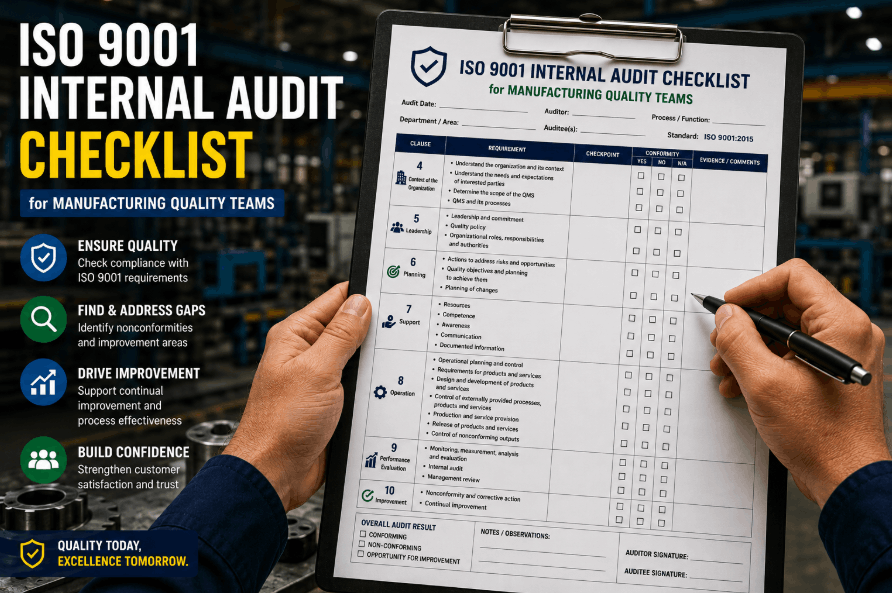
ISO 50001 Audit Checklist for Manufacturing
When an external auditor walks your floor, they are looking for evidence across four core areas: documentation, implementation, measurement, and improvement. Use this checklist to self-assess before the certification body arrives.
Documentation
Energy policy signed and dated by top management
Defined EnMS scope covering all included facilities
Energy review report with SEU identification
Documented Energy Baseline with historical data
EnPI definitions, formulas, and targets on record
Implementation
Energy roles and responsibilities assigned in writing
Training records for all SEU-related personnel
Operational controls documented for each SEU
Energy procurement specifications defined
Communication plan in place and active
Measurement & Monitoring
Monitoring and measurement plan documented
Calibration records for all energy meters
EnPI trend data showing performance vs. baseline
Legal compliance evaluation completed
Climate change context assessed (2024 amendment)
Improvement Evidence
Internal audit completed with documented findings
Corrective action records for all nonconformities
Management review minutes on file
At least one cycle of continual improvement documented
Objectives and targets progress tracked and reported
The 2024 Climate Amendment: What Changes for Your Plant
2024 UPDATE
Climate Risk Assessment Required
Organizations must now formally assess whether climate change affects their energy management system—including heatwaves increasing cooling demand, weather disruption affecting production, and carbon pricing raising energy costs.
Stakeholder Climate Expectations
You must evaluate whether external stakeholders—customers, regulators, investors—have expectations related to climate action that affect your EnMS scope or objectives.
No Structural Overhaul Needed
The 2024 amendment does not rewrite the standard. Existing ISO 50001 certified organizations need to add a climate context review to their next management review cycle to maintain conformance.
Ready to Build Your ISO 50001-Compliant EnMS?
Oxmaint gives manufacturing teams a centralized platform to manage EnPIs, track SEUs, schedule audits, and generate reports your certification body will accept—all in one place.
ISO 50001 Benefits: Real Numbers from Manufacturing
Cost Reduction
10–30%
Typical energy cost savings achieved by manufacturing facilities within 2 years of ISO 50001 implementation through systematic identification of waste and inefficiency.
GHG Emissions
Scope 1+2
ISO 50001 directly reduces Scope 1 (fuel combustion) and Scope 2 (purchased electricity) emissions, the two largest controllable sources for most manufacturers.
Regulatory Shielding
EU / UK
In the EU and UK, ISO 50001 certification can exempt high-energy facilities from mandatory energy audits, reducing regulatory burden and audit costs significantly.
Supply Chain Access
OEM Requirement
Major automotive, electronics, and industrial OEMs are requiring tier-1 suppliers to hold ISO 50001 certification as part of their Scope 3 emissions reduction programs.
Frequently Asked Questions
How long does ISO 50001 certification take for a manufacturing plant?
Most manufacturing facilities achieve certification in 12 to 18 months from kickoff to the Stage 2 audit, depending on facility size and existing data infrastructure. Plants with ISO 9001 or ISO 14001 already in place can move faster since documentation frameworks overlap.
Oxmaint can accelerate the process by centralizing your energy data and audit trail from day one, cutting months off your preparation timeline.
Is ISO 50001 mandatory for manufacturers?
In the EU and UK, ISO 50001 certification is either legally required or provides a compliance exemption for high-energy-consuming organizations. In the US, it remains voluntary but is increasingly expected by federal programs, large customers, and investors. The trajectory is clear: voluntary today, expected tomorrow.
Speak to our team to understand what applies to your facility specifically.
What is an Energy Baseline and why does it matter?
The Energy Baseline (EnB) is the reference-period energy consumption data your facility uses to measure improvement over time. Without a solid baseline, you cannot demonstrate that your EnMS is actually delivering performance gains—which is what certification auditors verify. The baseline must cover at least 12 months of data and account for relevant variables like production volume and weather.
Can a small or mid-size manufacturer implement ISO 50001?
Yes. ISO 50001 is explicitly designed to be scalable across organizations of any size. The 2018 revision specifically improved accessibility for SMEs. A smaller facility will have fewer Significant Energy Uses to manage, making the audit scope narrower and less resource-intensive. The financial ROI tends to be proportionally strong for SMEs because energy waste is often highest where processes are least optimized.
How does ISO 50001 connect to Scope 1, 2, and 3 emissions reporting?
ISO 50001 directly targets Scope 1 (on-site fuel combustion) and Scope 2 (purchased electricity) emissions by requiring systematic measurement and reduction of energy consumption. While it is not a carbon accounting standard, the EnPI data it generates feeds directly into GHG inventory reports and ESG disclosures.
Oxmaint's energy tracking module maps consumption data to emission factors automatically, bridging ISO 50001 compliance and carbon reporting in one workflow.
Stop Leaving Energy Savings on the Table
Join manufacturers using Oxmaint to implement ISO 50001 faster, track EnPIs in real time, and walk into certification audits fully prepared. No spreadsheets. No guesswork.

-audit-checklist-for-manufacturing-plants.png)