When a 95-year-old Michigan auto parts supplier finally abandoned their paper-based production logs in 2023, the transition revealed a staggering truth: their actual equipment effectiveness was 34% lower than management believed. Three months into their digital transformation, real-time dashboards exposed hidden bottlenecks that had cost them $1.8 million annually in phantom capacity. This isn't an isolated case—industry research shows that 68% of manufacturers overestimate their operational efficiency by 20-40% due to delayed, incomplete, or manipulated manual data. Digital transformation isn't about trendy technology; it's about replacing assumptions with facts, reactions with predictions, and chaos with control. This comprehensive guide provides a proven roadmap for manufacturing leaders to assess readiness, select technologies, manage organizational change, and measure ROI throughout their Industry 4.0 journey. Ready to uncover your plant's hidden potential? Start with automated data capture that shows you what's really happening on your factory floor right now.
Level 1
Manual & Reactive
Paper logs, clipboard rounds, spreadsheet tracking, firefighting mode, tribal knowledge dependency
OEE: 45-60%
Data Latency: 24-72hrs
Level 2
Digital Recording
CMMS deployed, digital work orders, basic sensor monitoring, siloed systems, limited analytics
OEE: 60-70%
Data Latency: 4-12hrs
Level 3
Connected & Visible
Integrated systems, real-time dashboards, automated alerts, predictive capabilities emerging, data-driven decisions
OEE: 70-82%
Data Latency: Real-time
Level 4
Optimized & Autonomous
AI-driven optimization, self-correcting processes, digital twins, autonomous decision-making, continuous improvement loops
OEE: 82-95%
Data Latency: Predictive
Core Technology Pillars of Digital Transformation
Foundation layer connecting machines, sensors, and systems to create a single source of truth.
Key Components:
Industrial IoT sensors, edge computing, cloud storage, data lakes, API integrations, network infrastructure
Typical Investment: $40K - $200K for mid-size plant
Implementation: 8-16 weeks
Real-time monitoring and visualization tools that surface production metrics, quality data, and equipment status.
Key Components:
MES platforms, production dashboards, mobile apps, andon systems, digital work instructions, operator interfaces
Typical Investment: $25K - $150K for mid-size plant
Implementation: 6-12 weeks
Analytics and AI systems that forecast failures, optimize schedules, and recommend actions before problems occur.
Key Components:
Predictive maintenance, demand forecasting, quality prediction, energy optimization, machine learning models
Typical Investment: $30K - $180K for mid-size plant
Implementation: 12-24 weeks
Workflow automation, robotic systems, and autonomous decision-making that reduce manual intervention.
Key Components:
RPA for administrative tasks, collaborative robots, automated quality gates, smart scheduling, inventory automation
Typical Investment: $50K - $300K for mid-size plant
Implementation: 12-28 weeks
The Six-Phase Transformation Roadmap
Discovery & Assessment
4-6 Weeks
Critical Activities:
- Document current state processes and pain points through value stream mapping
- Assess technology infrastructure readiness and identify integration gaps
- Interview stakeholders across operations, maintenance, quality, and IT
- Calculate baseline metrics for OEE, downtime costs, and quality issues
- Benchmark against industry standards to quantify opportunity size
Deliverable: Maturity assessment report with prioritized improvement opportunities
Strategy & Business Case
3-4 Weeks
Critical Activities:
- Define 3-year vision with specific capability targets per pillar
- Build financial model showing phased investments and expected returns
- Create technology selection criteria and evaluate vendor options
- Design governance structure with steering committee and working teams
- Develop change management plan addressing skills, culture, and communication
Deliverable: Board-ready business case with phased budget and ROI projections
Quick Win Pilot
8-12 Weeks
Critical Activities:
- Deploy initial technology on single production line or asset group
- Train core team on new tools and establish standard operating procedures
- Collect before/after data to validate assumptions in business case
- Document lessons learned and refine rollout approach for next phases
- Showcase results to build organizational momentum and secure ongoing support
Deliverable: Proven ROI on pilot with documented playbook for scaling
Scaled Deployment
16-28 Weeks
Critical Activities:
- Roll out core infrastructure and visibility tools plant-wide
- Integrate new systems with existing ERP, CMMS, and quality platforms
- Conduct waves of user training with role-specific curricula
- Establish data governance policies and assign ownership responsibilities
- Launch performance management system tracking new KPIs
Deliverable: Fully operational digital foundation across all departments
Advanced Capabilities
20-32 Weeks
Critical Activities:
- Layer in predictive analytics and AI/ML models on mature data foundation
- Implement advanced automation for repetitive workflows and decisions
- Build custom analytics for process optimization and root cause analysis
- Extend digital capabilities to supply chain partners and customers
- Develop digital twin models for scenario planning and virtual commissioning
Deliverable: AI-powered optimization delivering measurable efficiency gains
Continuous Evolution
Ongoing
Critical Activities:
- Monitor technology landscape for emerging capabilities worth piloting
- Refine algorithms and thresholds based on accumulating operational data
- Expand use cases as team capabilities and organizational trust grow
- Share best practices across facilities and replicate wins systematically
- Maintain competitive advantage through relentless incremental improvement
Deliverable: Self-sustaining innovation culture with embedded digital expertise
Accelerate Your Digital Roadmap by 60%
Pre-integrated platform eliminates months of custom development and system integration
Overcoming the Five Biggest Transformation Barriers
Symptom: Operators bypass new systems, reverting to paper logs and manual workarounds despite technology availability.
Root Cause: Fear of job loss, perception that technology creates more work, lack of involvement in design decisions, inadequate training.
Proven Solution: Co-create workflows with frontline users before deployment. Show how technology eliminates their most frustrating tasks rather than monitoring their performance. Celebrate early adopters publicly and make them change champions for their peers.
2
Legacy System Integration
Symptom: New digital tools create data silos because they cannot connect with 15-year-old ERP or PLC systems lacking modern APIs.
Root Cause: Proprietary protocols, discontinued vendor support, undocumented customizations, IT risk aversion to touching production systems.
Proven Solution: Use middleware platforms that translate between old and new systems without replacing core infrastructure. Start with read-only integrations to build confidence before attempting bidirectional data flows.
Symptom: Analytics produce meaningless results because asset master data is incomplete, production codes are inconsistent, and timestamps are unreliable.
Root Cause: Decades of undisciplined data entry, no governance policies, multiple naming conventions, missing validation rules.
Proven Solution: Launch focused data cleanup sprint on critical asset classes before analytics deployment. Implement validation at point of entry rather than retroactive correction. Assign data stewards with accountability for quality metrics.
Symptom: Technology underutilized because team lacks expertise to configure systems, interpret analytics, or troubleshoot connectivity issues.
Root Cause: Workforce trained on mechanical systems, not data analysis. Limited budget for specialized hires. Vendor dependency for every configuration change.
Proven Solution: Develop internal power users through vendor certifications and hands-on projects. Hire one digital manufacturing engineer to anchor capabilities rather than outsourcing everything. Partner with community colleges for pipeline of tech-savvy technicians.
Symptom: Executives lose confidence when benefits are vague promises of "better visibility" rather than quantified financial outcomes.
Root Cause: Inadequate baseline metrics, inability to isolate technology impact from other variables, focusing on activity instead of outcomes.
Proven Solution: Establish control groups or time-series baselines before deployment. Track hard metrics like tons per hour, first-pass yield, or MTBF rather than soft measures like user satisfaction. Report monthly variance analysis showing technology contribution to P&L.
Financial Impact Model
Software & Sensors
$85K - $220K
Implementation Services
$40K - $95K
Training & Change Management
$25K - $60K
Internal Labor (Backfill)
$30K - $75K
Total First Year
$180K - $450K
Downtime Reduction
$200K - $550K
Quality Improvements
$75K - $180K
Labor Productivity
$60K - $140K
Energy & Materials Optimization
$40K - $110K
Annual Benefit
$375K - $980K
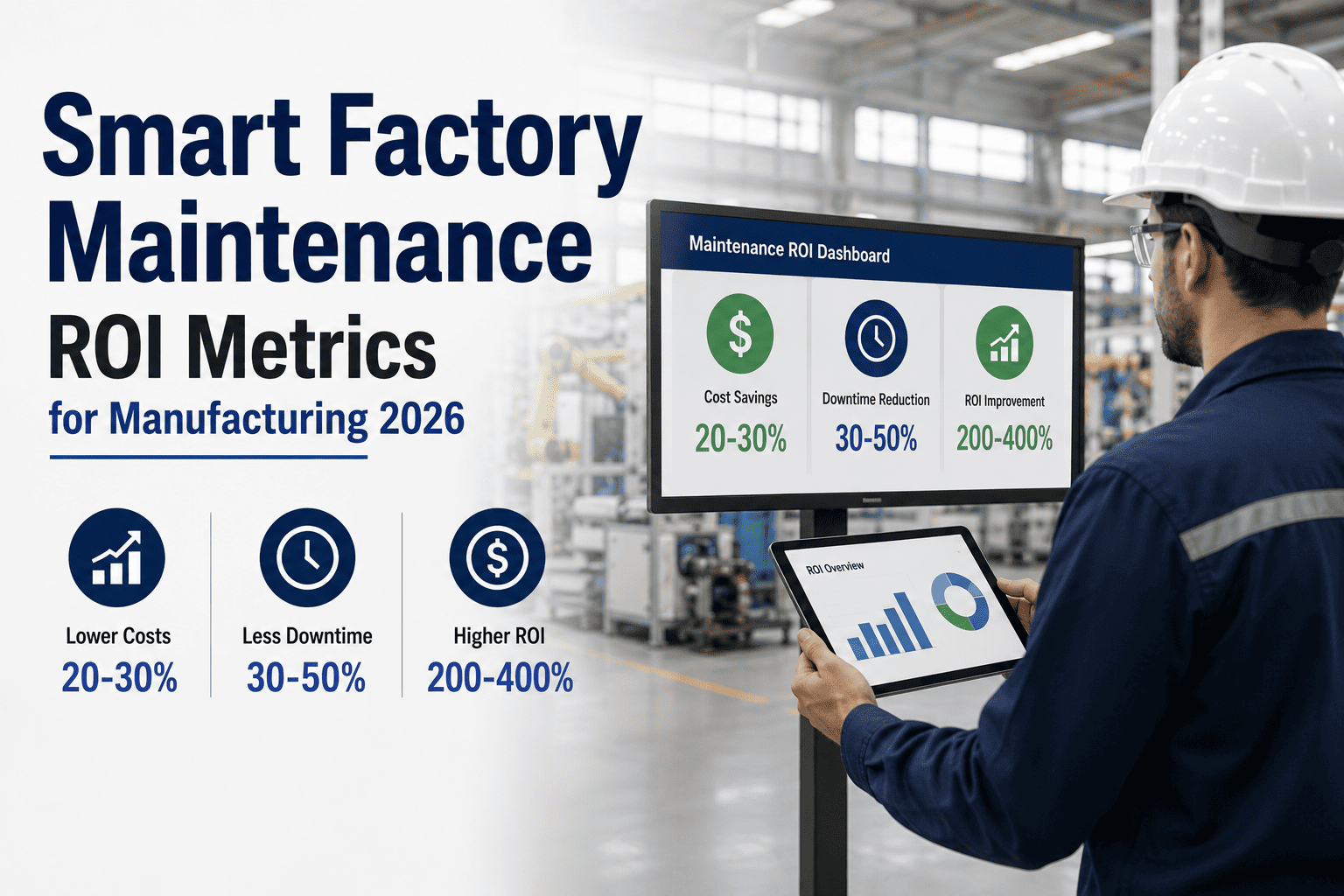
ROI Reality: Most manufacturers achieve payback between 12-20 months with sustained 2:1 to 4:1 annual returns thereafter. The variance depends on starting maturity level, deployment scope, and organizational execution discipline. Looking to model your specific scenario?
Schedule a customized ROI workshop where we analyze your current costs and project technology impact.
Technology Selection Criteria
Frequently Asked Questions
How long does a typical manufacturing digital transformation take from start to measurable results?
Quick wins from pilot deployments typically appear within 3-4 months, while comprehensive plant-wide transformation spans 18-36 months. The key is phased implementation that delivers incremental value rather than waiting years for a big-bang rollout.
Modern platforms can show ROI within the first quarter.
What percentage of our workforce needs digital skills for transformation to succeed?
You need about 15-20% power users who can configure systems and interpret analytics, while the remaining 80% need basic digital literacy to use dashboards and mobile tools. Most successful transformations hire 2-3 digital manufacturing specialists and upskill existing high-performers rather than replacing entire teams.
Can we pursue digital transformation while still running legacy equipment from the 1990s?
Absolutely—retrofit sensors and edge devices can extract data from virtually any equipment regardless of age. The challenge is connectivity, not equipment vintage. Many manufacturers successfully digitize 30-year-old assets using bolt-on IoT solutions that require no machine modifications.
Should we build custom solutions in-house or buy commercial off-the-shelf platforms?
Unless you have very unique processes unsupported by any vendor, buy proven platforms and customize workflows rather than building from scratch. Custom development typically costs 3-5x more and takes 2-3x longer than commercial solutions, with ongoing maintenance burdens that divert IT resources from strategic projects.
How do we maintain cybersecurity when connecting factory floor to cloud systems?
Implement network segmentation separating IT and OT systems, use encrypted data transmission, require multi-factor authentication, and choose vendors with SOC 2 or ISO 27001 certifications. Many manufacturers deploy edge gateways that aggregate data locally before cloud transmission, limiting exposure of production networks.
Transform Your Factory Without the Risk
Proven platform deployed in 200+ plants with average 16-month payback and 98% user adoption