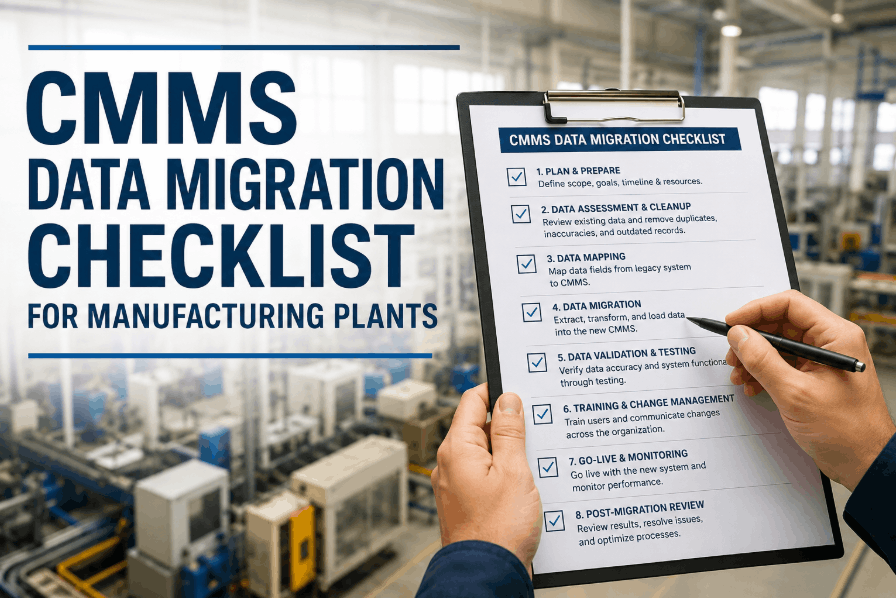
Jumping into predictive maintenance without the right sensors, data infrastructure, or analytical capability is like installing a Formula 1 telemetry system on a bicycle — expensive, overwhelming, and ultimately unused. Predictive maintenance (PdM) delivers measurable ROI only when your plant has reached a baseline maturity in preventive maintenance execution, CMMS data hygiene, and condition monitoring fundamentals. This readiness assessment helps reliability managers and plant engineers objectively evaluate whether their facility is prepared for PdM investment, or whether strengthening PM compliance and reactive maintenance response should come first. OxMaint's platform bridges the gap between traditional PM programmes and predictive strategies, giving you a structured path from reactive firefighting to data-driven intervention.
Predictive Maintenance · PdM Assessment · Readiness Evaluation
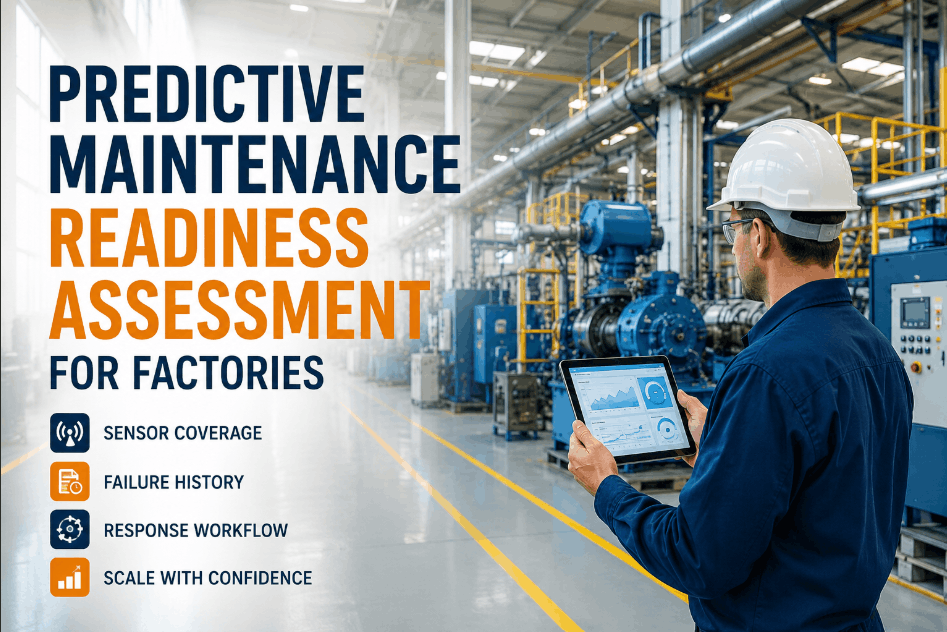
Predictive Maintenance Readiness Checklist for Manufacturing Plants
Six-category maturity assessment covering maintenance culture, data infrastructure, sensor capability, analytical skills, CMMS readiness, and ROI justification for PdM programmes.
65%
Of plants attempt PdM before PM compliance reaches 75%
$250K–$500K
Typical Year 1 investment for pilot PdM programme
18–24 mo
Average time to ROI-positive predictive maintenance
ISO 55000
Asset management framework for PdM maturity
Maintenance Maturity Progression
Level 1
Reactive
Fix on failure
→
Level 2
Preventive
Scheduled PM
→
Level 3
Condition-Based
Monitor thresholds
→
Level 4
Predictive
Forecast failures
→
Level 5
Prescriptive
Auto-optimize
Most manufacturing plants operate at Level 2. PdM readiness requires stable Level 2 execution before advancing to Level 3–4.
Assessment Categories
Maintenance Culture
Data Infrastructure
Sensor Capability
Analytical Skills
CMMS Maturity
Financial Justification
Category 01
Maintenance Culture & Leadership Readiness
Predictive maintenance programmes fail when leadership expects technology to fix cultural problems. Before investing in vibration analysts and thermal cameras, assess whether your team executes the basics consistently and whether management supports data-driven decision-making over gut instinct.
Preventive maintenance compliance rate exceeds 75% for three consecutive months — missed PMs are exceptions, not routine
Requirement: PM completion tracking in CMMS · Validated by: Maintenance Manager · Criticality: High
Work orders are closed within 48 hours of completion with accurate labor hours, parts consumed, and failure codes documented
Requirement: CMMS data quality audit · Validated by: Reliability Engineer · Criticality: High
Root cause analysis (RCA) is performed on recurring failures, not just catastrophic breakdowns — findings drive PM procedure updates
Requirement: RCA documentation library · Validated by: Continuous Improvement Lead · Criticality: Medium
Plant leadership allocates dedicated budget for condition monitoring equipment and does not expect immediate payback within 90 days
Requirement: Capital approval for PdM pilot · Validated by: Plant Manager / CFO · Criticality: High
Maintenance technicians can interpret basic vibration trends and understand the difference between velocity, acceleration, and displacement measurements
Requirement: Technician training records · Validated by: Vibration Analyst · Criticality: Medium
Operations and maintenance teams meet weekly to review asset performance — production does not override maintenance recommendations during these reviews
Requirement: Meeting attendance logs · Validated by: Production Manager · Criticality: Medium
At least one reliability engineer or vibration analyst on staff with ISO 18436 Category II certification or equivalent training
Requirement: Training certifications · Validated by: HR / Maintenance Manager · Criticality: High
Category 02
Data Infrastructure & System Integration
Predictive analytics require clean, timestamped, machine-readable data flowing from sensors to analysis platforms to work order generation. If your current maintenance data lives in Excel spreadsheets and technician notebooks, PdM is premature.
All critical assets have complete equipment records in CMMS — manufacturer, model, serial number, installation date, maintenance history, and failure modes
Requirement: Asset register audit · Validated by: CMMS Administrator · Criticality: High
CMMS can accept external data feeds via API, CSV import, or OPC-UA integration — not locked to manual data entry only
Requirement: CMMS technical documentation · Validated by: IT Manager · Criticality: High
Historical failure data is available for at least 12 months with failure mode classification consistent across all work orders
Requirement: CMMS data export and analysis · Validated by: Reliability Engineer · Criticality: Medium
Plant has WiFi or cellular coverage on production floor for wireless sensor connectivity — dead zones identified and mitigation plan in place
Requirement: Network coverage map · Validated by: IT Infrastructure Lead · Criticality: High
IT department supports industrial IoT deployments and does not block sensor data transmission due to cybersecurity policies without providing alternative solution
Requirement: IT policy review · Validated by: IT Security Manager · Criticality: High
Data storage infrastructure can handle time-series sensor data — minimum 1 TB available for 12 months of high-frequency vibration or thermal data
Requirement: Server capacity audit · Validated by: IT Systems Administrator · Criticality: Medium
OxMaint's CMMS is designed for PdM readiness — API-first architecture, automated sensor integrations, and condition monitoring dashboards are included, not add-on modules you pay extra for.
Category 03
Sensor & Monitoring Capability
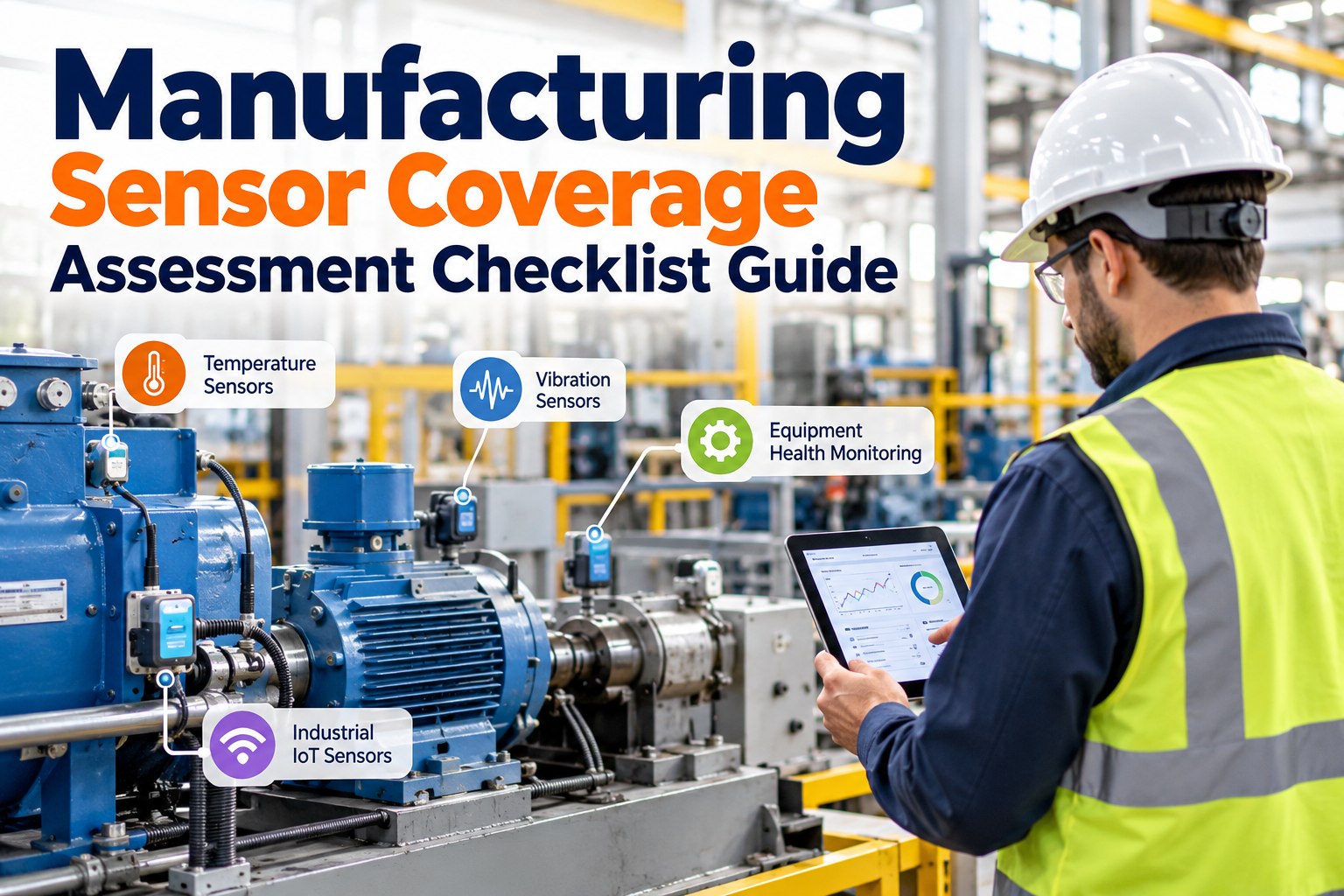
You cannot predict what you cannot measure. Effective predictive maintenance starts with the right sensors installed on the right assets, collecting the right data at the right frequency — not generic IoT devices recording everything and producing noise.
Critical rotating equipment already has vibration monitoring capability — either handheld route-based or permanently installed accelerometers
Requirement: Vibration monitoring inventory · Validated by: Vibration Analyst · Criticality: High
Oil analysis programme is active with samples collected monthly and trended over time — wear metal concentrations and viscosity changes are tracked
Requirement: Oil analysis reports archive · Validated by: Lubrication Technician · Criticality: Medium
Thermal imaging surveys are performed at least quarterly on electrical distribution and high-temperature process equipment
Requirement: Thermal imaging report history · Validated by: Reliability Engineer · Criticality: Medium
Criticality ranking exists for all production assets — critical assets identified for PdM pilot based on downtime cost, failure frequency, and safety impact
Requirement: Asset criticality matrix · Validated by: Maintenance Manager · Criticality: High
Maintenance team understands which failure modes are predictable (bearing wear, insulation degradation) vs unpredictable (catastrophic shaft fracture, random contaminant ingress)
Requirement: Failure mode analysis workshop · Validated by: Reliability Engineer · Criticality: Medium
Budget allocated for wireless sensor network deployment — $2K–$5K per monitored asset depending on sensor type and communication infrastructure
Requirement: PdM capital budget approval · Validated by: Finance Manager · Criticality: High
Category 04
Analytical Skills & Tools
Sensors generate data. Humans generate insight. Predictive maintenance requires people who can interpret FFT spectra, trend regression models, and anomaly detection alerts — not just install dashboards and hope patterns emerge automatically.
Reliability team can perform vibration spectrum analysis and identify gear mesh frequencies, bearing defect frequencies, and imbalance signatures
Requirement: Vibration analysis case studies · Validated by: Vibration Analyst · Criticality: High
At least one team member has experience with statistical process control (SPC), regression analysis, or machine learning fundamentals
Requirement: Training records or academic background · Validated by: Reliability Manager · Criticality: Medium
Team uses data visualization tools (Excel pivot tables minimum, Power BI or Tableau preferred) to identify maintenance trends and present findings to leadership
Requirement: Sample KPI dashboards · Validated by: Maintenance Manager · Criticality: Medium
Budget exists for external vibration analysis training, PdM software vendor support, or reliability consulting services during pilot phase
Requirement: Training budget allocation · Validated by: HR / Finance · Criticality: Medium
Vendor relationships established with condition monitoring equipment suppliers who provide technical support and alarm threshold tuning assistance
Requirement: Vendor service agreements · Validated by: Procurement Manager · Criticality: Medium
Category 05
CMMS Integration & Workflow Automation
Predictive maintenance alerts are useless if they sit in an analyst's inbox instead of triggering work orders. Your CMMS must convert sensor alarms into assigned, prioritized maintenance tasks automatically — no manual transcription from one system to another.
CMMS supports automated work order generation triggered by external alarms or threshold violations from condition monitoring systems
Requirement: CMMS feature documentation · Validated by: CMMS Administrator · Criticality: High
Condition monitoring data can be displayed directly in asset detail pages — technicians view vibration trends and oil analysis results without switching systems
Requirement: CMMS sensor integration capability · Validated by: IT Manager · Criticality: Medium
CMMS mobile app allows technicians to view PdM-generated work orders, access sensor data, and upload field observations from production floor
Requirement: Mobile CMMS functionality test · Validated by: Maintenance Technician · Criticality: Medium
Escalation workflow exists for PdM alerts — low-priority alarms route to planner for scheduling, high-priority alarms notify supervisor immediately
Requirement: Workflow state diagram · Validated by: Maintenance Manager · Criticality: High
Parts inventory system is linked to CMMS — when PdM work order is created, required spare parts are auto-reserved or flagged if out of stock
Requirement: ERP-CMMS integration · Validated by: Stores Supervisor · Criticality: Medium
Category 06
Financial Justification & ROI Framework
Predictive maintenance is a capital investment, not an operating expense upgrade. Leadership needs a clear business case showing avoided downtime costs, extended asset life, and maintenance labor optimization — not vague promises of Industry 4.0 transformation.
Historical downtime costs are documented per asset or production line — measured in lost production volume, revenue impact, or penalty costs
Requirement: Downtime cost database · Validated by: Finance / Production Manager · Criticality: High
Emergency repair costs are tracked separately from planned maintenance — showing cost differential validates PdM investment in failure prevention
Requirement: Work order cost analysis · Validated by: Maintenance Planner · Criticality: Medium
Business case includes realistic timeline to positive ROI — typically 18–24 months for pilot programme before scaling across facility
Requirement: PdM business case document · Validated by: CFO / Plant Manager · Criticality: High
PdM pilot targets 5–10 critical assets, not plant-wide deployment — allows proof of concept without overcommitting resources
Requirement: Pilot asset selection list · Validated by: Reliability Engineer · Criticality: High
Success metrics defined before pilot launch — target reduction in unplanned downtime, increase in bearing life, or reduction in catastrophic failures
Requirement: KPI baseline and target document · Validated by: Continuous Improvement Lead · Criticality: High
Dedicated project owner assigned to PdM pilot with authority to allocate technician time, approve sensor purchases, and coordinate with IT and operations
Requirement: Project charter with RACI matrix · Validated by: Plant Manager · Criticality: High
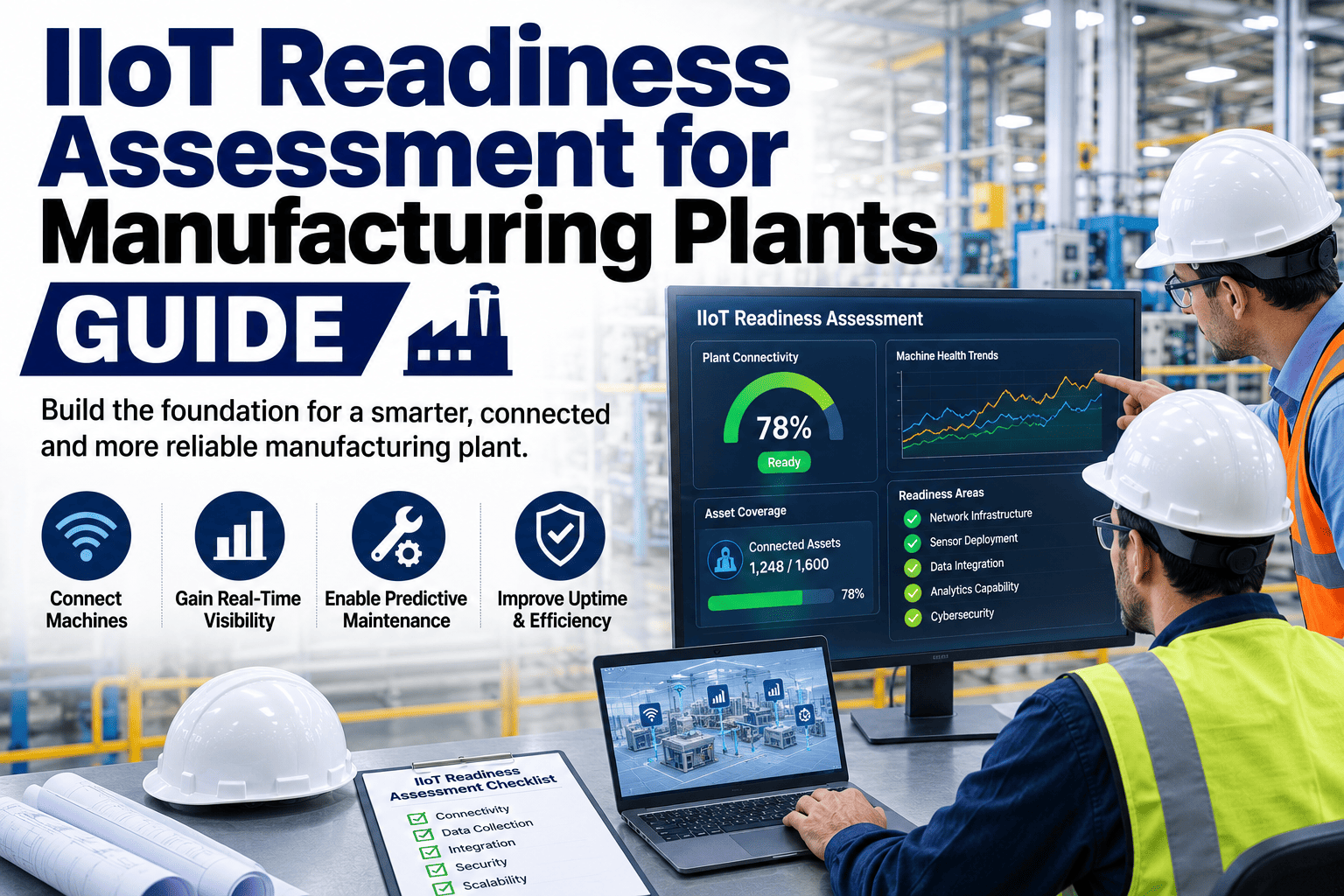
Readiness Scoring Framework
| Total Checkmarks Achieved |
Readiness Level |
Recommended Action |
| 30–34 (High items all checked) |
Ready for PdM Pilot |
Proceed with 5–10 asset pilot programme immediately |
| 24–29 (Most High items checked) |
Nearly Ready |
Address gaps in CMMS integration and team training first |
| 18–23 (Some High items missing) |
Foundation Building |
Focus on PM compliance and data quality for 6 months |
| 12–17 (Many High items missing) |
Early Maturity |
Strengthen reactive and preventive programmes before PdM |
| < 12 |
Not Ready |
Invest in CMMS implementation and PM process standardization |
High-criticality items must all be checked before proceeding with PdM investment. Medium-criticality gaps can be addressed during pilot phase.
Industry Perspective
What Reliability Leaders Say About PdM Readiness
01
We burned $200K on vibration sensors and a cloud analytics platform before realizing our technicians couldn't even complete weekly PM routes consistently. We paused PdM, fixed our PM compliance, and restarted the pilot 18 months later with actual success.
Reliability Manager, Pulp & Paper Manufacturing
02
The breakthrough wasn't the sensors — it was configuring our CMMS to auto-generate work orders when vibration exceeded baseline by 25%. Alerts that never leave the analyst's dashboard are just expensive data collection, not predictive maintenance.
Maintenance Director, Chemical Processing Plant
03
Our pilot succeeded because we picked the right assets — high downtime cost, predictable failure modes, and accessible for sensor installation. Starting with 50 random assets guarantees you'll waste time monitoring things that fail unpredictably anyway.
Principal Engineer, Automotive Manufacturing Facility
Frequently Asked Questions
PdM Readiness Questions
What is the minimum PM compliance rate needed before starting predictive maintenance?
Industry best practice suggests 75% PM completion rate sustained for at least three months. If your team cannot execute time-based maintenance reliably, adding condition-based complexity will fail.
Do we need a dedicated vibration analyst on staff for PdM?
Not necessarily for a pilot programme, but you need at least one person with ISO 18436 Category II training or equivalent who can interpret spectra and set alarm thresholds. Many plants start with contractor support and train internal staff during Year 1.
Can we implement PdM without a CMMS?
No. Sensor alerts must convert into work orders automatically or the programme collapses into email overload. A CMMS with API integration capability is foundational infrastructure, not optional.
What is a realistic timeline from assessment to PdM pilot launch?
If this assessment identifies you as "Ready" or "Nearly Ready," expect 3–4 months for sensor procurement, installation, baseline data collection, and team training before generating the first predictive work order.
Which assets should be included in a PdM pilot programme?
Target 5–10 critical rotating equipment assets with high downtime costs, known failure histories, and predictable degradation patterns like bearing wear or belt misalignment. Avoid one-off custom machines or assets with random failure modes.
Build Your PdM Foundation on a CMMS That's Already Designed for It
OxMaint's platform includes sensor integration, automated alarm-to-work-order workflows, and condition monitoring dashboards as core features — not expensive add-ons you discover later. Start with solid PM execution, scale into predictive when you're ready.