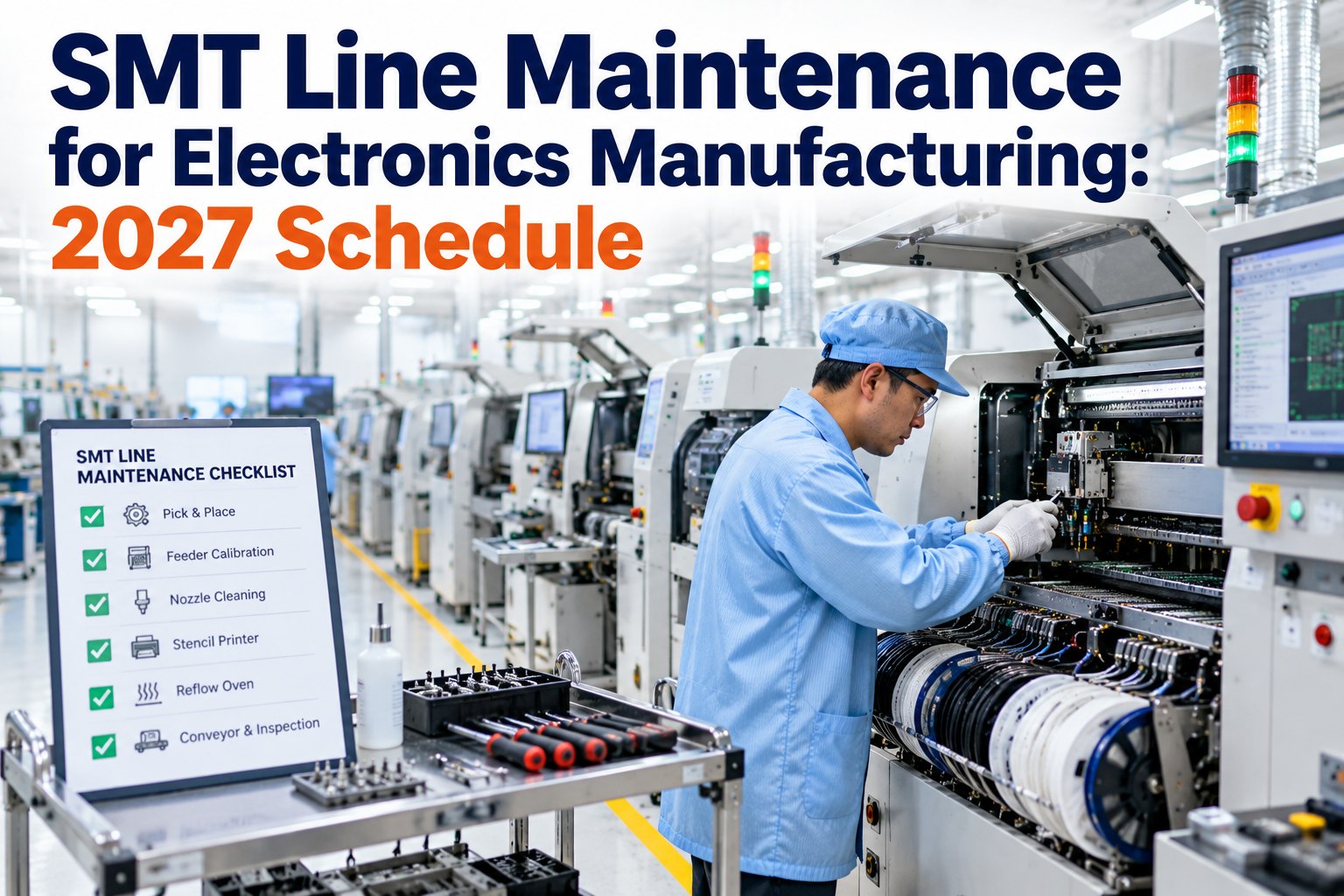
SMT Line Maintenance for Electronics Manufacturing: 2027 Schedule
By Willam Jerry on October 29, 2026
On an SMT line, the expensive problems rarely begin as big failures. They begin as a nozzle with a hairline crack, a stencil wipe that was skipped, a feeder that drifts a fraction out of pitch or an oven profile nobody has verified in weeks. Each one quietly feeds defects into the line, and by the time the AOI catches them, a batch is already in rework. SMT line maintenance is the discipline of cleaning, calibrating and checking the three machines that decide quality: the stencil printer, the pick-and-place machine and the reflow oven. This guide gives you a practical schedule, a defect-to-cause map and a reflow profile checklist, and shows how OXMAINT AI, the AI-powered CMMS, turns that schedule into automatic work orders, parts reservations and a maintenance history for every machine.
SMT Line Maintenance for Electronics Manufacturing: 2027 Schedule.
When nozzle, stencil and oven checks live on clipboards, they slip. OXMAINT AI schedules each task per machine, lets operators scan the asset QR code to log it and turns any failed check into a work order, so the schedule runs itself.
1InspectQR scan opens the machine's shift and weekly checklists
➜
2Flag the IssueA worn nozzle or a failed profile check is logged with a photo
➜
3Work OrderThe fix is assigned, parts are linked and the outcome is recorded
➜
4PM Keeps RunningRecurring schedules per machine, based on time or usage
How an SMT Line Works — and Where Maintenance Matters Most
A typical SMT line moves boards through a fixed sequence. Three stations shape most of the quality outcome, so they get most of the maintenance attention. Layouts vary by plant, but the flow is consistent. Sign up free and add each station as an asset.
Loaderfeeds boards
➜
Stencil Printerdeposits paste
➜
SPIchecks paste
➜
Pick & Placeplaces parts
➜
Reflow Ovenforms joints
➜
AOIinspects boards
➜
Unloaderstacks boards
Highlighted stations are the main focus of this schedule
Defect → Likely Source: Where to Look First
When AOI or inspection flags a defect, the machine that caused it is often upstream. This map points your team at the right place before anyone starts adjusting settings. Book a demo to see defect-linked work orders.
Clogged or worn nozzle, weak vacuum, feeder or tape issue, dirty filter
Skewed or misplaced parts
Pick & place
Damaged nozzle tip, vision or camera contamination, feeder pitch drift, calibration
Tombstoning, cold or dull joints
Reflow oven
Profile drift, blocked or failing heating zone, conveyor speed, fan or flux buildup
Voids or poor wetting
Reflow + printing
Profile not matched to the paste, atmosphere issues, paste handling or print volume
The SMT Line Maintenance Schedule
Use this as a starting point and replace it with your OEM manuals and your own defect data. Higher volume, fine-pitch work and lead-free processes may need tighter intervals. Load it as automated preventive maintenance.
Every shift
Weekly
Monthly
Quarterly+
Stencil Printer
Wipe stencil to program, check paste level and age
Inspect squeegee blades, clean vision and support pins
Check stencil condition and tension, clean rails and sensors
Verify alignment and print repeatability to OEM method
Pick & Place
Review pick-up errors, wipe nozzles that show trends
Deep-clean nozzles, inspect tips, clean filters and cameras
Check feeders for pitch, sprockets and cover-tape feed
Run accuracy calibration, service head and vacuum system per OEM
Reflow Oven
Confirm recipe, conveyor speed and alarms
Verify the profile with a thermal profiler
Clean flux residue and filters, lubricate conveyor to OEM
Inspect fans, heaters, thermocouples and exhaust
Illustrative starting schedule. Always follow the manufacturer's instructions for your equipment.
Machine by Machine: What to Check and Why
STENCIL PRINTER
Good paste in, good joints out
Stencil: clean apertures and check for damage or tension loss
Squeegee: replace blades with nicks or wear
Support: boards must sit flat on the tooling
Record: wipe frequency, blade changes, paste lot and age
PICK & PLACE
Nozzles and feeders decide pick-up success
Nozzles: clean, inspect the tip and test vacuum flow
Feeders: check pitch, sprockets and calibration
Vision: keep cameras and lighting clean
Record: pick-up errors by nozzle and feeder
REFLOW OVEN
A profile is only valid while the oven holds it
Profile: verify with a profiler, not by recipe alone
Airflow: fans, filters and flux buildup
Conveyor: speed, chain condition and lubrication
Record: profile results per product and date
Reflow Profile Anatomy — The Four Zones to Verify
A reflow profile follows the solder paste manufacturer's guidance and the board's thermal needs. Maintenance keeps the oven able to deliver it. Start free and store profile checks per oven.
PreheatControlled ramp up
SoakTemperatures even out, flux activates
ReflowSolder melts, joints form
CoolingJoints solidify
Target temperatures and times come from the paste datasheet and the board. This guide does not set them.
Put the Schedule on the Machines, Not on a Wall Chart.
OXMAINT AI generates the checks, records the readings and keeps nozzles, feeders and consumables in stock.
Many plants wipe problem nozzles during the shift and deep-clean weekly, but the right interval depends on your parts, machine and pick-up error trend. Follow your OEM guidance. Sign up free and track it per nozzle.
How often should a reflow oven profile be verified?
Set a regular interval based on your process, products and quality requirements, and verify after any maintenance or recipe change. Book a demo to see recurring checks.
What causes most SMT line downtime?
It differs by plant. Common contributors are feeder and nozzle problems, print quality issues and oven faults. Your own stop records show where yours comes from. Start free and log stops by machine.
Can a CMMS manage SMT line preventive maintenance?
Yes. A CMMS schedules the tasks, records readings, links spare parts and keeps a history for each machine. Book a demo to see it on a line.