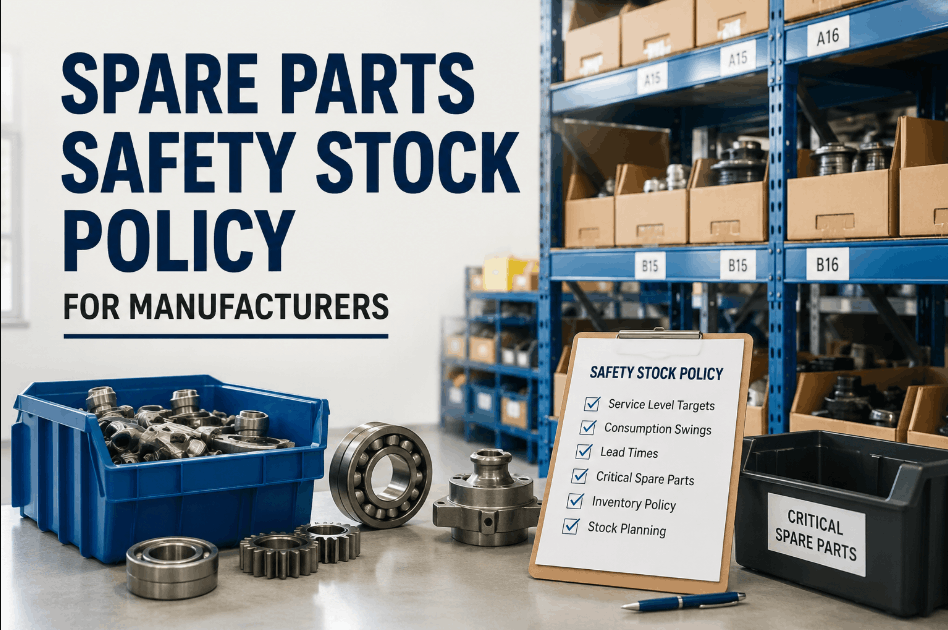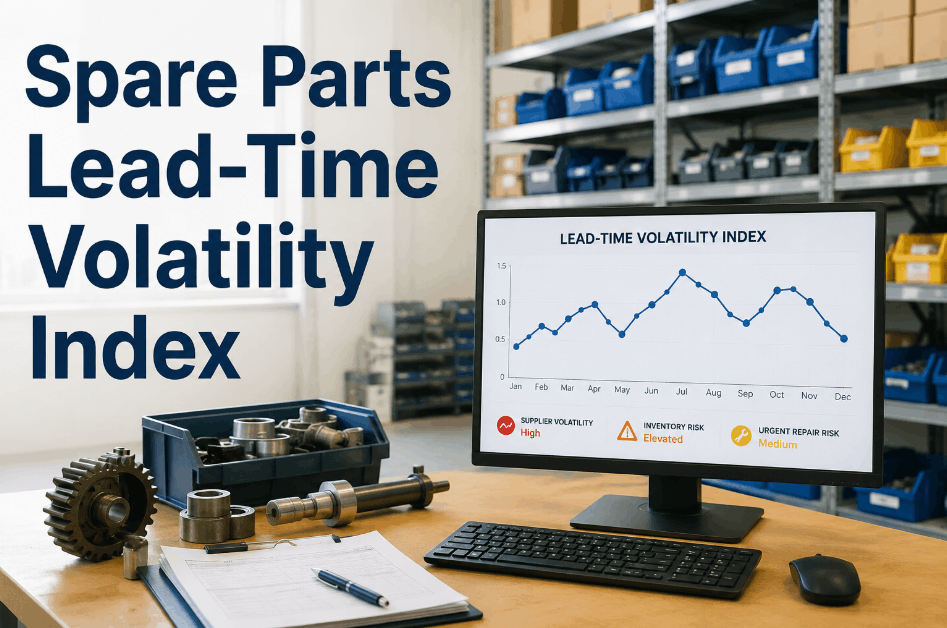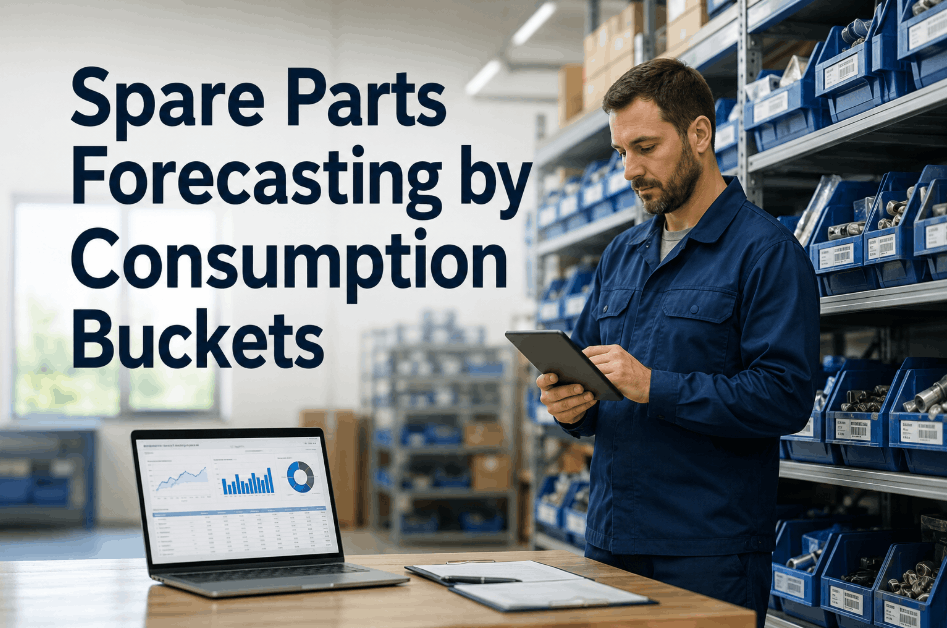
Spare parts forecasting fails when demand is treated as a single distribution. A bearing consumed once every three years on a critical drive behaves nothing like a filter replaced monthly across fifty machines — yet most inventory planning models apply the same reorder logic to both. Consumption bucket segmentation separates parts by demand frequency, lead time, and criticality so buyers can apply the right forecasting model to each class rather than over-stocking slow movers and under-buffering fast-moving essentials. Sign Up Free to connect your parts consumption history to Oxmaint and start forecasting from actual demand patterns. Oxmaint AI links parts consumption records from maintenance work orders to procurement history — giving storeroom managers and maintenance buyers the consumption bucket data needed to set stock levels that match real demand without carrying excess. Book a Demo to see how consumption-driven forecasting flows from Oxmaint work orders into inventory planning recommendations.
Forecast Parts Demand from Actual Consumption — Not Contract Assumptions
Oxmaint AI segments spare parts by consumption bucket, lead time, and criticality — giving buyers and storeroom managers the demand visibility to keep stock tight without risking outages on critical maintenance items.
Why Spare Parts Forecasting Breaks Down Without Consumption Segmentation
Gap #1
Single Reorder Model Applied to All Parts
Fast-moving consumables and slow-moving insurance spares are managed with the same reorder point logic — creating excess stock for low-frequency parts and chronic stockouts for high-consumption items.
Gap #2
Criticality Not Reflected in Stock Policy
Parts are stocked by consumption rate alone without weighting asset criticality — leaving critical single-source components under-buffered while non-critical consumables absorb working capital in excess quantities.
Gap #3
Lead Time Variance Ignored in Planning
Safety stock calculations use average lead times from supplier contracts rather than actual delivery variance data — underestimating buffer requirements for suppliers with wide lead time spreads.
Gap #4
Demand Spikes from Planned Maintenance Unforecasted
Planned shutdowns and scheduled overhauls create predictable demand spikes for specific parts classes — but these events are not linked to inventory planning, causing emergency procurement during maintenance windows.
Gap #5
Obsolete Stock Not Flagged
Parts retired from active assets remain in the storeroom inventory system — tying up capital in components with zero future demand and inflating reported inventory value with non-productive stock.
Gap #6
Consumption Data Disconnected from Work Orders
Parts usage is recorded at the storeroom level but not linked to the maintenance work order that drove demand — making it impossible to calculate consumption rates by asset, failure mode, or maintenance type.
How Oxmaint AI Structures Spare Parts Forecasting by Consumption Bucket
01
Consumption History Capture
Parts consumption is recorded at work order level in Oxmaint — linking each issue to the asset, failure mode, and maintenance type that drove demand, building a consumption history tied to real maintenance events.
→
02
Bucket Segmentation
Oxmaint segments parts into consumption buckets — fast-moving, slow-moving, and insurance spares — weighted by asset criticality and lead time variance to apply the appropriate forecasting model to each class.
→
03
Lead Time Variance Integration
Actual delivery lead time data from procurement records is incorporated into safety stock calculations — replacing contracted average lead times with variance-adjusted buffer requirements per supplier and part class.
→
04
Demand Forecast and Reorder Planning
Oxmaint generates consumption-driven reorder recommendations per bucket — factoring in planned maintenance schedules, supplier lead time variance, and asset criticality to keep stock levels matched to actual demand.
What Oxmaint Captures Per Spare Parts Forecasting Record
Consumption Data
Parts consumption recorded per work order with asset and failure context
Consumption rate calculated by part, asset class, and maintenance type
Demand spikes from planned shutdowns identified and flagged for pre-ordering
Bucket Classification
Parts classified into fast-moving, slow-moving, and insurance spare buckets
Criticality weighting applied to buffer calculations per asset class
Bucket reclassification triggered automatically when consumption pattern changes
Lead Time Planning
Actual delivery lead time variance captured per supplier from procurement records
Safety stock calculations updated with variance-adjusted lead time distributions
Reorder points adjusted when supplier lead time variance shifts materially
Inventory Outcome
Stock levels matched to actual consumption rates by bucket and criticality
Excess stock on slow-moving parts identified and flagged for review
Stockout risk reduced on critical fast-moving items through variance-adjusted buffers
31%
Average reduction in excess spare parts inventory when consumption bucket segmentation replaces uniform reorder logic
2.4×
Improvement in critical parts availability when lead time variance data replaces average contracted lead time in safety stock models
48hrs
Typical time to deploy Oxmaint and begin linking parts consumption records to work order demand history
90days
Average period to generate statistically reliable consumption bucket classifications after Oxmaint inventory tracking deployment
Oxmaint AI vs Standard CMMS for Spare Parts Demand Planning
Standard CMMS — Limited Inventory Intelligence
Single reorder model applied to all parts regardless of demand pattern or criticality
Safety stock set from average contracted lead times — delivery variance ignored in buffer calculations
Planned maintenance demand spikes not integrated into inventory planning — emergency procurement frequent
Parts consumption recorded at storeroom level only — no link to work order, asset, or failure context
Obsolete stock not flagged — retired asset parts remain in inventory and tie up working capital
No bucket segmentation — fast-moving and insurance spares managed with identical stock policies
Oxmaint AI — Consumption-Driven Spare Parts Planning
Consumption bucket segmentation applies the right forecasting model to each parts class automatically — Sign Up Free
Lead time variance from actual procurement records integrated into safety stock calculations per supplier
Planned maintenance schedules linked to parts demand — pre-order recommendations generated before shutdowns
Parts consumption linked to work order, asset, and failure type — consumption rates calculated with full context
Obsolete parts flagged automatically when linked assets are retired from the asset register — Book a Demo
Fast-moving, slow-moving, and insurance spare buckets managed with differentiated stock policies per criticality
6 KPIs to Measure Spare Parts Forecasting Accuracy
These KPIs give maintenance buyers and storeroom managers the metrics to track forecast accuracy, identify over- and under-stocked parts classes, and build an inventory plan that matches stock levels to actual maintenance demand. Book a Demo to see how Oxmaint tracks all six from linked work order and procurement records.
KPI 01
Parts Availability Rate by Bucket
Percentage of work order part requirements fulfilled from stock on first request, measured separately by consumption bucket. Tracks whether stock policies are correctly calibrated for each demand class.
Availability
KPI 02
Forecast Accuracy by Part Class
Variance between forecasted and actual parts consumption per quarter, measured by bucket. High forecast error on fast-moving parts indicates consumption pattern change or forecasting model mismatch.
Forecast Accuracy
KPI 03
Excess Stock Value by Bucket
Value of inventory held above calculated maximum stock level per consumption bucket. Identifies working capital tied up in over-stocked slow-moving or obsolete parts that could be released or returned.
Working Capital
KPI 04
Stockout Rate on Critical Parts
Frequency of zero-stock events on parts classified as critical by asset criticality weighting. Each stockout on a critical part represents a potential unplanned downtime exposure that an adequate buffer should have prevented.
Stockout Risk
KPI 05
Lead Time Variance Coverage
Percentage of active parts with safety stock calculated from actual delivery variance rather than contracted average lead time. Coverage gaps mean stockout buffers are calculated on assumptions rather than measured supplier performance.
Planning Quality
KPI 06
Planned Maintenance Demand Fulfillment
Percentage of planned maintenance and shutdown part requirements fulfilled from pre-positioned stock rather than emergency procurement. Measures how effectively planned maintenance demand is integrated into inventory pre-positioning.
Planned Demand
Industries Using Oxmaint for Spare Parts Demand Planning
Process Manufacturing
Consumption Bucket Planning for Rotating Equipment Spares
Chemical and refining plants use Oxmaint to segment rotating equipment spare parts into consumption buckets — ensuring that high-criticality seal kits and bearing sets carry variance-adjusted safety stock while slow-moving overhaul parts are held at minimum levels consistent with planned maintenance schedules. Sign Up Free for your facility.
Mining and Resources
Remote Site Spare Parts Forecasting Against Long Lead Times
Mining operations use Oxmaint to forecast spare parts demand at remote sites against extended supplier lead times — ensuring that critical equipment spares for haul trucks and conveyors are pre-positioned based on consumption bucket analysis rather than reactive emergency procurement. Book a Demo for your operation.
Utilities and Infrastructure
Long Lead Time Insurance Spare Management for Critical Assets
Power and water utilities use Oxmaint to manage insurance spare inventory for transformer components, switchgear, and pump assemblies — applying consumption bucket logic to distinguish single-unit insurance spares from regularly consumed maintenance parts and optimize capital allocation across both classes.
Food and Beverage
Hygiene-Critical Parts Forecasting Across Seasonal Demand Cycles
F&B manufacturers use Oxmaint to forecast sanitary component and food-grade seal consumption across seasonal production cycles — pre-positioning parts inventory before peak production periods based on historical consumption patterns by product line and asset class.
Your Parts Consumption Is Already Telling You What to Stock. Are You Listening?
Oxmaint AI segments spare parts by consumption bucket, lead time variance, and asset criticality — giving buyers and storeroom managers the demand data to keep critical parts available without carrying excess stock on slow-moving items. Book a Demo to see consumption-driven forecasting applied to your inventory.
Frequently Asked Questions
What are consumption buckets in spare parts forecasting?
Consumption buckets are demand-frequency categories — fast-moving, slow-moving, and insurance spares — that group parts by how often they are consumed so that different stock policies and forecasting models can be applied to each class rather than treating all parts identically.
How does Oxmaint link parts consumption to work orders?
Oxmaint records parts issuance at work order level — linking each consumption event to the asset, failure type, and maintenance task that drove demand. This context allows consumption rates to be calculated by asset class and failure mode, not just at overall storeroom level.
How does lead time variance affect safety stock calculations in Oxmaint?
Oxmaint replaces contracted average lead times with actual delivery variance distributions from procurement records — adjusting safety stock requirements to reflect real supplier performance risk rather than optimistic contract commitments.
Can Oxmaint forecast demand spikes from planned shutdowns?
Yes. Oxmaint links planned maintenance schedules to parts demand — generating pre-order recommendations before shutdown windows so critical parts are pre-positioned rather than procured on an emergency basis during the maintenance event.
Does Oxmaint support spare parts tracking across multiple storerooms and sites?
Yes. Oxmaint aggregates consumption data across all sites and storerooms — enabling central procurement teams to compare consumption rates, identify inter-site transfer opportunities, and coordinate supplier orders across the full maintenance network.
Stop Stocking Parts by Gut Feel. Start Forecasting by Consumption.
Oxmaint AI gives maintenance buyers and storeroom managers the consumption bucket segmentation, lead time variance data, and criticality weighting needed to build spare parts inventory plans that prevent outages without carrying excess.