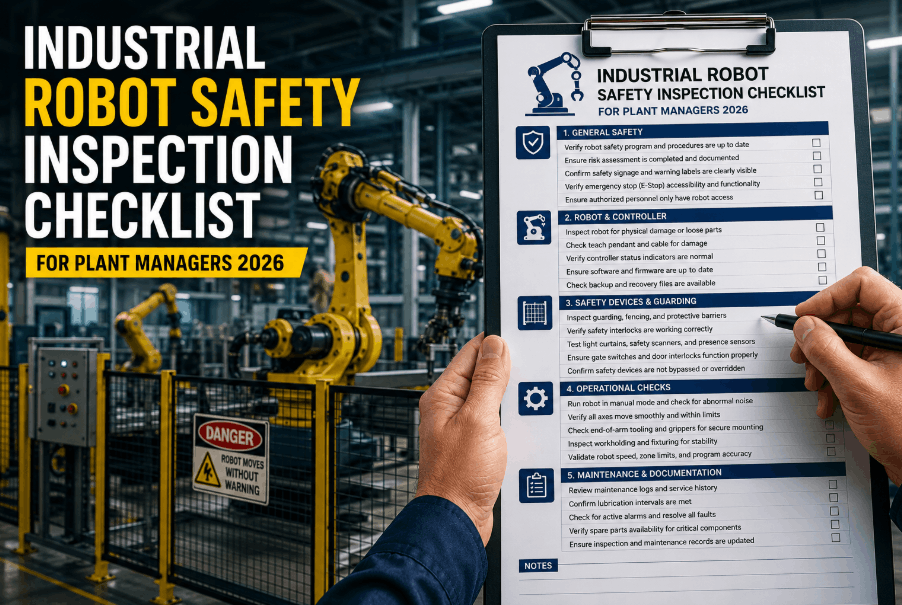
Facility managers evaluating quadruped robots for industrial inspection face a critical procurement decision in 2026. Boston Dynamics Spot, ANYbotics ANYmal, and Unitree B2 each target different operational profiles across hazardous environments, sensor depth, and autonomy levels. But the real differentiator is not the robot itself—it is whether the captured inspection data reaches your maintenance team as an actionable work order or sits trapped in a vendor dashboard nobody checks. This guide breaks down each platform across the specifications, sensor capabilities, and CMMS integration points that actually influence procurement outcomes. Schedule a consultation to discuss how Oxmaint turns robot inspection data into automated maintenance workflows for your facility.
What Makes Industrial Inspection Robots Worth the Investment
Industrial quadrupeds are not consumer gadgets—they are sensor delivery platforms that walk. Their value comes from reaching dangerous or repetitive inspection points consistently, capturing data humans cannot, and feeding that data into maintenance systems that generate work orders before equipment fails. Without CMMS integration, a robot is an expensive camera on legs.
500+
Industrial sites running Spot globally, making it the most deployed quadruped in enterprise environments
Zone 1
ANYmal X holds IECEx and ATEX certification for explosive atmospheres—the only legged robot with this rating
70%
Unitree commands roughly 70% of global quadruped sales by volume, driven by aggressive pricing and research adoption
Start connecting robot inspection data to real maintenance actions. Create your free Oxmaint account to see how Spot, ANYmal, and Unitree outputs auto-generate work orders with attached evidence, asset mapping, and technician assignments—no manual data entry required.
Sign Up Free
Spot vs ANYmal vs Unitree B2 — Full Specification Breakdown
Hardware specifications determine where each robot can operate, how long it can run, and what it can carry. The table below covers the procurement-critical specs that maintenance and operations teams need for vendor evaluation.
Pricing varies by configuration, payload selection, and licensing model. Contact each vendor for current quotes and availability in your region.
Inspection Sensor Capabilities That Actually Matter
The robot platform is the delivery mechanism. The sensors are where inspection value lives. Thermal imaging, gas detection, acoustic monitoring, and AI-powered gauge reading determine what defects your team catches—and what slips through. Here is how each platform stacks up for real-world inspection work.
Thermal ImagingFLIR Lepton / Boson
Visual Camera5x stereo + PTZ
LiDARVelodyne / custom
Gas DetectionPartner add-on
Acoustic SensingThird-party
Gauge / Dial OCRSpot CAM + AI
Thermal ImagingIntegrated radiometric
Visual CameraPan-tilt inspection head
LiDAR360 deg built-in
Gas DetectionIntegrated OGI
Acoustic SensingUltrasonic built-in
Gauge / Dial OCRAI-powered OCR
Thermal ImagingThird-party mount
Visual CameraDepth + RGB onboard
LiDAR3D LiDAR standard
Gas DetectionNot available
Acoustic SensingNot available
Gauge / Dial OCRCustom SDK dev
How Robot Inspection Data Connects to Your CMMS
An inspection robot without CMMS integration is a data silo on four legs. The real procurement question is not just which robot captures the best data—but which robot's data reaches your maintenance technician fastest. Oxmaint's open API accepts outputs from all three platforms, converting inspection findings into automated work orders with attached evidence, asset mapping, and priority routing. Sign up for free to see how robot data flows into real work orders inside Oxmaint.
Oxmaint's open REST API accepts media attachments and anomaly payloads from any robotic platform.
Create your free Oxmaint account and test robot data ingestion with your existing or planned fleet before you commit to a vendor.
Want to see how robot anomaly data becomes a prioritized work order in under 60 seconds? Schedule a live demo and our team will walk you through the full Oxmaint integration pipeline—from robot scan to technician assignment—using your facility's asset types as the example.
Book a Demo
From Robot Scan to Completed Repair — The Inspection Workflow
Regardless of which robot platform you select, the inspection-to-maintenance pipeline follows the same five-stage pattern inside Oxmaint. The goal is zero manual data entry between the moment a robot flags a thermal anomaly and the moment a technician receives a prioritized work order with photographic evidence attached.
01
Robot Runs Scheduled Mission
The robot follows a pre-mapped route, stopping at designated waypoints to capture thermal, visual, acoustic, and gas readings tied to specific asset IDs in your facility.
02
AI Flags Anomalies in Real Time
Onboard or cloud-based AI compares readings against learned baselines—detecting thermal hotspots, misaligned gauges, unusual vibration patterns, visible corrosion, or gas concentration spikes.
03
Data Pushes Into Oxmaint via API
Anomaly reports, inspection images, and sensor logs are sent to Oxmaint through REST API or webhook. Each data point auto-maps to the corresponding asset record and location in your facility hierarchy.
04
Oxmaint Generates Prioritized Work Orders
Based on configurable severity thresholds, Oxmaint creates work orders with inspection evidence attached, assigns them to the appropriate technician by skill and location, and sets SLA-driven due dates.
05
Technician Resolves, Robot Verifies
The technician reviews evidence on the Oxmaint mobile app, completes the repair, and logs completion notes. The next scheduled robot mission re-inspects the same asset to confirm the fix—closing the loop automatically.
Which Robot Wins for Your Industry
No single platform dominates every use case. The right choice depends on your hazard classification, inspection complexity, budget constraints, and how deeply robot outputs need to integrate with your maintenance management system. Sign up for Oxmaint to test robot data integration with your asset portfolio before you finalize your vendor decision.
Oil, Gas and Petrochemical Facilities
ANYmal X
ATEX Zone 1 IECEx certification, integrated gas detection, ultrasonic leak sensing, and fully autonomous 24/7 operation make ANYmal the only viable legged robot for explosive atmosphere inspections. Petronas, Equinor, Shell, and BASF are among active deployment partners.
Manufacturing and Mixed-Use Plants
Boston Dynamics Spot
The broadest third-party ecosystem, proven stair climbing, swappable payload mounts, and a mature Autowalk mission system suit facilities with diverse inspection needs across multiple floor levels and equipment types.
Large Perimeter and Campus Patrol
Unitree B2
Four-hour battery, 6 m/s top speed, IP67 rating, and pricing under $60K make Unitree the cost-effective choice for large-area visual patrol where ATEX is not required and deep sensor integration is secondary.
Power Generation and Utility Infrastructure
Spot or ANYmal
Multi-level inspection access, thermal scanning, acoustic monitoring, and gauge reading capabilities are non-negotiable for turbine halls, substations, and boiler rooms. Both platforms deliver here; ANYmal if gas hazards are present.
Turn Every Robot Inspection Into a Maintenance Action
Whichever platform you deploy, inspection data is only valuable when it reaches the right technician at the right time. Oxmaint converts outputs from Spot, ANYmal, and Unitree into prioritized work orders—complete with attached thermal images, anomaly classifications, asset history, and completion tracking.
Procurement Checklist Before You Sign
Use this checklist during vendor evaluation to ensure you are comparing platforms on the factors that determine long-term operational success—not just spec sheet headlines.
Not sure which robot vendor's data format works best with your existing systems? Book a 30-minute demo and our integration engineers will map your chosen vendor's output types to Oxmaint's work order pipeline—so you can make your procurement decision with full CMMS compatibility confirmed.
Book a Demo
Mixed Fleet Strategy — When One Robot Is Not Enough
Many facilities achieve the best coverage-to-cost ratio by deploying multiple platforms. A mixed fleet approach assigns each robot to the environment and task profile where it delivers the highest return, while Oxmaint serves as the unified data layer that consolidates inspection outputs from every platform into a single work order queue. Sign up for Oxmaint to manage multi-vendor robot fleets from one maintenance dashboard.
High-Risk Zones
ANYmal X
Deploy in ATEX-rated areas, offshore platforms, and confined spaces where explosion-proof certification is mandatory. Cost is high but no alternative exists for Zone 1 legged inspection.
General Plant Floor
Boston Dynamics Spot
Covers multi-level manufacturing areas, equipment rooms, and utility corridors. Payload flexibility supports thermal, visual, and acoustic inspection across diverse asset types.
Perimeter and Outdoor
Unitree B2
Handles large-area patrol, fence line monitoring, and outdoor tank farm visual checks. Long runtime and low cost enable fleet-scale deployment for broad coverage.
One Platform for Every Inspection Robot
Whether you run a single Spot or a mixed fleet of all three, Oxmaint unifies your robot inspection data into one maintenance command center. Every anomaly becomes a work order. Every work order has evidence attached. Every repair gets verified by the next robot mission. That is how you close the loop between detection and resolution.
Frequently Asked Questions
Can Oxmaint receive and process inspection data from all three robot vendors?
Yes. Oxmaint's open REST API and webhook ingestion system accept data from Spot, ANYmal, and Unitree. Thermal images, anomaly JSON reports, visual captures, and point cloud files can all be attached to asset records and used to auto-generate work orders.
Start your free account and connect your first robot data source in under 10 minutes.
Which robot should I choose for ATEX-rated explosive environments?
ANYmal X is the only legged robot with IECEx and ATEX Zone 1 certification, making it the sole option for autonomous quadruped inspection in explosive atmospheres. Boston Dynamics Spot can achieve limited hazardous area compliance through third-party enclosures, while Unitree B2 currently holds no explosion-proof certification.
How does robot-captured data actually trigger a work order in Oxmaint?
When a robot's AI flags an anomaly—a thermal hotspot, abnormal gauge reading, or gas spike—the data is sent to Oxmaint via API or webhook. Oxmaint matches the inspection waypoint to the registered asset, evaluates severity against your configurable thresholds, and auto-creates a work order with images, readings, and recommended actions attached.
Book a demo to see this workflow live.
Is Unitree B2 a credible option for serious industrial inspection programs?
Unitree B2 delivers strong value for visual patrol, perimeter monitoring, and basic thermal scanning at a fraction of the cost of Spot or ANYmal. However, it lacks integrated inspection-grade sensors, ATEX certification, and turnkey autonomous mission management. It works best as a high-coverage supplement to more capable platforms in non-hazardous zones.
What is the typical payback period for a robotic inspection program?
Most facilities achieve positive ROI within 12 to 18 months through reduced unplanned downtime, fewer safety incidents, and labor reallocation from routine patrol to higher-value tasks. Facilities with hazardous zones, high inspection frequency, or offshore logistics often see payback within 6 to 9 months.
Schedule a consultation to model ROI projections for your specific operation.