Your 20-year-old CNC lathe still holds tolerance, but the control throws alarms, the drive board is "no longer available" and the last spare came off a used-parts site. Do you retrofit it, rebuild it or write a purchase order for a new machine? The right answer isn't a gut feeling. It comes from repair history, parts obsolescence, accuracy and cost per spindle hour. This 2027 guide shows you how to compare all three.
CNC Retrofit vs Replace: Best Decision for Aging Machines in 2027
A decision tree, a cost-per-spindle-hour comparison and the warning signs that tell you it's time. Want the data behind the decision? Click "Sign in to the micro app" and open real CNC repair histories in a sample plant, with nothing to set up.
Three paths for an aging CNC machine
Replace the CNC control, and usually the drives, motors, wiring and PLC logic. Keep the iron.
- Fixes obsolete electronics
- Mechanics must already be sound
- Downtime usually measured in weeks
Restore the mechanics: ways, ballscrews, spindle, lube and hydraulics. Add a control retrofit to remanufacture to near-new.
- Fixes accuracy and wear
- Keeps foundation, tooling and programs
- Longest scope, so plan the outage
Buy a new machine with current speed, envelope, automation and warranty.
- Highest capability gain
- Highest cash outlay plus hidden costs
- Learning curve for programmers and operators
8 signs your CNC machine is due for a decision
Recognize three or more? Start collecting the data below before the next breakdown forces the decision. Sign In to Access Micro App to see how a sample plant tracks CNC alarms, spindle complaints and repair costs per machine.
The retrofit vs replace decision tree
The 4 numbers that should decide it
Three of these four numbers come straight from maintenance records. Explore the Micro App to see repair cost, downtime and parts data kept per machine.
Worked example: one CNC lathe, three options
A two-shift CNC lathe with an obsolete control. Lost contribution during downtime is $150 an hour. Each option's capital (including its own changeover downtime) is spread over its expected life:
Illustrative numbers, not quotes. "Keep as is" is the most expensive option here. Retrofit and replace land within a few cents, so the deciding factors become cash ($60K vs $280K) and capability. If you don't need more speed or axes, the retrofit frees $220K for other projects.
Hidden costs and how to choose a retrofit partner
- Rigging, removal and foundation work
- New tooling, holders and fixtures
- Re-posting and proving out part programs
- Operator and programmer training
- Lower output during the learning curve
- Requalifying parts with customers
- Have you retrofitted this make and model before?
- Does scope include drives, motors, cabling and PLC logic?
- Is the control an OEM path (e.g. a newer Fanuc or Siemens control) or a third-party kit?
- Will you do backlash, ballbar or laser checks after start-up?
- What downtime do you commit to, and what's the warranty?
- Do we get updated electrical drawings and training?
Before you call a rebuilder, pull the machine's full repair record. Sign In to Try Micro App to see work order cost, type and priority per CNC machine in a sample plant.
Make the decision from records, not memory
Every number in the cost-per-spindle-hour formula starts as a maintenance record. The Oxmaint micro app keeps them per machine, so the retrofit-or-replace meeting starts with facts.
"Louder above 8,000 rpm, surface finish getting worse. Operator dropped to 6,000 rpm for now."
Pending · High"Spindle on CNC Machining Center 04 growling above 6,630 rpm… Operator has dropped the speed."
Approved · MediumShown: the ready-made sample plant that loads with the micro app. Note how operators slow the spindle to keep running. That lost speed is a real cost, and it belongs in your spindle-hour math.
Where each decision input lives in the micro app
Work Orders per asset with type (corrective, preventive, breakdown), priority, cost and due date
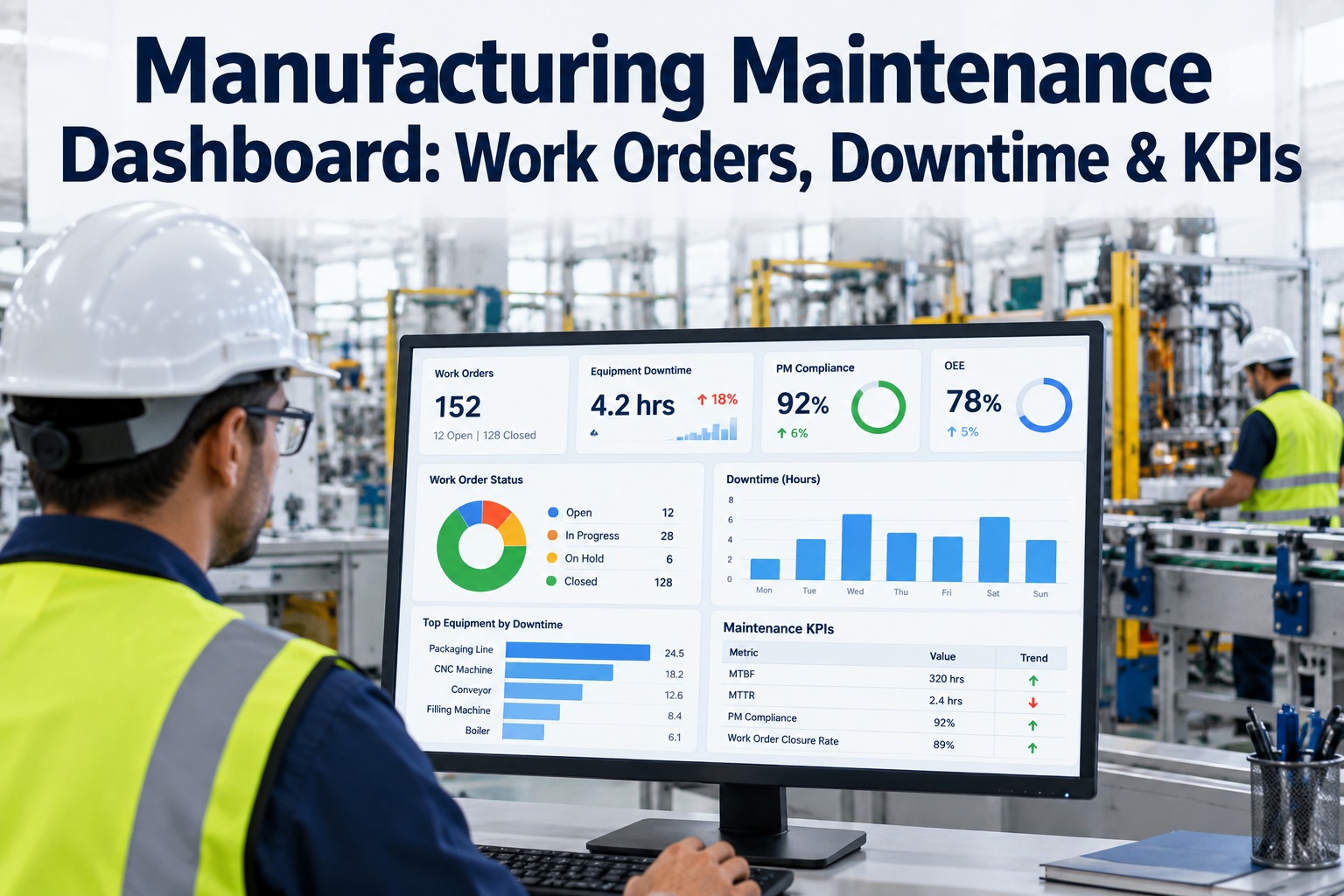
Dashboard & KPIs: downtime logged, MTTR, breakdown share, average cost per job
Parts, Demand Parts and Vendors: stock vs minimum, unit cost and lead time
PM Schedules such as "CNC ballscrew backlash and axis alignment", every 12 months
Asset Master health score and criticality per machine
Running hours behind meter-based PMs ("every 500 hours or 1 month, whichever first")
Walk into the capital meeting with proof, not opinions. One click on "Sign in to the micro app" opens CNC work orders, health scores and PM history. Prefer a guided tour? "Book a demo" takes 30 minutes.
Whatever you choose, protect the investment
The sample plant already keeps parts like servo motor encoder cables and toolholder pull studs on its parts list with minimum stock levels. Get Started with Micro App to set up spares and PMs for your retrofitted or new machine.
Frequently asked questions
Is it better to retrofit or replace a CNC machine?
Retrofit when the casting and mechanics are sound, the machine still fits your parts, and the main problem is obsolete electronics. Replace when the structure is worn or cracked, or when you need capability the old machine can't give. Compare cost per spindle hour for both.
How much does a CNC retrofit cost compared to a new machine?
Industry rules of thumb put a control retrofit at roughly 25–50% of a comparable new machine, and suggest keeping a full restore under about 60%. Actual cost depends on the control, drives, tool changer complexity and scope, so get quotes for your machine.
What is included in a CNC retrofit kit?
A typical control retrofit includes a new CNC control and operator panel, and often new servo drives, motors, cabling and PLC logic. Mechanical work such as way regrinding or ballscrew replacement is a rebuild and is usually quoted separately.
What is the difference between retrofit, rebuild and remanufacture?
A retrofit updates the control and electronics. A rebuild restores mechanical condition such as ways, ballscrews and spindle. Remanufacturing combines both to bring the machine close to new.
What should I do when CNC parts become obsolete?
List which control, drive and motor parts are discontinued, check lead times on the rest, and estimate the cost of a long outage if one fails. If that risk is high and the mechanics are sound, a control retrofit is usually the safer path.
How can maintenance software help the retrofit decision?
It keeps repair cost, downtime, parts and PM history per machine. In the Oxmaint micro app you can see work orders, health scores, KPIs like MTTR and downtime logged, and parts stock for each CNC asset. Sign In to the Micro App to explore it with sample data.