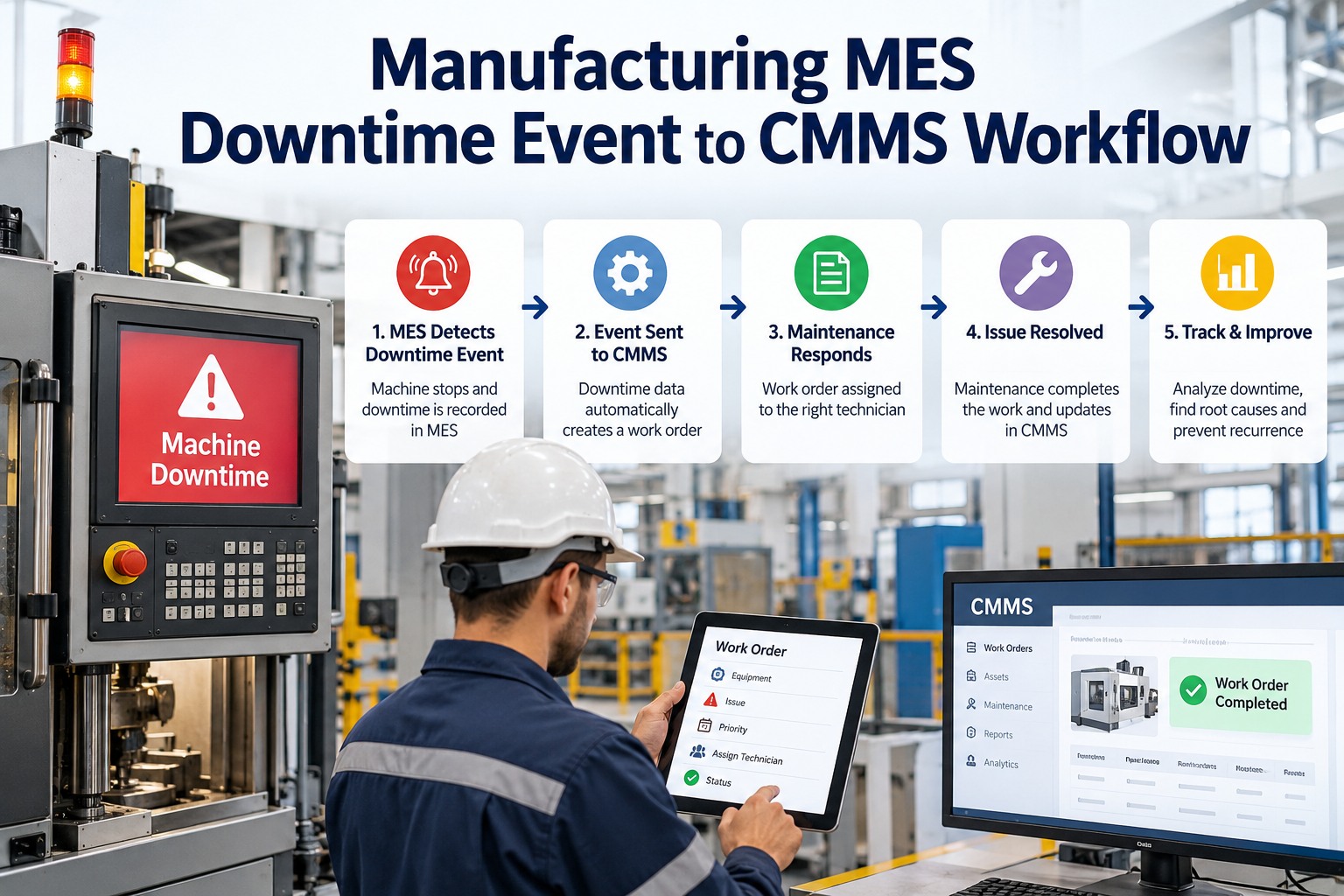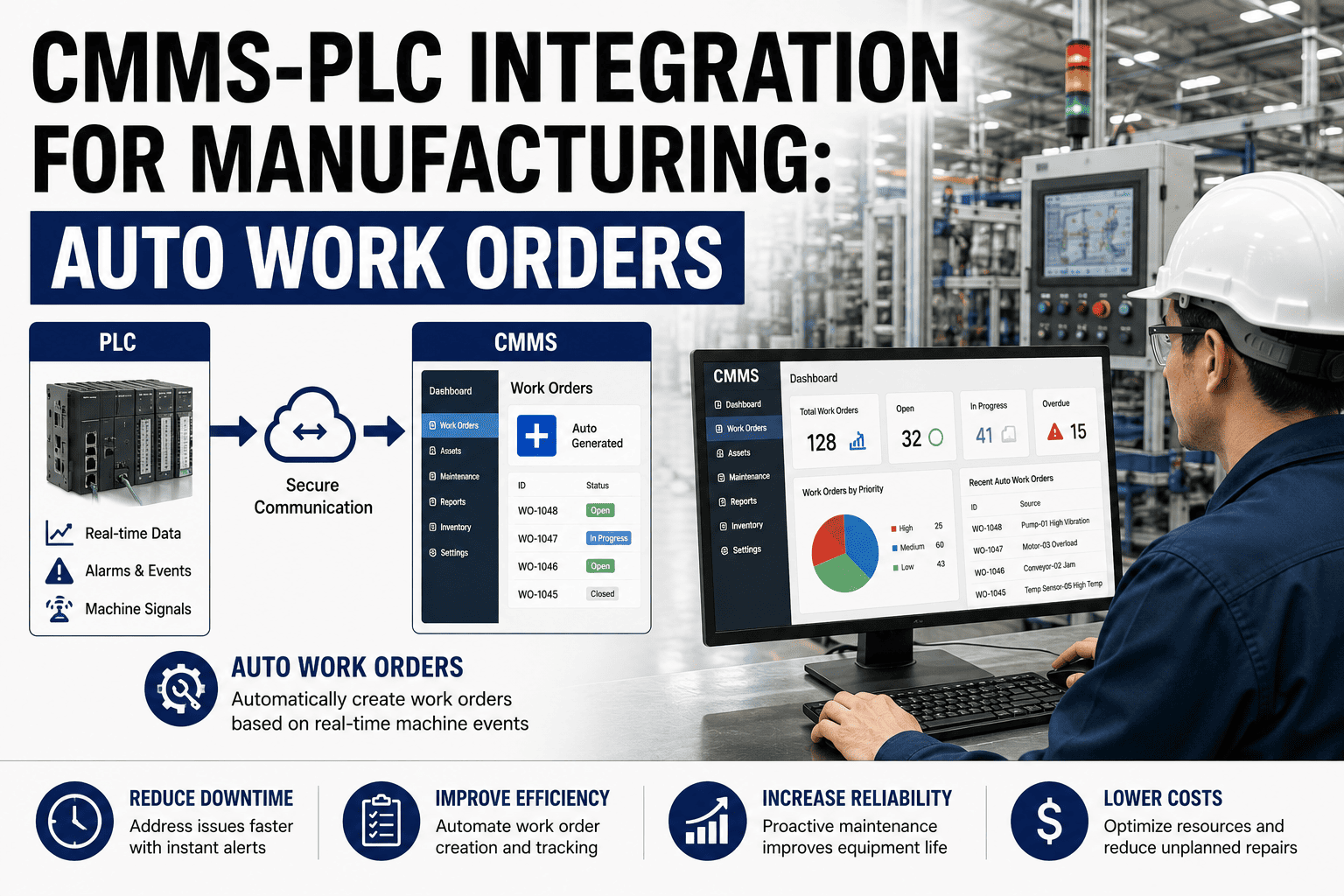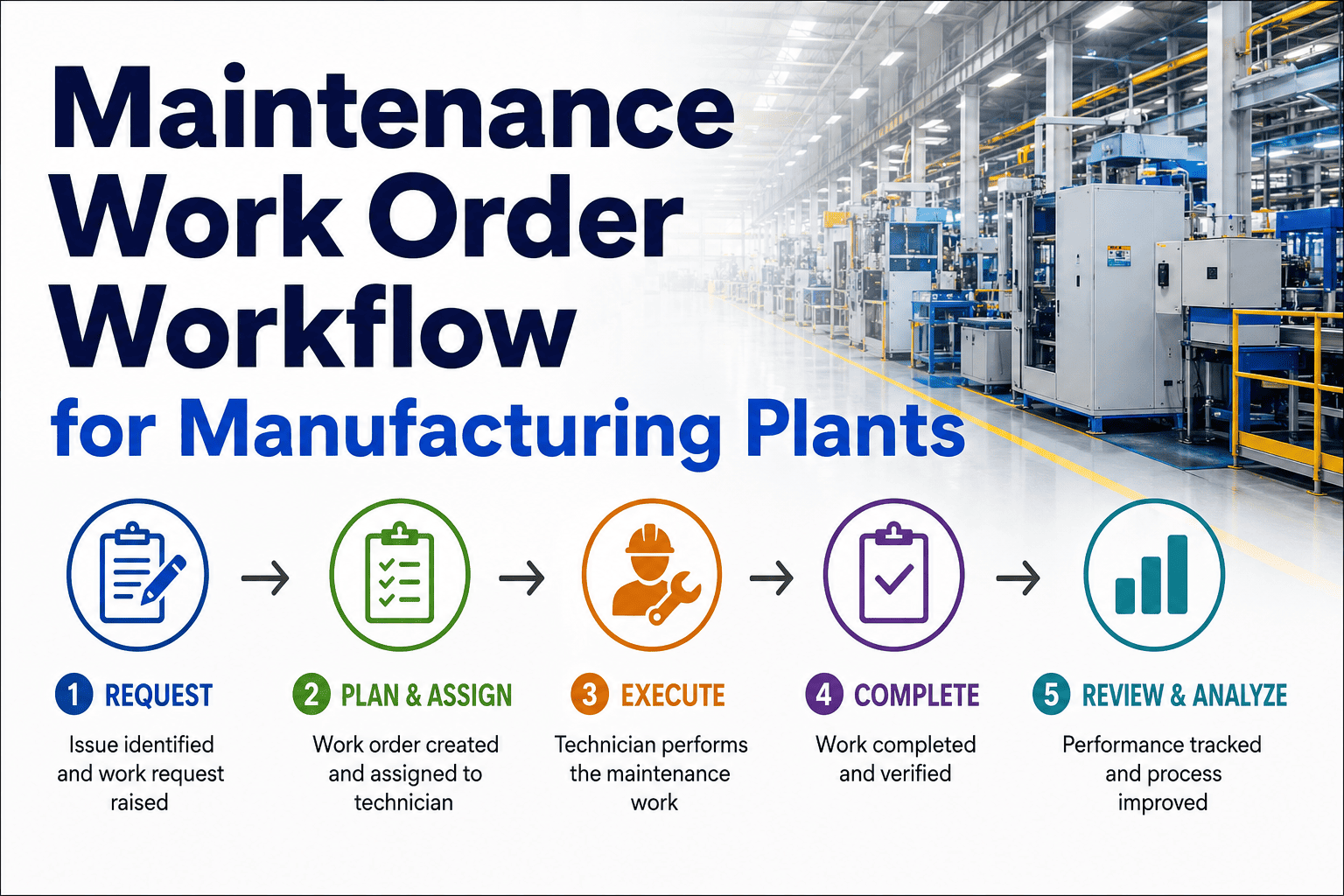
Work order prioritization in manufacturing determines whether maintenance resources are deployed where they protect production and safety — or whether urgent, high-consequence work competes with routine tasks in an undifferentiated backlog. In environments where maintenance teams manage hundreds of open work orders across multiple production lines, a structured prioritization framework is the difference between a maintenance function that prevents failures and one that permanently chases them. Sign Up Free with OxMaint to deploy a configurable work order prioritization system that routes the right work to the right technician at the right time — across every shift and every plant.
Why Work Order Prioritization Is a Production-Critical Competency
Without a formal prioritization framework, manufacturing maintenance teams default to urgency-as-loudest-voice — where the most recently reported fault or the most persistent production supervisor determines task sequence. This creates a systematic bias toward reactive, low-criticality work while high-consequence preventive tasks drift. Book a Demo to see how OxMaint's work order prioritization engine routes maintenance tasks by criticality, production impact, and compliance deadline — not by who asks loudest.
The Four Criteria for Manufacturing Work Order Prioritization
Effective work order prioritization in manufacturing environments applies four evaluation criteria consistently across every work request — regardless of origin. Sign Up Free to configure OxMaint's work order priority scoring matrix for your specific production environment and asset criticality classifications.
Safety and Environmental Risk
Work orders involving safety-critical systems, hazardous energy control, regulatory compliance, or potential environmental release carry the highest priority classification and must be scheduled with zero deferral. OxMaint's safety-flagged work order queue segregates these tasks for immediate supervisor visibility and execution tracking.
Production Impact and Bottleneck Status
Work orders on assets in the critical production path — where failure would halt the line or stop downstream operations — receive priority elevation based on the production consequence of continued deferral. OxMaint links asset criticality classifications to work order priority scoring automatically.
Failure Urgency and Deterioration Rate
Urgency reflects how quickly a developing fault will progress to functional failure if maintenance is deferred. A conveyor drive showing intermittent overtemperature alarms carries different urgency than a minor cosmetic defect. Condition monitoring data and fault history in OxMaint provide the deterioration trend context needed to assign urgency accurately.
Compliance and SLA Deadline
Regulatory inspection requirements, insurance compliance tasks, OEM warranty maintenance requirements, and internal SLA commitments carry fixed completion deadlines that must factor into priority queue management. OxMaint tracks deadline proximity and auto-escalates work orders approaching compliance windows.
Resource Availability and Planning Window
Priority must account for whether the required skills, parts, and access conditions are currently available. A high-priority work order that cannot be executed because a critical part is on order should be tracked as blocked — not lost in the backlog. OxMaint's work order status tracking surfaces blocked high-priority tasks for proactive parts expediting.
Cost of Deferral vs. Cost of Execution
The financial cost of deferring a preventive task — expressed as increased failure probability, expected repair premium, and potential production loss — can be compared against execution cost to justify priority sequencing. OxMaint's asset cost history makes this calculation tractable for recurring maintenance decisions.
Work Order Priority Classification System for Manufacturing
Book a Demo to see OxMaint's priority classification system configured for a multi-line manufacturing environment with automated escalation rules.
| Priority Level | Criteria | Response Target | Examples | Escalation Trigger |
|---|---|---|---|---|
| P1 — Emergency | Safety risk or active production stoppage | Immediate — same shift | Safety interlock fault, conveyor failure on bottleneck line | Instant supervisor alert |
| P2 — Urgent | Imminent failure risk, production impact likely | Within 4–8 hours | Critical asset overtemperature, intermittent drive faults | 2-hour response overdue alert |
| P3 — High | Developing fault, production risk if deferred | Within 24–48 hours | Bearing vibration trend, minor leak on process line | 24-hour SLA tracking |
| P4 — Scheduled | Planned PM, no immediate failure risk | Per PM schedule | Routine lubrication, filter replacement, inspection rounds | PM schedule deviation alert |
| P5 — Deferred | Low risk, no production impact if deferred | Next available window | Minor cosmetic repairs, non-critical improvements | Backlog age review flag |
Work Order Prioritization Process: Step-by-Step for Manufacturing Teams
Implementing structured work order prioritization requires a defined process that standardizes how new requests are evaluated, classified, and queued. OxMaint supports each step with configurable workflows, mobile intake forms, and automated routing logic. Sign Up Free to configure work order intake and prioritization workflows in OxMaint for your manufacturing environment.
Standardized Work Request Intake
All maintenance work requests — from operators, supervisors, inspection findings, and condition monitoring alerts — enter OxMaint through a standardized intake form that captures asset ID, fault description, and initial requester-assessed urgency. Standardized intake eliminates the undocumented verbal work request that bypasses the priority queue.
Maintenance Planner Priority Assessment
A maintenance planner or supervisor reviews incoming work requests and applies the four-criteria prioritization framework — safety risk, production impact, urgency, and compliance deadline — to assign a validated priority level. OxMaint's asset criticality data and fault history surface in the review interface to support this assessment.
Resource and Parts Availability Check
Before a high-priority work order is dispatched, OxMaint checks parts inventory availability and flags any required items that are not in stock. Work orders blocked by parts unavailability are tagged as blocked-pending-parts — removing them from the active dispatch queue while triggering inventory reorder actions.
Technician Assignment and Mobile Dispatch
OxMaint dispatches prioritized work orders to technicians by skill match and shift availability, with mobile delivery of work instructions, safety procedures, and asset history. Priority queue visibility on the technician mobile interface ensures that P1 and P2 work orders are not deferred in favor of easier low-priority tasks.
SLA Tracking and Escalation Management
OxMaint tracks response and completion time against priority-level SLA targets and escalates overdue work orders to supervisors automatically. SLA compliance metrics in OxMaint's maintenance dashboard provide the visibility needed to identify systematic prioritization gaps before they become chronic reliability problems.
How OxMaint Enables Structured Work Order Prioritization
Frequently Asked Questions: Work Order Prioritization in Manufacturing
What is work order prioritization in manufacturing maintenance?
Work order prioritization is the structured process of sequencing maintenance tasks by safety risk, production impact, urgency, and compliance deadline — ensuring that resources are deployed where they prevent the highest-consequence failures first.
How many priority levels should a manufacturing work order system use?
Most manufacturing environments operate effectively with 4–5 priority levels: emergency, urgent, high, scheduled, and deferred. Fewer levels reduces discrimination between genuinely different urgency profiles; more levels create administrative overhead without prioritization benefit.
How does a CMMS improve work order prioritization?
A CMMS like OxMaint automates priority routing based on asset criticality, tracks SLA compliance per priority level, escalates overdue high-priority work orders, and provides backlog analytics that identify chronic prioritization failures before they compound into downtime events.
What causes work order priority inflation in manufacturing?
Priority inflation occurs when requesters assign excessive urgency to routine tasks to jump the queue. Structured intake with planner-validated priority assignment — supported by objective asset criticality data in OxMaint — reduces inflation by separating requester urgency from validated maintenance priority.
How should safety-critical work orders be handled in a manufacturing priority system?
Safety-critical work orders must be segregated into a dedicated highest-priority classification with zero-deferral policy, immediate supervisor notification, and closed-loop completion verification. OxMaint supports safety-flagged work order queues with mandatory supervisor sign-off on completion.