In fiscal year 2024, OSHA recorded 2,655 lockout/tagout violations — making LOTO the third most cited standard in the country for the second year running. That number has climbed every year since 2022. Behind each citation is not a rogue employee or a freak accident. It is a system failure: a paper procedure that did not get followed, a permit that was not issued, a confined space that was entered without proper atmospheric testing. Power plants operate under concentrated hazard density that no other industry matches — high-voltage electrical systems, high-pressure steam lines, oxygen-deficient boiler drums, and flammable gas feed lines all coexist within the same facility footprint. When safety permitting runs on paper, clipboards, and shared spreadsheets, the gap between procedure and reality becomes dangerous. Sign up free on Oxmaint replaces fragmented paper systems with digital LOTO, automated permit workflows, real-time hazard detection, and audit-ready compliance records — so your plant's safety program works in practice, not just on paper.
OSHA FY2024 Enforcement Data
LOTO Is the #3 Most Cited OSHA Violation. Power Plants Are in the Crosshairs.
2,655 citations. $20.7 million in penalties. And violations are rising 29% year over year — not because plants lack safety programs, but because paper-based systems fail the moment enforcement pressure arrives.
2,655
LOTO Citations Issued FY2024
$20.7M
Total LOTO Penalties in 2023
80%
LOTO Injuries Linked to Training Failures
+29%
Violation Growth 2022–2023
Four Safety Systems Every Power Plant Must Get Right
Power plant safety is not a single program. It is four interlocking systems that must function simultaneously — each with its own OSHA standard, permit workflow, documentation requirement, and failure mode. A weakness in any one of them creates liability exposure across all plant operations. Talk to an OxMaint safety specialist about how your current systems stack up against what OSHA inspectors actually check.
Digital Lockout / Tagout (LOTO)
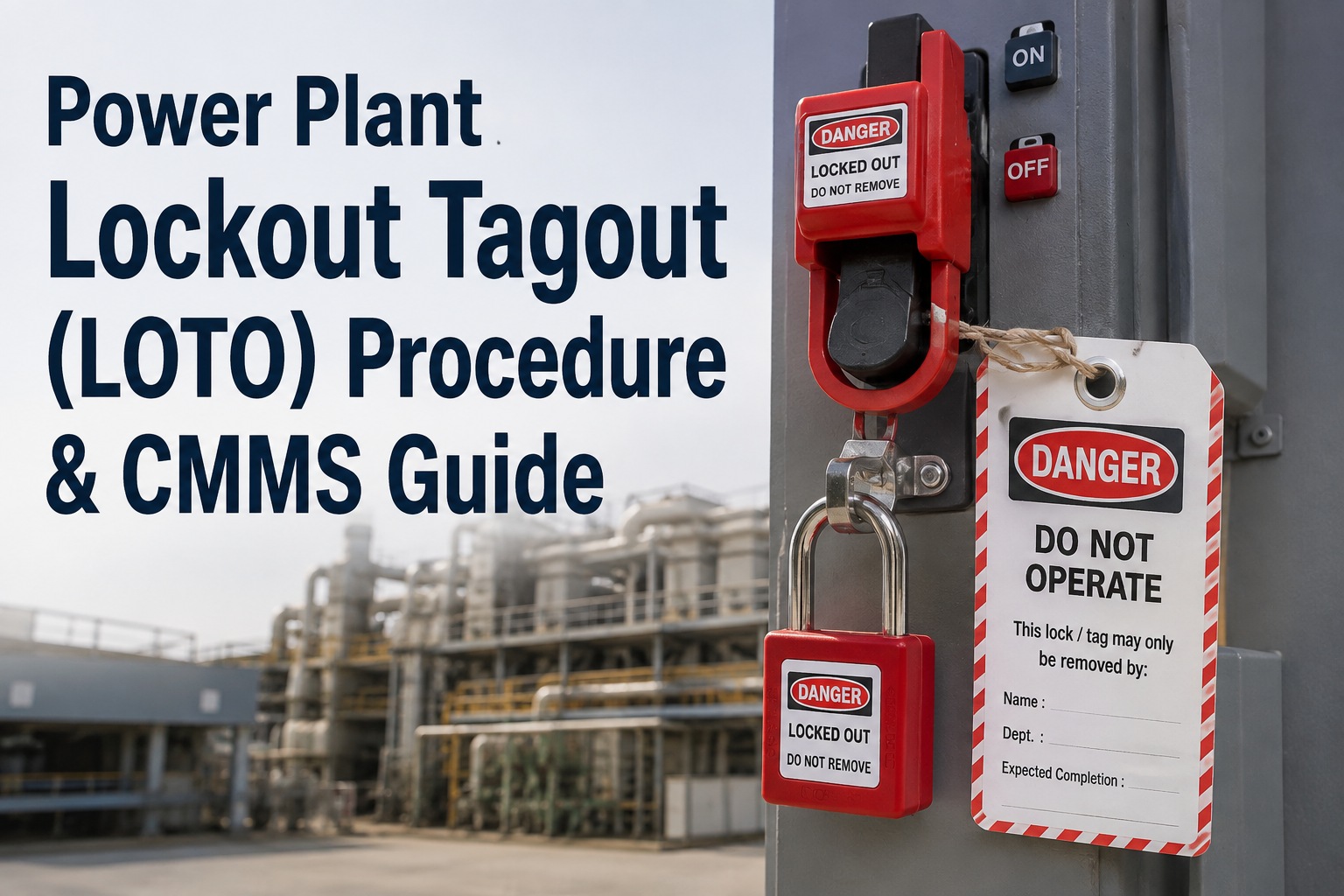
Controlling hazardous energy during maintenance is OSHA's most persistently violated standard in energy-intensive industries. Every power plant has dozens to hundreds of LOTO isolation points — electrical disconnects, steam isolation valves, pneumatic lines, hydraulic systems. Paper-based procedures create version control failures, untrained workers, and missing documentation that inspectors find immediately.
Risk: Electrocution, crush injuries, arc flash fatalities
Hot Work Permit Management
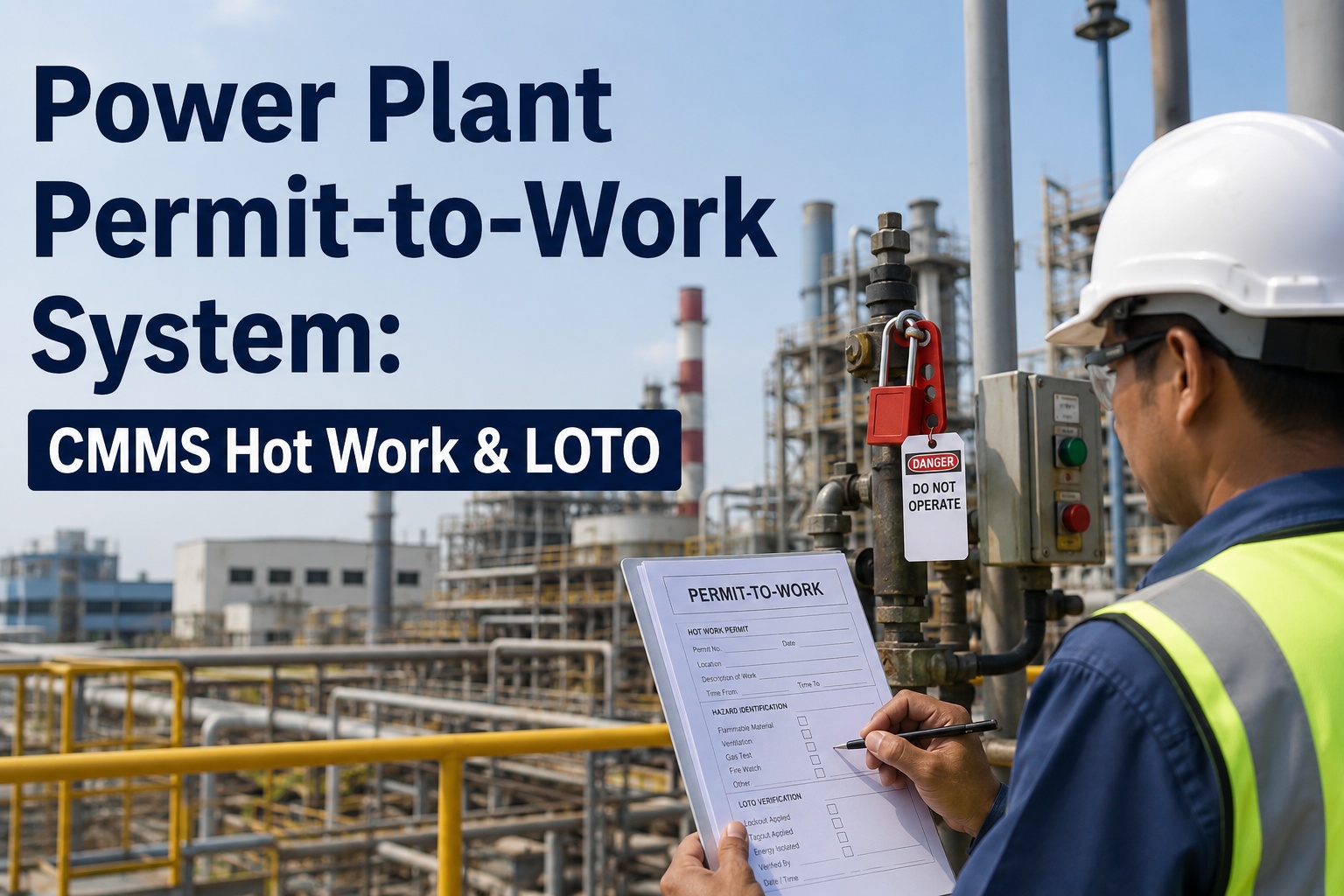
Welding, cutting, grinding, and brazing operations inside a power plant require a signed hot work permit before any spark is generated. Adjacent combustible materials, fuel gas lines, and oxygen-enriched atmospheres make unauthorized hot work one of the leading causes of industrial fires. Permits must document area inspection, fire watch assignments, suppression system precautions, and post-work monitoring periods.
Risk: Flash fires, boiler explosions, facility damage
Confined Space Entry Permits
Power plants contain some of the most hazardous confined spaces in any industry: boiler drums, ash hoppers, condenser vaults, cooling towers, and underground cable tunnels. Each entry requires atmospheric testing for oxygen, flammable gas, and toxic vapors; an authorized entrant and attendant designation; rescue plan documentation; and a signed entry permit that is voided the moment conditions change.
Risk: Asphyxiation, engulfment, toxic exposure deaths
Real-Time Hazard Detection
AI safety platforms now integrate with IoT sensors, wearables, and camera systems to detect safety violations in real time — unauthorized confined space entry without a permit, hot work in non-permitted zones, proximity to energized equipment without LOTO verification, and atmospheric threshold breaches. These systems trigger immediate alerts rather than discovering violations during post-incident investigations.
Outcome: Prevent incidents before they occur
A worker died every 99 minutes in the United States in 2023 from contact with equipment and machinery — the exact incidents that LOTO, confined space, and hot work permit programs are designed to prevent. These are not statistics about other industries. Power plants maintain some of the highest hazardous energy densities of any facility type.
Where Paper-Based Safety Programs Break Down
Most power plants have written LOTO procedures, hot work permits, and confined space programs. The violations keep rising anyway. OSHA investigators and safety researchers consistently identify the same breakdown patterns — and they are all rooted in paper-based, manually enforced systems that depend on perfect human execution every single time.
Procedure Version Control Failures
Written LOTO procedures go out of date when equipment is modified. Workers follow old isolation sequences on changed systems. Digital platforms push updated procedures to workers in real time and require acknowledgment before work begins.
Permit Issuance Without Site Verification
Hot work and confined space permits are signed in offices without a physical site inspection. Digital permits require GPS-tagged location verification and photo documentation of pre-work conditions before the permit can be authorized.
Group Lockout Coordination Failures
When multiple crews work on the same equipment, physical tag tracking breaks down. One crew removes their lock while another crew member is still inside. Digital LOTO shows every active lock, every authorized worker, and prevents equipment re-energization while any lock remains active.
Missing Documentation at Inspection
OSHA inspectors request the last 12 months of completed permits, LOTO procedure certifications, and training records. Paper systems produce incomplete files, missing signatures, and procedures that cannot be located. Digital systems generate audit-ready reports in seconds.
Training Gaps on Site-Specific Hazards
80% of LOTO injuries involve workers who had not received proper site-specific training. Generic safety modules do not cover actual plant equipment. OxMaint ties training records to specific LOTO procedures and blocks permit issuance for untrained workers on specific equipment.
No Real-Time Permit Status Visibility
Supervisors have no real-time view of how many permits are active, where confined space entries are occurring, or whether LOTO verifications have been completed. Safety managers only discover problems during audits — or after incidents. AI dashboards surface this visibility continuously.
Your Safety Program Works on Paper. Does It Work in Practice?
OxMaint replaces paper LOTO procedures, handwritten hot work permits, and clipboard confined space entry logs with a fully digital, AI-assisted safety management platform. Every permit. Every isolation point. Every training record. Searchable, timestamped, and audit-ready before the inspector arrives.
How OxMaint's AI Safety Platform Works
OxMaint connects safety permitting, hazard detection, training verification, and compliance reporting into a single platform that operates at the speed your plant actually works — not the speed of a paper-based safety office. Here is how the core safety workflows operate from a technician's first task assignment through permit closure and audit documentation.
01
Work Order Triggers Safety Requirements
When a maintenance work order is created in OxMaint, the AI engine evaluates the task type, equipment tag, and location to automatically identify required safety permits — LOTO, hot work, confined space entry, or combinations — before the technician ever leaves the control room.
02
Training Verification Before Permit Issuance
The system checks the assigned technician's training records against the specific equipment and permit type. Workers with expired or missing LOTO authorizations for that equipment cannot receive a permit. Training gaps are flagged to supervisors before work begins, not after an incident.
03
Digital Permit With Site Verification
Hot work and confined space permits require photo documentation of the work area, atmospheric test results entry (for confined space), and GPS location tagging. LOTO permits display the specific isolation sequence for that equipment, require step-by-step verification checkboxes, and capture each lock applied with timestamp and authorized user identity.
04
Real-Time Safety Dashboard and Alerts
Safety supervisors see every active permit, every LOTO isolation in progress, and every confined space entry on a single live dashboard. IoT sensor integrations trigger automated alerts when atmospheric readings approach dangerous thresholds, when permit duration limits are exceeded, or when entries occur in areas with no active permit.
05
Permit Closure and Compliance Archive
Completed permits are closed with a digital sign-off that confirms post-work conditions, fire watch completion for hot work, and atmosphere re-testing for confined space exits. All permits are archived with complete audit trails — searchable by equipment, worker, date range, or permit type — and exportable for OSHA inspection response.
The Financial Case: What Safety Violations Actually Cost
Safety investment is often framed as a cost center. The enforcement record tells a different story. OSHA penalty exposure, workers' compensation liability, production downtime from post-incident shutdowns, and reputational damage from recordable incidents all dwarf the cost of a digital safety management platform. The numbers below reflect documented costs from recent enforcement actions and industry data.
| Violation Type |
OSHA Standard |
Max Penalty Per Violation |
Real Enforcement Example |
Additional Hidden Costs |
| Lockout / Tagout |
29 CFR 1910.147 |
$16,550 (serious)
$165,514 (willful) |
$274,569 penalty — 2 willful + 11 serious violations at a single facility (2024) |
Workers' comp, lost production, equipment damage |
| Confined Space Entry |
29 CFR 1910.146 |
$16,550 per citation |
$119,757 proposed penalties — Schneider Electric for atmospheric testing failures |
Fatality investigations, criminal referral risk |
| Hot Work Permits |
29 CFR 1910.252 + NFPA 51B |
$16,550 per citation |
Industrial fires from unauthorized hot work average $2.4M in facility damage per incident |
Insurance premium increases, permit violations |
| Electrical Safety (LOTO Adjacent) |
NFPA 70E + 29 CFR 1910.333 |
$49,650 — Tesla, FY2024 |
Worker electrocuted — no PPE, no LOTO verification at energized equipment |
Federal criminal referral, multi-year litigation |
$132M
Total OSHA fines for top 10 most cited violations in 2023 — a 30% increase from the prior year. Enforcement budgets and penalty levels continue to grow.
35–50%
Reduction in safety incidents achievable by power plants that shift from paper-based to digital permit and LOTO management systems within the first 18 months.
$40K
Average direct cost of a single non-fatal LOTO-related injury, including medical expenses, lost productivity, investigation time, and workers' compensation claims.
OSHA Standards Your Safety Platform Must Cover
A power plant safety management system is only as strong as the standards it tracks. OxMaint maps every permit type, training requirement, and documentation obligation directly to the relevant OSHA standard and NFPA code — so your platform enforces compliance automatically, not manually.
| OSHA / NFPA Standard |
Safety Area |
Key Documentation Required |
OxMaint Feature |
| 29 CFR 1910.147 |
Hazardous Energy Control (LOTO) |
Written procedures, energy isolation records, annual certification, training records |
Digital LOTO procedures, per-equipment isolation sequences, training gate |
| 29 CFR 1910.146 |
Permit-Required Confined Spaces |
Entry permits, atmospheric test results, rescue plan, attendant logs — kept 1 year |
Digital entry permits, sensor integration, permit archive with 1-year retention |
| 29 CFR 1910.252 + NFPA 51B |
Hot Work / Welding Safety |
Hot work permits, fire watch assignments, area inspection, post-work monitoring — kept 1 year |
Digital hot work permits, fire watch timer, post-work closure checklist |
| NFPA 70E |
Electrical Safety / Arc Flash |
Arc flash hazard analysis, PPE category documentation, approach boundary records |
Equipment-level arc flash data, PPE requirement display, approach permit workflow |
| 29 CFR 1910.132 |
Personal Protective Equipment |
Hazard assessments, PPE selection records, training certifications per task type |
PPE requirements embedded in each permit type, training record links |
Frequently Asked Questions
How does OxMaint's digital LOTO differ from traditional paper procedures?
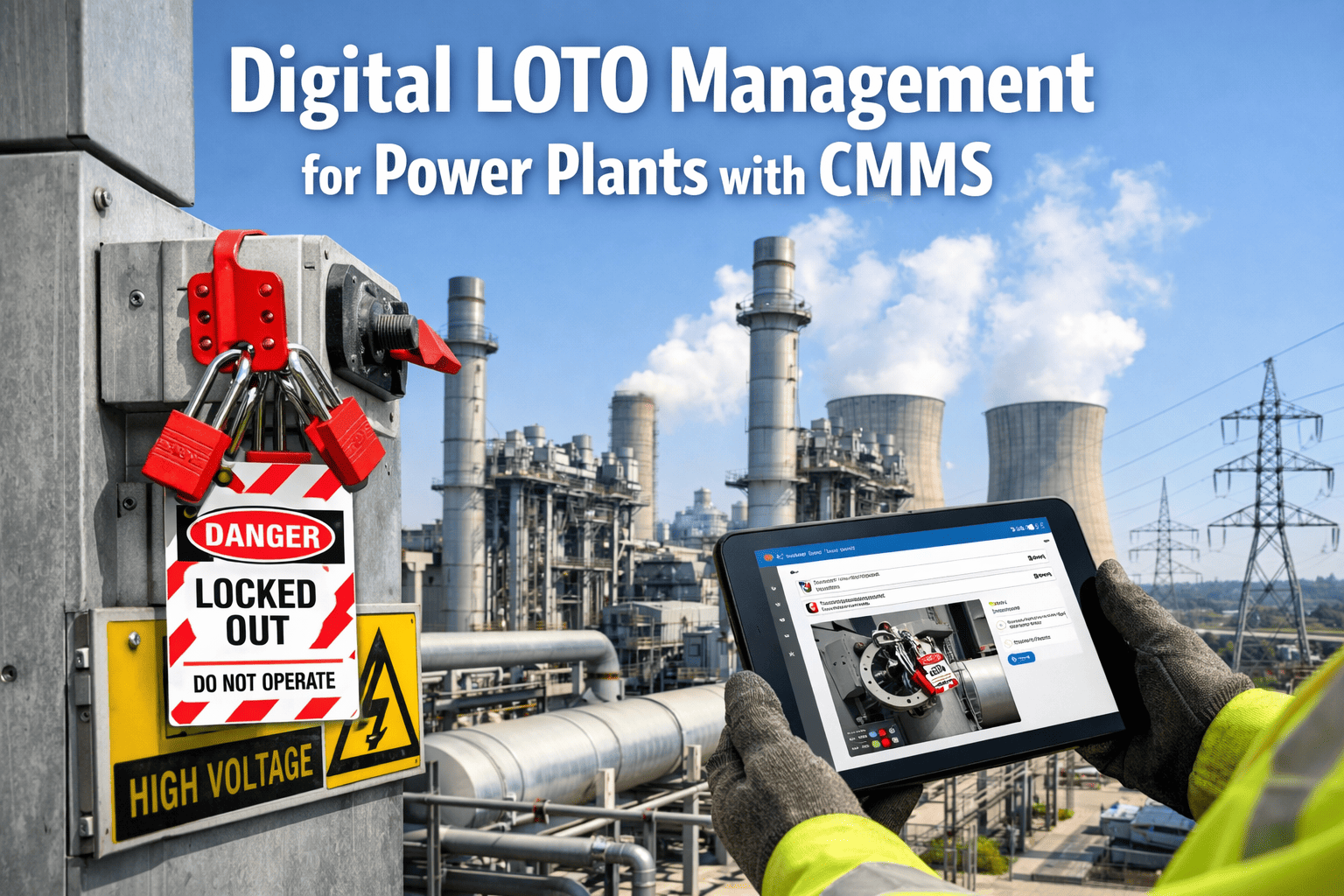
Paper LOTO procedures have three critical failure modes: version control, worker access, and documentation completeness. OxMaint stores LOTO procedures digitally linked to each equipment tag — so when a technician scans an equipment asset, they receive the current, approved isolation sequence specific to that machine. Any procedure update is pushed immediately to all users, eliminating outdated paper printouts. Each lock application is timestamped and attributed to an authorized worker, group lockout coordination shows all active locks on shared equipment in real time, and the system prevents permit sign-off until every isolation step is confirmed. The resulting documentation is complete, automatically organized, and audit-ready.
Can OxMaint handle group lockout scenarios where multiple crews work on the same equipment?
Yes — group lockout is one of the most common failure points in industrial LOTO programs and a specific design focus of OxMaint's platform. When multiple workers or crews are authorized to work on the same equipment, OxMaint displays all active locks on a shared equipment record in real time. Re-energization of any isolation point is blocked for as long as any authorized lock remains active and uncleared. Each worker clears their own lock individually with a confirmed digital sign-off, and supervisors can see group lockout status across all active work orders on the safety dashboard. This eliminates the physical coordination failures that cause injuries when one worker clears an equipment point while another crew member is still inside.
What atmospheric monitoring integration does OxMaint support for confined space entry?
OxMaint integrates with common industrial gas detection instruments and IoT atmospheric sensors to pull pre-entry and continuous monitoring data directly into the confined space entry permit record. Pre-entry testing results for oxygen concentration, flammable gas LEL percentage, and toxic vapor levels are required fields in the digital permit — entry authorization cannot be granted until acceptable conditions are documented. For facilities with fixed atmospheric monitoring systems inside confined spaces such as boiler drums or underground vaults, OxMaint displays live readings on the safety dashboard and triggers automated alerts when readings approach OSHA action levels, giving attendants and supervisors time to act before conditions become immediately dangerous.
How quickly can OxMaint generate documentation for an unannounced OSHA inspection?
OSHA inspectors will typically request completed permits for the past 12 months, LOTO procedure certifications with annual review dates, training records for authorized workers, and incident investigation documentation. Paper systems require hours or days to compile this documentation and frequently produce incomplete records with missing signatures or misfiled permits. OxMaint generates filtered audit reports by standard, date range, equipment, or worker in under two minutes. Every permit, every LOTO procedure, every training record, and every inspection log is stored with its complete digital audit trail — who authorized it, who executed it, when each step was completed, and whether any deviations were noted and resolved.
Does OxMaint integrate with our existing CMMS and work order systems?
OxMaint functions as a complete integrated platform that connects safety permitting directly to your maintenance work order system. When a work order is created for equipment that requires LOTO, confined space entry, or hot work authorization, the safety permit workflow is automatically triggered — maintenance teams cannot proceed to scheduled work without the required permits being issued and active. For plants already using other CMMS platforms, OxMaint connects via API to receive work order triggers and push permit status back to the maintenance system. Most integrations are configured within 4–6 weeks of deployment without requiring replacement of existing maintenance systems.
Stop Relying on Paper to Protect Your Workers
LOTO violations are rising 29% year over year. Confined space fatalities and hot work fires are preventable — but not with clipboards and shared spreadsheets. OxMaint gives power plant safety teams the digital LOTO workflows, permit management, real-time hazard visibility, and audit documentation that paper systems cannot deliver. Your workers deserve a safety program that actually works.