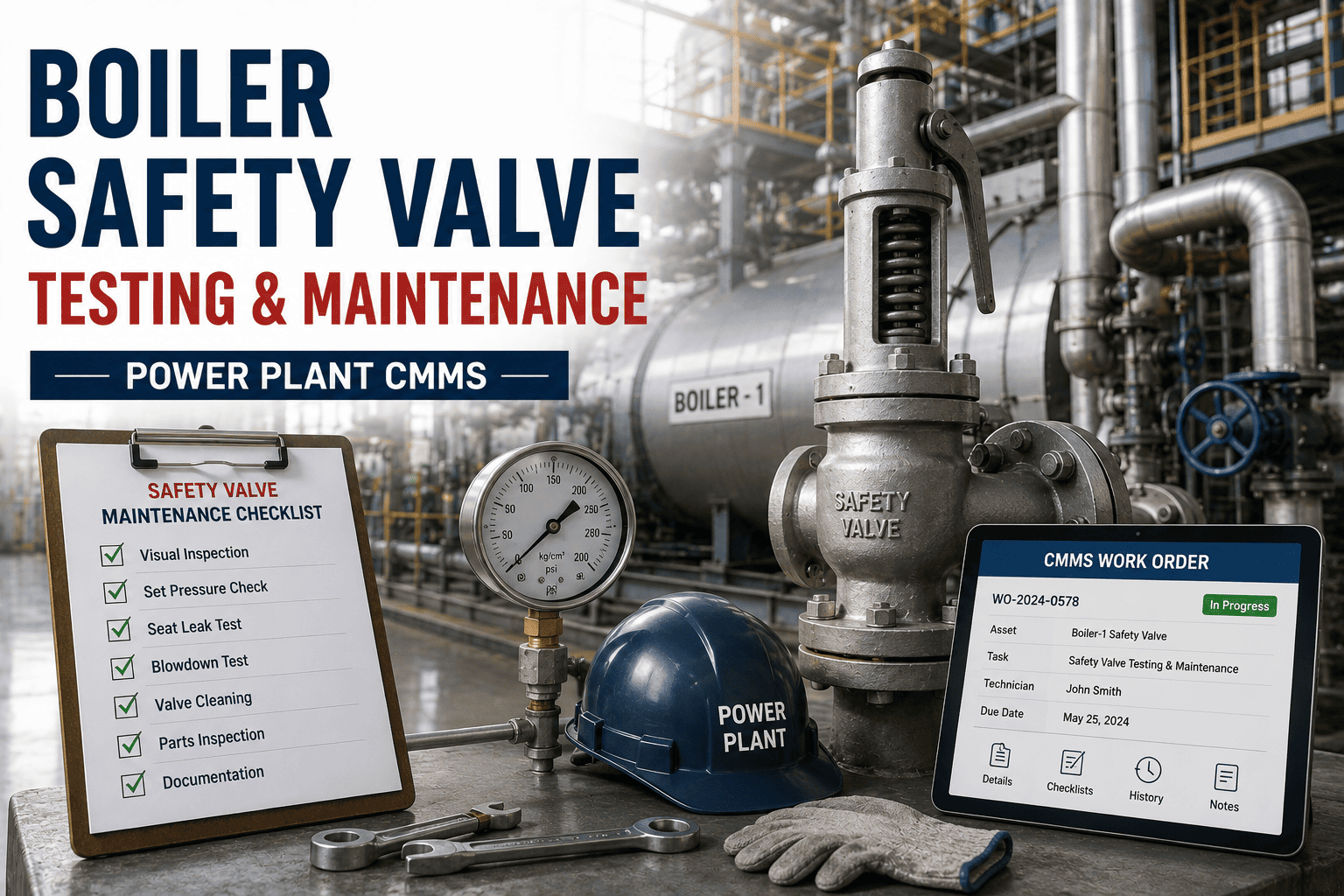
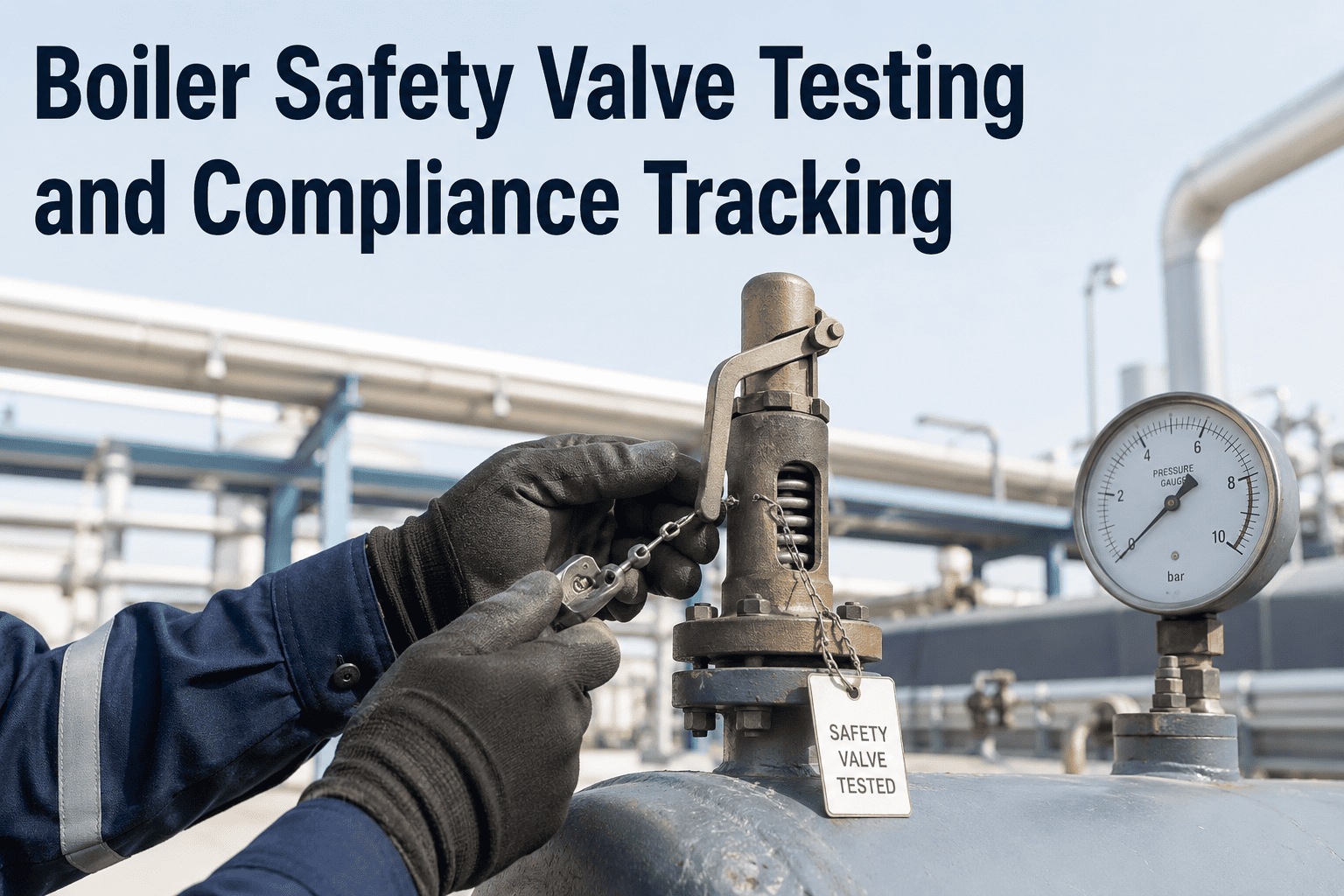
A single failed safety relief valve during a high-pressure steam event can force a full unit shutdown, trigger a regulatory inspection, and expose plant operators to serious liability — yet many power plants still track thousands of valves on spreadsheets with no individual service history, no actuator test records, and no systematic PM schedule. With isolation valves, control valves, safety relief valves, and check valves spread across every system in a plant, the scale of the tracking problem is enormous. OxMaint CMMS treats every valve as an individual asset with its own history, test records, and maintenance schedule — so your reliability team always knows which valve was last serviced, what was found, and when it's due again. Book a 30-minute demo to see how valve-level asset management works at scale.
68%
of valve failures caused by lack of documented service history
4,000+
valves in a typical 500MW gas combined-cycle plant
$1.2M+
average cost of a forced outage caused by SRV failure to lift
The core problem
Why valve maintenance fails without a CMMS
Power plant valves are not interchangeable. A 6-inch steam isolation valve on the HP turbine bypass and an identical-looking valve on a cooling water header have entirely different service requirements, failure modes, and regulatory obligations. When valves are tracked at the system level rather than the individual asset level, service intervals are averaged out, test results are lost, and failures are attributed to bad luck rather than missed maintenance.
The five tracking failures that cause valve-related outages
1
No individual asset record — valve population tracked as a system, not individual components
2
Actuator test results recorded on paper, never searchable or trend-analyzed
3
SRV pop test and recertification intervals missed due to no PM trigger in CMMS
4
No record of which valves have been repacked, rebuilt, or replaced — leading to repeat failures
5
Regulatory inspection readiness relies on individual technician memory rather than system data
Valve taxonomy
Four valve types, four different maintenance strategies
Isolation Valves
Gate, ball, butterfly, globe
Full-stroke exercising on a defined interval, seat leakage testing, stem packing inspection, and valve position verification. High-cycle isolation valves need individual cycle counts tracked in CMMS to trigger bearing and packing replacements at the right interval — not calendar time.
Control Valves
Pneumatic, hydraulic, electro-hydraulic
Positioner calibration, stroking tests (open/close/partial stroke), seat and plug inspection, actuator pressure tests, and I/P converter checks. CMMS should capture as-found and as-left calibration data for every service, enabling deviation trending over the valve's service life.
Safety Relief Valves
Spring-loaded, pilot-operated
Pop test verification against set pressure, seat tightness check after reseating, and recertification at intervals defined by ASME PTC 25 and insurance requirements. SRV records in CMMS must include as-found pop pressure, as-left set point, tag number, and certification body — all retrievable for OSHA PSM audits.
Check Valves
Swing, tilting disc, dual plate
Non-destructive backflow testing, disc condition inspection during system outages, and hinge pin wear assessment. Check valve failures are often silent until a reverse-flow event causes pump or turbine damage — CMMS-tracked inspection records prevent this class of failure.
Track every valve — isolation, control, SRV, and check — with full service history
OxMaint's CMMS creates individual asset records for your entire valve population, with PM schedules, actuator test forms, and SRV certification tracking built in.
CMMS configuration
How to structure valve assets in your CMMS
1
Build the valve asset hierarchy
Create individual asset records for every maintainable valve. Organize under the parent system (HP steam, cooling water, fuel gas) and location. Capture nameplate data: manufacturer, model, size, pressure class, material, actuator type, and tag number. This becomes the foundation all service records are built on.
2
Configure valve-type PM templates
Create reusable PM task templates for each valve category. Isolation valve PMs include: visual inspection, exercising, packing check. Control valve PMs include: positioner calibration, stroke test, as-left data entry. SRV PMs include: pop test scheduling, certification upload, recertification date update. Templates enforce consistent data capture across all technicians.
3
Set actuator test record fields
For pneumatic and hydraulic actuators, capture supply pressure, stroke time (open and close), fail-safe position verification, and positioner output signal at 0%, 50%, and 100% stroke. Storing this data per-valve per-service enables deviation detection when actuator performance starts degrading between maintenance intervals.
4
Integrate with outage planning
Many critical valve services — internal inspection, seat grinding, bonnet repacking — require system isolation and are only practical during planned outages. CMMS outage scheduling should pull deferred valve maintenance tasks into the outage scope automatically, preventing the common failure of discovering overdue valve work after outage windows close.
Compliance & regulatory
SRV certification and OSHA PSM: what CMMS records must capture
Safety relief valves on pressure vessels and steam systems are subject to ASME Section I, ASME Section VIII, and OSHA Process Safety Management (29 CFR 1910.119) requirements. CMMS records for SRVs must be audit-ready and complete.
| Required Record |
Regulatory Driver |
CMMS Field Type |
Retention Period |
| As-found pop pressure |
ASME PTC 25 / Insurance |
Numeric (PSI/bar) |
Life of equipment |
| As-left set pressure |
ASME Section I/VIII |
Numeric (PSI/bar) |
Life of equipment |
| Certification body & stamp |
OSHA PSM / state boiler code |
Text + attachment |
Life of equipment |
| Recertification due date |
Insurer / local jurisdiction |
Date field → PM trigger |
Active until renewed |
| Seat tightness test result |
API 527 |
Pass/Fail + leakage rate |
10 years minimum |
| Technician & certifying body |
OSHA PSM 1910.119(j) |
Text field |
Life of equipment |
Maintenance benchmarks
Valve maintenance intervals: industry reference guide
HP/IP Steam Isolation
Annual full-stroke
Seat leak test every 2 years during outage. Packing inspection semi-annual.
Turbine Control Valves
Outage-based (major/minor)
OEM-recommended stroke test quarterly. Full overhaul at major inspection interval.
Safety Relief Valves
3–5 years (insurer-dependent)
Pop test and recertification. More frequent if as-found deviation > 3% from set point.
Boiler Feedwater Check
Annual inspection
Disc and hinge condition during boiler outage. Replace if wear exceeds OEM limits.
Cooling Water Butterfly
2-year full service
Actuator and disc inspection. Seat replacement if leakage exceeds allowable limits.
Fuel Gas Ball Valves
Annual proof test
Full-stroke exercise and seat leak test. Critical for HAZOP-defined safety functions.
Expert answers
Frequently asked questions — valve maintenance management
Every valve. Every service record. Every compliance requirement — in one system.
Stop managing valve maintenance on spreadsheets and in technician memory. OxMaint gives your plant a complete valve asset registry with PM scheduling, actuator test records, SRV certification tracking, and mobile data capture — all in one platform.