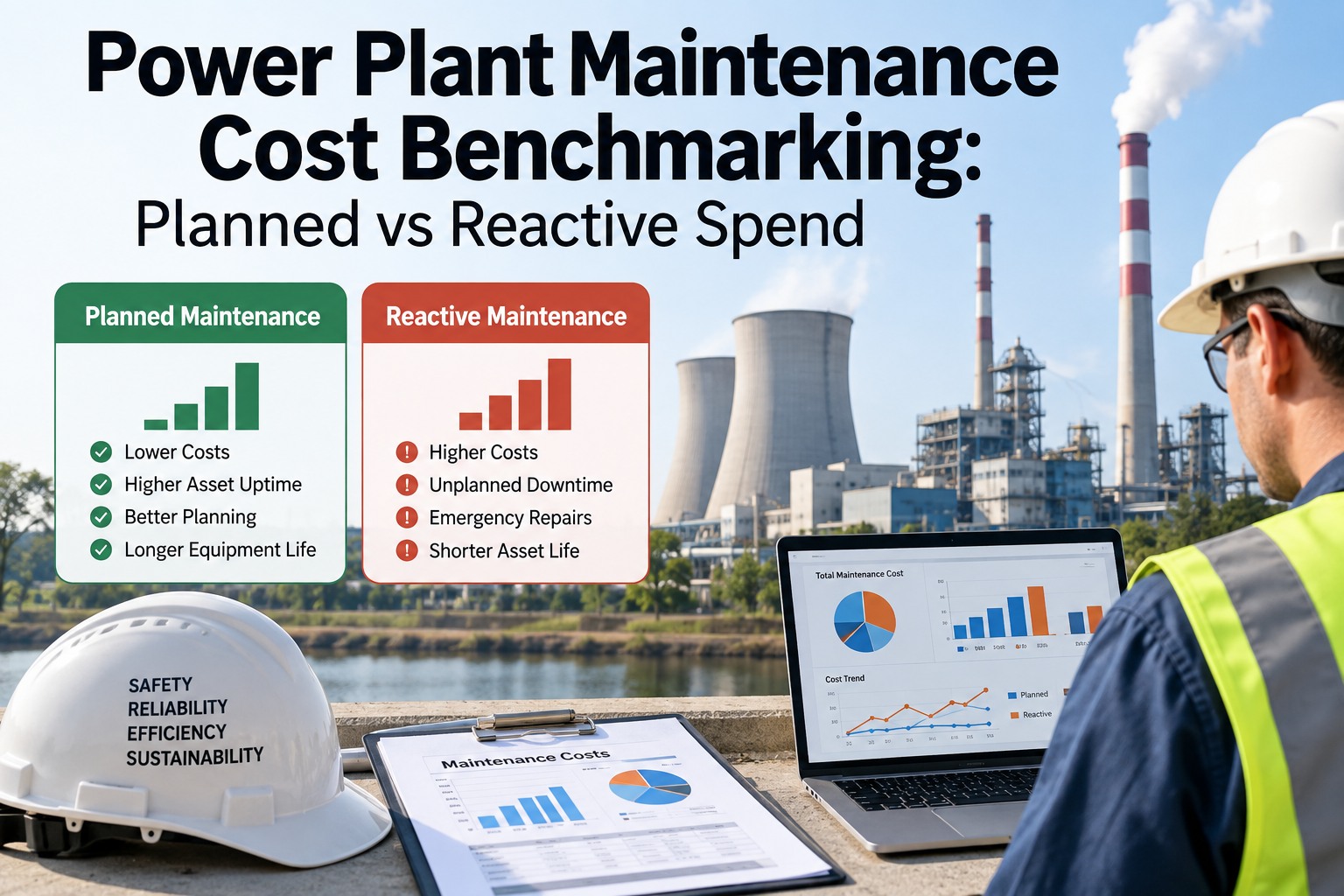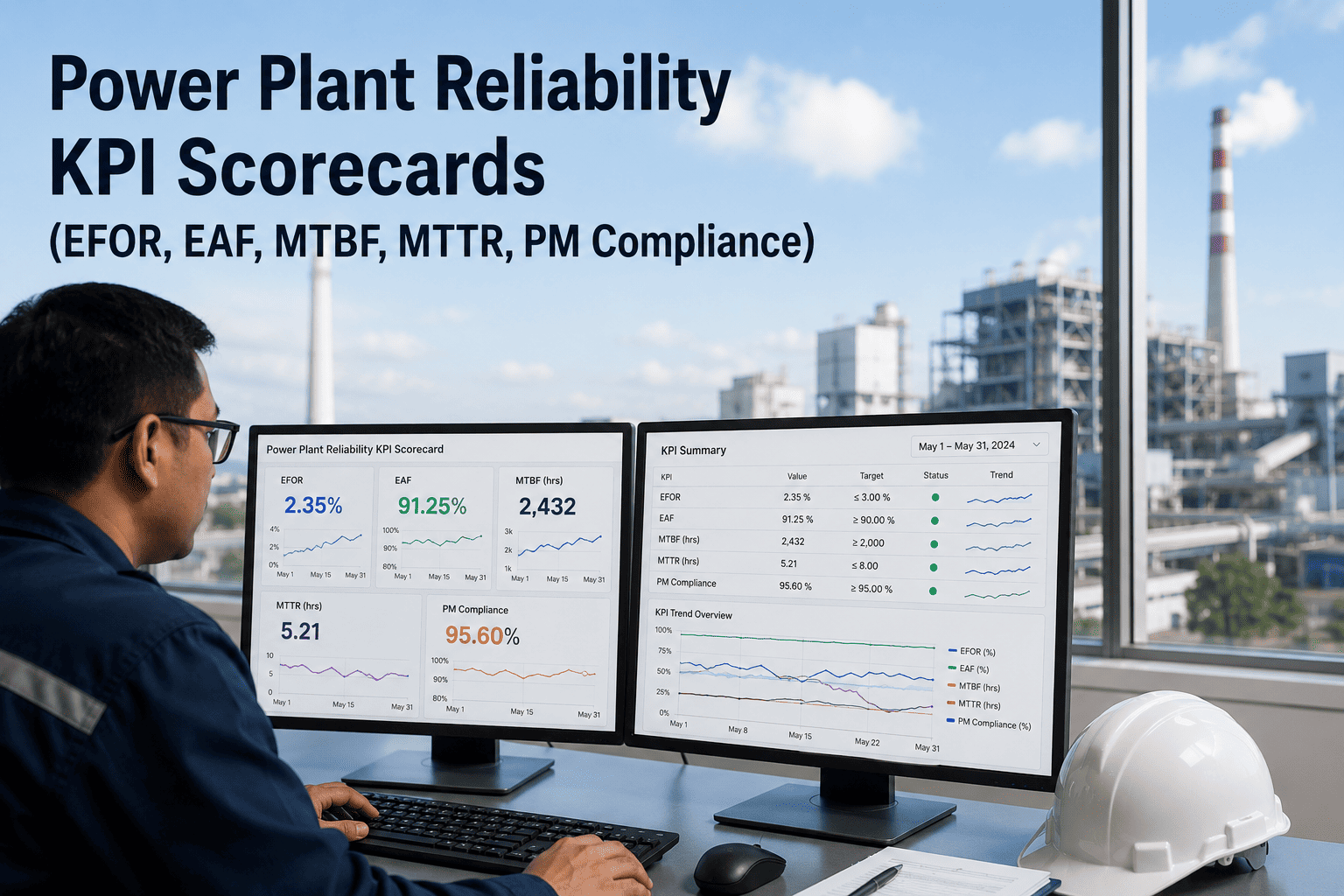
Most power plant maintenance managers know their MTTR. Fewer know how it compares to the industry median — and almost none have a structured process for closing that gap using the data already sitting in their CMMS. Benchmarking maintenance performance isn't an academic exercise: a plant running at 4.2% maintenance cost as a percentage of replacement asset value when the industry top quartile sits at 2.1% is paying a compounding premium that erodes margin every operating year. CMMS data is the fastest path to benchmarking because it already holds work order history, labor hours, failure events, and PM compliance rates in one place. Explore how Oxmaint surfaces benchmark-ready analytics from your maintenance data — or book a 30-minute session to walk through KPI configuration for your plant.
Why Maintenance KPI Benchmarking Is a Business Decision, Not a Metrics Exercise
Benchmarking converts raw operational data into a performance gap map. For a 600 MW plant, moving from the industry median to top-quartile MTBF is worth an estimated $2.1–$3.4 million annually in recovered availability — numbers that justify maintenance budget increases, workforce investment, and technology deployment to any board or regulator asking for evidence.
Power Plant Maintenance KPIs: Definitions, Benchmarks, and CMMS Data Sources
Each KPI below is calculated from work order and asset data already captured in a functioning CMMS. The benchmarks are drawn from EPRI, Solomon Associates, and SMRP industry surveys for thermal generation assets.
Know Exactly Where Your Plant Stands Against Industry Benchmarks
Oxmaint CMMS calculates MTTR, MTBF, PM compliance, maintenance cost per MWh, and reactive ratio from your live work order data — so benchmarking is a dashboard view, not a quarterly report project.
How CMMS Data Accelerates the Path from Benchmark to Performance
Knowing your gap is step one. Closing it requires connecting each lagging KPI to the specific maintenance behavior driving it — and that connection only exists inside the work order and asset data your CMMS holds. The table below maps common benchmark gaps to their root maintenance drivers and the CMMS actions that address them.
| Lagging KPI | Common Root Cause | CMMS-Driven Corrective Action | Expected Improvement Timeline |
|---|---|---|---|
| High MTTR | Parts unavailable at job start; crew mobilization delays | Enable parts reservation on work order creation; configure crew response escalation alerts | 30–60 days |
| Low MTBF | PM inspections missed or deferred; no failure mode tracking | Activate automated PM scheduling with criticality-tiered compliance alerts; configure FMEA failure codes | 90–180 days |
| Low PM Compliance | Manual scheduling, no escalation for missed windows | Switch to condition/hours-based PM triggers; enable 30/14/7 day pre-due escalation alerts | 60–90 days |
| High Maintenance Cost/MWh | High reactive work ratio driving emergency labor and freight | Shift to predictive scheduling using asset health scores; reduce reactive work order share below 20% | 6–12 months |
| High Reactive Ratio | No condition monitoring integration; calendar-only PM schedule | Connect sensor feeds to asset health dashboard; configure failure pre-event alert thresholds | 90–180 days |
Maintenance KPI Benchmarking: Common Questions
Your CMMS Data Already Holds the Benchmarks. Oxmaint Surfaces Them.
MTTR, MTBF, PM compliance, cost per MWh, and reactive ratio — all calculated live from your work order and asset data without manual reporting. Power plant maintenance leaders using Oxmaint benchmark continuously, not quarterly. Start free or see how the KPI dashboard is configured for your plant's asset classes.