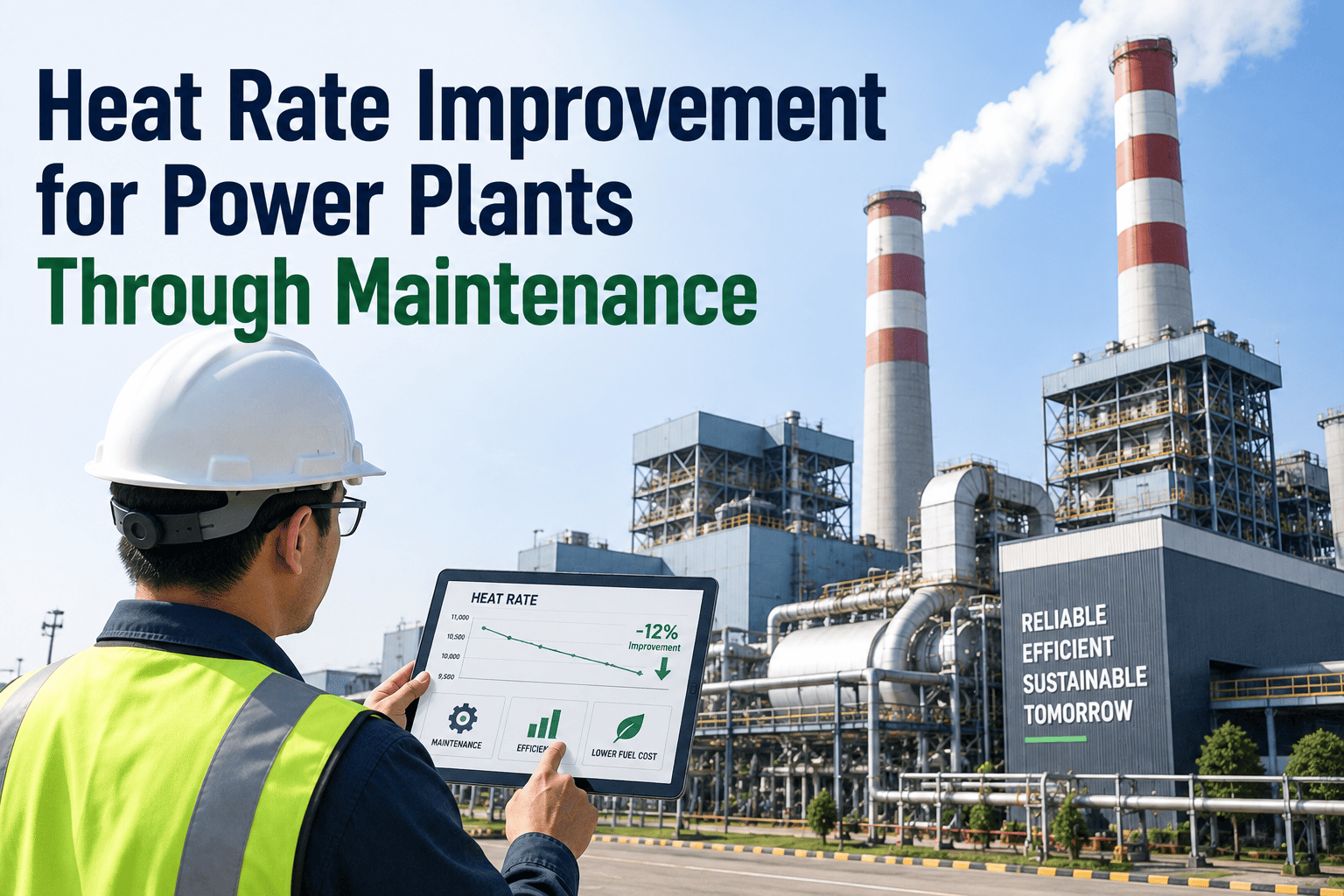
A 2% increase in air preheater leakage at a 500 MW coal-fired unit costs $340,000 annually in lost efficiency — fuel burned to heat air that bypasses the combustion process entirely — yet most plants discover the problem only when heat rate calculations drift upward over quarterly reviews. A CMMS with integrated APH leakage tracking and maintenance scheduling closes the gap between real-time differential pressure monitoring and coordinated basket cleaning, seal replacement, and rotor balancing workflows — so leakage stays below 8%, heat rate holds target, and boiler efficiency degradation triggers preventive action instead of reactive troubleshooting six months too late.
Why Air Preheater Leakage Compounds Faster Than Plants Detect It
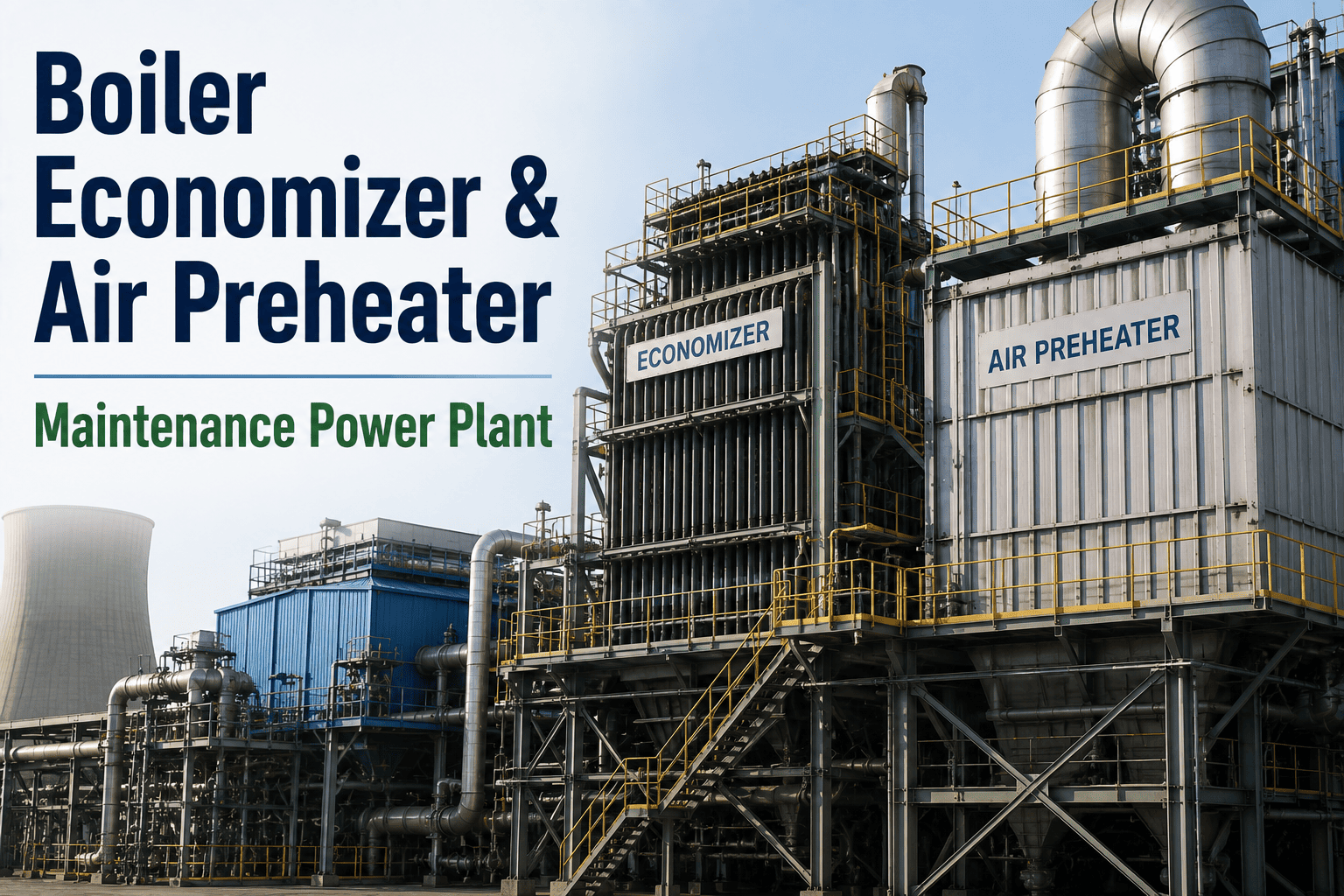
Air preheaters recover waste heat from flue gas to preheat combustion air — the single largest opportunity for efficiency gain in the Rankine cycle after the condenser. A well-sealed APH returns 15-20% of boiler input energy that would otherwise exit the stack. But seals wear, baskets foul, rotors warp, and leakage creeps upward at 0.3-0.5% per quarter. By the time operations notices the heat rate deviation, six months of excess fuel consumption have already occurred and seal damage has progressed from repairable to replacement-required.
How to Calculate and Monitor APH Leakage Rate
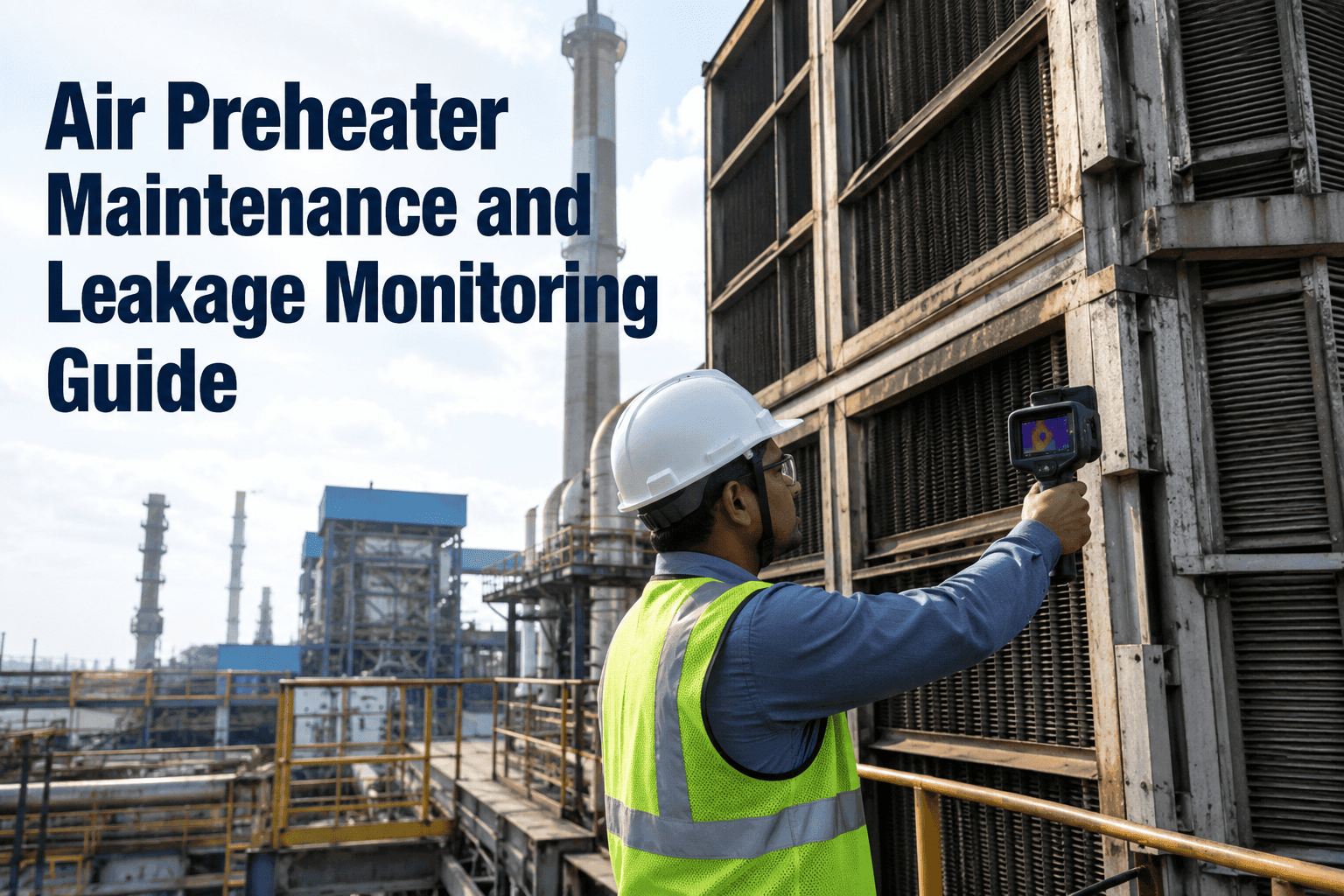
Air preheater leakage is the percentage of combustion air that bypasses the furnace by leaking from the high-pressure air side to the low-pressure gas side through worn seals and gaps. Accurate measurement requires continuous monitoring of inlet and outlet O2 concentrations with correction for air infiltration at other points in the gas path.
Air Preheater Preventive Maintenance Schedule
APH maintenance spans multiple time scales — from weekly differential pressure checks to multi-year rotor overhauls. Effective scheduling balances condition-based interventions with planned outage coordination to minimize both forced outages and efficiency degradation between major inspections.
| Maintenance Task | Frequency | Duration | Triggers & Conditions | Key Inspection Points |
|---|---|---|---|---|
| Differential Pressure Monitoring | Continuous | Real-time | Alert if ΔP increases 15% above baseline | Air side ΔP, gas side ΔP, fouling indicators |
| Leakage Rate Calculation | Continuous | Real-time | Work order if 7-day average exceeds 8% | Inlet/outlet O₂, seal position, bearing temps |
| Seal Visual Inspection | Quarterly | 2-4 hours | During unit shutdown or low-load window | Radial seals, axial seals, bypass dampers, wear patterns |
| Basket Water Wash | 6-12 months | 8-16 hours | When gas-side ΔP rises 20% or outlet temp drops 15°F | Basket plugging, ash deposits, soot buildup, corrosion |
| Seal Adjustment & Tightening | 12 months | 12-24 hours | Leakage >7% or seal clearance >design tolerance | Seal clearances, hold-down springs, guide tracks, alignment |
| Seal Replacement (radial/axial) | 18-24 months | 3-5 days | Wear depth >50%, scoring, permanent deformation | Seal material condition, rotor plate wear, sealing surfaces |
| Bearing Inspection & Lubrication | 12 months | 4-8 hours | Vibration >4.5 mm/s or bearing temp >180°F | Bearing clearances, oil condition, vibration signature, alignment |
| Rotor Basket Replacement | 8-12 years | 2-4 weeks | Corrosion perforation, structural damage, heat transfer loss >15% | Basket corrosion state, tube plugging, heat transfer performance |
| Rotor Balancing | 3-5 years | 1-2 weeks | Vibration trend upward or uneven basket loading | Dynamic balance, runout, structural integrity, drive coupling |
| Full APH Overhaul | 10-15 years | 4-8 weeks | Major outage, end of rotor life, design upgrade | Complete disassembly, rotor replacement, housing refurbishment, seal redesign |
Frequency intervals assume coal-fired operation with typical fly ash loading. Gas-fired units extend basket cleaning intervals but may have shorter seal life due to higher temperature differentials.
Track APH Leakage, Heat Rate, and Seal Condition in One Platform
OxMaint links APH differential pressure, O₂ analyzer data, and heat rate calculations to maintenance scheduling — so leakage trends trigger seal inspections, basket fouling schedules water washes, and efficiency losses drive corrective work orders before fuel costs compound. See it running on your boiler data in a 30-minute demo.
Common APH Failure Modes and Root Causes
Air preheater failures rarely happen suddenly. Most develop over months through gradual seal wear, basket plugging, or structural degradation. Recognizing early indicators prevents minor issues from escalating into forced outages or major efficiency losses.
Measured Impact of APH Maintenance on Heat Rate and Fuel Cost
These performance shifts are measured before and after APH seal replacement, basket cleaning, and leakage reduction at coal and gas-fired units — showing the direct link between APH condition and boiler efficiency.
Frequently Asked Questions
Stop Losing Efficiency to APH Leakage and Fouling
OxMaint tracks air preheater differential pressure, leakage rates, seal condition, and heat rate impact in real-time — with automated work order generation for basket cleaning, seal adjustment, and efficiency recovery before fuel costs escalate. Start free or see it live on your boiler performance data.