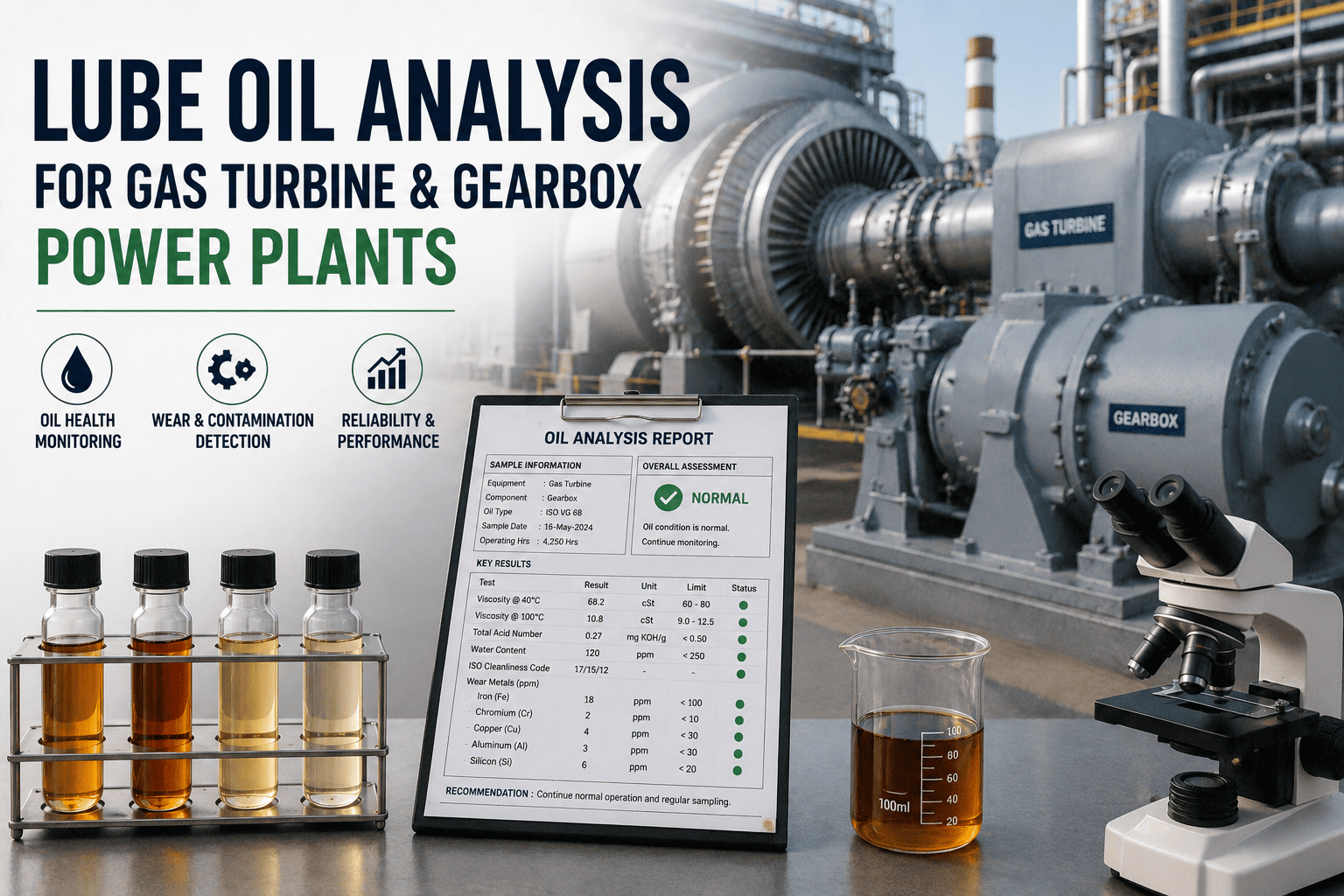
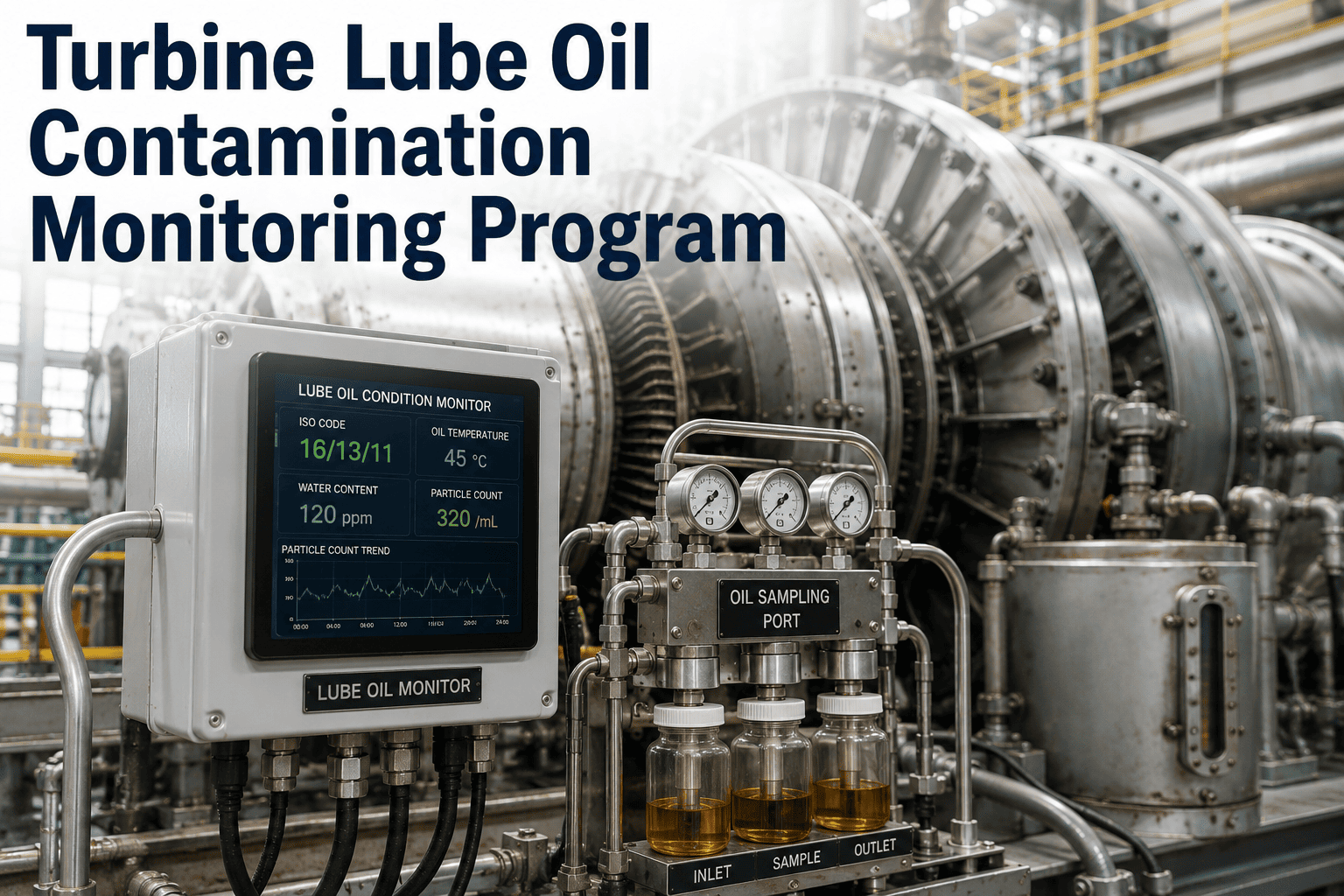
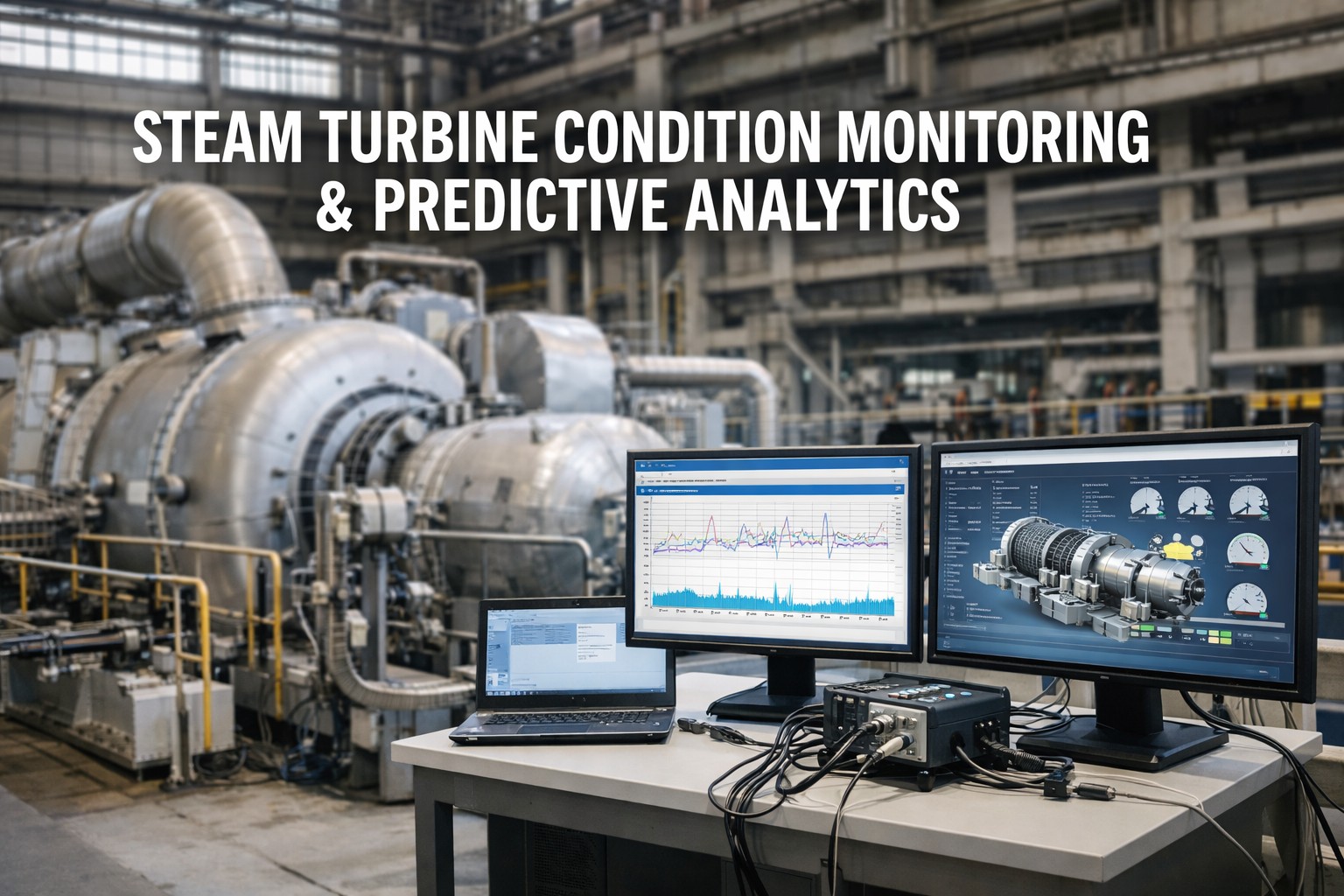
Turbine oil is not maintenance background noise. It is a real-time diagnostic signal — carrying iron particles, moisture levels, viscosity readings, and acid numbers that can predict a bearing failure weeks before any vibration sensor fires an alarm. Yet in most power plants today, that signal sits in a PDF report in someone's inbox, unconnected to the CMMS that actually dispatches work orders. Sign up for Oxmaint to connect your oil lab results directly to your maintenance workflows and stop treating analysis as a reporting exercise.
Turbine Oil Analysis Software: CMMS Integration for Predictive Maintenance
How integrating oil lab data with your CMMS turns contamination trends into automated work orders — before bearing failure forces an unplanned outage.
Your Oil Analysis Programme Is Producing Data. It Is Not Producing Action.
Every turbine oil sample your team sends to the lab returns a report. Viscosity. Particle count. Iron, copper, and lead in parts per million. Water content. Acid number. The report arrives as a PDF. Someone reads it. Maybe. Meanwhile, the CMMS that controls your work orders has no idea the report exists — and a bearing is wearing faster than your next scheduled inspection interval assumes.
Lab data sits in PDF reports, emailed to individuals rather than routed to the system that creates work orders. When iron particles spike above critical limits, the alert exists only in an inbox — not in a scheduled corrective task assigned to a technician with parts ready.
The interval between an oil sample showing contamination and a maintenance intervention is filled with manual steps: someone must read the report, decide it is actionable, create a work order, assign it, and schedule it. Each step adds delay. Wear progresses at the same rate regardless of whether anyone has processed the paperwork.
A single reading of 45 ppm iron might be borderline acceptable. Three consecutive readings of 31, 38, and 45 ppm iron — rising on the same bearing — is a failure developing in slow motion. Spotting that pattern requires a system that stores and trends every result, not a filing system of individual PDF reports.
From Oil Sample to Work Order — Without a Human in the Middle
Oxmaint's oil analysis integration closes the loop between your laboratory and your maintenance execution in four connected stages. The result is a system where a contamination reading above your defined threshold triggers a work order automatically — with the asset, the failure mode, the recommended action, and the parts list already populated.
Technicians log oil sample collection directly in Oxmaint work orders, recording the sample point, sample date, operating hours since last change, and current oil temperature. This creates a traceable link between the physical sample and the asset record before the sample leaves the plant.
When the laboratory processes the sample, results are pushed directly to Oxmaint via API — no manual entry, no PDF forwarding. Every parameter (viscosity, wear metals, particle count, water content, acid number) maps to structured data fields against the specific asset record and sample event.
Oxmaint compares each incoming result against your configured warning and critical limits — which can be set per asset, per parameter, and per operating condition. The system also evaluates trend rate: a reading below the absolute limit but rising at an abnormal rate triggers a warning before the threshold is breached.
When a limit breach or adverse trend fires, Oxmaint automatically generates a corrective work order — pre-populated with the asset ID, the triggered parameter, the recommended action (filtration, oil change, bearing inspection, or seal check), and the parts list. The work order goes directly to the assigned reliability engineer for approval and scheduling.
See Oxmaint's Oil Analysis Integration in Action
Our reliability team will walk you through a live configuration showing how lab results trigger work orders in your specific turbine environment.
The Three Dimensions of Turbine Oil Condition — and What Each Tells You
Effective turbine oil analysis is not a single test. It is a structured programme that tracks three distinct dimensions simultaneously: what the machine is generating (wear metals), what has entered the system from outside (contamination), and how the lubricant itself is performing (fluid properties). Oxmaint structures all three into one unified asset health view.
| Dimension | Key Parameters | What Elevated Readings Indicate | Automated Action in Oxmaint |
|---|---|---|---|
| Wear Metals | Iron, Copper, Lead, Tin, Chromium (ppm) | Bearing surface degradation, journal wear, babbitt material loss | Bearing inspection work order + ultrasonic follow-up task |
| Contamination | Particle count (ISO 4406), Water content (ppm), Silica, Sodium | Filter bypass, seal failure, cooling water ingress, external particulate ingestion | Filtration work order + seal inspection + filter replacement task |
| Fluid Properties | Viscosity (cSt), Acid Number (TAN), Oxidation, Varnish Potential (MPC) | Thermal degradation, additive depletion, varnish formation risk | Oil change work order + system flush task with lead time for procurement |
All three dimensions are trended continuously against historical baselines for each individual asset — not against generic industry averages.
What Happens When Oil Analysis Catches What Vibration Monitoring Misses
Routine sample returned from lab: Iron 28 ppm (limit: 50 ppm). Copper 11 ppm (limit: 20 ppm). All readings within limits. Vibration data: nominal. No work order generated — but Oxmaint notes the iron reading as the highest in 18 months of historical data for this bearing.
Iron 39 ppm. Copper 17 ppm. Both readings still below absolute limits — but Oxmaint's auto-trending alarm detects a statistically significant rising rate across two consecutive samples. A warning-level work order is automatically created: inspect Bearing No. 3, check oil filter differential pressure, verify seal condition.
Visual inspection and micrometer measurement confirm babbitt material loss on the lower bearing shell — consistent with the rising iron trend. The bearing is scheduled for replacement during the next planned maintenance window, three weeks out. A parts order for the replacement bearing shell is raised immediately.
Bearing shell replaced during scheduled maintenance window. Unit 2 returns to service without an unplanned trip. The alternative — waiting for vibration alarms — would have flagged the failure at Week 11 at the earliest, by which point shaft scoring would likely have required an unplanned outage of 5–7 days.
What Oxmaint's Oil Analysis Integration Includes
Warning and critical limits are set individually for each asset based on OEM specifications, operating conditions, and historical baseline — not generic industry tables. A bearing running at high load and temperature gets different thresholds than an identical bearing in a lightly loaded position.
Oxmaint correlates wear metal trends with contamination readings and fluid property degradation simultaneously. Rising iron combined with rising water content and declining viscosity tells a different story — and triggers a different response — than rising iron alone.
Results flow directly from compatible oil analysis laboratories into Oxmaint via API, eliminating manual data entry. For labs not yet integrated, Oxmaint provides a structured import template that maps report fields to asset records in a single upload step.
Every alarm-triggered work order routes to the correct reliability engineer or maintenance planner based on asset area, shift assignment, and urgency level. Critical-limit breaches can be configured to notify by both system alert and direct message simultaneously.
Oxmaint manages your oil sampling schedule as structured recurring work orders — not a separate spreadsheet. When a sample is overdue, the system escalates it the same way a missed PM escalates: visibly, with tracking, not silently in a forgotten calendar entry.
Every result for every sample point is stored against the asset record permanently. A reliability engineer reviewing Bearing No. 3 sees 36 months of iron, copper, and particle count trends on a single screen — the kind of view that makes rate-of-change visible without any manual data compilation.
What Plants Report After Integrating Oil Analysis with Their CMMS
The following performance shifts reflect outcomes documented from power generation facilities that moved from isolated oil analysis programmes to fully integrated CMMS-connected workflows.
| Metric | Isolated Oil Analysis Programme | CMMS-Integrated Programme | Change |
|---|---|---|---|
| Time from lab result to work order | 3–10 days (manual process) | Under 2 hours (automated) | 90%+ faster |
| Bearing failures detected by oil analysis before vibration alarm | Less than 20% | Over 65% | 3x improvement |
| Unplanned turbine outages per year | Baseline (facility-specific) | 30–45% reduction | Avg. 37% fewer |
| Oil change frequency (condition vs. calendar) | Fixed intervals regardless of condition | Condition-based, extended where justified | 15–25% oil life extension |
| Sampling schedule compliance | 52–61% (spreadsheet-managed) | 87–93% (CMMS-managed) | +30 pts average |
| False alarm rate on oil analysis alerts | High (generic threshold tables) | Low (per-asset, trend-adjusted limits) | Up to 40% fewer false alarms |
The Oil Analysis Maturity Scale — Five Levels from Reactive to Predictive
Most plants operate at Level 2 or Level 3. The jump from Level 3 to Level 4 — where lab results automatically generate work orders — is where the measurable reduction in unplanned outages occurs.
Oil changed when it looks dirty or after failure. No sampling programme. Bearing failure is the primary signal.
Fixed interval oil changes. Occasional sampling. Lab PDFs received but not systematically actioned. No trend history.
Regular sampling with defined intervals. Lab reports reviewed manually. Some trending in spreadsheets. Work orders created manually when needed.
Lab results sync to CMMS automatically. Warning and critical limits trigger automated work orders. Trend history stored per asset. This is where most unplanned bearing failures are prevented.
Multi-parameter correlation with vibration and temperature data. AI-assisted remaining useful life estimation. Precise maintenance scheduling by predicted failure date rather than conservative fixed intervals.
Oxmaint moves plants from Level 2–3 to Level 4 with existing lab relationships and no new sensor hardware required. Sign up to start the assessment.
Turbine Oil Analysis Integration — Common Questions
No. Oxmaint integrates with your existing laboratory relationship via API if your lab supports data export, or through a structured import template if they do not. The integration is designed to work with the lab you already use — whether that is an in-house facility or a third-party service. For labs not yet API-connected, Oxmaint's implementation team maps the lab's standard report format to the import template as part of onboarding. Book a demo to discuss your specific laboratory setup.
Per-asset threshold configuration is a core part of Oxmaint's oil analysis module. Warning and critical limits are set individually for each asset, each parameter, and each sample point. You can load OEM-specified limits, apply limits derived from your own historical baseline, or use a combination of both. Trend-rate alarms — which fire when a parameter is rising abnormally even before it breaches an absolute limit — are also configurable per asset. Sign up to begin configuring your asset-specific thresholds.
Oxmaint supports the full standard set of turbine oil analysis parameters: wear metals (iron, copper, lead, tin, chromium, aluminium), particle count by ISO 4406 code, water content in ppm, viscosity at 40°C and 100°C, acid number (TAN), base number (TBN), oxidation, nitration, varnish potential (MPC rating), and custom parameters specific to your OEM or lubricant supplier. Each parameter can carry its own warning and critical limits independently. Book a demo to review the full parameter list against your current oil analysis programme.
Yes. Oxmaint integrates with DCS historians, vibration monitoring platforms, and online sensor systems to bring oil analysis results into context alongside vibration amplitude, bearing temperature, and operating hours. This correlation — seeing that rising iron coincides with a subtle vibration shift at a specific frequency — is the data pattern that distinguishes a developing bearing failure from normal operational variation. The combined view is available on each asset's health dashboard. Sign up to explore the multi-parameter correlation view.
For a plant with an existing sampling programme and laboratory relationship, the Oxmaint oil analysis integration typically reaches live automated alarming within 6–10 weeks. This covers asset register setup, threshold configuration, lab data format mapping, historical result import (providing immediate trend baseline), and technician training on the mobile work order interface. Plants with more assets or multiple laboratory suppliers may require additional time for API configuration. Book a demo to get an implementation timeline specific to your facility.
Your Next Bearing Failure Is Already Showing in Your Oil Data. The Question Is Whether Anyone Will See It.
Oxmaint connects your oil analysis lab directly to your work order system so that contamination trends trigger maintenance action automatically — before a bearing failure costs you an unplanned outage and emergency repair bill.