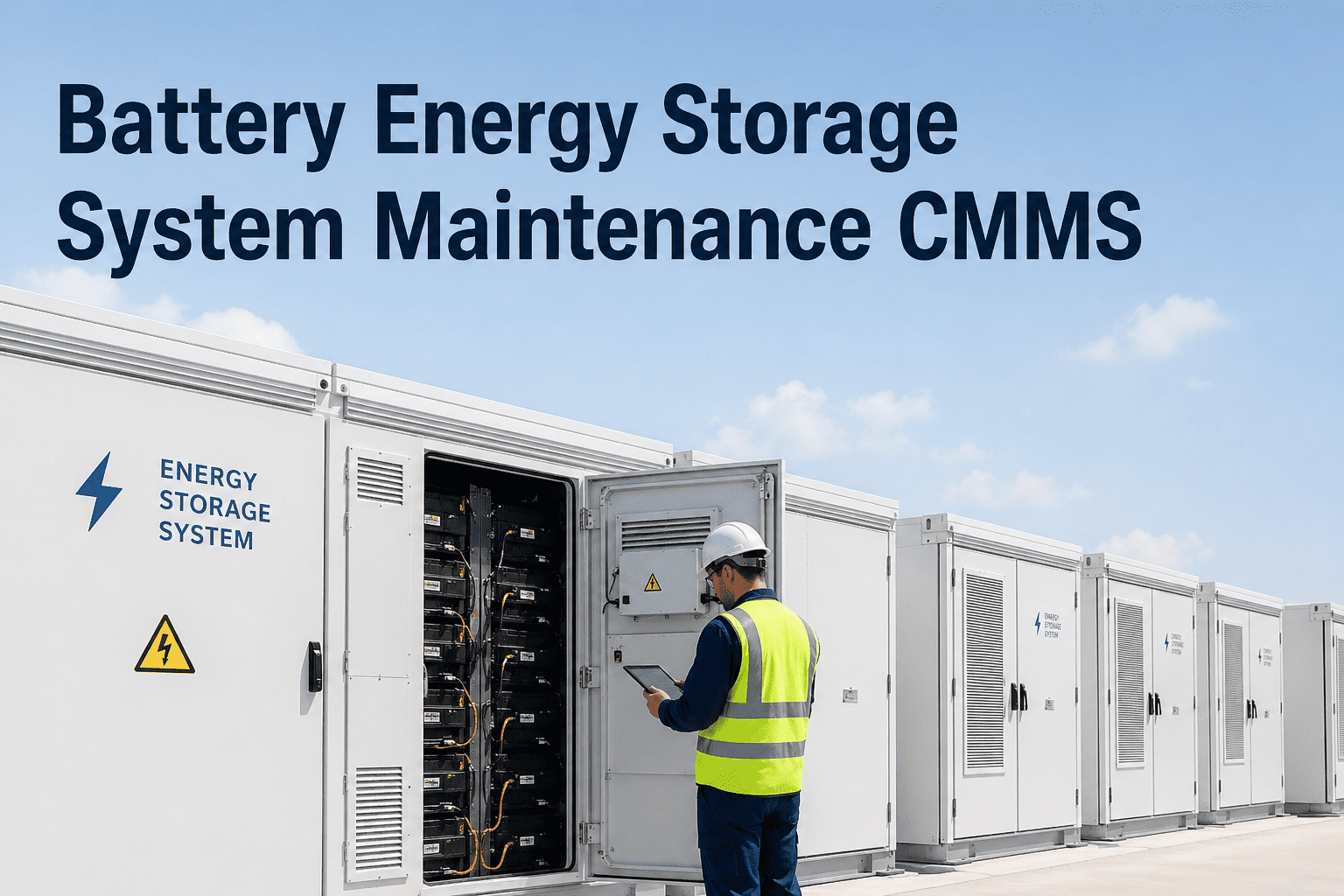
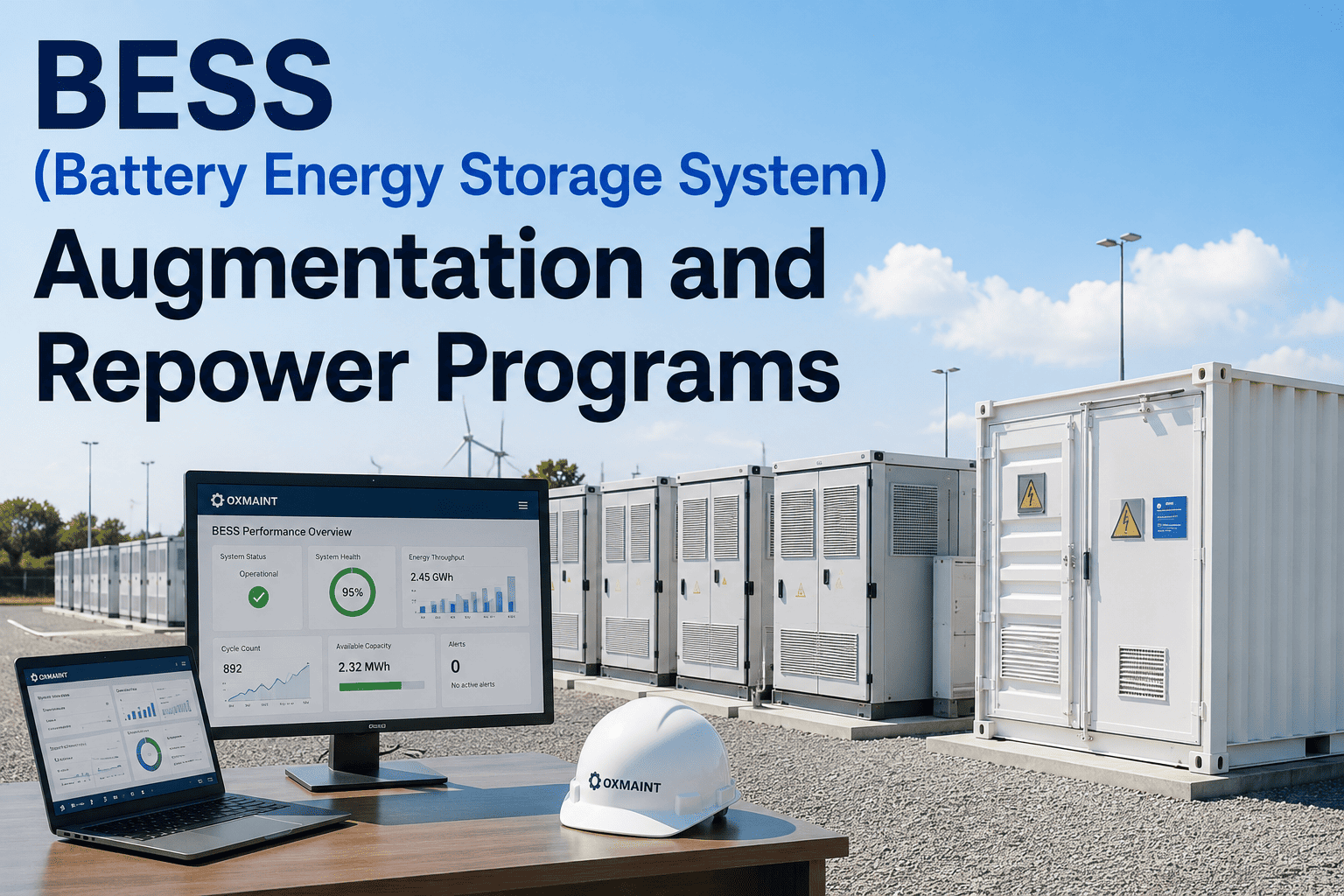
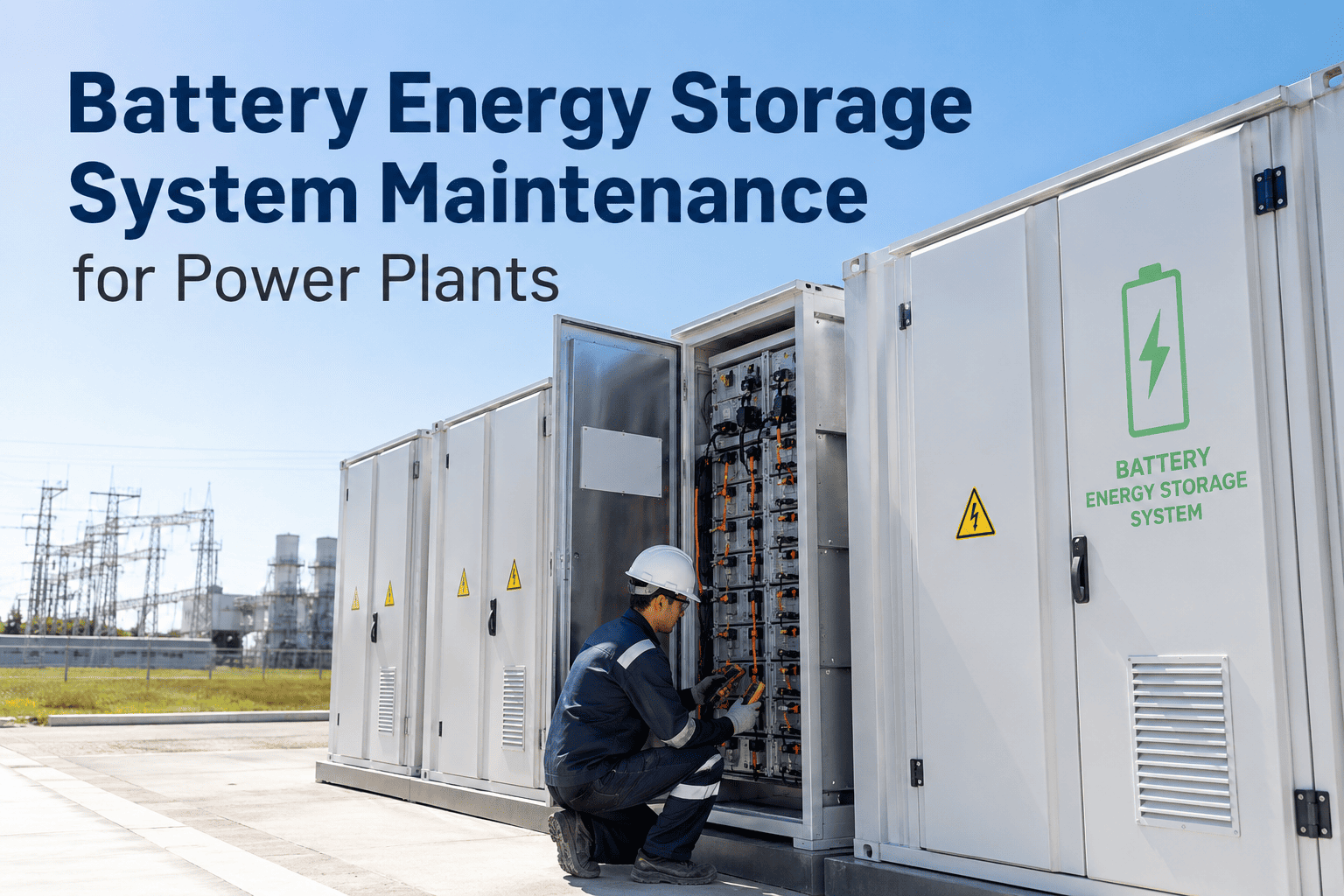
Battery Energy Storage Systems now anchor the world's fastest-growing energy infrastructure — the global BESS market reached USD 44 billion in 2025 and is expanding at a 15.3% CAGR through 2035, with over 57 GWh of new capacity installed in 2025 alone. Yet field data from quality audits across 70+ BESS factories shows that 72% of all BESS defects are system-level — thermal management failures, fire suppression gaps, and auxiliary circuit faults — not battery cells themselves. Maintenance teams managing these assets are tracking dozens of interdependent components across modules, racks, inverters, and thermal systems with schedules and spreadsheets built for simpler equipment. This is exactly where a purpose-built CMMS changes outcomes. To see how OxMaint tracks BESS component health, automates PM schedules, and keeps audit documentation ready at all times, you can start a free trial or book a 30-minute BESS maintenance walkthrough with a specialist.
CMMS for Energy Storage / BESS Operations 2025
Battery Energy Storage System Maintenance — Why CMMS Is Now Critical Infrastructure
As grid-scale BESS installations scale from pilot to fleet, maintenance teams need more than spreadsheets. Here is what structured CMMS does for battery module health, thermal management, and inverter reliability.
$44B
Global BESS market in 2025
72%
BESS defects are system-level, not cell-level
15.3%
CAGR through 2035 — fastest energy segment
57 GWh
New BESS capacity installed in 2025 alone
Where BESS Maintenance Actually Fails
Understanding the real failure map changes how you structure your maintenance program. The data from EPRI, CEA, and NYSERDA field audits consistently shows the same pattern — failures cluster in systems that are easy to overlook between scheduled inspections.
28%
Fire Detection & Suppression
The highest-risk failure category. Suppression defects identified in over a quarter of audited BESS systems — many discovered only at commissioning when cascading fires became possible.
Safety-Critical
19%
Auxiliary Circuit Panels
Faulty auxiliary panels risk control system failure across multiple racks simultaneously — a single fault that can cascade across the entire enclosure.
Safety-Critical
15%
Thermal Management Systems
Circulation failures, compressor mainboard faults, and refrigerant leaks. Thermal degradation is often invisible until it becomes a thermal runaway event.
Safety-Critical
11%
Cell & Module Failures
Despite being the most feared failure mode, actual cell degradation accounts for only 11% of classified BESS incidents — most battery failures start elsewhere.
Performance
!
Key finding: BESS failures rarely originate from battery cells — they originate from integration failures, thermal management gaps, and inadequate monitoring. A CMMS that tracks systems, not just cells, is what protects reliability.
OxMaint Tracks Every BESS Component — Not Just Batteries
Configure PM schedules for thermal systems, inverters, fire suppression, and battery racks in one platform. Mobile-ready for field technicians, audit-ready for compliance teams.
The Five BESS Components That Need Structured CMMS Tracking
Every BESS installation contains the same five maintenance-critical component groups. Effective CMMS builds a separate asset hierarchy for each — with its own PM schedule, failure modes, and inspection triggers.
01
Battery Modules and Racks
Each module and rack is a distinct asset requiring state-of-charge calibration, capacity testing against baseline, and cell voltage imbalance monitoring. CMMS tracks performance degradation per module over time and triggers inspection when capacity falls below threshold — before cumulative degradation impacts dispatch availability.
SOC recalibration
Capacity baseline testing
Voltage imbalance checks
Module replacement tracking
02
Thermal Management System
Liquid cooling circuits, compressor mainboards, circulation pumps, and refrigerant levels represent the most under-maintained component group in most BESS installations. NYSERDA operators ranked thermal management as the equipment most likely to fail first. Structured CMMS prevents this with filter replacement schedules, coolant refill triggers, and leak detection protocols tied to work orders.
Filter replacement cycles
Coolant level and quality
Pump performance checks
Temperature gradient logs
03
Inverters and Power Electronics
Inverter faults are a leading cause of output loss events — NYSERDA operators consistently ranked inverters among the top two components most likely to degrade. CMMS tracks inverter service intervals, firmware update schedules, DC bus voltage stability checks, and cooling fan conditions — each with its own asset record, history, and failure-mode library.
Firmware version tracking
DC bus voltage checks
Cooling fan inspection
Trip event logging
04
Fire Detection and Suppression
28% of audited BESS systems had fire detection or suppression defects — the highest single failure category. Suppression system inspections are not optional; they are often contractually mandated by insurers and grid operators. CMMS automates inspection scheduling, logs suppressant levels, records sensor test results, and flags overdue checks before they become compliance violations.
Sensor calibration records
Suppressant level checks
Nozzle and valve inspection
Regulatory compliance log
05
Balance of System — Transformers, Switchgear, and Cabling
Transformer insulation testing, switchgear contact checks, breaker exercise schedules, and cable termination inspections form the BOS maintenance layer that is most often run on ad-hoc schedules. CMMS formalises these into planned work orders with asset-linked history — so degradation trends are visible before they produce forced outages.
Transformer insulation test
Breaker exercise log
Cable termination checks
Switchgear contact inspection
BESS Maintenance Schedule — What a Structured CMMS Delivers
The difference between reactive and planned BESS maintenance is primarily a scheduling and documentation problem. Here is how a CMMS organises the maintenance calendar across time horizons.
| Frequency |
Component |
Task |
CMMS Trigger |
| Daily |
Battery Management System |
Review BMS alarms, SOC variance, temperature alerts |
Auto-check / shift handover form |
| Weekly |
Thermal Management |
Cooling pump performance, refrigerant sight-glass check |
Scheduled PM work order |
| Weekly |
Fire Suppression |
Sensor activation test, suppressant pressure reading |
Scheduled PM work order |
| Monthly |
Inverters |
Fan filter cleaning, DC bus voltage stability, trip log review |
Scheduled PM work order |
| Monthly |
Battery Modules |
Capacity check against baseline, cell voltage balance audit |
Meter-based trigger |
| Quarterly |
Thermal Management |
Coolant flush and refill, compressor mainboard check |
Scheduled PM work order |
| Quarterly |
BOS — Switchgear |
Contact resistance test, breaker exercise, torque check |
Scheduled PM work order |
| Annual |
Transformer |
Insulation resistance test, oil sampling, thermal scan |
Scheduled PM work order |
| Annual |
Full BESS System |
Capacity performance test vs rated, full compliance audit package |
Date-based + regulator requirement |
OxMaint generates all of these as recurring work orders automatically — start a trial to configure your BESS asset hierarchy in minutes.
How CMMS Connects to Your Battery Management System
Modern BESS operations run on BMS data — cell voltages, temperatures, SOC, cycle counts, and fault codes flowing continuously. CMMS closes the loop by converting that data into maintenance actions with assigned owners, deadlines, and documented outcomes.
BMS Alert Fires
Temperature threshold exceeded or cell voltage deviation detected in BMS
CMMS Work Order Created
OxMaint auto-generates corrective work order assigned to on-shift technician with asset context
Technician Executes
Mobile app guides inspection, captures readings, photos, and resolution notes in the field
Asset record updated with time-stamped resolution — audit-ready, exportable, permanent
OxMaint integrates with SCADA and BMS via REST API and OPC-UA — book a demo to see the integration architecture for your site configuration.
Frequently Asked Questions
What does a CMMS do for BESS maintenance that a spreadsheet cannot?
A CMMS automates PM scheduling across every component — modules, inverters, thermal systems, fire suppression — generates work orders with deadlines and owners, and builds a permanent asset history that supports compliance audits. Spreadsheets cannot trigger work orders from BMS alerts, cannot enforce completion sign-off, and cannot produce the documentation regulators and insurers increasingly require for grid-connected storage assets.
Try OxMaint free to see the difference.
How often do BESS systems actually need preventive maintenance?
Daily BMS alarm reviews, weekly thermal and fire suppression checks, monthly inverter and module capacity audits, quarterly coolant and switchgear tasks, and annual full-system performance tests. Operators who ran annual-only inspection cycles reported the highest rates of unexpected failures — particularly in thermal and suppression systems. Structured recurring PM is what prevents system-level failures, which represent 72% of all BESS defects.
Can OxMaint integrate with our BMS and SCADA systems?
Yes. OxMaint supports REST API and OPC-UA integration for SCADA and historian connectivity, and can receive alerts from BMS platforms to auto-trigger corrective work orders. This closes the loop between monitoring data and documented maintenance actions.
Book a demo to discuss your specific BMS vendor and site topology.
What compliance documentation does BESS maintenance require?
Grid operators, insurers, and regulators typically require documented inspection records for fire suppression systems, evidence of thermal management maintenance, inverter service history, and annual performance test results. OxMaint stores all of this in auditable, time-stamped work order records that can be exported on demand — reducing compliance prep from days to hours.
Is OxMaint suited for utility-scale BESS sites with hundreds of assets?
Yes. OxMaint is designed for multi-asset, multi-site deployments — each battery rack, inverter block, thermal unit, and BOS component is registered as a distinct asset with its own PM schedule, failure codes, and maintenance history. For large utility-scale sites,
book a walkthrough to see how the asset hierarchy is structured for BESS specifically.
BESS Reliability Starts With Structured Maintenance
72% of BESS failures are system-level — preventable with structured PM schedules, component-level tracking, and documented inspection history. OxMaint gives energy storage teams the CMMS infrastructure to manage battery modules, thermal systems, inverters, and fire suppression in one platform — with mobile execution, BMS integration, and audit-ready records built in.