Acoustic emission monitoring is the only condition monitoring technology that hears active damage as it happens — not after it has already progressed. When a weld crack propagates, a boiler tube corrodes internally, or cavitation erodes a pump impeller, the material releases ultrasonic stress waves in the 50 kHz to 1 MHz range that no pressure sensor, vibration analyzer, or thermal camera can detect. Power plants running aging boiler systems, high-pressure steam piping, and large rotating equipment are adopting AE sensors specifically because the failure modes that cause the longest forced outages — internal crack growth, partial discharge in transformers, and active cavitation — are silent to conventional instrumentation until they become catastrophic. Integrating those AE signals directly into a CMMS like Oxmaint is what converts raw acoustic data into a scheduled work order — before the damage reaches a reportable threshold.
What Acoustic Emission Monitoring Actually Detects
AE technology does not measure vibration, temperature, or flow. It listens to the ultrasonic stress waves emitted by material under active stress — which means it detects damage while it is occurring, not after it has already altered the equipment's operating state. That distinction defines every use case in a power plant.
AE-D1
Active Crack Growth
Each micro-crack extension in a weld, pressure vessel wall, or turbine rotor releases a distinct burst-type AE signal. Pattern analysis distinguishes crack initiation from stable propagation — giving maintenance 14–30 days of warning before the crack reaches critical length.
Boiler headers — Steam piping welds — Turbine rotors — Pressure vessels
AE-D2
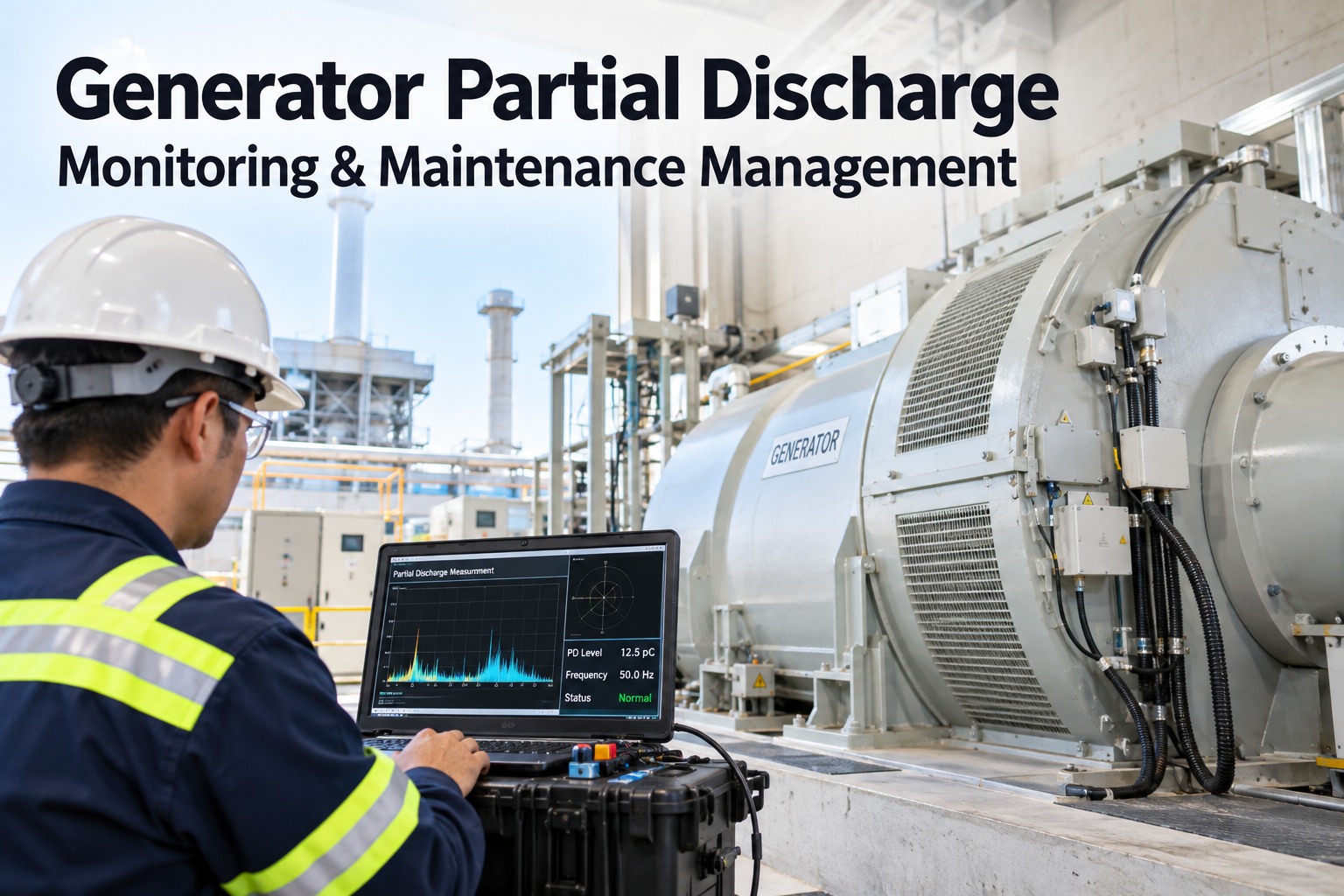
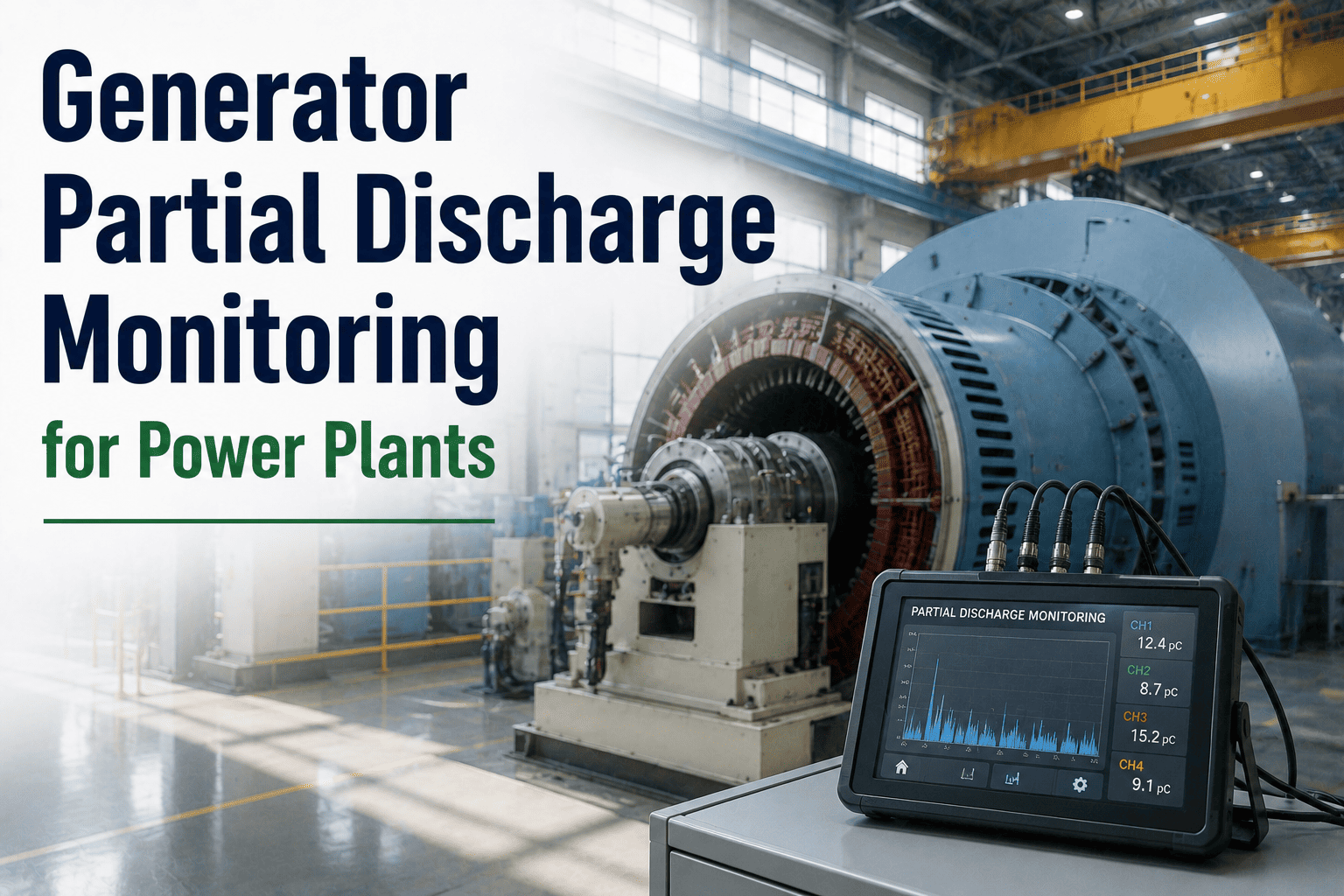
Partial Discharge in Transformers & Switchgear
Partial discharge in transformer insulation generates high-frequency AE pulses measurable through the tank wall without any electrical contact — avoiding the safety constraints of electrical PD measurement while matching its detection sensitivity on internal defects.
Main power transformers — Generator step-up units — HV switchgear — GIS bays
AE-D3
Cavitation in Pumps & Turbines
Cavitation bubble collapse generates broadband AE signals at frequencies that distinguish erosive cavitation from acceptable bubble formation. AE monitoring quantifies cavitation intensity continuously — enabling operators to tune operating points before pitting damage occurs on impeller and runner surfaces.
Boiler feed pumps — Condensate extraction pumps — Hydraulic turbine runners — Circulating water pumps
AE-D4
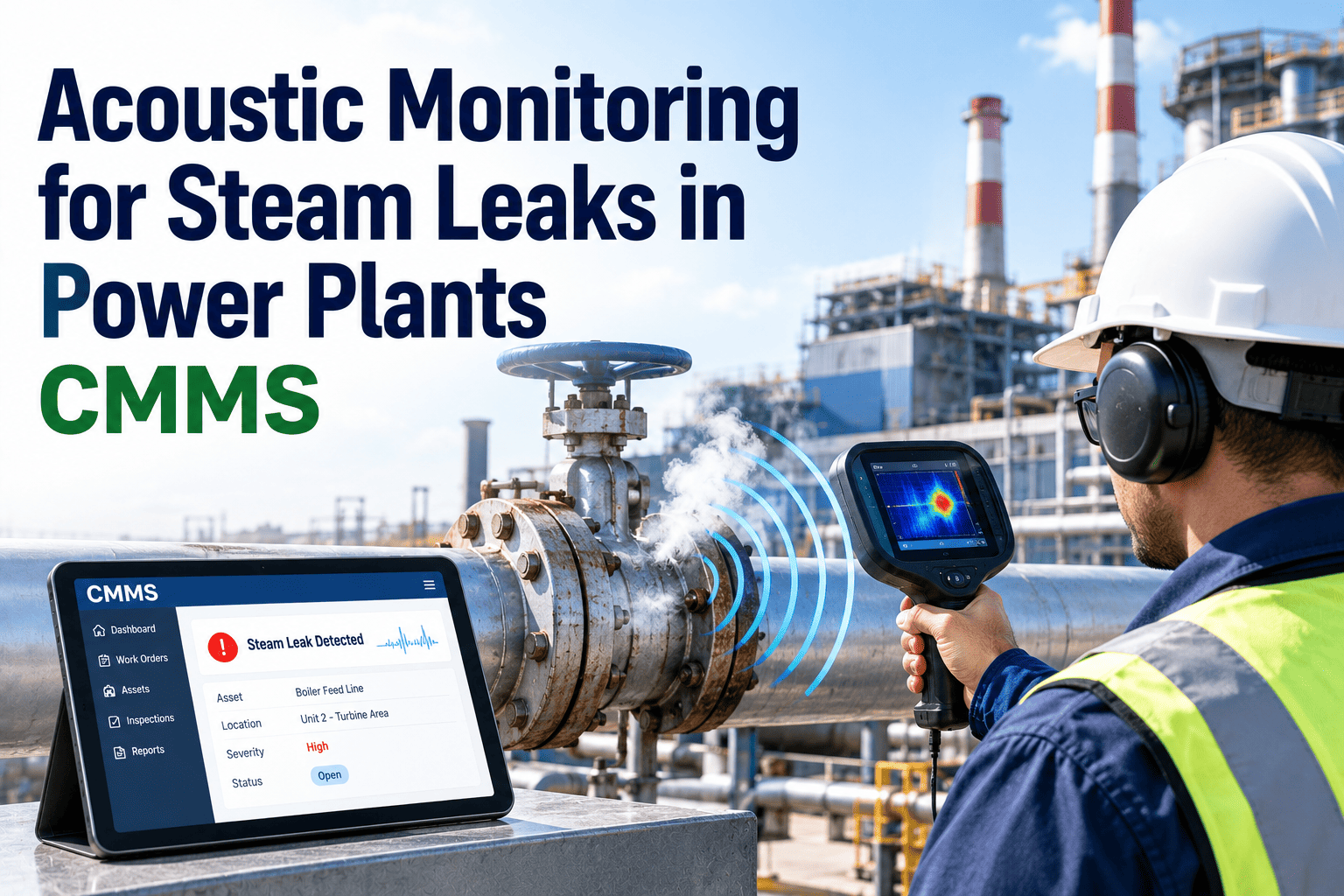
Steam & Process Leaks
Fluid escaping through a micro-crack or valve seat leak generates continuous AE emission detectable 14 to 30 days before the leak rate reaches a measurable flow impact. AE-based leak detection locates the source to within centimeters on long pipe runs without scaffolding or thermal survey.
High-pressure steam lines — Boiler tubes — Attemperators — Valve seat leakage
AE Data Without a CMMS is Just Noise
Detecting a crack signal is step one. Converting it into a scheduled inspection, a prioritized work order, and an auditable closure record is what prevents forced outages. Oxmaint connects AE alerts directly to maintenance workflows — see how it works on your plant's critical assets.
How AE Signals Differ From Other Monitoring Techniques
Maintenance teams often ask where acoustic emission fits alongside vibration analysis and thermography. The answer is that each technique covers a different failure mechanism — and AE closes the specific gap that conventional sensors leave open: active sub-surface damage that has not yet changed operating parameters.
Monitoring Technique Comparison — What Each Detects and Misses
The Four Critical Power Plant Assets for AE Deployment
Not every asset in a power plant justifies AE sensor investment. The economic case is strongest where the failure mode is internally driven, the damage is sub-surface, and the consequence of missing it is a multi-day forced outage. These four asset categories meet all three criteria.
01
Boiler Pressure Parts
Highest AE ROI
Boiler tube failures account for over 50% of all coal plant forced outages according to NETL data. AE sensors mounted on headers and steam drums detect the acoustic signature of active corrosion, internal crack extension, and weld fatigue weeks before tube leakage becomes a visible event. The standard deployment covers high-temperature headers, waterwall tube banks at stress concentration zones, and attemperator body welds — the three locations where most boiler pressure part failures initiate.
14–30Days advance warning on active crack growth
50%+Of plant forced outages prevented by this single asset class
02
Main Power Transformer
Longest Lead Time
Transformer failure is low-frequency but catastrophic — average replacement lead time for a large unit is 12–18 months. AE monitoring on transformer tanks detects partial discharge activity inside the tank through the tank wall without any electrical intrusion, identifying winding insulation degradation and dielectric breakdown progressions that OLTC oil analysis and dissolved gas analysis may not catch in the early stages. The earlier the detection, the more repair options remain available.
12–18Month replacement lead time — early detection is not optional
Non-contactPD detection through tank wall — no electrical intrusion required
03
Boiler Feed Pumps
Cavitation Focus
BFP cavitation erodes impeller and diffuser surfaces progressively — with vibration typically showing the effect only after material loss has already altered hydraulic performance. AE monitoring at the pump casing detects cavitation bubble collapse energy in real-time, enabling operators to adjust NPSH margin, throttle suction valve position, or modify feedwater temperature set-points before impeller pitting damage requires a shutdown. Research at hydraulic turbine facilities has confirmed AE distinguishes erosive from non-erosive cavitation regimes with high reliability.
Real-timeCavitation intensity quantification — not post-event damage assessment
PreventsImpeller pitting before 5–14 day repair downtime is triggered
04
High-Pressure Steam Lines
Leak Detection
Steam lines operating above 100 bar develop micro-leaks at weld heat-affected zones long before any pressure drop or flow anomaly is measurable. AE monitoring along pipe runs detects the turbulent flow signature of escaping steam through the pipe wall — locating the defect source to within centimeters without scaffolding access or plant outage. Plants deploying AE-based steam line monitoring report eliminating routine scaffolding inspection costs that run $80,000–$250,000 per campaign, while achieving better defect detection rates.
cm-levelLeak source location accuracy along pipe runs
$80K–250KTypical scaffolding inspection cost eliminated per campaign
From AE Alert to Closed Work Order — How Oxmaint Closes the Loop
Acoustic emission data in isolation produces alerts. What it needs to produce is a scheduled intervention, a parts order, and a compliant maintenance record. Oxmaint connects AE sensor output to CMMS workflow so that every acoustic anomaly becomes a trackable, assignable piece of work — with the right technician, the right tools, and the right window in the plant maintenance schedule.
AE Signal to Maintenance Action — The Oxmaint Workflow
S1
AE Sensor Data Ingestion
AE sensors stream signal parameters — hit rate, amplitude distribution, energy, rise time — into Oxmaint via SCADA, OPC-UA, or direct API. Raw waveforms stay at the sensor; only diagnostic parameters enter the CMMS at configurable intervals.
S2
Pattern Classification by Damage Mode
AI signal processing separates mechanical noise from true damage events — and classifies each event type: crack propagation burst, partial discharge pulse, cavitation collapse, or leak turbulence signature. Each has a distinct waveform fingerprint that eliminates false alarms from electrical interference and structural resonance.
S3
Severity Scoring & Trend Alert
Each asset gets a cumulative AE activity index trended against its established baseline. When activity rate crosses configurable thresholds, an alert with severity classification and estimated damage progression rate is generated — distinguishing a slow fatigue process from a rapidly escalating crack event.
S4
Auto-Generated Work Order
A structured corrective or inspection work order is created in Oxmaint: asset identity, damage mode classification, recommended action (NDE inspection, fitness-for-service assessment, leak sealing), required equipment, and scheduling priority aligned to the next available maintenance window.
S5
Inspection, Closure & Regulatory Record
The technician completes the inspection on the Oxmaint mobile app with photos, NDT measurement results, and digital sign-off. The AE alert, work order, inspection finding, and closure time are all linked in one audit trail — satisfying ASME, IBR, and insurance inspection documentation requirements.
AE Monitoring Deployment — What Plants Recover
$1.56B
Global AE monitoring market in 2024 — driven by power plant adoption
8.9%
CAGR through 2033 — fastest growing NDT segment in energy
35%
Reduction in false alarms with AI-powered AE analytics
30–90
Days to first AE sensor deployment on priority assets
Frequently Asked Questions
Your Plant Has Cracks It Has Not Found Yet
Every boiler header weld, high-pressure steam line, and transformer that runs without AE monitoring is a component with no early-warning system on the failure modes that cause the longest outages. Oxmaint gives your maintenance team the CMMS infrastructure to connect AE sensor data to actionable work orders from day one — so the signals your plant is already producing turn into planned maintenance, not emergency repairs.