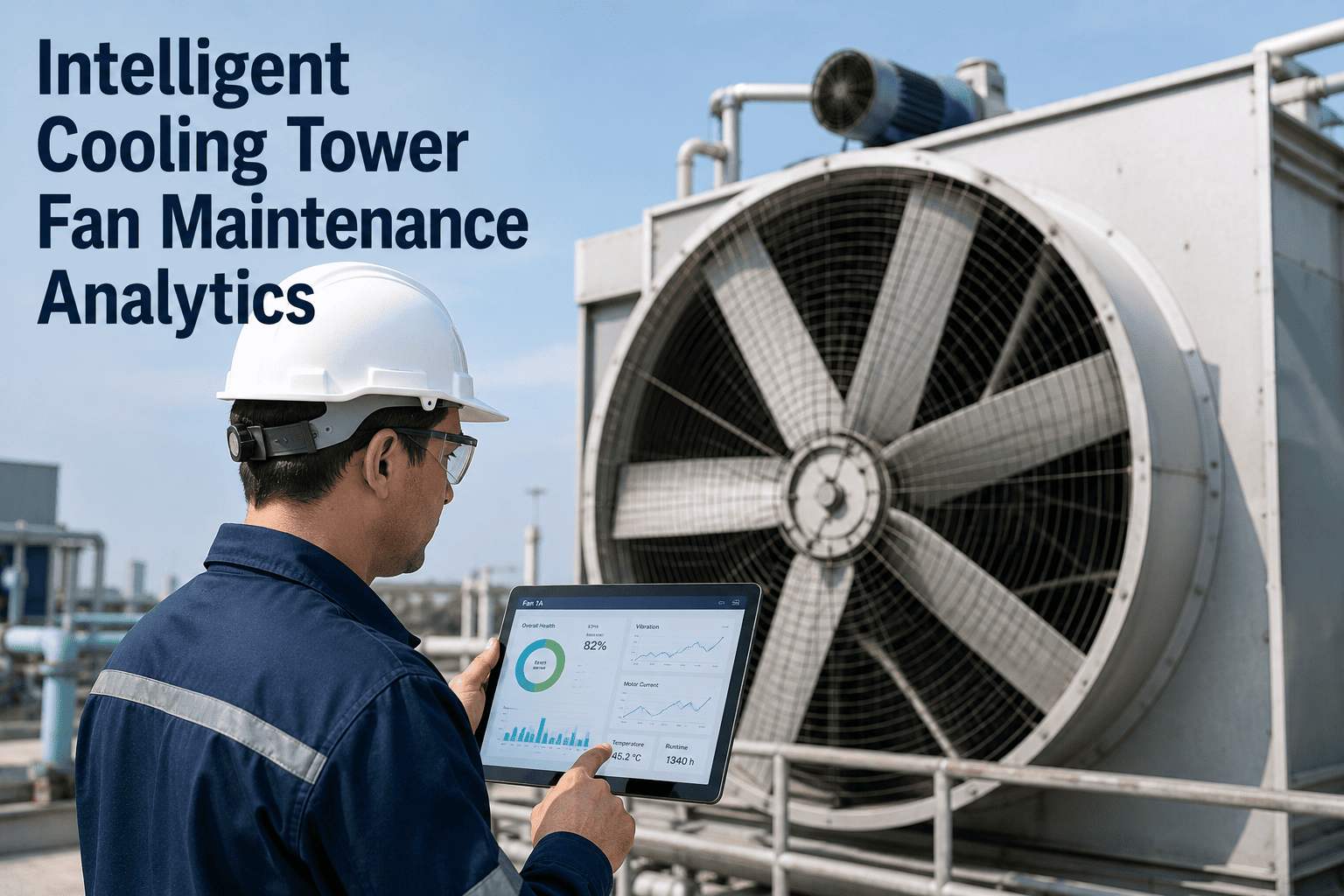
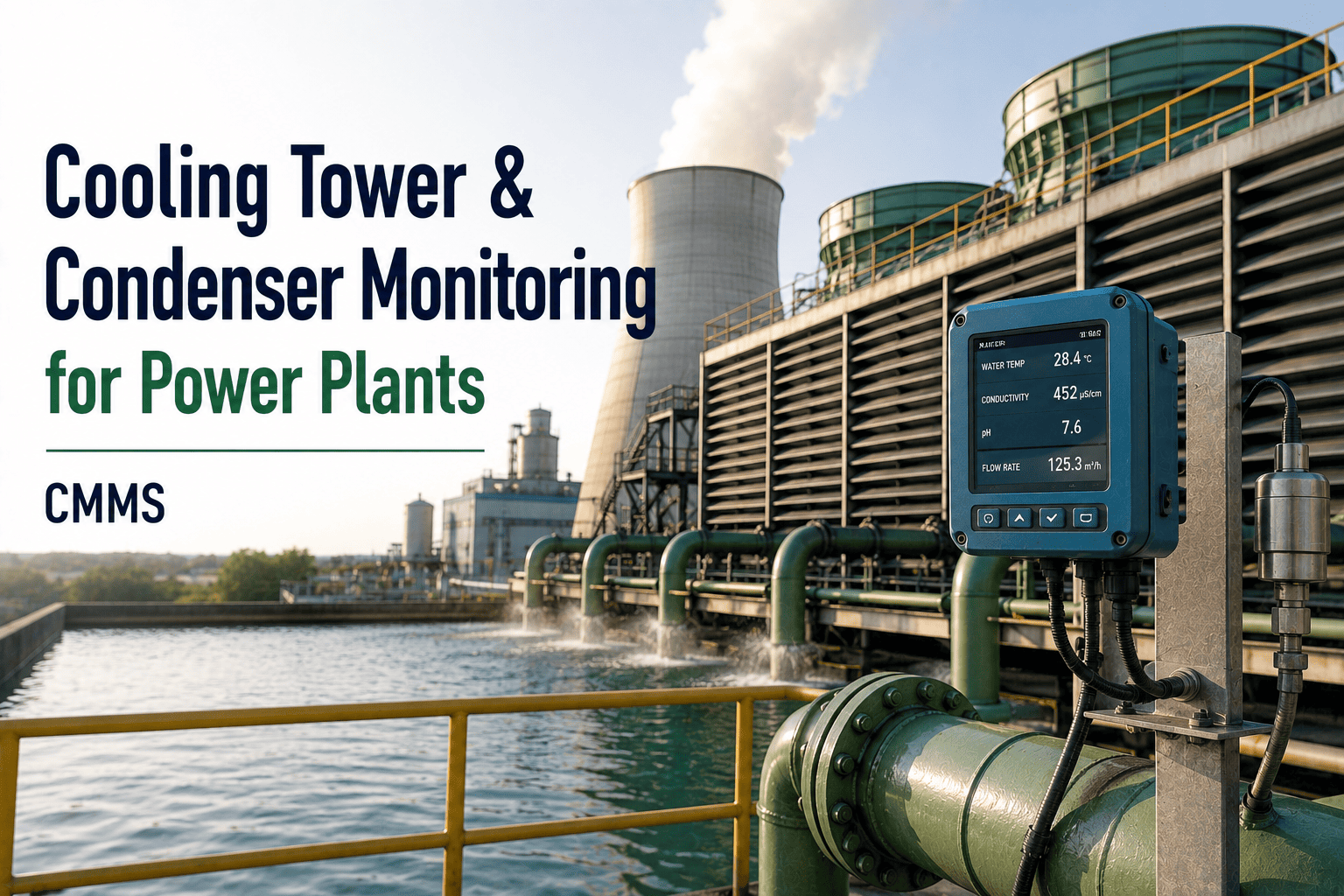
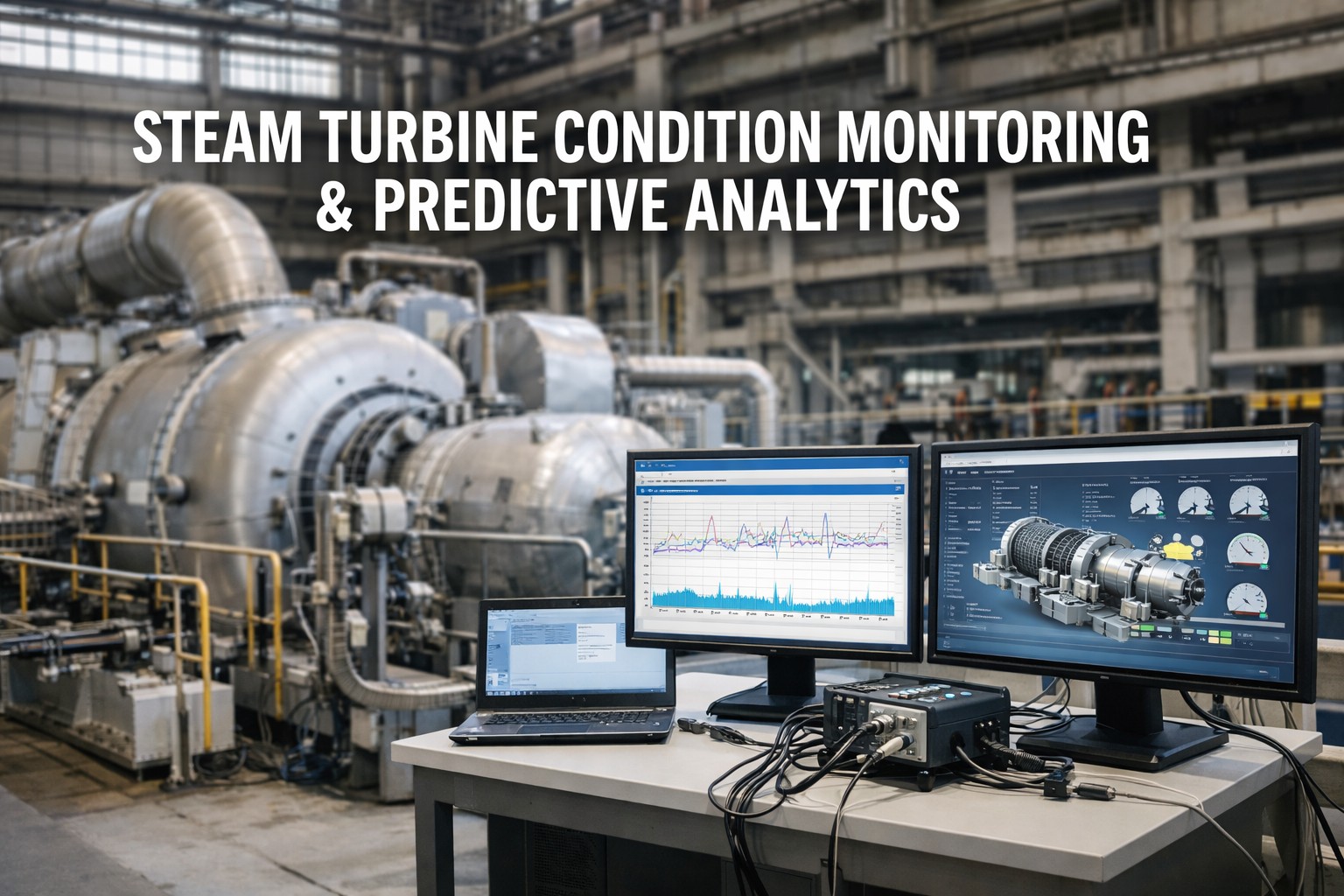
A cooling tower fan running at half its rated airflow doesn't trip an alarm — it just quietly raises condenser backpressure, which quietly cuts turbine efficiency, which quietly adds fuel cost to every megawatt the plant produces until someone finally checks the gearbox and finds worn bearings that had been getting louder for months. Vibration sensors on every fan drive turn that slow creep into a number on a screen, weeks before efficiency loss becomes a forced derate. Here's how cooling tower fan analytics inside OxMaint catches that drift early.
Cooling System Reliability
Intelligent Cooling Tower Fan Maintenance Analytics
Bearing wear, belt slip, and motor imbalance each show up first in vibration data, days to weeks before they become an efficiency-killing failure. AI analytics flags the pattern and routes a work order before backpressure climbs.
The chain reaction one degraded fan sets off
1
Fan bearing wear reduces airflow across the tower fill
→
2
Condenser water inlet temperature rises above design
→
3
Condenser backpressure increases, cutting turbine efficiency
→
4
Heat rate degrades, raising fuel cost per MWh produced
Signals analytics watches on every fan drive
See your cooling tower fans scored on one dashboard
Bring vibration logs from one fan unit and we'll show the trend the model would have flagged.
Reactive repair versus predictive analytics
| Approach | Failure Mode Caught | Typical Outcome |
|---|
| Reactive (after noise/failure) | Bearing seizure, gearbox damage | Unplanned outage, fan replacement |
| Scheduled inspection only | Caught if within inspection window | Variable, depends on cycle timing |
| Predictive vibration analytics | Early-stage bearing and belt wear | Planned repair, minimal efficiency loss |
Common fan failure modes analytics catches first
What plants typically gain after one full season
1
Fewer unplanned fan motor trips during peak summer load
→
2
Maintenance scheduled around vibration trend, not guesswork
→
3
Measurable heat rate improvement tracked against baseline
Frequently asked questions
How many sensors are needed per cooling tower fan?
A typical setup uses one to two vibration sensors per fan, usually mounted on the gearbox and motor bearing housings, along with a temperature sensor on the bearing itself. This is enough to capture the dominant failure modes without instrumenting every component on the drive train. Larger towers with multiple fan cells scale the same sensor pattern across each cell. See sensor placement guidance inside
OxMaint.
Can this detect belt slip separately from bearing wear?
Yes — belt slip produces a distinct vibration frequency signature and current draw pattern compared to bearing degradation, and the analytics engine separates the two rather than lumping them into one generic alert. This matters because a belt adjustment is a much faster fix than a bearing replacement, and routing the correct work order saves unnecessary downtime. The system flags which specific failure mode is developing.
Discuss your fan configuration on a call.
Does fan analytics tie into condenser backpressure monitoring?
Yes — fan health data can be correlated against condenser backpressure and heat rate trends, making the connection between a degrading fan and a measurable efficiency loss visible on the same dashboard. This helps justify maintenance priority with an efficiency cost number rather than just a vibration reading. Plants running heat rate tracking already see the strongest correlation value from this combination. Explore this view inside
OxMaint.
What's the typical payback period for adding fan analytics?
Most plants see payback within one to two cooling seasons, driven primarily by avoided unplanned fan failures and the efficiency gains from catching airflow degradation earlier. The exact timeline depends on tower size, fan count, and how frequently failures have historically occurred. Plants with a history of multiple fan failures per season tend to see faster returns.
Get a payback estimate for your site.
Is this compatible with both induced-draft and forced-draft cooling towers?
Yes — the underlying vibration and thermal signatures of bearing and belt wear are consistent across induced-draft and forced-draft fan designs, so the same monitoring approach applies to both. Mounting locations for sensors differ slightly based on the drive configuration, which is addressed during setup for each tower type. Mixed-design plants can monitor all tower types on one consolidated dashboard. Get started with
OxMaint today.
Stop losing heat rate to a fan nobody's watching
Get vibration analytics running on your cooling tower fans before the next efficiency review.