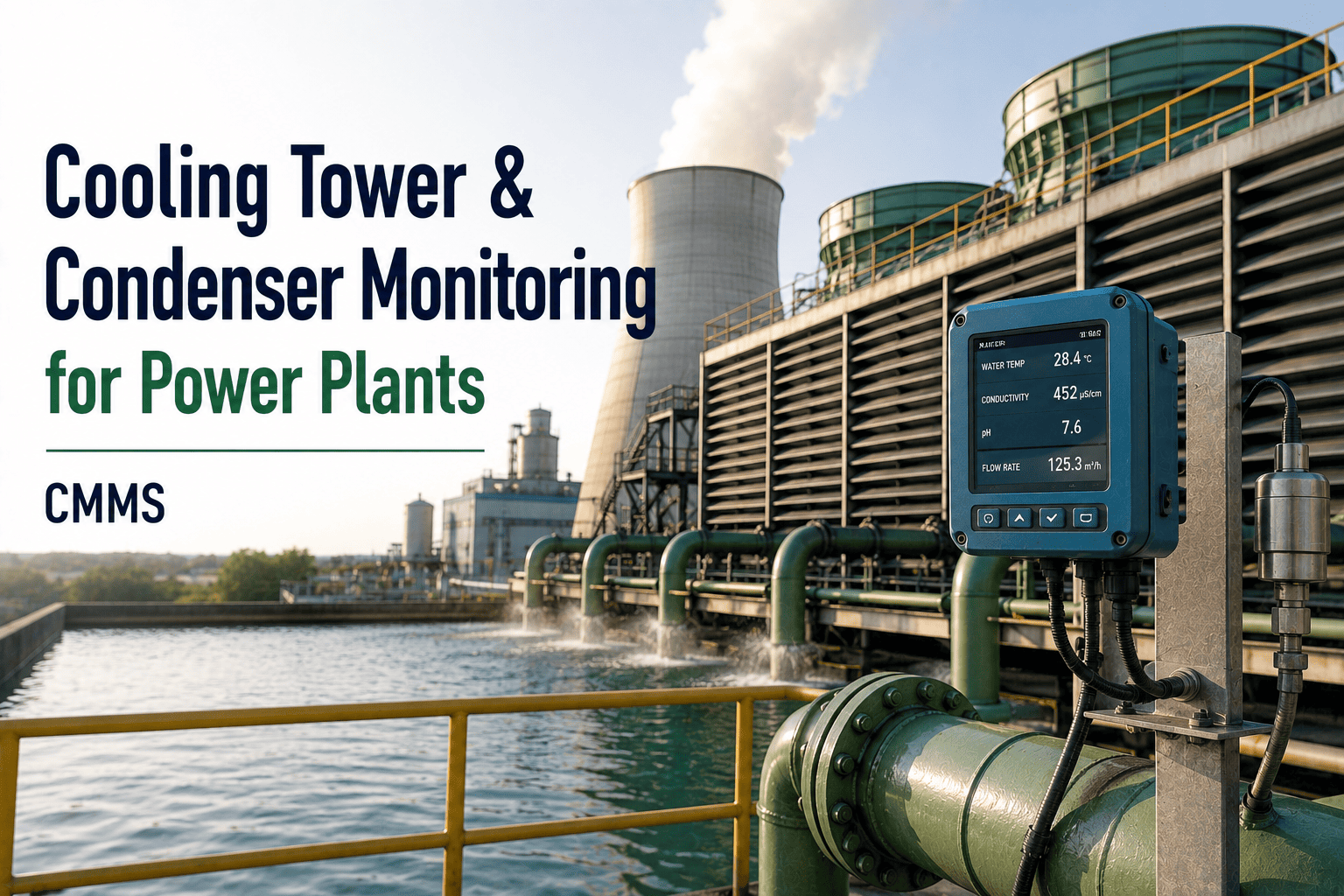
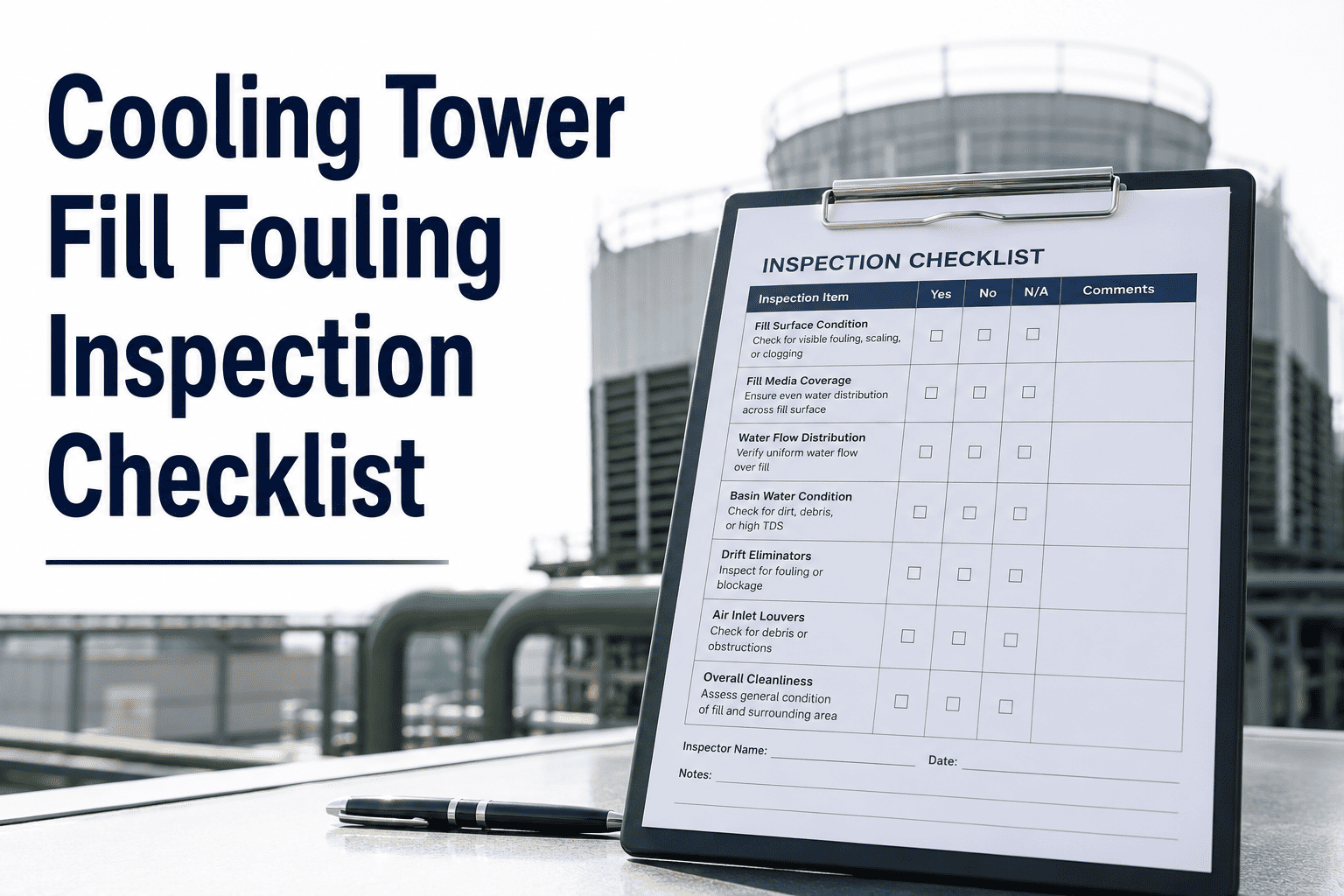
A cooling tower does not announce when it is about to fail. Scale accumulates silently on fill media over weeks. Basin corrosion progresses through seasons. Fan bearing wear builds vibration gradually until the day a motor trips. Water chemistry drifts outside safe limits between manual tests. By the time any of this becomes visible, the damage is already done — and the repair bill already exceeds what a structured maintenance programme would have cost over the same period. Sign up for Oxmaint to put your cooling tower inspections, water chemistry tracking, and PM schedules into one system that keeps every asset in view.
Cooling Tower Maintenance Software: CMMS for Inspection, Water Treatment & Reliability
How facilities using structured CMMS workflows reduce unplanned cooling tower downtime, eliminate water treatment compliance gaps, and extend equipment life by 5–8 years.
Four Silent Failure Modes That Paper Schedules and Spreadsheets Cannot Track
Cooling towers fail through four distinct mechanisms, each developing at a different rate and requiring a different response. A CMMS that manages them as separate assets — with individual PM schedules, inspection checklists, and chemistry logs — catches each one. A paper schedule catches none of them consistently.
Calcium and magnesium minerals concentrate as water evaporates and precipitate as hard deposits on fill media and heat exchanger tubes. Even a thin layer creates an insulating barrier that forces pumps and fans to consume more energy to achieve the same cooling output. Left untreated, restricted flow and reduced heat transfer become permanent performance losses.
Imbalanced pH and inadequate corrosion inhibitor levels allow oxygen and aggressive ions to attack steel basin walls, pipe connections, and structural fasteners. Galvanized steel sections are particularly vulnerable to low-pH water. Corrosion that reaches weld seams and basin drain connections can progress to structural leaks requiring complete section replacement.
Continuous duty cycles, outdoor particulate, and moisture exposure wear fan motor bearings and drive belts faster than most fixed PM intervals account for. Blade imbalance from fouling or physical damage generates vibration that accelerates bearing failure. An undetected out-of-balance fan running at full load can fail catastrophically within weeks of first showing vibration symptoms.
Warm recirculating water between 25–45°C creates ideal conditions for Legionella pneumophila growth when biocide levels drop below effective thresholds. A single missed water treatment dose, a failed chemical feed pump, or an extended shutdown without proper shutdown procedures can push a tower into a biological hazard condition within days — with regulatory, legal, and public health consequences.
Every Component. Every Frequency. One System.
Cooling tower maintenance covers mechanical components, water chemistry, structural integrity, and regulatory compliance — simultaneously. Oxmaint structures each into its own PM schedule with the correct frequency, the right checklist, and automatic escalation when tasks are missed or readings fall outside limits.
Build Your Cooling Tower PM Schedule in Oxmaint
Our team will configure every component, frequency, and water chemistry threshold for your specific tower type — and show you how escalation works when readings go out of range.
Water Treatment Is Not a Monthly Visit. It Is a Continuous Control System.
Most cooling tower water treatment failures happen between service visits — not during them. A monthly service record proves someone checked the chemistry once. It does not prove the system was protected on the 27 days in between. Oxmaint's water chemistry tracking logs every test result against the asset record, trends each parameter over time, and escalates automatically when any value drifts outside its configured limit.
Controls corrosion rate and biocide effectiveness. Low pH accelerates galvanized steel attack. High pH promotes calcium carbonate scale. Even 0.5 units outside range changes the corrosion profile significantly.
Oxidation-reduction potential indicates active biocide concentration. Readings below 250 mV indicate insufficient disinfection — the condition that creates Legionella risk. Chemical feed pump failure can drop ORP in hours.
Tracks dissolved solids concentration. Excessive cycles of concentration mean high scaling and corrosion potential. Too-frequent blowdown wastes treated water and chemicals. Automated blowdown calibrated to conductivity optimises both.
Passivates metal surfaces against electrochemical attack. Inhibitor depletion is invisible to the eye but measurable by test kit. Trending residual levels over time reveals consumption rate changes that indicate higher corrosion activity or dilution from make-up water.
Elevated turbidity indicates suspended solids — biological growth, sediment, or scale fragments — that consume biocide, reduce heat transfer, and harbour pathogens. A turbidity spike often precedes a biological contamination event by several weeks.
Culture or PCR-based testing at defined intervals per your Water Management Plan. Oxmaint tracks test due dates as recurring work orders, records results against the asset, and triggers remediation work orders when positive results require immediate response per protocol.
ASHRAE 188, Local Law 77, and Your Water Management Plan — All in One Audit Trail
Regulatory requirements for cooling tower water management have become significantly more demanding since Legionella outbreaks in New York City in 2015 prompted mandatory registration, routine testing, and detailed record-keeping requirements that now apply to thousands of commercial and industrial facilities. ASHRAE Standard 188 establishes the baseline framework for Water Management Plans across the United States. Several states and cities have added local requirements on top of ASHRAE 188 that carry civil penalties for non-compliance.
Oxmaint creates and maintains the compliance record automatically. Every inspection, every chemistry test, every corrective action, and every water treatment service record is stored against the specific asset with date, technician, and result. When an auditor asks for the previous 12 months of pH and biocide records for Tower No. 3, the answer takes minutes — not a search through paper files.
Before and After CMMS: What Facilities Actually Report
The following comparisons reflect documented outcomes from facilities that moved cooling tower maintenance from paper checklists and spreadsheets to structured CMMS-managed programmes.
| Maintenance Metric | Paper / Spreadsheet Managed | Oxmaint CMMS Managed | Improvement |
|---|---|---|---|
| PM completion rate | 52–61% average | 87–93% average | +30 pts average |
| Unplanned cooling events per year | Facility baseline | 60–80% reduction | Avg. 70% fewer |
| Water treatment chemical cost | Unoptimised feed rates | 15–25% reduction | Condition-based dosing |
| Legionella compliance documentation gaps | Common (paper filing) | Eliminated | 100% audit-ready records |
| Equipment lifespan | Industry average baseline | 5–8 years extended | Structured PM compliance |
| Emergency repair incidents | $8,000–$25,000 per event | Reduced by catching wear early | Prevented before failure |
Cooling Tower Maintenance Is Not the Same Task Every Month
Seasonal transitions — startup after winter shutdown and preparation for peak summer load — carry the highest risk of failure if not managed with structured checklists. Oxmaint schedules these as distinct work order types with specific task lists for each phase.
Cooling Tower CMMS — Questions Facility Teams Ask
Both approaches are supported. Technicians enter readings directly in the Oxmaint mobile app during their visit, with each result automatically logged against the specific tower asset record and date-stamped. For facilities with automated water quality controllers — conductivity probes, pH sensors, ORP transmitters — Oxmaint can receive readings via API integration, eliminating manual entry entirely. Either way, every value is trended over time and triggers escalation work orders when readings fall outside your configured limits. Book a demo to see both input methods configured live.
Yes. Oxmaint manages Legionella compliance documentation by scheduling Legionella culture and PCR tests as recurring work orders tied to each tower asset, recording results directly against the asset record, and triggering immediate corrective action work orders when positive results require remediation per your Water Management Plan protocol. All chemistry records, inspection reports, and corrective actions are stored with full audit trails — date, technician, result, and follow-up action. This is the documentation structure that ASHRAE 188 and local laws like New York's Local Law 77 require. Sign up to begin building your compliant water management record.
Multi-site and multi-tower management is a core use case for Oxmaint. Each cooling tower is registered as a separate asset with its own PM schedule, inspection checklist, water chemistry limits, and maintenance history. A facility manager overseeing 12 towers across 4 buildings sees all tower statuses on a single dashboard — which PMs are due, which chemistry readings are out of range, and which towers have open corrective work orders. Individual tower records remain fully separate for compliance documentation purposes. Book a demo to see a multi-site cooling tower portfolio configured.
Oxmaint escalates missed PMs and out-of-range readings into active work orders — not just notifications that can be dismissed. A missed weekly chemistry test generates a follow-up work order assigned to the responsible technician, with escalation to the supervisor if not completed within the configured grace period. An ORP reading below the biocide minimum threshold automatically creates a corrective work order: check chemical feed pump, verify day tank level, and retest within 24 hours. The escalation logic is fully configurable per asset and parameter. Sign up to configure your escalation rules.
For a facility with 2–5 cooling towers and an existing maintenance programme, setup typically takes 2–3 weeks — covering asset registration, PM schedule configuration, water chemistry parameter setup, inspection checklist build, and mobile app training for technicians. Larger multi-site portfolios with more complex tower types or integration requirements may take 4–8 weeks. Oxmaint's implementation team provides direct configuration support throughout the setup process. Book a demo to get a setup timeline specific to your facility.
Cooling Tower Failures Are Predictable. That Means They Are Preventable.
Scale, corrosion, fan wear, and biological risk all follow patterns that structured maintenance programmes catch early. Oxmaint gives your team the PM schedules, water chemistry tracking, and compliance documentation to manage every cooling tower systematically — before the failure, not after it.