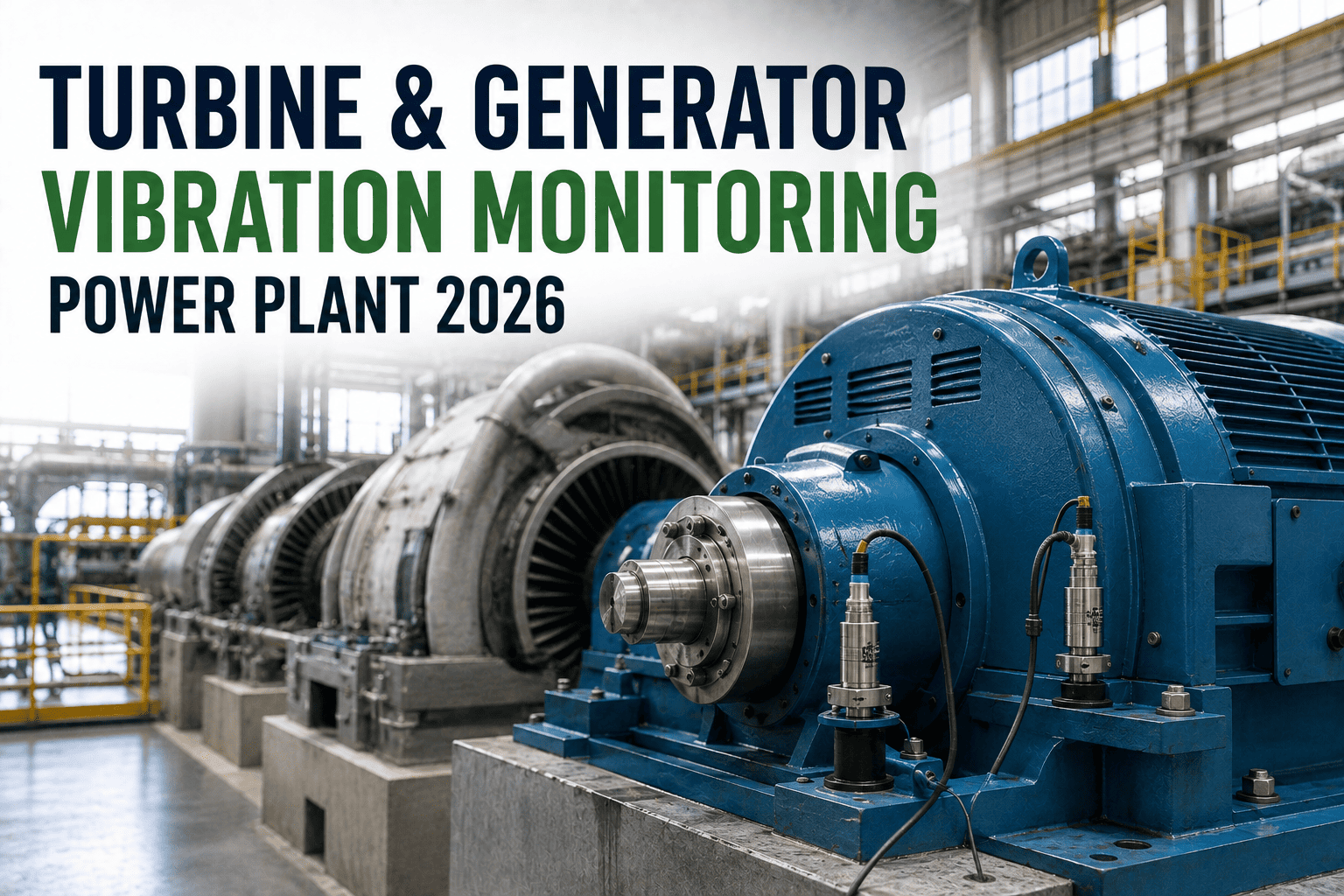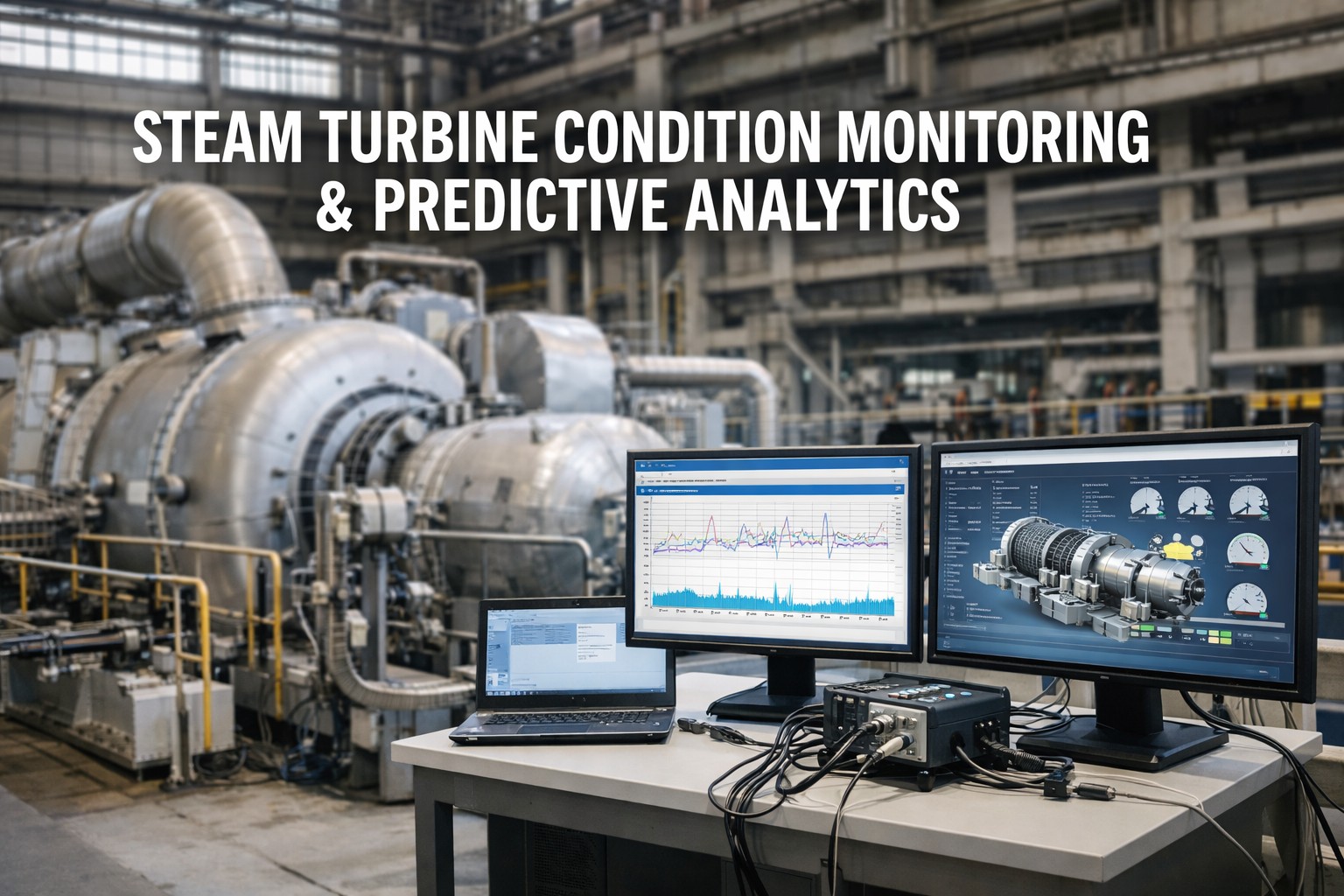
Steam turbines are the backbone of global power generation, driving everything from utility-scale electricity production to industrial cogeneration systems. Yet across the energy sector, unplanned steam turbine failures account for 13% of all forced outages in thermal power plants, with a single rotor blade failure costing up to $2 million in repairs and lost generation revenue. The average industrial facility loses $125,000 per hour during unplanned downtime, and for power plants specifically, total costs can exceed $500,000 per incident. The most critical insight? Over 90% of these failures show detectable degradation signatures days to weeks before catastrophic breakdown. The gap between knowing a turbine is degrading and actually catching it in time is where condition monitoring and predictive analytics transform your maintenance strategy. Oxmaint's condition monitoring platform gives power plant operators the tools to detect, predict, and prevent steam turbine failures before they become million-dollar emergencies.
Unplanned Steam Turbine Outages Cost Power Plants $500K+ Per Incident
90% of these failures are predictable with the right monitoring in place. Condition-based maintenance catches degradation weeks before breakdown.
The 6 Critical Parameters for Steam Turbine Health Monitoring
Effective steam turbine condition monitoring relies on tracking specific operational parameters that reveal degradation patterns long before visible symptoms appear. Each parameter acts as an early warning channel, and when monitored together through a unified maintenance management platform, they create a comprehensive health picture that makes failures predictable rather than surprising.
Vibration Analysis
Shaft vibration relative to bearings is the most reliable early indicator of mechanical degradation. Imbalance, misalignment, bearing wear, and blade damage all produce distinct vibration signatures detectable 4-12 weeks before failure.
Temperature Monitoring
Bearing temperatures, exhaust temperatures, and casing thermal profiles reveal lubrication failures, seal degradation, and internal efficiency losses. A sustained 14 degrees F rise above baseline signals imminent intervention needs.
Pressure Differential Tracking
Stage-by-stage pressure drops indicate blade erosion, nozzle fouling, and seal clearance changes. Trending pressure ratios against load reveals efficiency degradation invisible to simple performance checks.
Rotor Position and Eccentricity
Axial thrust position, shaft eccentricity, and expansion measurements catch rotor bowing, thrust bearing wear, and differential thermal expansion issues that precede catastrophic contact events.
Steam Flow and Quality
Monitoring steam purity, moisture content, and flow rates prevents water induction events and tracks turbine stage efficiency. Chemistry excursions cause corrosion fatigue that weakens blades within operating cycles.
Acoustic Emission Analysis
High-frequency acoustic signatures detect internal steam leaks, blade rubbing, and crack propagation at micro-levels. This non-invasive method identifies structural issues invisible to vibration analysis alone.
Reactive vs. Predictive: The Real Cost Difference
The financial case for predictive condition monitoring on steam turbines is straightforward arithmetic. Every prevented emergency failure avoids the 4.8x cost multiplier from overtime labor, expedited parts, temporary equipment rental, and cascade damage. Facilities that schedule a maintenance strategy assessment discover most of their emergency spending is preventable with the right data infrastructure in place.
How Oxmaint Powers Steam Turbine Predictive Analytics
Predictive analytics for steam turbines is not guesswork with better tools. It is a structured intelligence pipeline that converts continuous equipment performance data into failure forecasts with specific timelines and recommended actions. Here is how Oxmaint's predictive maintenance platform embeds turbine intelligence into every maintenance workflow:
Predict Turbine Failures Weeks Before They Happen
Oxmaint connects to your existing SCADA, DCS, and sensor systems to detect steam turbine degradation patterns invisible to manual inspection, then auto-generates work orders with parts, timing, and cost impact so your team intervenes during planned outages, not during peak demand.
Common Steam Turbine Failure Modes and Detection Windows
Each failure mode in a steam turbine produces distinct degradation signatures that predictive algorithms detect at different lead times. Understanding what the system monitors and how far in advance intervention is possible helps plant operators prioritize their sensor deployment and set realistic expectations for program outcomes.
Implementation Roadmap: From Pilot to Full Coverage
Deploying predictive condition monitoring for steam turbines follows a structured path that delivers measurable value at each phase. You do not need to instrument every component on day one. Start with the highest-consequence failure modes, prove value fast, and expand with evidence. Book a demo to design a phased deployment plan for your specific turbine fleet.
Connect Existing Data Sources
Audit current SCADA, DCS, historian, and CMMS data. Connect existing vibration, temperature, and pressure feeds to Oxmaint without replacing any current systems. Most plants achieve initial integration within 2-4 weeks.
Baseline Learning and First Detections
AI learns each turbine component's normal operating baseline across load ranges and ambient conditions. First anomaly detections and predictive alerts begin within weeks of connection.
Predictive Work Orders in Daily Workflow
Predictive alerts auto-generate work orders with recommended actions, parts lists, and optimal timing. Maintenance teams shift from reactive firefighting to planned, data-driven interventions during scheduled outages.
Expand Coverage and Continuously Optimize
Extend monitoring to auxiliary systems: condensers, feedwater pumps, generators. AI models continuously improve with plant-specific data. Capital planning becomes condition-driven rather than age-driven.
Start Monitoring Your Steam Turbines Intelligently
Join power plant operators who are catching turbine failures weeks in advance, saving millions in emergency costs, and transforming their maintenance teams from firefighters into strategic asset managers with Oxmaint.
Frequently Asked Questions
What parameters should be monitored first on a steam turbine?
Start with the two highest-impact parameters: vibration analysis and bearing temperature monitoring. These two alone catch over 60% of developing failure modes including bearing wear, rotor imbalance, misalignment, and seal degradation. Vibration monitoring provides 4-12 weeks of lead time before most mechanical failures, while temperature trending catches lubrication and thermal issues 2-8 weeks ahead. Once these are established, add pressure differential tracking and acoustic emission analysis to reach 85-92% predictive coverage across all major failure modes. Sign up for Oxmaint to start building your turbine monitoring program with guided sensor prioritization.
Do we need to replace our existing SCADA or DCS to deploy predictive monitoring?
No. Oxmaint is designed to layer on top of your existing infrastructure, not replace it. The platform connects to legacy SCADA and DCS systems through standard protocols like OPC, Modbus, and BACnet using protocol gateways. It integrates with existing CMMS and historian systems via API connections. For turbine components with minimal existing instrumentation, standalone wireless IoT sensors fill data gaps without any control system modifications. Most plants achieve initial data integration within 2-4 weeks using existing hardware.
How accurate are predictive failure forecasts for steam turbines?
Accuracy depends on monitoring maturity. For fault detection such as identifying abnormal vibration or temperature drift, accuracy exceeds 90% from day one because rule-based detection works immediately upon data connection. For failure forecasting that projects when a component will fail, models need 2-4 weeks to learn each turbine's baseline, with accuracy improving over 3-6 months as the system learns load patterns and seasonal variations. By month six, most plants report 85-92% prediction accuracy. The 8-15% of unpredicted failures are typically sudden events like foreign object damage that produce no degradation pattern. Book a demo to see predictive models applied to your turbine fleet.
What is the typical ROI for a steam turbine predictive monitoring program?
Most facilities achieve positive ROI within 6-12 months. The math is direct: if your plant experiences even 2-3 unplanned turbine-related outages per year at $200K-$500K per event, and predictive monitoring prevents 65% of those, you avoid $260K-$975K in emergency costs annually. Add energy efficiency gains from early detection of degradation, extended component life from optimized maintenance timing, and reduced overtime labor costs. Against annual platform investment, this represents 3-7x first-year ROI, with returns compounding as AI models improve and coverage expands.
Can field technicians use Oxmaint during turbine inspections?
Oxmaint's mobile interface is built for industrial environments. Technicians complete digital inspection checklists, log vibration readings, capture thermal images, and report anomalies from any smartphone or tablet. Offline mode captures all data in areas with poor connectivity around turbine decks, syncing automatically when connection returns. Photo and measurement attachments for bearing condition, seal clearances, and blade profiles are standard. Every inspection feeds directly into the predictive model, improving accuracy with each data point collected.