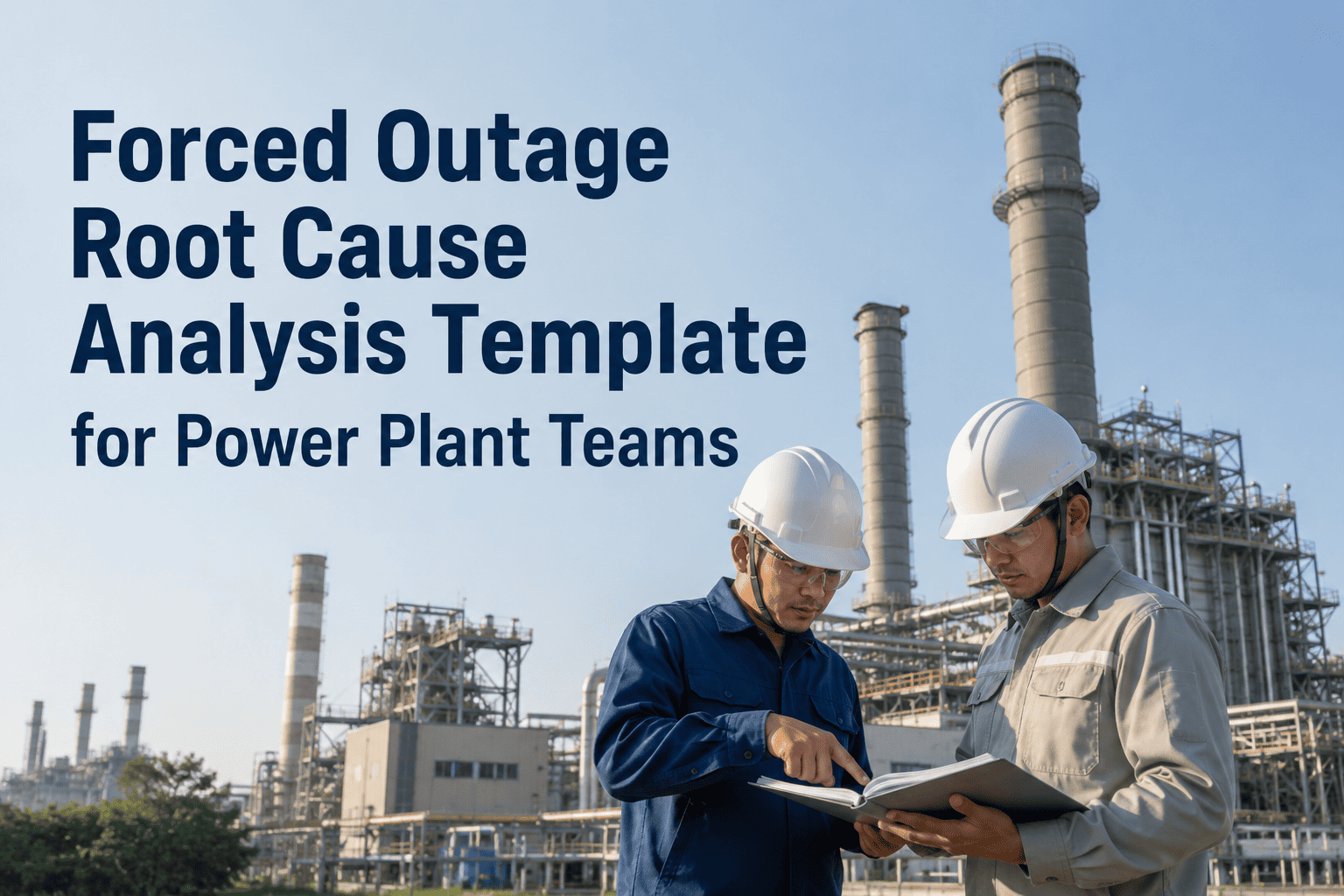
A forced outage doesn't just cost lost generation revenue — it costs trust, because the same failure mode tends to repeat until someone actually closes the loop on why it happened. Most plants run a root cause investigation, write a report, and file it somewhere it never gets compared against the next failure. The pattern stays invisible because nothing connects investigation findings back to the asset record where the next planner would see it. OxMaint structures forced outage root cause analysis as a tracked workflow tied directly to the failed asset, so findings turn into corrective actions instead of filed reports. See how a structured RCA workflow reduces repeat failures — sign in to OxMaint or book a demo today.
Outage Planning / Reliability Improvement
Forced Outage Root Cause Workflow for Generation Assets
Turn every forced outage into a structured investigation that actually prevents the next one.
The Investigation Timeline That Closes the Loop
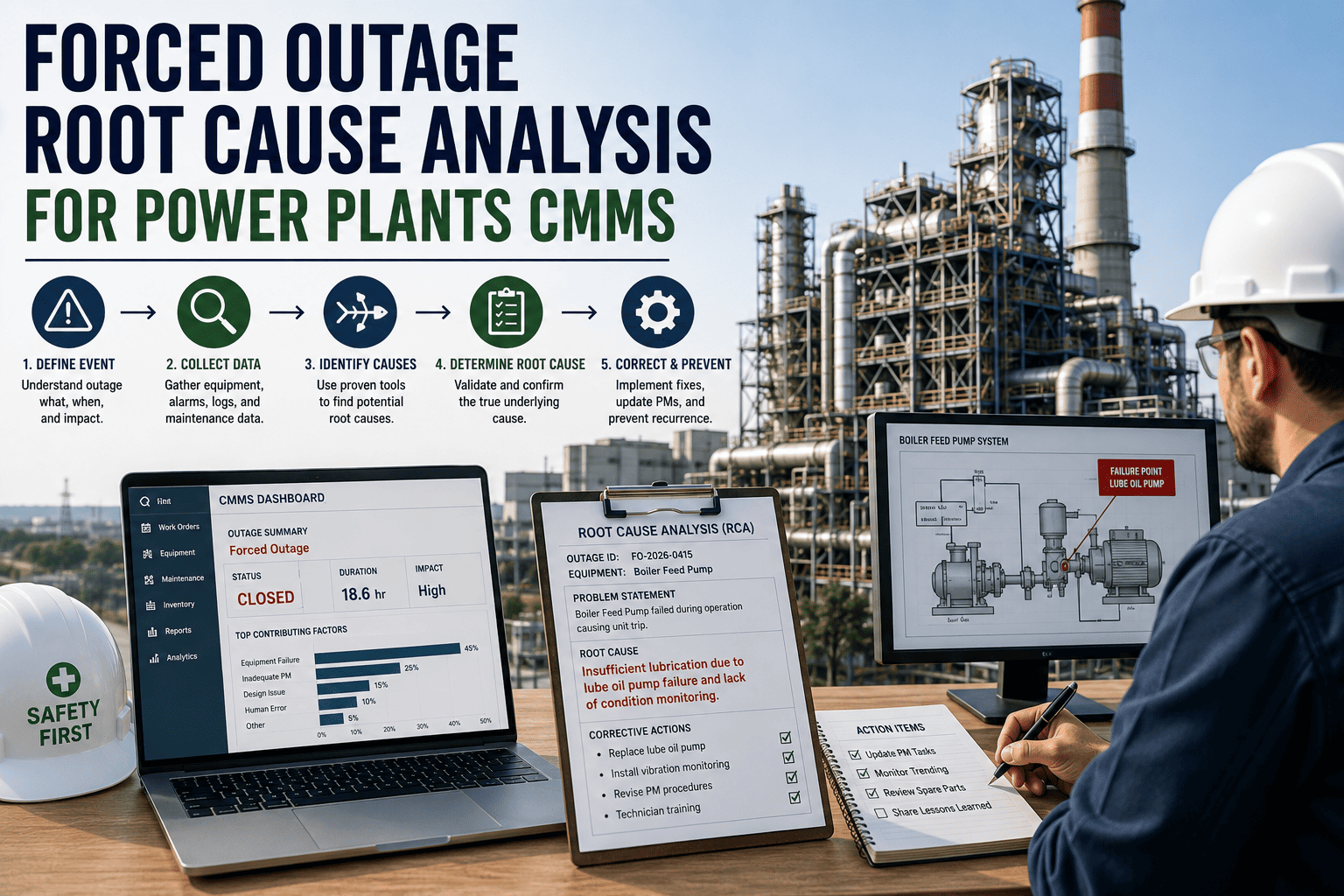
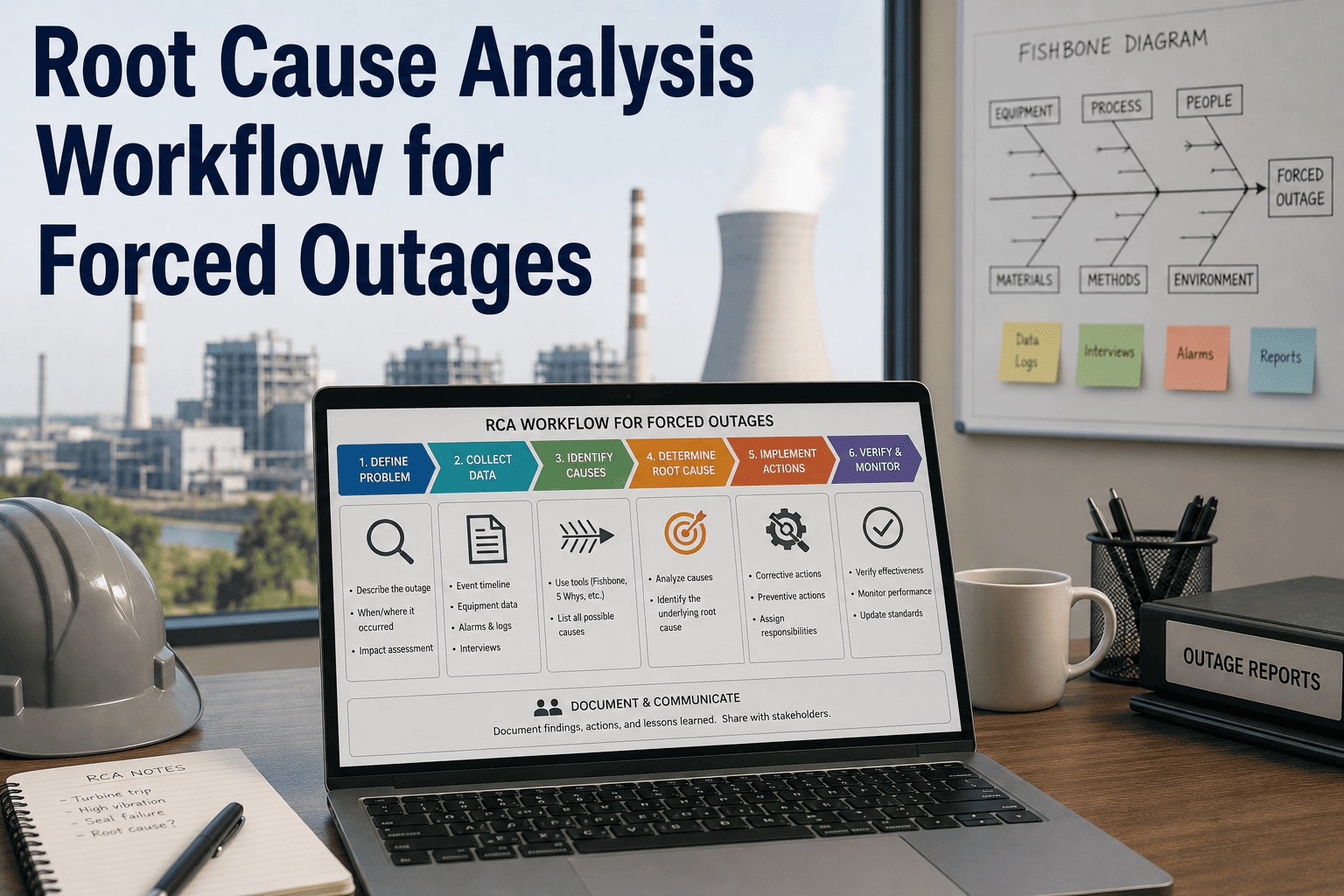
Generic incident report templates miss the specific failure progression of generation assets. OxMaint's RCA workflow walks investigators through a five-stage timeline that ties directly back to the asset's maintenance and inspection history, so the root cause isn't a guess — it's evidence.
01
Trip Event Capture
Outage start time, trip code, and operator log are pulled directly into the investigation record the moment the unit trips.
02
Asset History Pull
Maintenance and inspection records for the implicated component are auto-attached, surfacing missed PMs or recent deferred work instantly.
03
Failure Mode Classification
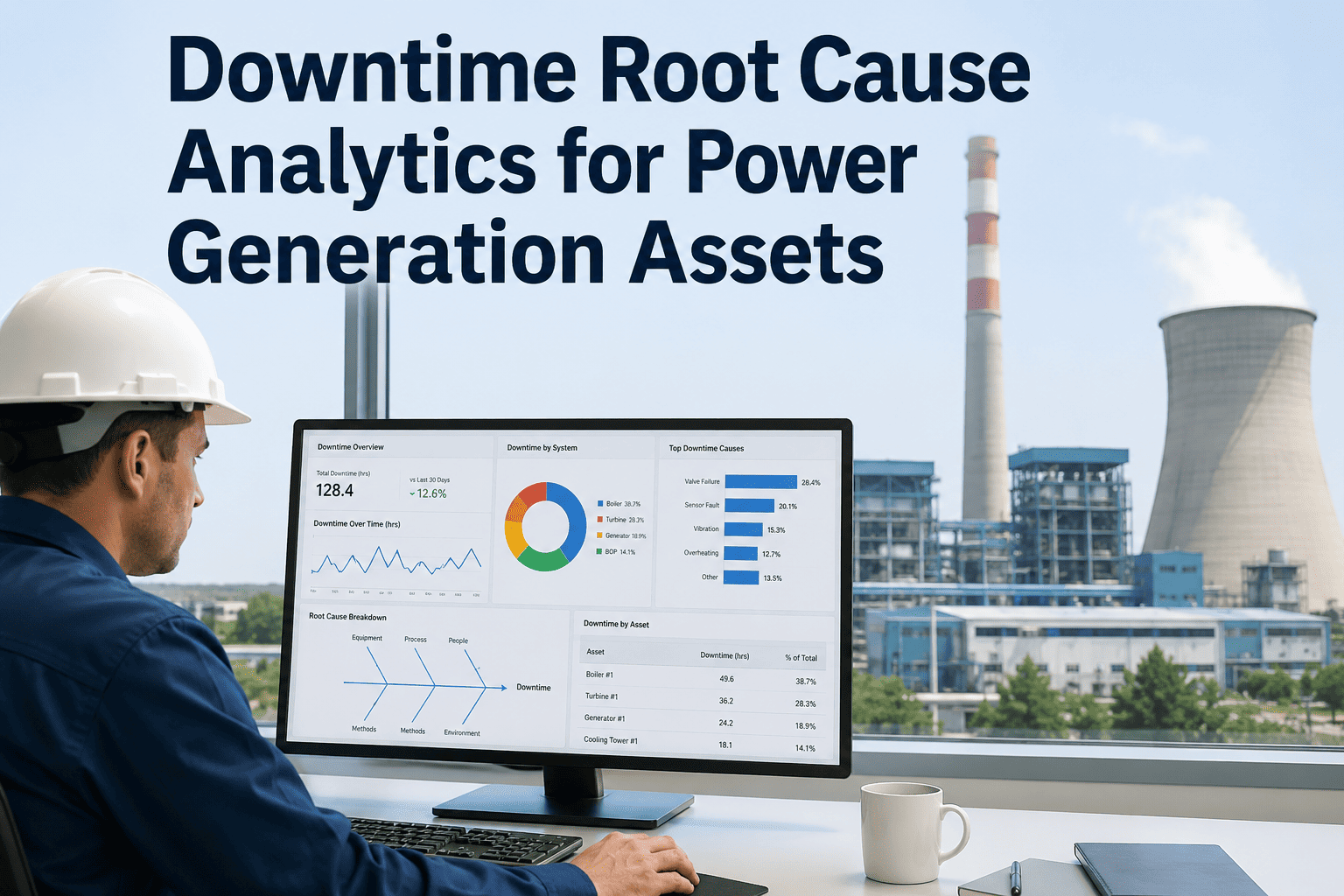
Investigators classify the failure against a standard taxonomy, building a comparable dataset across every forced outage on the asset class.
04
Corrective Action Assignment
Each root cause generates a tracked corrective action — a procedure change, a PM frequency update, or a design review — with an owner and a due date.
05
Recurrence Check
The next time the same asset class trips, OxMaint flags whether the prior corrective action was completed — closing the loop the paper process never could.
Stop Repeating the Same Failure
Connect Every Forced Outage to a Closed Corrective Action
OxMaint ties root cause findings directly to the failed asset's record, so the next planner sees exactly what happened and what was supposed to change.
Common Forced Outage Failure Modes Tracked by Asset Class
| Asset Class | Common Trip Cause | Typical Corrective Action |
|---|
| Steam Turbine | Bearing temperature excursion | Vibration monitoring frequency increase |
| Gas Turbine | Combustion instability / flameout | Fuel nozzle inspection interval revision |
| Boiler / HRSG | Tube leak detection | Targeted NDT on affected tube bank |
| Generator | Excitation system fault | Relay calibration and test procedure update |
| Cooling System | Loss of condenser vacuum | Air inleakage survey added to PM plan |
Frequently Asked Questions
How does OxMaint structure a forced outage RCA investigation?
Each investigation follows a five-stage workflow — trip capture, asset history pull, failure mode classification, corrective action assignment, and recurrence checking — all tied to the asset record.
Sign in to start an RCA investigation.
Can RCA findings be compared across multiple forced outages?
Yes. Standard failure mode classification builds a comparable dataset across every trip event on a given asset class, making repeat failure patterns visible across plants and fleets.
What happens if a corrective action is never completed?
OxMaint flags open corrective actions against the asset and surfaces them automatically the next time that asset class trips, preventing the same root cause from being investigated twice without resolution.
Does the RCA workflow integrate with existing work order history?
Maintenance and inspection history for the implicated component is pulled automatically into the investigation, so missed PMs or deferred work are visible without manual record searching.
Book a demo to see it on your fleet's outage history.
Who typically owns the RCA process inside OxMaint?
Reliability engineers typically lead the investigation, with corrective actions assigned across maintenance, operations, or engineering depending on the root cause classification identified.
Build a Reliability Record That Actually Works
Make Every Forced Outage the Last of Its Kind
OxMaint's structured RCA workflow turns investigation findings into tracked corrective actions tied directly to the asset that failed.