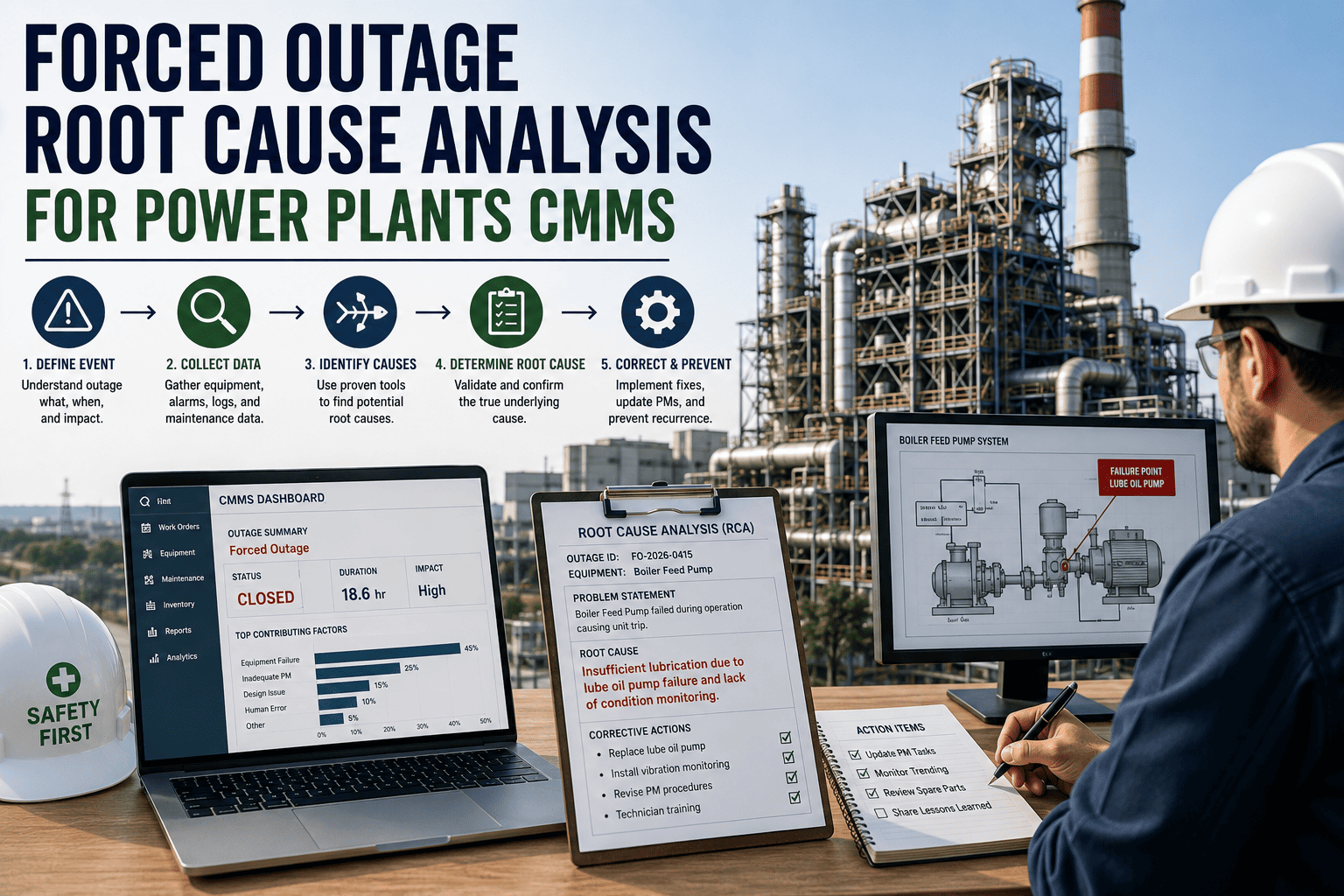
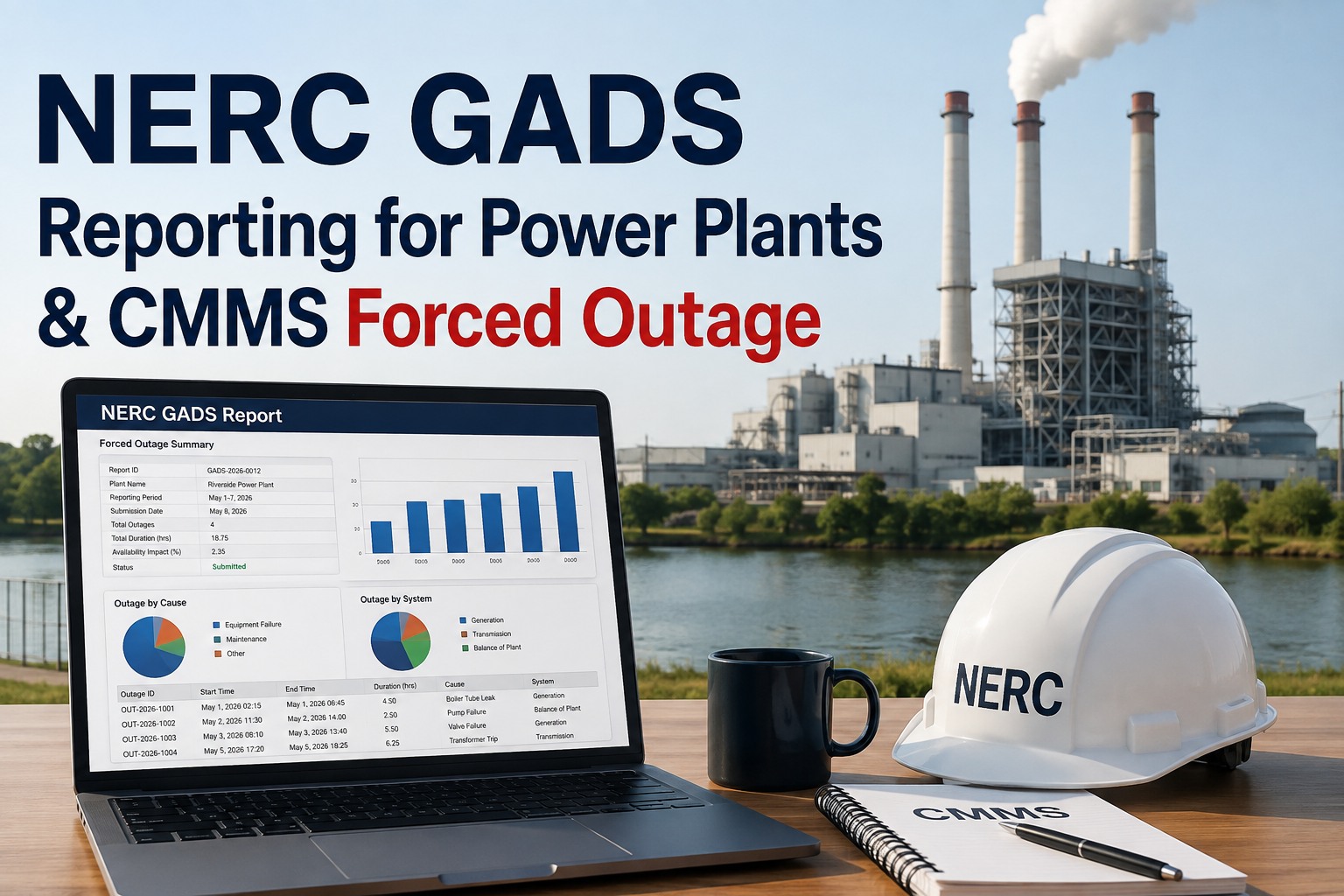
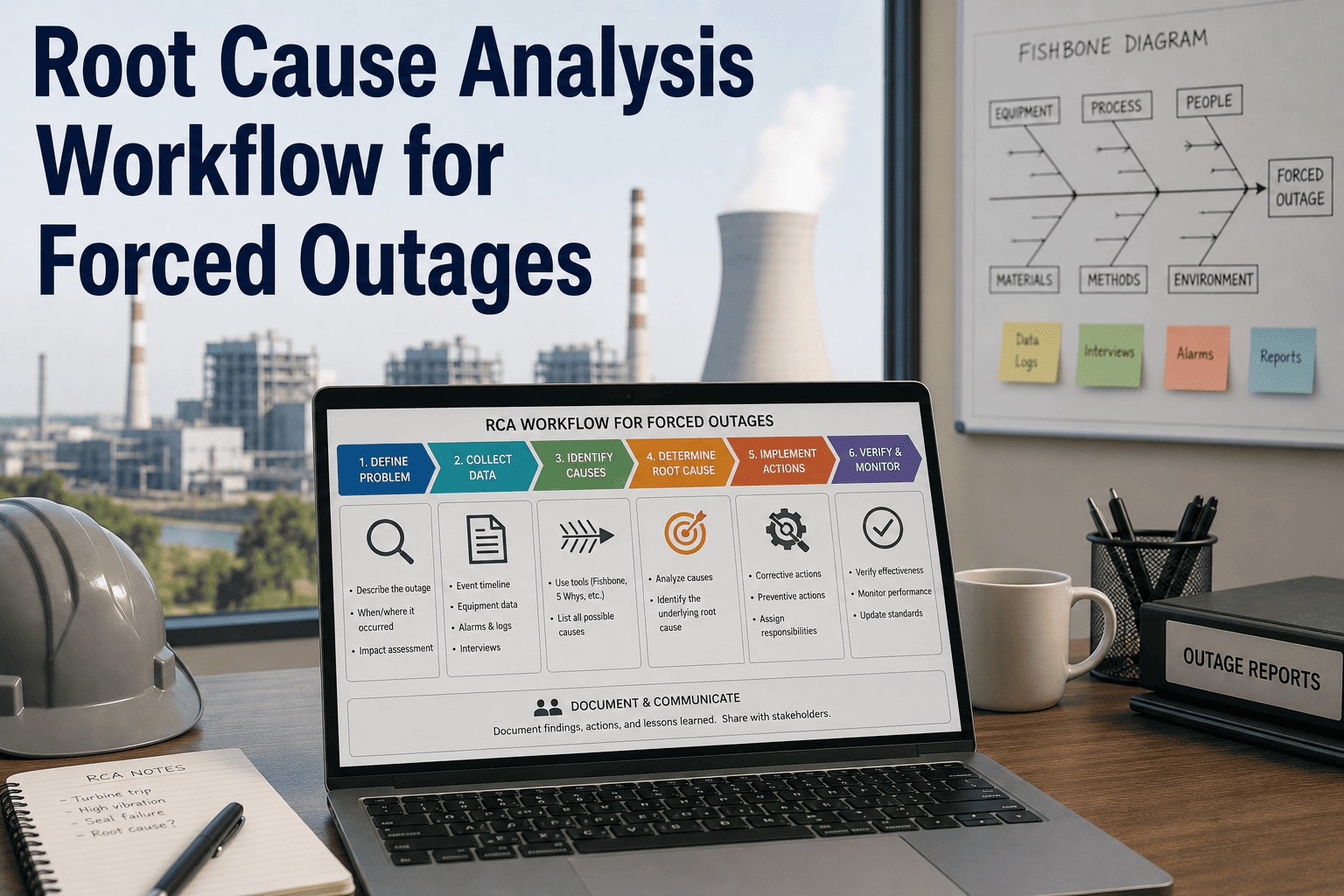
Same unit, same symptoms, same six-figure-per-hour loss — your team fixes it again, logs the work order, and moves on. Three months later it happens again. This is the cycle that root cause analysis is built to break: instead of treating every forced outage as an isolated repair, RCA traces the failure back through its causal chain until it reaches the condition that, if corrected, prevents recurrence. Plants that run structured RCA after every forced outage consistently cut recurring failures and unplanned downtime, because the fix addresses the system that allowed the failure rather than just the failed part. A forced outage RCA template gives every investigator the same structure to follow, so findings are consistent and comparable across units and shifts. OxMaint's RCA workflow turns that template into a digital record linked to the originating incident.
Reliability Planning
Stop Renting Temporary Fixes for Repeat Failures
A structured forced outage RCA template — 5 Whys, fishbone, and corrective action tracking — built for power plant reliability teams.
Why Forced Outage RCA Pays for Itself
A single forced outage on a major unit can cost over a hundred thousand dollars per hour in lost generation, recovery labor, and schedule disruption. The numbers below show why finding the real root cause — once — is worth the effort every time.
$125K+
Typical cost per hour of lost generation during a major unit outage
70%
Reduction in recurring failures with systematic RCA programs
50%
Cut in unplanned downtime once root causes are addressed
85%
Of human-error outages trace back to flawed procedures, not individuals
The 5 Whys, Walked Through a Real Forced Outage
The 5 Whys method drills down a single causal chain, asking why at each step until the answer points to a system condition rather than a person or a single failed part. Here is how that drill-down looks for a recurring turbine trip.
Problem
Steam turbine tripped on high vibration, second time this quarter.
Why 1
Bearing temperature spiked before the trip, triggering the vibration interlock.
Why 2
Lubricating oil flow to the bearing had dropped below normal range.
Why 3
An oil filter was partially clogged and had not been replaced on schedule.
Why 4
The filter replacement task was on the PM schedule but had no enforced compliance check.
Root Cause
PM compliance was not tracked or escalated, so overdue lubrication tasks went unnoticed until failure.
Link Every RCA Finding to a Tracked Corrective Action
An RCA that ends with a finding and no owner repeats itself. OxMaint generates a corrective action with an assigned owner and due date directly from the RCA record, and tracks completion until the fix is verified.
5 Whys or Fishbone? Choosing the Right Method
Not every forced outage has a single causal chain. When multiple factors interact, a fishbone diagram maps them all at once instead of forcing a single line of questioning.
Use 5 Whys When
The failure has a clear, linear chain — one condition led directly to the next, and a single line of questioning reaches a clear systemic cause.
Use Fishbone When
Multiple categories — equipment, procedure, environment, and people — may have contributed together, and the team needs to map all branches before narrowing down.
Use Fault Tree When
The failure involves combinations of conditions that must all occur together, common in protection system or safety-critical equipment failures.
What Belongs in a Complete Forced Outage RCA Record
Incident Details
Date, time, unit, asset, operating condition at the moment of trip, and immediate operational impact.
Causal Chain or Diagram
The completed 5 Whys chain or fishbone diagram, with evidence supporting each step rather than assumptions.
Root Cause Statement
A single, specific statement describing the systemic condition that allowed the failure to occur.
Corrective Actions
Specific actions with assigned owners and due dates, distinguished from short-term containment fixes.
System Change Flag
Whether the fix requires a procedure, schedule, or design change — not just a one-time repair.
Verification of Effectiveness
A follow-up check confirming the corrective action actually prevented recurrence.
Frequently Asked Questions
How many "whys" should a forced outage investigation actually use?
Five is a guideline, not a rule — the investigation continues until the answer describes a system condition that can be corrected, whether that takes three steps or seven.
OxMaint's RCA templates support as many steps as the investigation needs.
How does a digital RCA template prevent repeat investigations of the same failure?
Each RCA record is linked to the originating asset and failure mode, so when a similar trip occurs, investigators can see prior findings and whether corrective actions were completed and verified.
Who should be involved in a forced outage root cause investigation?
Operations and maintenance staff closest to the event should contribute evidence, while the investigation itself should be led by someone without a stake in the outcome, to avoid the chain stopping at a convenient answer.
Can RCA findings feed into compliance and audit reporting?
Yes — a timestamped RCA record with linked corrective actions satisfies most internal audit and reliability reporting requirements without separate documentation.
Book a demo to see the audit-ready report format.
What happens if a corrective action from an RCA is never completed?
An open corrective action with no completion date leaves the root cause unaddressed, and the failure will likely recur. OxMaint tracks open RCA actions on a dashboard with reminders so they do not get lost after the initial investigation.
Build a Reliability Program That Stops Repeat Failures
Give every investigation a consistent template, link findings to tracked corrective actions, and build a searchable history of what actually causes your forced outages. Start a free trial or book a 30-minute walkthrough.