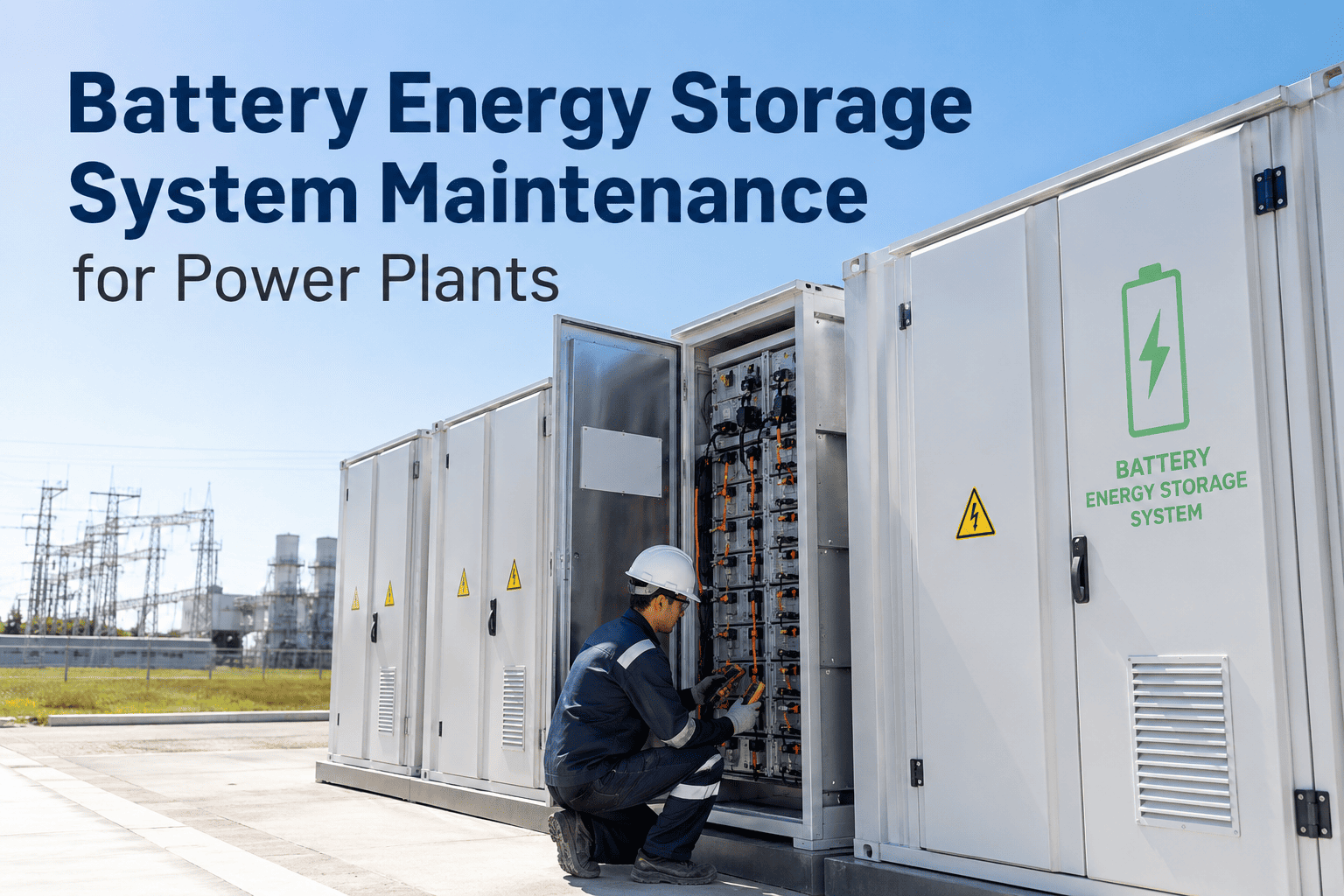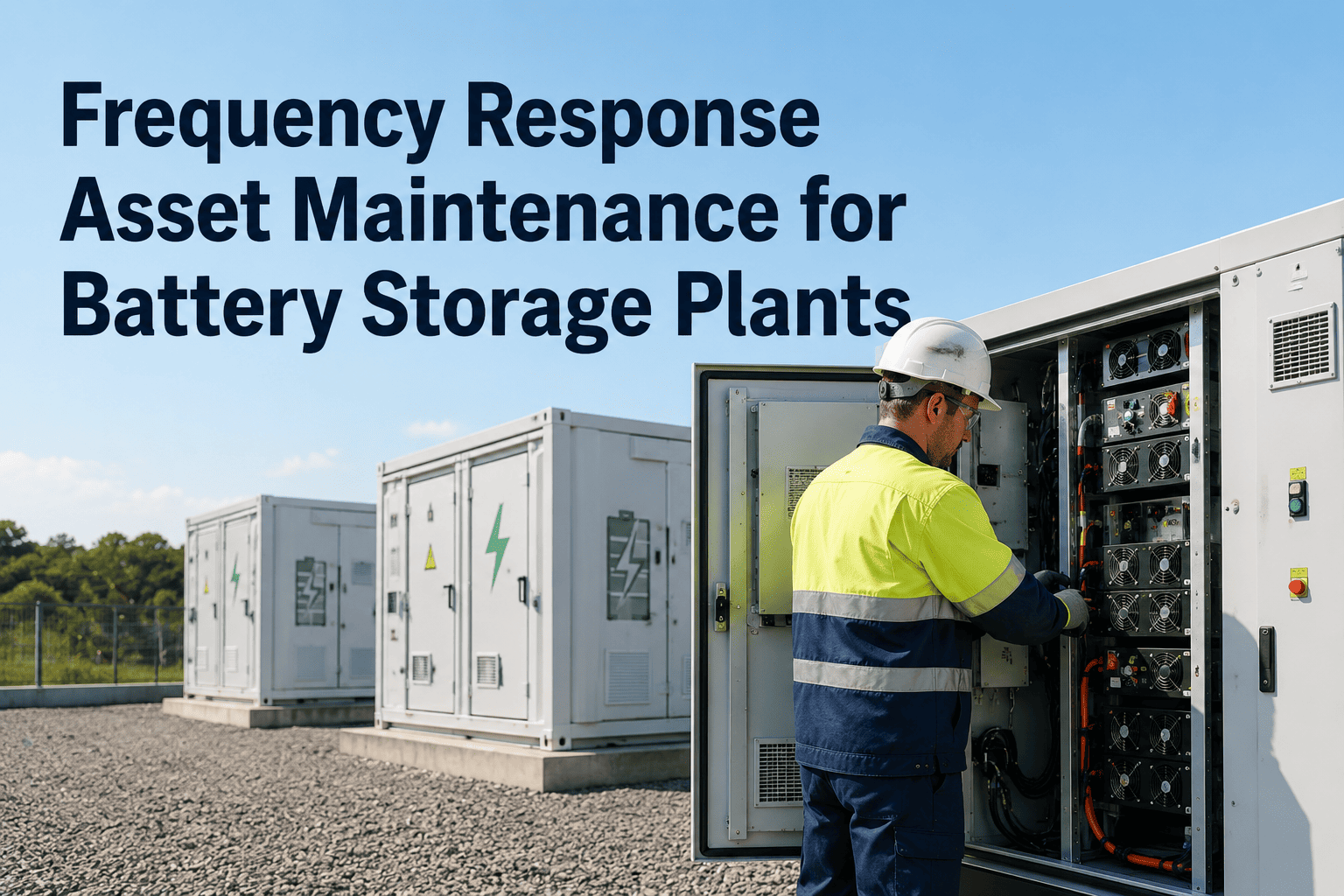
Battery energy storage systems participating in frequency response markets are contractually obligated to deliver power within 100 to 500 milliseconds of a grid frequency deviation — a window that leaves no room for degraded inverters, undersized cooling, or partially available strings. In Texas in 2024, grid-scale BESS provided up to 100% of total frequency response capacity during multiple grid events, demonstrating that grid operators are now structurally dependent on battery storage plants for a service that was previously provided by spinning thermal generators. That dependence raises the operational stakes considerably: a BESS that misses a frequency response call due to a thermal limitation, a BMS-curtailed discharge, or an inverter fault is no longer just an asset management failure — it is a grid reliability event with financial penalties and regulatory exposure. OxMaint gives battery storage operators the analytics, work order infrastructure, and compliance documentation to keep frequency response assets available at full rated capacity — not just operationally available, but dispatch-ready at the performance specifications the market contract requires.
Keep Your Battery Storage Plant Ready for Every Frequency Response Call
Frequency response contracts demand full-capacity discharge within milliseconds. OxMaint's analytics and work order platform keeps every battery string, inverter, and cooling unit at the performance specification your grid services contract requires.
The Financial and Operational Stakes of Frequency Response Availability
Frequency response services generate revenue precisely because they are dispatchable and reliable. When a BESS fails to meet a response obligation due to maintenance-avoidable degradation, the consequences are immediate and compounding.
Analytics That Show Frequency Response Risk Before a Call Is Missed
OxMaint's reporting module tracks the maintenance and performance metrics that determine whether your BESS is truly dispatch-ready — not just operationally available on paper.
OxMaint tracks dischargeable capacity per string versus contracted response capacity over time. When cumulative SOH decline pushes available capacity below the contracted MW threshold, an alert triggers a maintenance review — before the next market dispatch window opens.
Frequency response requires sustained high-rate discharge — the condition most likely to push cell temperatures toward OEM limits. OxMaint tracks delta-T trends and HVAC service history to give operators a real-time view of thermal headroom before high-demand dispatch events.
Round-trip efficiency and inverter output accuracy degrade over time without structured PM. OxMaint logs RTE test results, firmware update history, and output verification per PCS unit — flagging efficiency drift before it affects response accuracy scores in ancillary markets.
Grid services contracts require documented availability above a threshold — typically 95%+ for frequency regulation. OxMaint generates timestamped availability records from PM completion data and corrective WO closure times, providing the compliance evidence operators need for market reporting and contract audits.
OxMaint turns every maintenance insight into a work order — automatically. No manual follow-up, no lost alerts, no gaps between what the data shows and what the technician does.
See how frequency response teams use OxMaint to track capacity, automate PM schedules, and prove grid services compliance in under an hour of setup.
Critical Asset Maintenance for Frequency Response Readiness
These are the asset-level PM tasks that determine whether a BESS delivers its contracted frequency response — tracked and auto-scheduled in OxMaint across every unit, string, and container.
| Asset | PM Task | Frequency | Frequency Response Risk If Skipped |
|---|---|---|---|
| Battery Modules | Capacity test per string, SOH curve update, cell balance verification | Quarterly | Capacity shortfall — contracted MW unavailable during response event |
| PCS / Inverters | RTE verification, output efficiency test, firmware update, response time test | Semi-annual | Response latency increase — misses the 100–500ms market window |
| Thermal / HVAC | HVAC filter DP check, delta-T per zone, coolant sample, refrigerant pressure | Monthly | BMS discharge curtailment during high-rate frequency response |
| BMS / Controls | Alarm log review, fault code clearance, SOC calibration, firmware version check | Monthly | False cutoff or missed fault — emergency shutdown during dispatch |
| DC Connections | Torque check all terminals, IR scan DC bus, ground fault test, insulation resistance | Semi-annual | Arc fault or high-resistance connection limiting discharge rate |
| Fire Suppression | Suppression system function test, detector calibration, alarm panel check | Semi-annual | Regulatory shutdown risk — NFPA 855 non-compliance finding |
Frequently Asked Questions
Join battery storage operators using OxMaint to stay response-ready, protect grid services revenue, and prove availability compliance without manual documentation.
Start free — no credit card, no IT project, no long-term contract. Or book a 30-minute demo to see how OxMaint tracks frequency response readiness across your specific battery storage plant configuration.