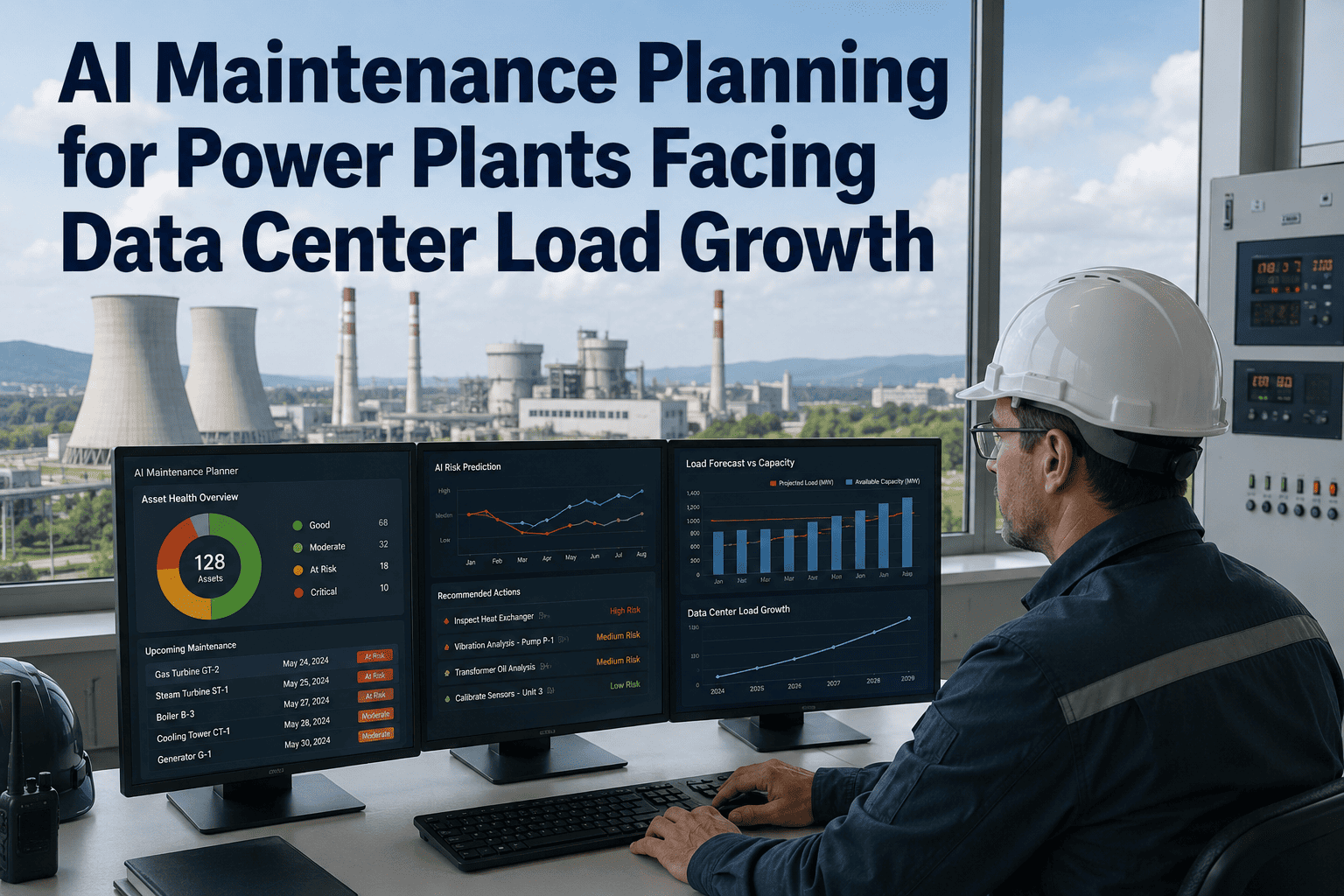
U.S. data center power demand is projected to more than double from approximately 35 GW in 2024 to over 78 GW by 2035 — and every megawatt of that demand will be served by power plants that must operate with greater reliability, higher capacity factors, and longer intervals between forced outages than grid operators have historically planned for. Data centers do not tolerate brownouts, frequency deviations, or unexpected generation shortfalls. They require firm, dispatchable, continuous power — and that requirement flows directly back to the maintenance planning discipline of every plant on the supply side of the equation. Plants that still manage maintenance on spreadsheets, or execute PMs on fixed intervals without condition-driven prioritization, are not equipped to meet this new demand environment. OxMaint AI maintenance planning gives plant teams the visibility and workflow automation needed to sustain the reliability that AI-era load growth demands. If your plant is facing increased dispatch expectations with the same maintenance planning tools you used five years ago, book a consultation to see what changes.
Predictive Maintenance — Load Growth
Data Centers Need Guaranteed Power. Your Plant Needs AI Maintenance Planning to Deliver It.
AI-driven data center load is creating a new reliability standard for power plants. OxMaint gives your maintenance team the predictive tools, mobile workflows, and real-time alerts to operate at the uptime levels this demand wave requires.
The Load Growth Reality
U.S. data center demand (2024)
U.S. data center demand (2035)
Share of U.S. electricity by 2030
Source: Bloomberg NEF, IEA, Deloitte 2025
Reliability Gap
What AI Load Growth Demands from Every Plant on the Grid
Data center operators require reliability that traditional grid planning was never designed to guarantee. The 2025 NERC report identifies fast-changing AI data center loads as among the most pressing emerging reliability risks for North American power infrastructure. Three specific demands now fall on plant maintenance teams.
01
Higher Dispatch Availability
Hyperscale data centers negotiate power purchase agreements with availability guarantees above 99.95%. A forced outage from an undetected equipment failure triggers penalty clauses and destroys the premium pricing that makes data center supply contracts attractive. Maintenance planning must eliminate unplanned forced outages — not reduce them.
02
Faster Recovery from Partial Failures
AI workloads are load-volatile — GPU clusters can swing demand by hundreds of megawatts within seconds. Plants on data center supply contracts are expected to ramp rapidly and sustain output under load transients. Equipment that is degraded — but not yet failed — cannot ramp reliably. AI predictive maintenance catches degradation before it limits ramp capability.
03
Extended Maintenance Windows Between Planned Outages
As load growth tightens capacity margins in regions like PJM and ERCOT, planned outage windows are being compressed. Capacity market prices for 2026-2027 delivery in PJM cleared at over 10x prior-year prices. Plants that need frequent planned outages because condition monitoring is inadequate cannot compete in this environment. AI-driven PM extends intervals safely.
The plants that win data center supply contracts are the ones that can guarantee uptime. Is yours one of them?
OxMaint AI maintenance planning gives your team the predictive alerts, mobile work orders, and real-time asset health dashboards to sustain the availability that AI-era load contracts require.
OxMaint Capabilities
Six Features Built for High-Dispatch Reliability
OxMaint's AI maintenance planning layer addresses each of the reliability gaps that high-dispatch environments expose in traditional maintenance programs.
AI Failure Risk Scoring
Equipment health scored continuously across turbines, generators, transformers, and cooling systems. Assets approaching failure threshold surface automatically in the maintenance priority queue — no manual data review required.
Prevents forced outages
Mobile Work Orders
Technicians receive, execute, and close work orders from the field without returning to a control room. Real-time photo documentation, safety checklist completion, and parts consumption recorded at point of work — not reconstructed later.
Reduces response time
Real-Time Alert Routing
Sensor threshold breaches and AI-detected anomalies route directly to the right technician with the right clearance level. Alert classification separates monitoring items from urgent interventions — no alarm flooding.
Eliminates missed signals
Asset History Intelligence
Complete inspection, repair, and parts replacement history per asset feeds AI failure models. The system learns which maintenance patterns precede which failure modes on your specific equipment fleet — improving predictions over time.
Improves over time
Critical Spares Alignment
Risk-scored assets trigger automatic review of critical spare availability. If the highest-risk generator component has no spare on site, OxMaint flags the gap — before the failure, not after the unplanned outage proves it was missing.
Eliminates spare-out failures
Reliability Dashboards
Plant managers and O&M directors see MTBF, MTTR, forced outage rate, and PM compliance metrics in one view — updated in real time. Reporting for data center PPA counterparties and capacity market submissions generated automatically.
Visibility at every level
Scenario Comparison
Reactive Maintenance vs. AI-Planned Maintenance in a High-Load Environment
The difference between reactive and AI-planned maintenance becomes financially decisive when a plant is dispatched against a data center supply contract with availability commitments.
| Scenario |
Reactive Maintenance |
OxMaint AI Planning |
| Turbine bearing degradation detected |
Discovered at failure — 5-day forced outage |
AI flags 3 weeks prior — planned replacement in 4-hour window |
| Transformer temperature trend |
Monthly reading misses rapid rise — thermal failure |
Continuous trend analysis — advisory issued at 15% above baseline |
| Cooling system pump performance |
Vibration worsens undetected until seizure |
Vibration route alert triggers work order before critical threshold |
| Critical spare availability |
Spare missing — emergency procurement adds 72 hours |
Spare gap flagged 30 days before risk window — ordered in time |
| PPA availability compliance |
Penalty clauses triggered by forced outages |
Availability maintained — full contract value realized |
FAQ
Questions About AI Maintenance Planning for Load-Stressed Plants
How does OxMaint AI differ from our existing DCS alarm system?
DCS alarms fire when a threshold is crossed — they are reactive by design. OxMaint AI analyzes trend patterns across historical and real-time data to identify degradation trajectories before any threshold is crossed. The output is a structured work order with urgency classification, not a raw alarm requiring interpretation.
Book a consultation to see the difference in a live demo.
Can OxMaint integrate with our existing historian or DCS platform?
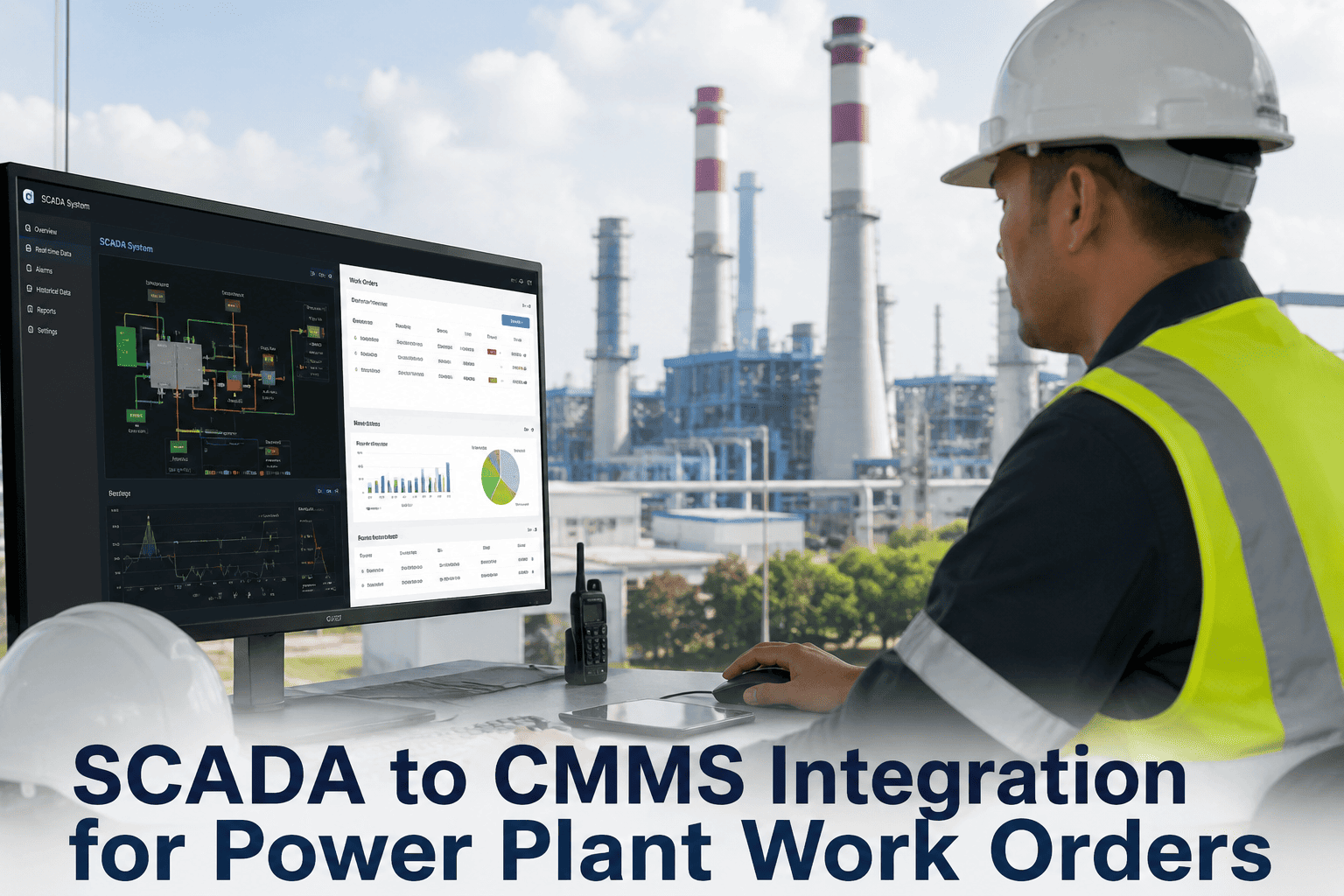
Yes. OxMaint ingests data from OSIsoft PI, Aveva, Ignition, GE Historian, and most OPC-DA/UA-compatible DCS platforms. Integration is configured without custom code in most cases and is typically live within 2-5 days.
Start your free trial to begin the integration assessment.
We have a data center PPA — can OxMaint help us document availability performance?
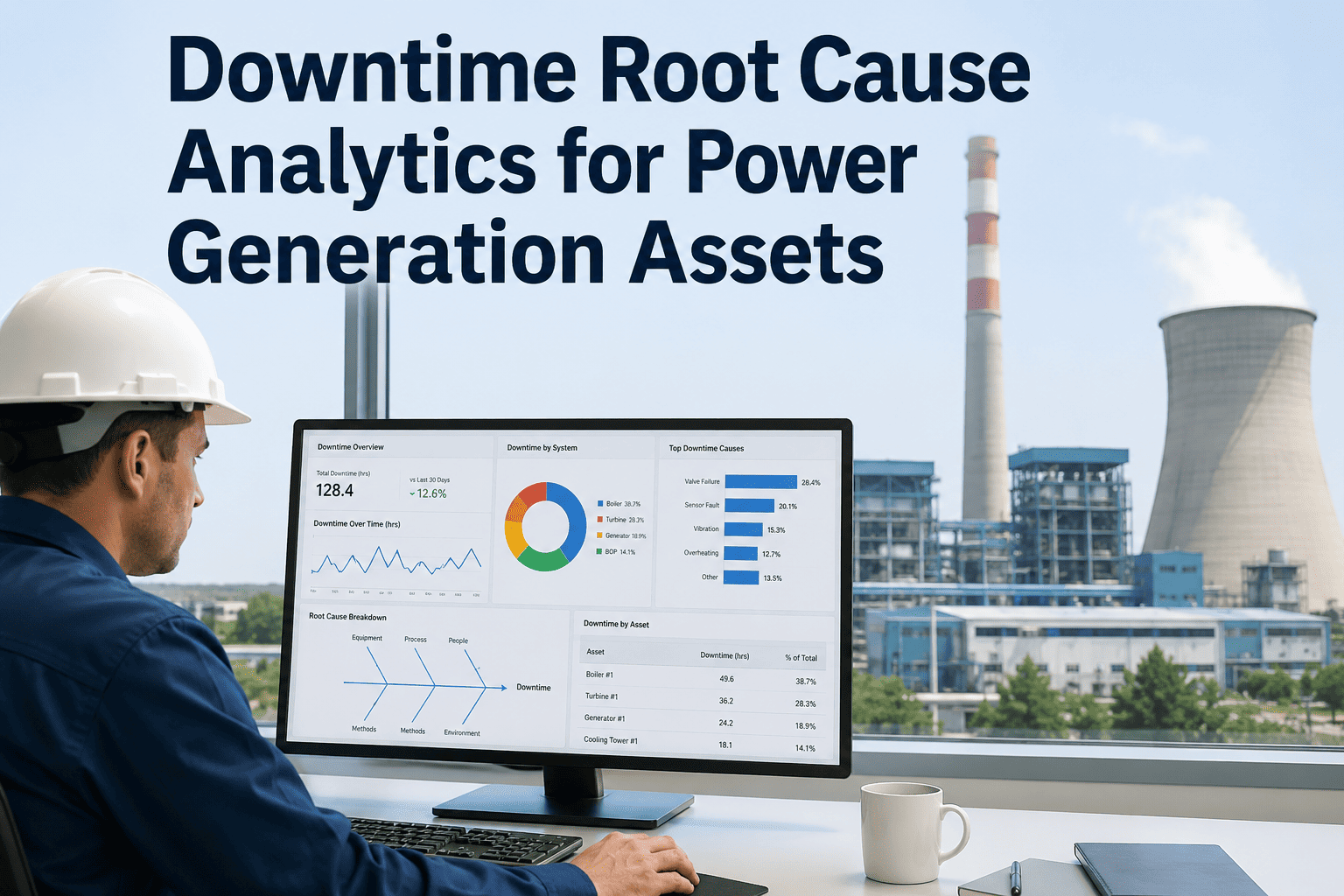
OxMaint generates availability reports — forced outage rate, planned outage duration, and MTTR — directly from completed work order history. These reports are formatted for PPA compliance documentation and capacity market submissions, with timestamps and root cause classification per event.
How long before our plant starts seeing reliability improvements?
Plants typically see measurable PM compliance improvements within the first 30 days and begin receiving AI-generated predictive alerts within 60-90 days as the system learns asset behavior baselines. Most plants report significant reduction in unplanned events within the first operating quarter.
Book a demo to see a deployment timeline for your plant.
What types of power plants does OxMaint support?
OxMaint supports gas-fired combined cycle, simple cycle peakers, coal, nuclear auxiliary systems, hydro, and renewable assets. Asset templates and PM libraries are pre-built for common equipment including GE, Siemens, Mitsubishi, and Alstom turbine families.
Start your free trial to explore the asset template library.
AI load growth is raising the reliability bar for every plant on the grid. OxMaint raises your maintenance standard to match it.
Predictive failure alerts, mobile work orders, AI risk scoring, critical spares alignment, and real-time reliability dashboards — OxMaint gives plant teams the tools to operate at the uptime levels that data center supply contracts now require.