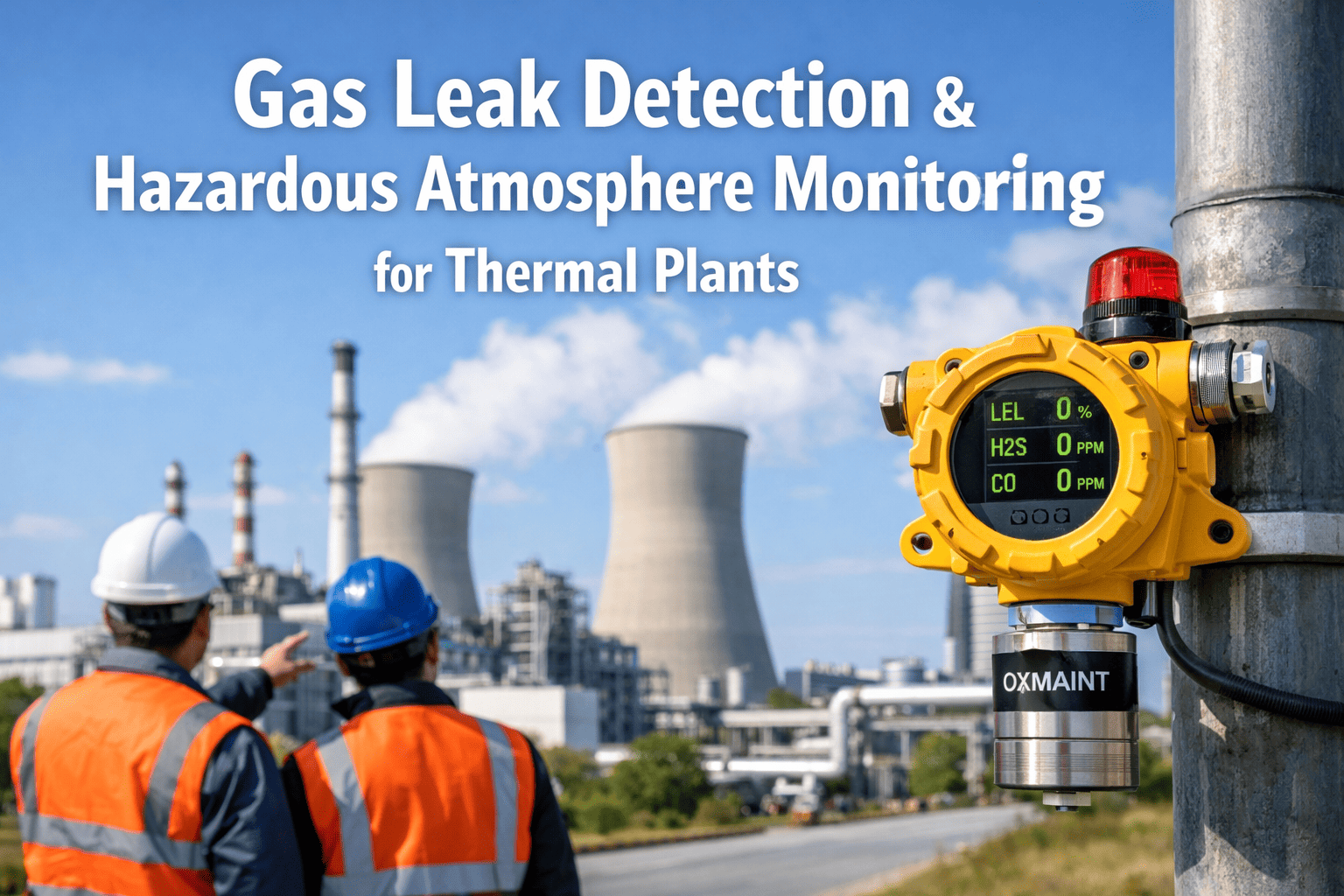
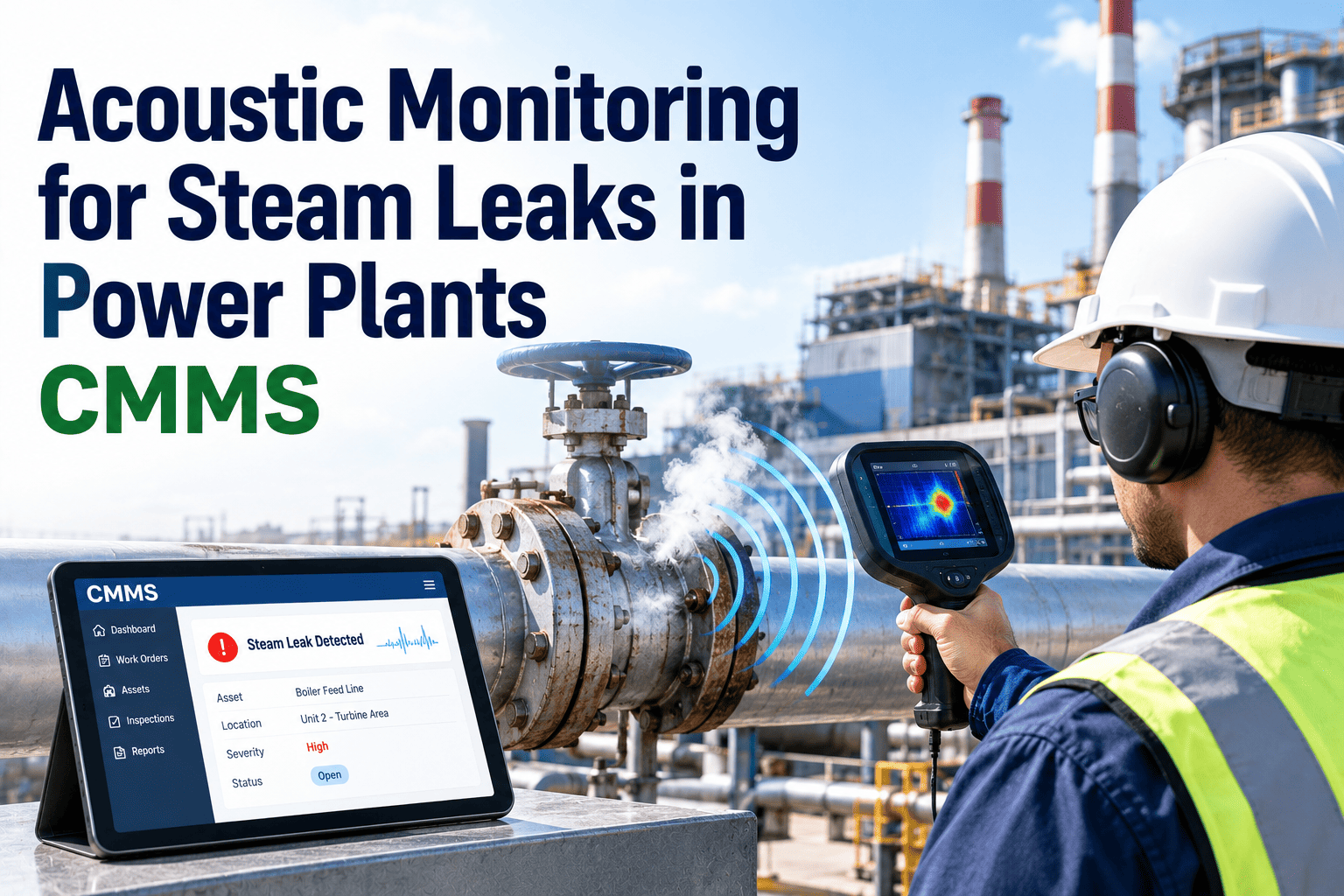
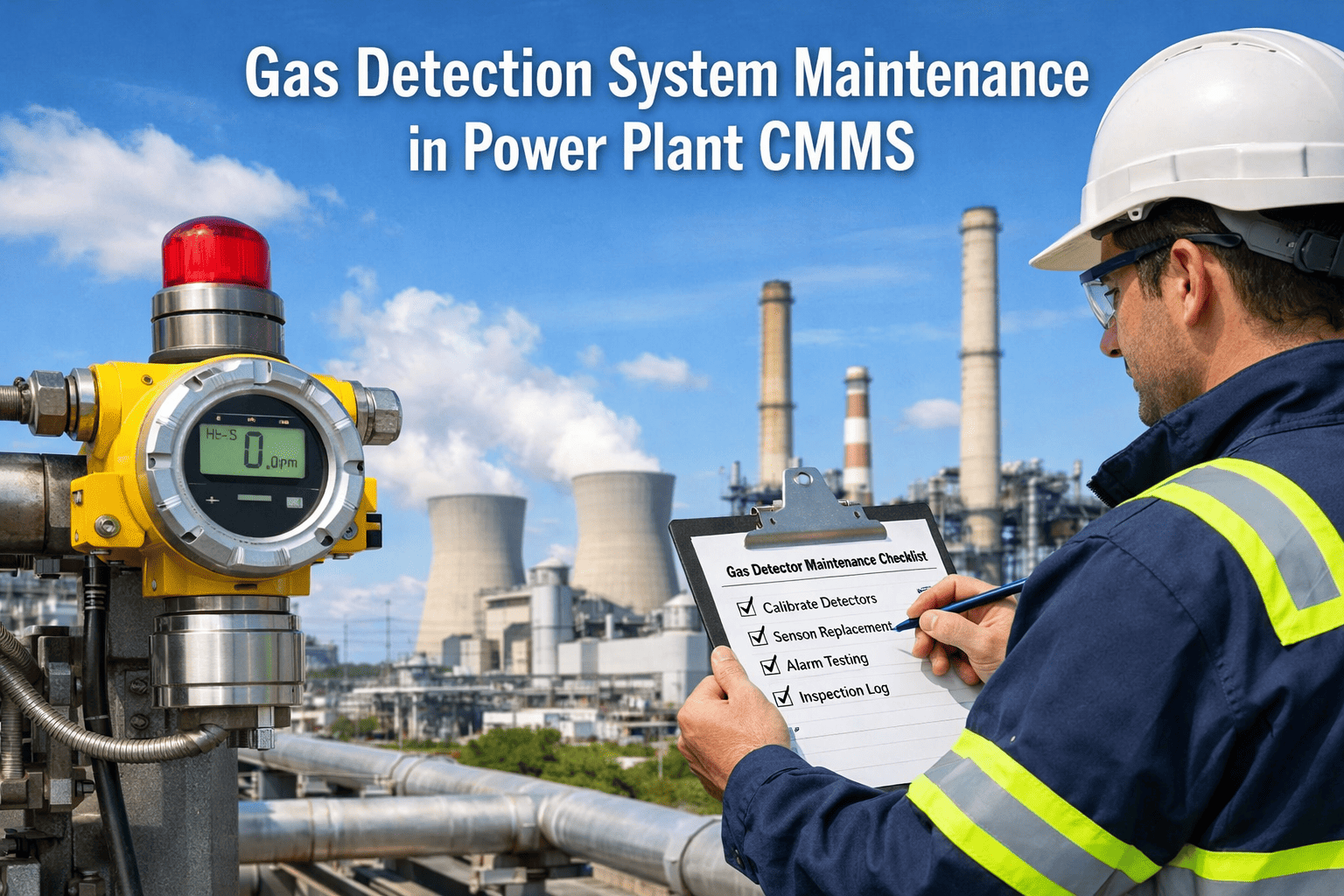
Thermal power plants run on combustible fuel, generate toxic byproducts, and confine workers in spaces where a single undetected gas accumulation can turn routine maintenance into a mass casualty event. The 2010 Kleen Energy explosion — triggered by natural gas accumulation in turbine enclosures with no gas detection active — killed six workers and injured more than fifty. Investigators found the same root cause as dozens of incidents before and after it: flammable gas reached its lower explosive limit in an enclosed space before anyone knew it was there. Two-thirds of all gas-related incidents in industrial plants start the same way — a leak no one detected until ignition. Sign up free on OxMaint to connect your gas detection hardware to an AI-powered monitoring platform that closes the gap between a sensor reading and a safety response — before accumulation becomes an emergency.
OSHA 29 CFR 1910.146 + 1910.1000 — Active Enforcement
Gas Accumulation Kills Before You Smell It. Detection Must Be Real-Time, Not Reactive.
H2S paralyzes the olfactory nerve at concentrations above 100 ppm — the exact level where workers stop smelling it and start losing consciousness. Methane is odorless at dangerous concentrations. Carbon monoxide is completely undetectable by human senses. Sensor-to-alert latency measured in minutes costs lives.
H₂S
Hydrogen Sulfide
Olfactory Paralysis
100 ppm+
Fatal Exposure
700–1000 ppm
CO
Carbon Monoxide
Headache/Dizziness
200 ppm
Fatal in 1–3 hrs
3,200 ppm
CH₄
Methane / Natural Gas
Lower Explosive Limit
4.4% vol (100% LEL)
Upper Explosive Limit
17% vol
Where Thermal Plants Generate Hazardous Atmospheres
Every thermal power plant has gas hazard zones distributed across its entire footprint — from turbine enclosures and boiler rooms to underground cable tunnels, cooling water sumps, and fuel gas metering stations. The problem is not that these hazards are unknown. The problem is that they are monitored inconsistently, with detector readings siloed in hardware panels that no one is watching when maintenance crews are working nearby. Book a consultation to map your plant's hazardous atmosphere zones against current monitoring coverage.
EXTREME RISK
Gas Turbine Enclosures
Methane (CH₄) · Natural Gas · VOCs
Fuel supply piping to turbine combustion chambers operates at 8–30 barg. Flange failures, valve stem leaks, and seal degradation release natural gas into acoustically enclosed spaces with auto-ignition surfaces reaching 520°C. Gas turbine enclosure explosions from fuel accumulation are documented at facilities worldwide.
EXTREME RISK
Boiler Rooms & Furnace Areas
CO · SO₂ · NOₓ · Combustion Byproducts
Incomplete combustion generates CO at dangerous concentrations — particularly during startup, burner adjustment, and low-load operation. Flue gas recirculation failures can introduce SO₂ into occupied work areas. The 2023 Oak Grove Power Plant explosion during auxiliary boiler commissioning killed one contractor.
HIGH RISK
Confined Spaces: Sumps & Vaults
H₂S · CO · O₂ Deficiency
Underground cable tunnels, condenser water vaults, and cooling system sumps accumulate H₂S from biological activity and CO from nearby combustion sources. Oxygen displacement by inert purge gases leaves spaces that appear normal but are immediately life-threatening on entry without pre-testing.
HIGH RISK
Hydrogen-Cooled Generator Areas
Hydrogen (H₂) · Seal Oil Vapor
Large generators use hydrogen cooling systems operating at several psig. Seal failure releases H₂ — an odorless, colorless gas with a 4–75% explosive range, the widest of any common industrial gas. Hydrogen monitoring at generator housings and adjacent areas is essential, not optional.
HIGH RISK
Fuel Gas Metering Stations
Methane (CH₄) · Odorant Compounds
Natural gas pressure reduction, metering, and filtration equipment concentrates leak risk at flanged connections, regulators, and meter runs. While odorant (mercaptan) aids detection at low concentrations, workers with olfactory fatigue in odorous environments cannot rely on smell alone.
MODERATE RISK
Battery Rooms & UPS Areas
Hydrogen (H₂) · Sulfuric Acid Vapor
Lead-acid battery banks used for emergency power and control systems generate hydrogen during charging cycles. Without adequate ventilation verification and continuous H₂ monitoring, battery rooms reach explosive concentrations from a source that appears completely static from the outside.
6
Workers killed at Kleen Energy power plant — natural gas accumulated in turbine enclosure with no active gas detection system covering the area during commissioning
67%
of industrial gas incidents in refineries and thermal plants begin because no one detected a leak until it was too late, according to 2022 petrochemical incident analysis
42%
of confined space deaths involve would-be rescuers who entered without atmospheric testing — a failure that digital permit-to-enter workflows prevent automatically
62%
reduction in false alarms when sensor calibration intervals are maintained quarterly vs. annually — critical for preventing alarm fatigue that causes workers to ignore real warnings
How OxMaint Converts Detector Readings Into Safety Actions
Gas detectors generate readings. What happens between a reading and a worker response determines whether an incident is prevented or investigated. OxMaint integrates with your fixed and portable gas detection hardware to transform isolated sensor data into coordinated safety responses — automatically, without requiring someone to be watching a panel in a control room. Sign up free to see how the detection-to-response pipeline works for your plant configuration.
01
Sensor Integration & Continuous Data Ingestion
Fixed gas detectors, portable multi-gas monitors, and IoT atmospheric sensors connect to OxMaint via Modbus, OPC-UA, and direct API feeds. Data streams update the platform dashboard continuously — no manual readings, no periodic logging delays.
Supported: H₂S · CO · CH₄ · H₂ · O₂ · LEL · SO₂ · VOCs
02
Tiered Alarm Thresholds with AI Anomaly Detection
Each gas and location is configured with tiered thresholds — action level, evacuation level, and IDLH — aligned to OSHA PELs and site-specific risk profiles. AI anomaly detection flags gradual concentration trends that fall below single-point alarms but indicate a developing leak before any threshold is crossed.
Alarm tiers: Action → Evacuation → IDLH
03
Automated Work Order & Permit Suspension
When a gas alarm triggers in a zone where active work orders or confined space entry permits are open, OxMaint automatically suspends those permits and notifies permit-holders and supervisors simultaneously. Workers are alerted to evacuate before conditions worsen, and re-entry is blocked until the atmosphere is confirmed safe.
Instant permit suspension on alarm trigger
04
Detector Calibration & Maintenance Tracking
Every gas detector in your fleet is tracked in OxMaint with its calibration date, calibration gas type, next due date, and responsible technician. Overdue calibrations are flagged before they create compliance gaps — facilities maintaining quarterly calibration intervals see 62% fewer false alarms than those running annual intervals.
Calibration records audit-ready at any time
05
Incident Documentation & OSHA Compliance Reports
Every alarm event, every response action, and every atmosphere clearance is timestamped and stored with a complete audit trail. OSHA inspection requests for atmospheric monitoring records, confined space pre-entry test results, and gas detector calibration logs are generated in under two minutes — not assembled from paper binders over several hours.
OSHA-ready reports on demand
Gas Accumulation Does Not Wait for Your Next Inspection Round
OxMaint connects your existing gas detection hardware to an AI platform that turns sensor readings into immediate safety actions — automated permit suspension, supervisor alerts, calibration tracking, and audit-ready documentation. Stop managing gas safety from a wall panel no one is watching.
OSHA Compliance: What Gas Monitoring Standards Require
Gas monitoring at thermal power plants is not a best practice — it is a regulatory requirement under multiple concurrent OSHA standards. The table below maps the key standards to their specific requirements and the documentation OxMaint generates to satisfy each one during an inspection.
| OSHA Standard |
Requirement |
Gases Covered |
Documentation Required |
OxMaint Coverage |
| 29 CFR 1910.146 |
Pre-entry and continuous atmospheric testing in permit-required confined spaces |
O₂, flammable gas (LEL), toxic vapors (H₂S, CO) |
Signed entry permit with test results, attendant logs, kept 1 year |
Digital entry permits with mandatory atmosphere test fields; auto-archived |
| 29 CFR 1910.1000 |
Worker exposure must not exceed PELs for any air contaminant during 8-hour shift |
CO (50 ppm), H₂S (20 ppm), SO₂ (5 ppm), NO₂ (5 ppm), CH₄ (1,000 ppm) |
Monitoring records showing exposure levels, corrective action documentation |
Continuous sensor feeds vs. PEL thresholds; exceedance events auto-logged |
| 29 CFR 1910.119 (PSM) |
Process Hazard Analysis and mechanical integrity for processes involving flammable/toxic gases above threshold quantities |
Natural gas, H₂, flammable gas mixtures above TQ |
PHA documentation, mechanical integrity records, incident investigation reports |
PHA finding tracking, detector inspection work orders, incident documentation |
| NFPA 72 + NFPA 72A |
Gas detection systems must be tested and maintained per manufacturer specifications and applicable codes |
All combustible and toxic gases covered by fixed system |
Calibration records, functional test logs, detector inspection records |
Complete detector fleet calibration and testing schedule with overdue alerts |
| 29 CFR 1910.120 (HAZWOPER) |
Real-time air monitoring during hazardous material emergency response and cleanup operations |
Site-specific based on chemicals present |
Monitoring logs, PPE selection records, incident command documentation |
Emergency response work orders with live sensor feeds and responder PPE records |
Frequently Asked Questions
What gas detection hardware does OxMaint integrate with?
OxMaint integrates with fixed gas detection systems from major industrial vendors — including MSA, Honeywell Analytics, Draeger, Industrial Scientific, and RAE Systems — through standard industrial protocols including Modbus RTU, Modbus TCP, OPC-UA, and vendor-specific API connections. For portable multi-gas monitors used by maintenance crews during confined space entry and hot work, OxMaint accepts manual data entry through its mobile interface with photo documentation of instrument display readings, as well as automated data sync from instruments equipped with Bluetooth or USB connectivity. Facilities that have invested in a mix of legacy fixed detectors and newer IoT-connected sensors can consolidate all data streams into a single OxMaint monitoring dashboard without replacing any existing hardware. Initial sensor integration for a typical thermal plant is completed within 4–6 weeks of deployment.
How does OxMaint handle gas alarm response when maintenance crews are actively working in the affected area?
When a gas alarm triggers in a zone with active work orders or open confined space entry permits, OxMaint immediately cross-references the alarm location against the plant's active permit register. Permit-holders and their supervisors receive simultaneous push notifications with the alarm gas type, current concentration, threshold crossed, and the specific work order or permit that is now suspended. The suspended permit cannot be reinstated by the permit-holder alone — clearance requires a supervisor acknowledgment and a documented atmosphere confirmation showing readings below action level thresholds. This automated sequence replaces the manual process of a control room operator noticing an alarm, calling a foreman, and hoping the message reaches the crew in time — a chain that has failed in multiple documented incidents.
Can OxMaint detect slow methane accumulation before it reaches the 10% LEL action level?
Yes — this is one of the core capabilities of the AI anomaly detection layer in OxMaint's gas monitoring module. Standard fixed detector systems alarm only when readings cross a configured threshold. OxMaint's AI engine continuously analyzes concentration trend data from all connected sensors and flags anomalous upward trends — gradual methane accumulation in a turbine enclosure over 20 minutes that never crosses 10% LEL, for example — as a developing hazard that warrants investigation. This pre-threshold detection is particularly important in turbine enclosures and other well-ventilated spaces where a leak source may produce a slowly rising concentration that an instantaneous threshold alarm would miss entirely until ventilation changes or the source worsens. Early warning allows facilities to investigate a flange or valve before evacuation becomes necessary.
How does the platform track gas detector calibration across a large plant fleet?
Each gas detector in your facility is registered in OxMaint as an individual asset with its complete calibration history — gas type, concentration standard used, technician performing the calibration, and date performed. The platform calculates the next calibration due date based on the manufacturer's specified interval and sends automated alerts to the responsible technician 14 days before the due date and again on the due date. Overdue calibrations are flagged on the safety dashboard as open compliance items that require resolution. This matters for two reasons: OSHA inspectors specifically request calibration records for gas detectors used in confined space atmospheric testing, and facilities maintaining quarterly calibration intervals demonstrate 62% fewer false alarms than those on annual cycles — reducing the alarm fatigue that causes workers to underrespond to genuine hazard events.
What documentation does OxMaint generate if a worker is exposed to a gas above the OSHA PEL?
An exposure event above an OSHA PEL triggers a structured incident documentation workflow in OxMaint. The platform automatically creates an incident record linked to the sensor readings that recorded the exceedance, the active work order or permit at the time, the worker's identification, the duration of exposure based on entry and exit logs, and the gas concentration at each logged interval. This record forms the basis for OSHA 300 log entries if the exposure resulted in medical treatment or lost-time injury, the employer's investigation documentation required under 29 CFR 1904, any OSHA notification required under 29 CFR 1904.39 for hospitalizations, and internal corrective action tracking. All documentation is timestamped with a digital audit trail that demonstrates the chronology of events, the response actions taken, and the controls implemented to prevent recurrence.
Your Plant Has Gas Detectors. Does It Have a Response System?
Gas detectors measure. OxMaint responds. Real-time alarm-to-action workflows, automated permit suspension, detector calibration tracking, and complete OSHA documentation — built for the hazardous atmosphere complexity of thermal power plants. Because the gap between a sensor reading and a worker response is where incidents happen.