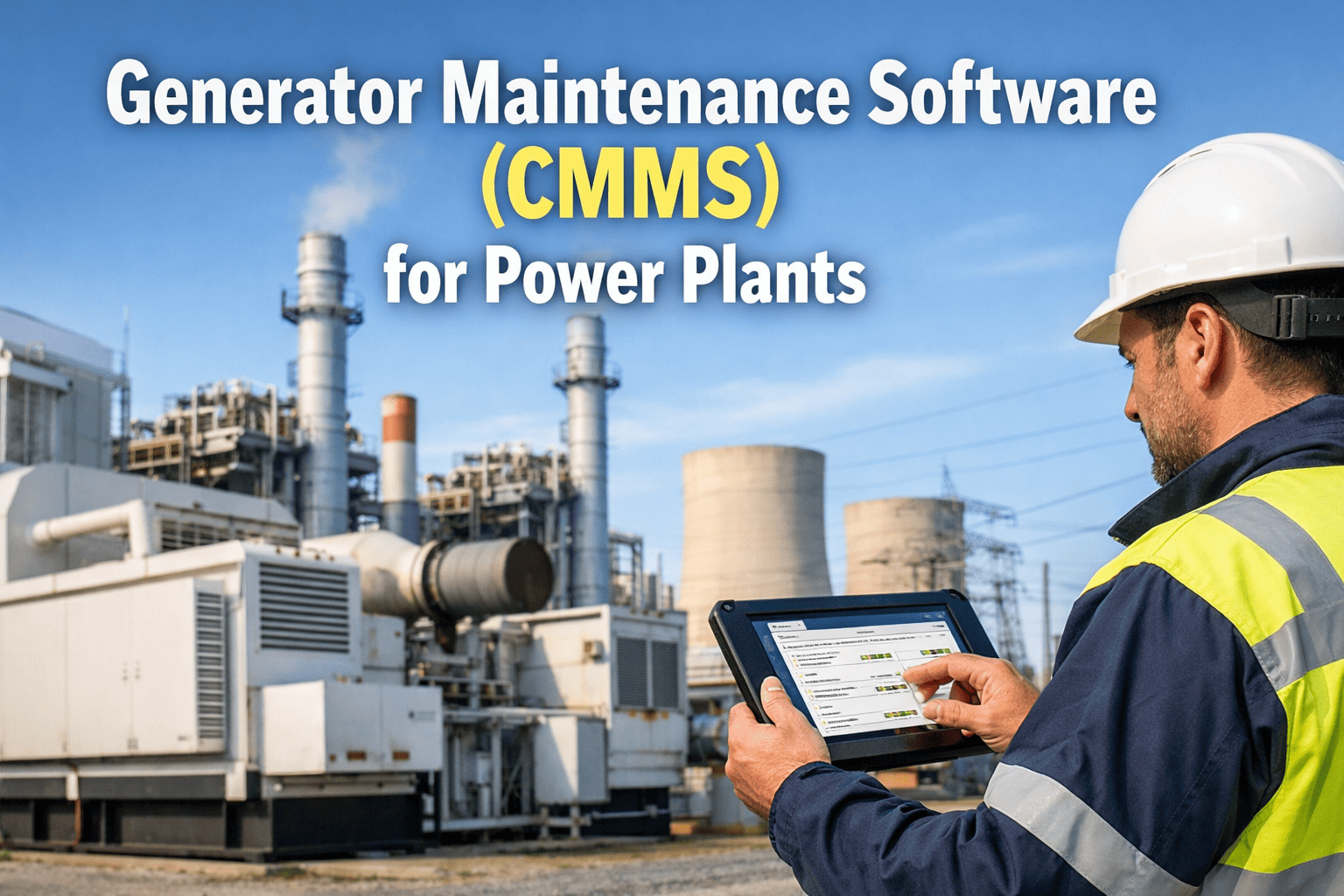
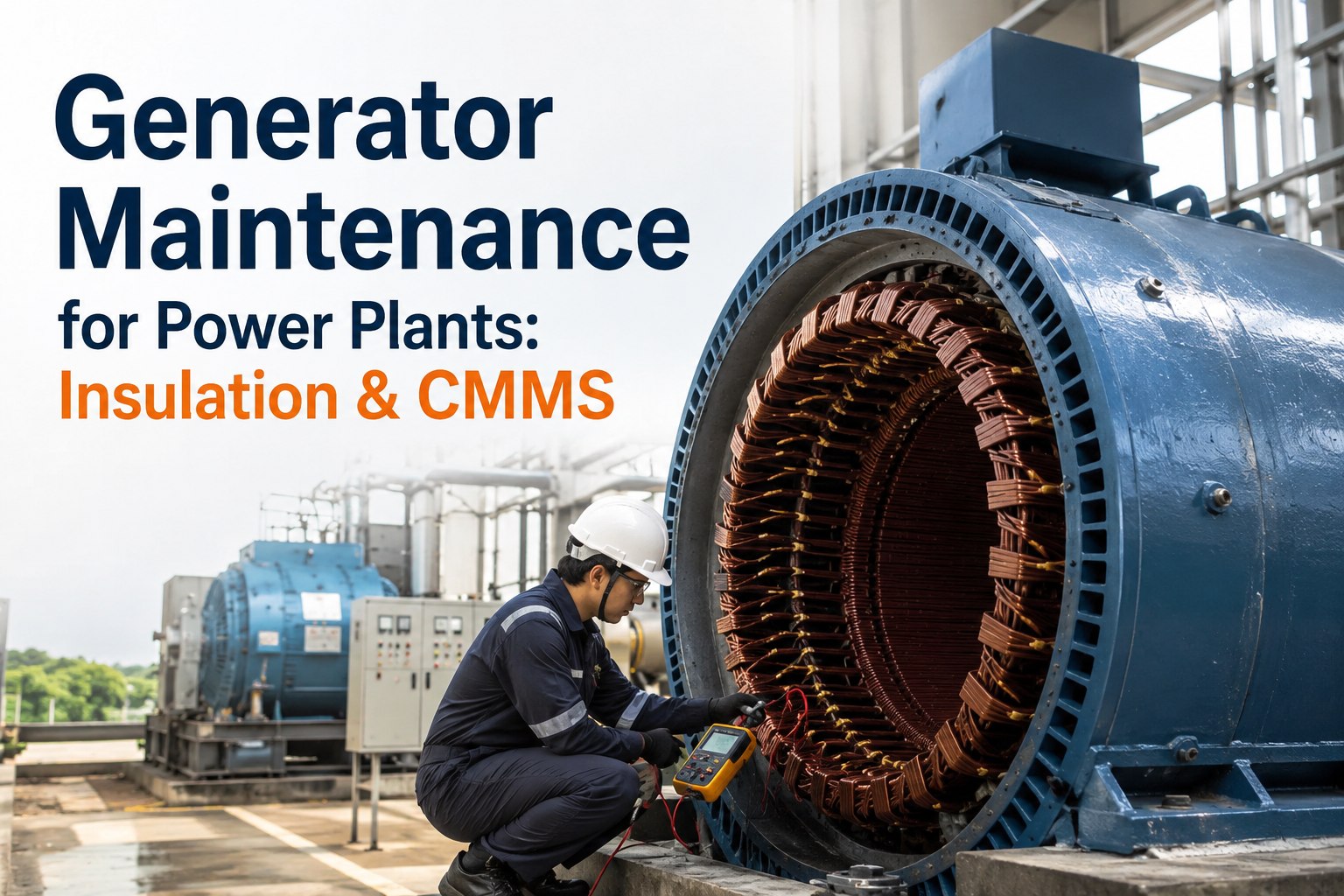
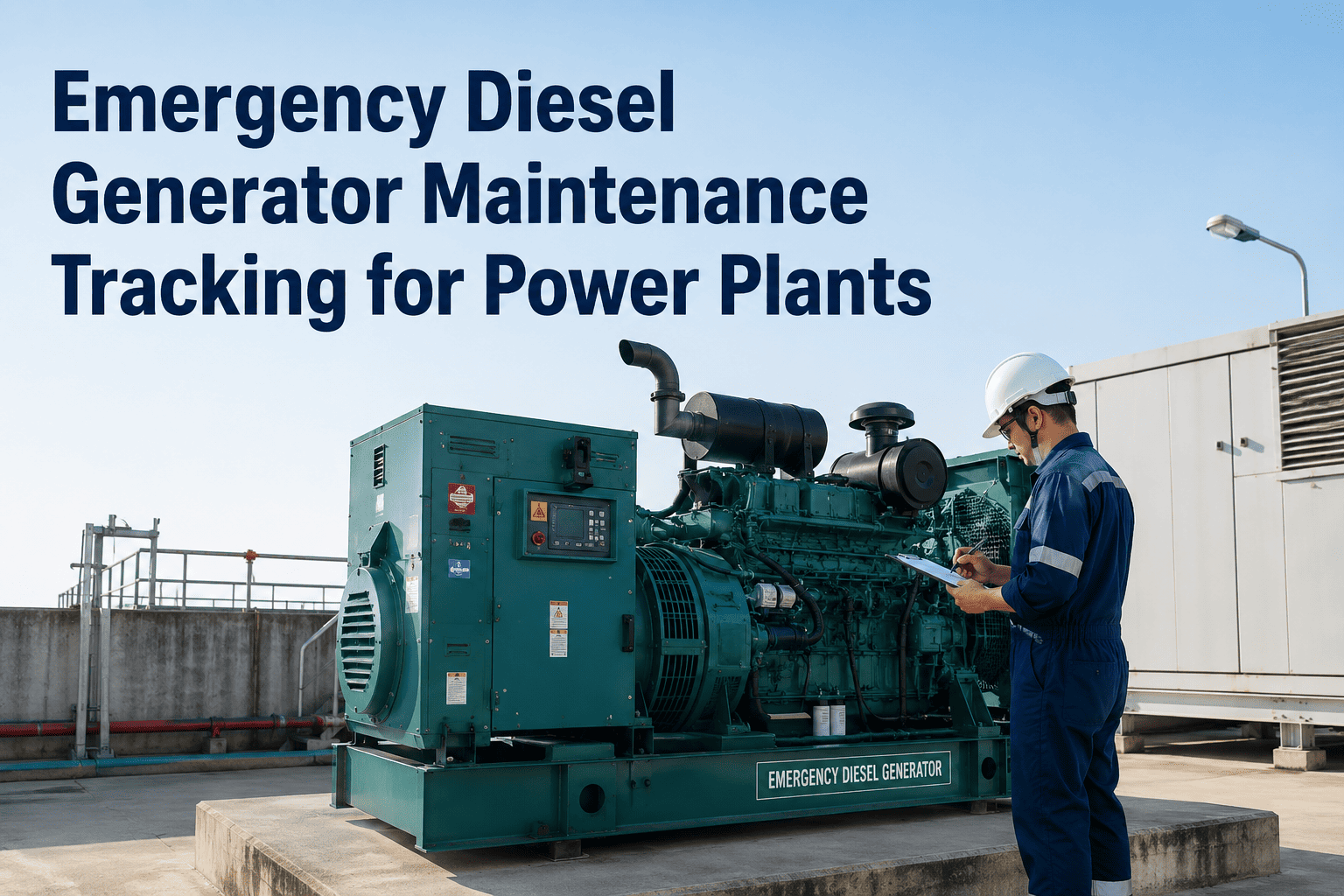
Generator failures don't announce themselves — they accumulate through missed oil changes, overdue coolant flushes, ignored vibration trends, and inspection tasks that slipped when a technician changed teams. At power plants running diesel auxiliaries, gas turbine generators, or standby reciprocating units, a single unplanned failure costs between $50,000 and $500,000 in emergency repair, lost generation, and contractor premiums — and in over 60% of cases the root cause is a preventive maintenance programme that existed on paper but not in execution. Oxmaint's CMMS for generator maintenance closes that gap with automated service scheduling, digital inspection records, and full failure history tracking across every unit in your fleet. Book a demo to see your generator fleet configured live.
Generator Fleet Performance — Industry Baseline Data
Where unplanned failures come from — and what prevents them
62%
Fewer unplanned failures
when generator PM compliance exceeds 85% — tracked in a CMMS
10,000 hr
Average MTBF
well-maintained diesel fleet vs 4,200 hr reactive-only
3.8×
Emergency Cost Premium
vs planned maintenance at same contractor rates
$280K
Avg Failure Cost
repair + lost generation + contractor premium at 100MW+ scale
Primary Failure Causes — Power Plant Generators
Generator Failure Modes: What Goes Wrong and Why
Every major generator failure category has a documented PM intervention that prevents it. The gap between prevention and failure is almost always a scheduling or documentation breakdown — not an absence of maintenance knowledge.
38%
Cooling System Failures
Coolant degradationRadiator foulingThermostat failureWater pump wear
Detectable: 200–400 hours before catastrophic failure via coolant chemistry and temperature trending
PM Prevention: Coolant pH and DCA testing every 250 hours · Radiator flush per OEM interval · Water pump bearing inspection
22%
Lubrication Failures
Oil degradationLow oil pressureFilter bypassBearing wear
Detectable: Oil analysis can identify viscosity breakdown and metallic particle increase 100–300 hours in advance
PM Prevention: Oil and filter change at 250–500 hr intervals · Oil pressure trending · Periodic oil sample analysis
18%
Fuel System Failures
Fuel contaminationInjector foulingFilter blockageTank microbial growth
Detectable: Exhaust smoke colour, fuel flow rate deviation, and filter differential pressure trending
PM Prevention: Fuel polishing on standby units · Injector inspection at 1,000 hr · Fuel filter replacement per interval
14%
Electrical and Winding Failures
Insulation degradationAVR driftExciter faultConnection loosening
Detectable: Winding resistance testing and partial discharge analysis up to 12 months in advance
PM Prevention: Annual insulation resistance test · AVR setpoint verification · Terminal connection torque check
8%
Structural and Mechanical Failures
Coupling wearVibration damageMount fatigueAlignment drift
Detectable: Continuous vibration monitoring identifies misalignment and coupling wear 4–8 weeks in advance
PM Prevention: Vibration baseline survey every 500 hr · Coupling inspection at major interval · Alignment check post-maintenance
Generator PM Intervals: What Gets Done and When
A generator's maintenance requirements span from shift-level operator checks through to multi-year major overhauls. Missing any tier creates a risk that accumulates invisibly until it becomes a forced outage.
Daily / Each Start
Operator Level
Engine oil level and condition check
Coolant level and temperature observation
Fuel level and drain water from fuel system
Battery voltage and charger status
Leak inspection — oil, coolant, fuel
Pre-start alarm and fault code check
250 Hours
Technician Level
Engine oil and filter change
Coolant DCA concentration test
Air filter inspection and service
Drive belt tension and condition
Exhaust system leak inspection
Load test — 30 min minimum at rated load
500 Hours
Maintenance Team
Fuel filter replacement
Coolant sample analysis
Alternator bearing inspection
Vibration baseline measurement
Turbocharger boost pressure test
Terminal connection torque check
1,000 Hours
Specialist Level
Injector inspection and test
Valve clearance measurement
Coolant system flush and refill
Insulation resistance test (winding)
AVR and governor setpoint verification
Coupling alignment check
Annual / Major
OEM / Contractor
Full load bank test and governor calibration
Partial discharge analysis (stator winding)
Fuel tank cleaning and inspection
Top-end overhaul at OEM hours (2,000–4,000 hr)
Battery replacement (every 3–5 years)
Full compliance and safety documentation review
Auto-Schedule Every PM Interval Across Your Entire Generator Fleet
Oxmaint generates and assigns work orders for every PM tier automatically — daily operator checks, 250-hour technician tasks, and annual overhaul windows — with mobile completion and digital sign-off on every inspection.
What Oxmaint Tracks for Every Generator Unit
Asset Record
Full Specification Profile
Make, model, serial number, rated kW, voltage, frequency, installation date, commissioning data, and OEM PM schedule — all linked to the unit's work order history
Runtime Hour Tracking
Accumulated operating hours logged per run event — PM intervals trigger automatically when hour thresholds are reached, not on fixed calendar dates
Component-Level Sub-Assets
Engine, alternator, cooling system, fuel system, and electrical panel tracked as individual sub-assets — each with independent PM schedules and failure histories
Maintenance Execution
Digital Inspection Checklists
Mobile checklists pre-built per PM interval — technicians complete and sign off on a phone or tablet, with mandatory fields enforced before work order closure
Parts and Consumable Tracking
Oil, filters, coolant additives, and belts linked to work orders — usage history per unit enables accurate inventory forecasting and eliminates last-minute procurement
Failure and Fault History
Every fault code, trip event, and unplanned repair recorded against the unit — pattern analysis reveals recurring failure modes before they cause a repeat event
Performance and Compliance
PM Compliance Rate per Unit
Dashboard shows scheduled vs completed PM tasks per generator, per period — identifying which units are falling behind before a skipped interval becomes a failure
Load Test Records
Periodic load test results logged with date, duration, load level, and technician — critical for standby generator compliance with NFPA 110, ISO 8528, and insurance requirements
Maintenance Cost per Unit
Labour hours, parts cost, and contractor spend tracked per generator — enabling total cost of ownership comparison across fleet and data-driven replacement decisions
CMMS vs No CMMS: The Generator Maintenance Numbers
| Metric |
Without CMMS — Industry Baseline |
With Oxmaint CMMS |
| PM Compliance Rate |
52–61% — tasks missed when crew changes or schedules are not enforced digitally |
79–94% — automated scheduling and mobile work orders close the execution gap |
| Unplanned Failure Rate |
8–14 unplanned events per generator per year at typical industrial/utility scale |
3–5 events — 62% reduction from condition-triggered PM and hour-based scheduling |
| Mean Time Between Failures |
3,800–5,200 operating hours across reactive-maintenance diesel fleets |
8,500–12,000 hours — MTBF more than doubles with structured PM execution |
| Emergency Repair Spend |
Emergency parts at 2–4× stock price, contractor mobilisation premium, overtime labour |
61% reduction — pre-positioned parts, planned labour windows, no urgency premium |
| Audit and Compliance Prep |
2–4 weeks to locate paper PM records and load test logs for insurance or regulatory audit |
Single dashboard export — all records digitally stored, searchable, and timestamped |
| Generator Lifespan |
12–18 years at reactive maintenance pace before major failure necessitates replacement |
20–28 years with structured PM — documented extension of economic life by 6–10 years |
Reduce Generator Failures by 62%. Start in 14 Days.
Oxmaint configures hour-based PM schedules, digital inspection checklists, and fleet-level compliance dashboards for your entire generator portfolio — diesel, gas, reciprocating, or standby — with no implementation project required.
Generator Type PM Requirements at a Glance
| Generator Type |
Primary PM Focus |
Key Interval Trigger |
Most Common Failure Mode |
CMMS Scheduling Priority |
| Diesel Reciprocating |
Lubrication, cooling, fuel system, injectors |
Operating hours (250/500/1,000 hr) |
Cooling system and fuel contamination |
Hour-meter triggered work orders per sub-system |
| Gas Turbine Generator |
Hot section inspection, combustor, compressor washing |
Equivalent Operating Hours (EOH) |
Hot section degradation, bearing wear |
EOH-based scheduling with condition-override thresholds |
| Steam Turbine Generator |
Blade inspection, governor, lube oil system, seals |
Run hours + annual statutory outage |
Blade erosion, labyrinth seal wear |
Outage-window PM scheduling with statutory inspection triggers |
| Hydro Generator |
Runner inspection, thrust bearing, stator winding, seals |
Calendar + run hours + seasonal outage |
Runner cavitation, bearing wear, winding insulation |
Seasonal scheduling aligned with low-flow maintenance windows |
| Standby / Emergency (NFPA 110) |
Load test, battery, fuel quality, transfer switch |
Calendar (weekly/monthly/annual test cycles) |
Failure to start — battery, fuel system, governor |
Calendar-based test scheduling with mandatory load test records |
Frequently Asked Questions
QCan Oxmaint schedule PM work orders based on generator operating hours rather than calendar dates?
Yes — Oxmaint supports hour-based PM scheduling where work orders are triggered automatically when an asset reaches a configured hour threshold (250, 500, 1,000 hours, etc.), rather than fixed calendar intervals. Hour-meter readings are logged against the asset and compared to the PM trigger point continuously.
Start a free trial to configure hour-based PM schedules for your generator fleet from day one.
QHow does the CMMS handle load test records for standby generators under NFPA 110?
Standby generators configured in Oxmaint have calendar-based test work orders (weekly exercise, monthly load test, annual full-load test) auto-scheduled per NFPA 110 requirements. Each test completion creates a timestamped digital record with load level, duration, and technician sign-off.
Book a demo to see how NFPA 110 test scheduling is configured for your standby fleet.
QCan we track maintenance costs per generator unit to support replacement decisions?
Yes — every work order in Oxmaint records labour hours, parts consumed, and contractor costs against the specific generator unit. Cumulative cost-per-unit reports allow maintenance managers to compare total cost of ownership across fleet units and build a data-backed case for replacement when repair spend approaches the cost threshold.
Start a free trial to begin tracking cost per unit from your first work order.
QDoes Oxmaint support a mixed fleet of generator types — diesel, gas turbine, and standby units — in one platform?
Yes — each generator type is configured with its own PM schedule template, interval triggers, and inspection checklist within the same Oxmaint account. Diesel units run hour-based schedules, gas turbines use EOH logic, and standby units follow calendar test cycles — all visible on one fleet dashboard.
Book a demo to see a mixed-type fleet configured in a single portfolio view.
QHow quickly can a plant go live with Oxmaint for generator maintenance management?
Most plants complete asset register setup, PM schedule configuration, and first work order issuance within 14 days — without a formal implementation project or IT involvement. Generator assets are imported via template, PM intervals are configured from OEM documentation, and mobile access is available to field technicians from day one.
Start a free trial and have your first generator PM scheduled within the same session.
Every Generator. Every Interval. Every Record. One Platform.
Oxmaint manages hour-based PM scheduling, digital inspection checklists, load test records, parts tracking, and fleet-level compliance dashboards for your entire generator portfolio — live in 14 days, no implementation project required.