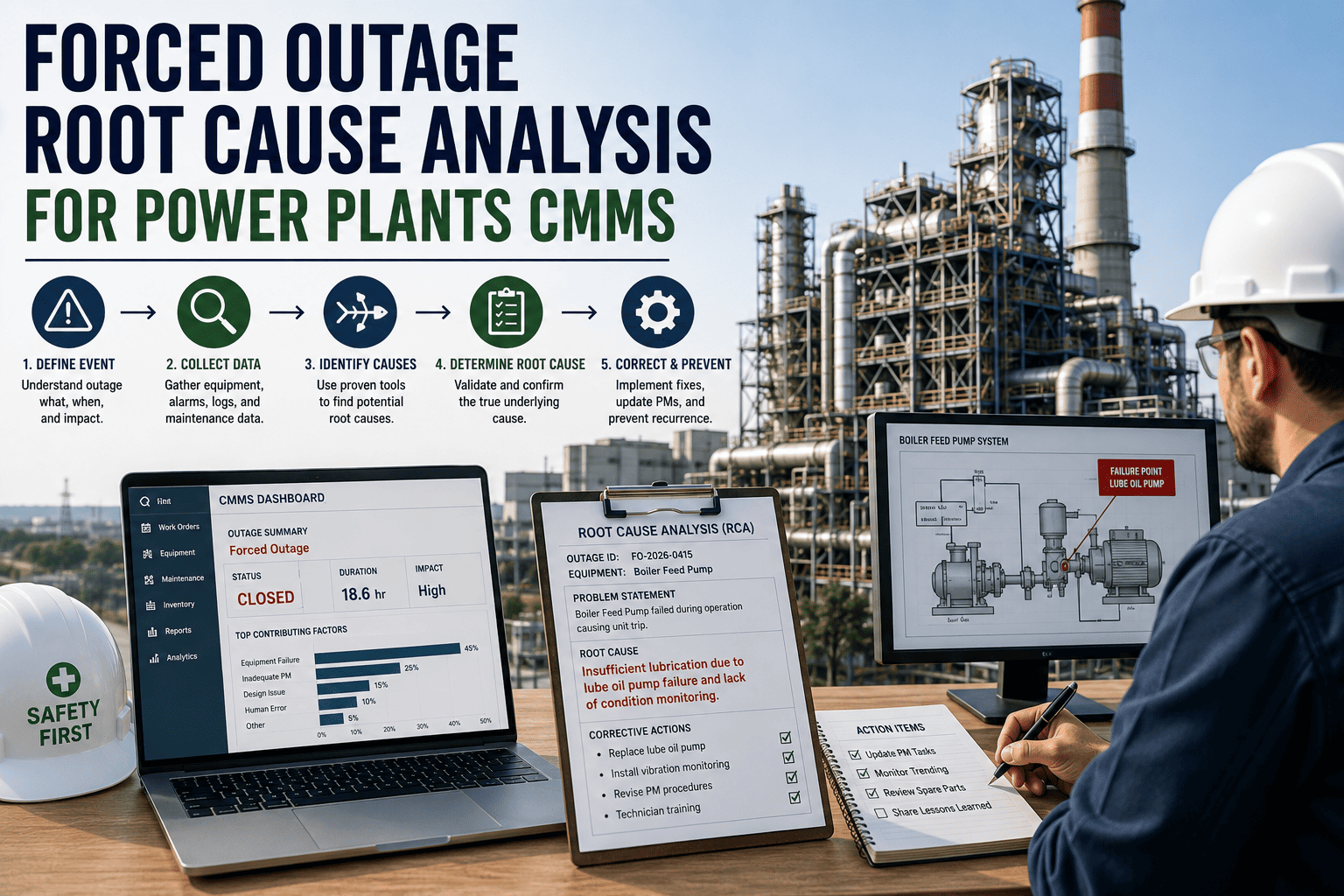
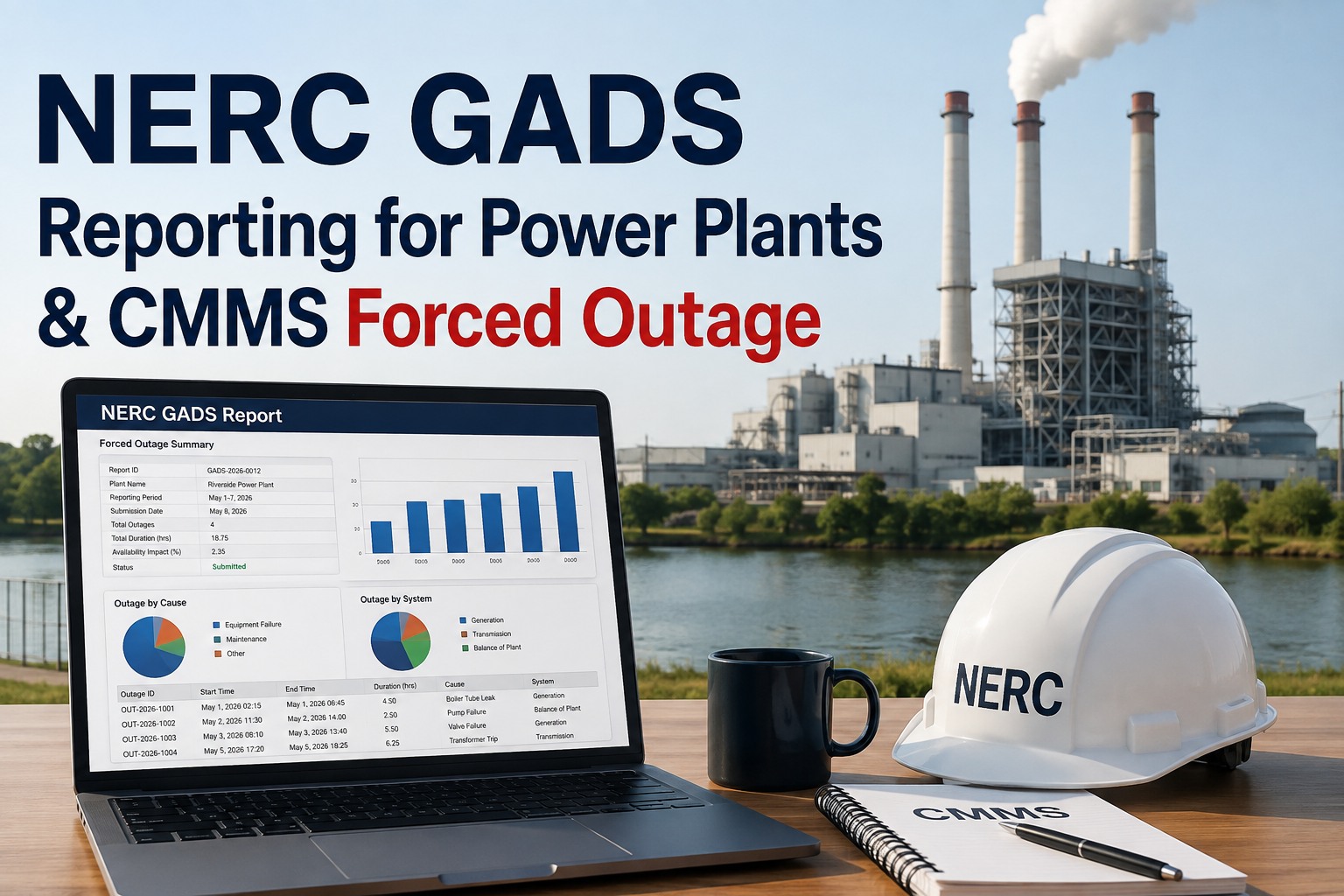
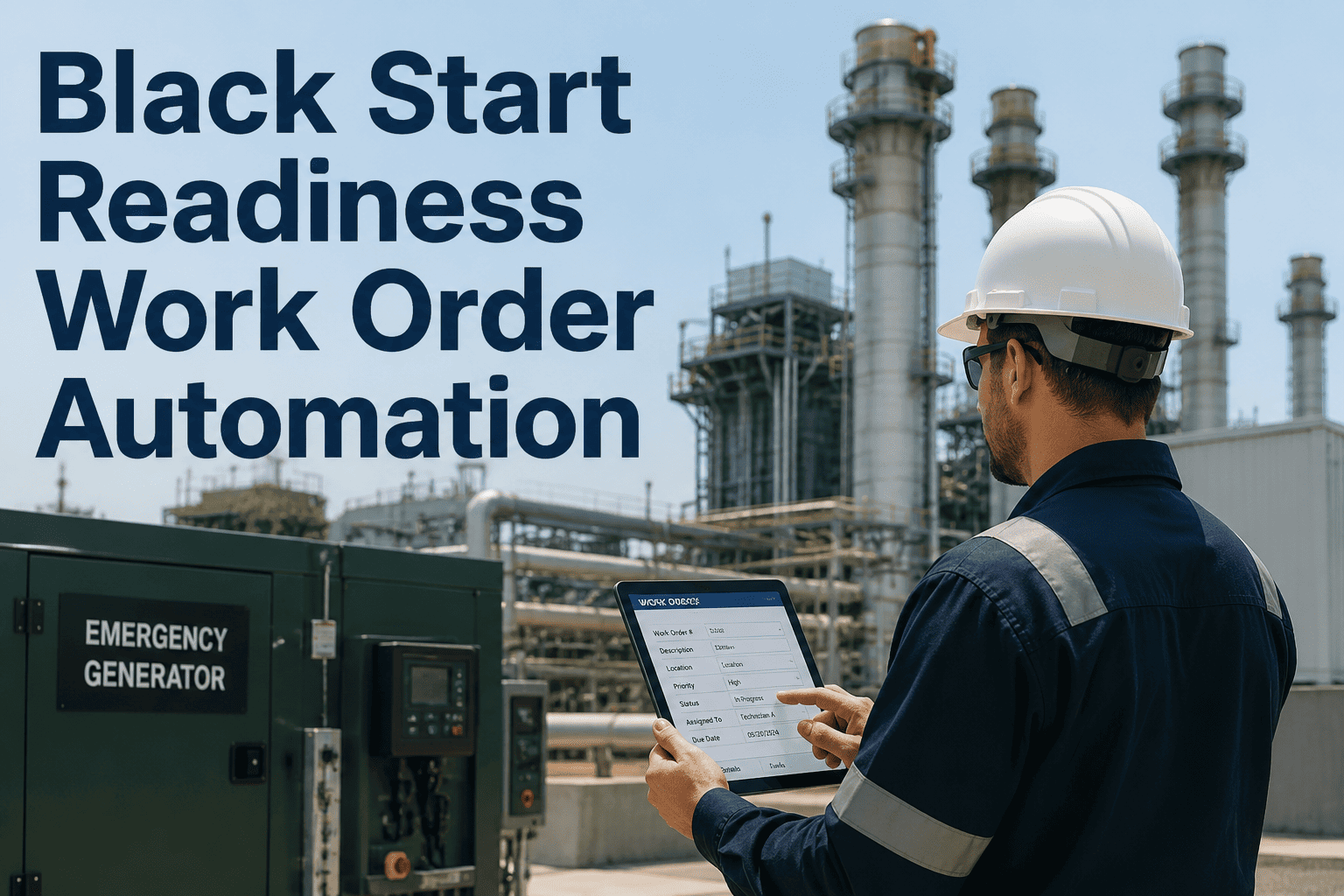
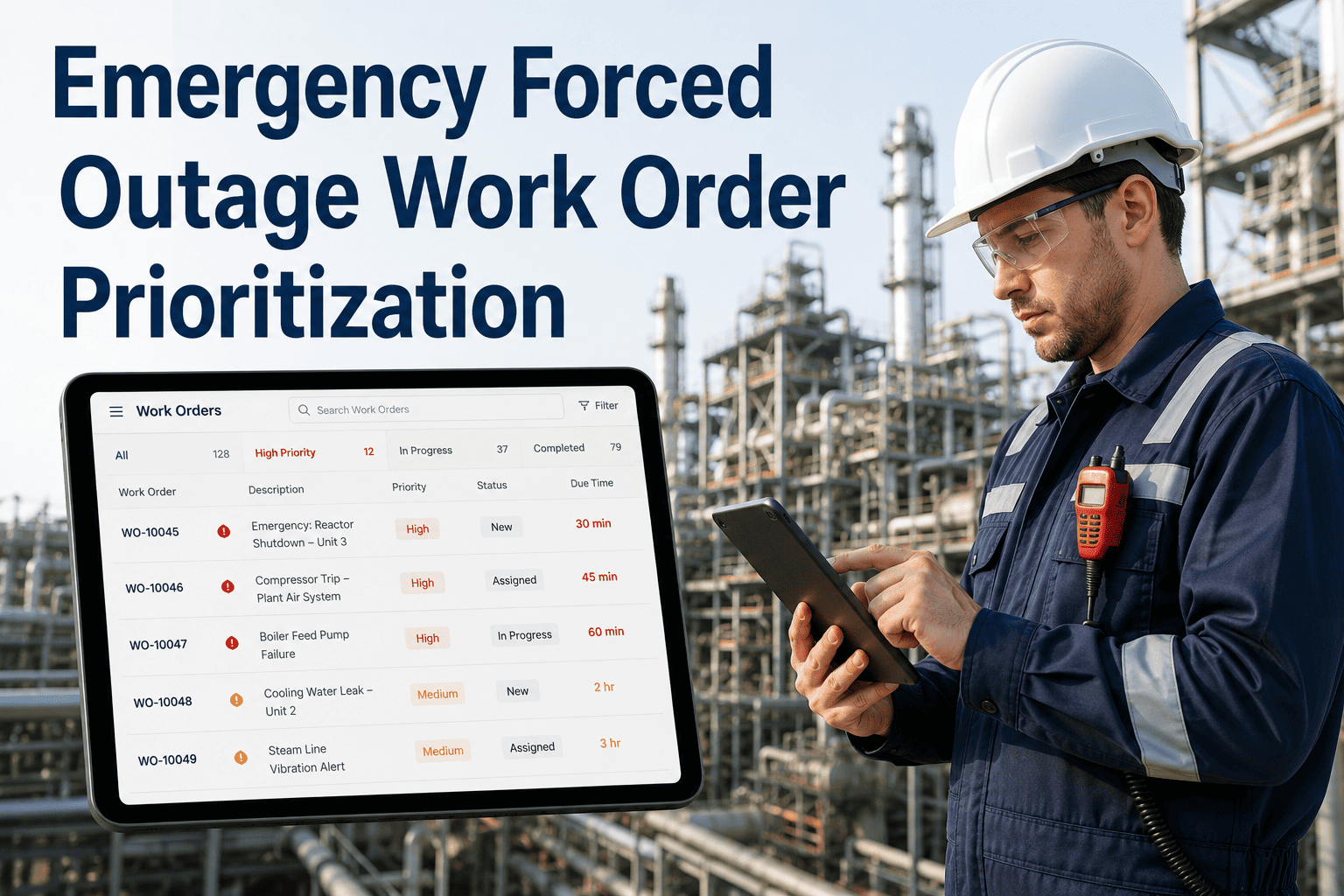
Peaker plants are the reliability backstop of the modern grid — called on hardest when every megawatt counts and every minute of delay becomes a grid stability event. Yet most peaker operations still track start reliability in spreadsheets, schedule PM by calendar, and dispatch crews with phone calls. In a world where grid operators send dispatch signals with 10-minute lead times, that gap between readiness and response is where forced outages are born. Oxmaint equips peaker teams with runtime-based PM, live start reliability tracking, and mobile work orders that keep your units dispatch-ready around the clock. See what smarter peaker maintenance looks like — start a free trial or book a demo with a peaker reliability specialist.
10 min
Typical dispatch signal lead time from grid operator
68%
Of forced outages traced to deferred or missed PM
$800K
Average cost of a failed start event under capacity contract
3.1x
More starts per year vs. combined-cycle baseload units
The Peaker Plant Maintenance Problem No Spreadsheet Can Solve
Peaker maintenance is fundamentally different from baseload operations. Your assets cycle multiple times daily during peak seasons, sit cold for weeks in off-peak months, and must fire reliably on the first command every time. That on-off pattern creates mechanical stress that accumulates invisibly until the worst possible moment.
01
Start-Count Drift
OEM maintenance intervals are measured in starts and fired hours — not calendar days. Plants running on time-based PM unknowingly operate past manufacturer thresholds during high-dispatch seasons and over-maintain during shoulder months.
02
Cold-Soak Failures
Extended standby periods hide lube system degradation, fuel system moisture intrusion, and control battery drain. Cold-start failures reveal defects that condition monitoring during operation never catches — because the unit never ran long enough.
03
Dispatch Readiness Gaps
When a grid operator calls, the answer must be yes. Plants that cannot confirm in real time which units are in a maintainable state versus a ready state risk committing to dispatch capacity they cannot actually deliver.
Oxmaint Capabilities Built for Peaker Operations
Runtime PM
Start-Count and Fired-Hour Tracking
PM work orders auto-trigger on actual runtime and start accumulation — not calendar dates. Whether your unit fires 3 times a day in August or sits idle for 6 weeks in November, maintenance intervals track the real mechanical life consumed.
Reliability
Start Reliability Scorecard
Track successful starts, failed starts, and start-attempt-to-dispatch time for every unit. Identify which assets have degrading start reliability trends before a grid dispatch event exposes the problem publicly.
Alerts
Forced Outage Early Warning
Condition-based alerts on fuel system pressure, lube oil temperature, control battery voltage, and cooling water chemistry trigger before failure — giving your crew a repair window measured in hours, not minutes.
Mobile
Fast-Deploy Mobile Work Orders
Field technicians receive, execute, and close work orders on mobile devices with offline capability. No trip to the maintenance office, no paper transcription. Dispatch readiness status updates the moment a work order closes.
Standby
Cold-Standby Inspection Protocols
Structured inspection rounds for units in extended standby — covering lube system priming, fuel train integrity, control power, and fire protection — confirm readiness without running the unit. Auto-scheduled based on standby duration.
Reporting
Capacity Contract Documentation
Generate start reliability reports, forced outage event summaries, and PM compliance records in formats ready for ISO, RTO, and capacity market audit requirements. No manual assembly from disconnected logs.
Dispatch-Ready Starts With Maintenance You Can Trust
Peaker plants that miss dispatch commitments face capacity penalty clawbacks, availability payment reductions, and long-term contract risk. Oxmaint keeps your units ready every time the grid calls.
Peaker Asset Maintenance Reference
| Asset |
Critical Failure Mode |
PM Trigger |
Oxmaint Coverage |
| Gas Turbine |
Hot section oxidation, compressor fouling |
Per OEM start count or fired hours |
Start counter, cycle-based work order trigger |
| Lube Oil System |
Oil degradation, filter plugging |
Every 500 fired hours or 90-day standby |
Runtime PM, oil sample log, standby check |
| Fuel Train |
Moisture intrusion, valve seat wear |
Standby duration trigger + annual |
Standby inspection protocol, valve test records |
| Control & Battery |
Battery discharge, relay drift |
Quarterly or 60-day standby |
Battery voltage check, relay calibration records |
| HRSG / Boiler |
Tube thinning, pressure part corrosion |
Statutory annual; UT per RBI |
Thickness measurement records, RBI interval alignment |
Results Peaker Plants See With Oxmaint
35%
Reduction in unplanned forced outages within 12 months
4.2 mo
Average payback period on Oxmaint deployment
25%
Labor efficiency gain from eliminated paper-based PM
74%
Faster compliance documentation at audit time
Frequently Asked Questions
How does runtime-based PM work for units with highly variable dispatch patterns?
Oxmaint tracks actual fired hours and start counts in real time. PM work orders auto-generate when asset-specific thresholds are reached, regardless of how irregular the dispatch pattern is. High-cycle summer months trigger more maintenance; low-activity shoulder seasons do not waste labor on unnecessary PMs.
Try it free to configure runtime triggers for your units.
Can Oxmaint track start reliability metrics per unit for capacity contract reporting?
Yes. The start reliability scorecard records every start attempt, outcome, and elapsed time to full load. Reports export in formats suitable for ISO, RTO, and bilateral capacity contract audits without manual data assembly.
Book a demo to review the reporting format before your next compliance cycle.
How does Oxmaint support units in long-term cold standby?
Standby inspection protocols auto-schedule based on days since last operation. Lube system, fuel train, control battery, and fire system checks are structured rounds that confirm readiness without running the unit.
Sign up to configure standby protocols for your specific equipment.
Does the mobile app work in remote peaker sites with limited connectivity?
Oxmaint operates fully offline. Technicians capture inspection data, photos, and GPS confirmation without network coverage, and everything syncs when connectivity returns.
Book a demo to see offline field capture in a live walkthrough.
How fast can Oxmaint be deployed across a fleet of peaker units?
Most peaker fleet deployments reach full operational status — asset registry, PM templates, mobile crew activation, and compliance dashboards — within 10-14 weeks, with field teams using the platform from day one of deployment.
Schedule a scoping call for a timeline specific to your fleet size.
Every Missed Start Is a Contract Risk. Stop Leaving It to Chance.
Oxmaint deploys across your entire peaker fleet in under 12 weeks — with runtime PM, mobile work orders, and start reliability tracking live from day one. No disruption to existing operations.