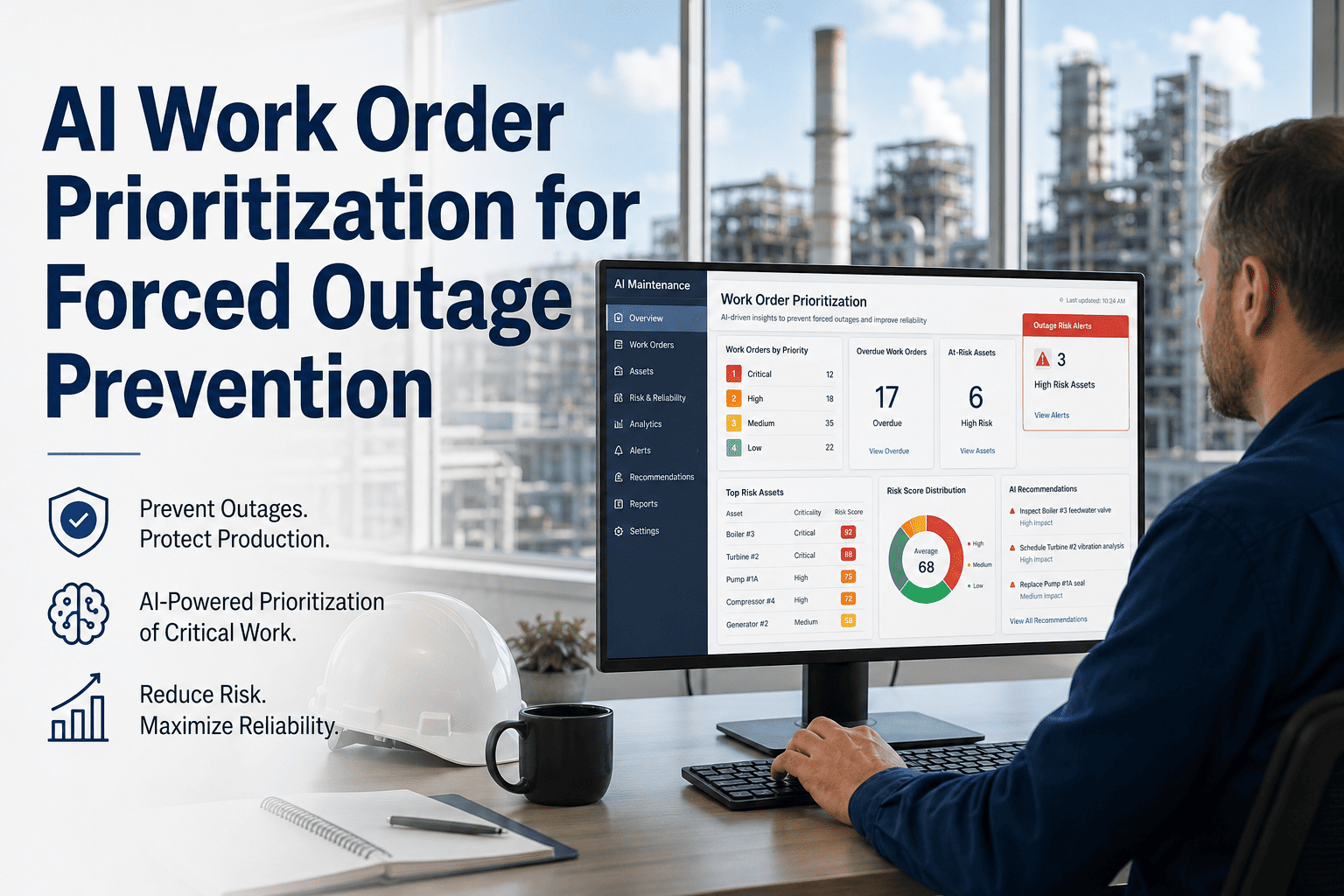
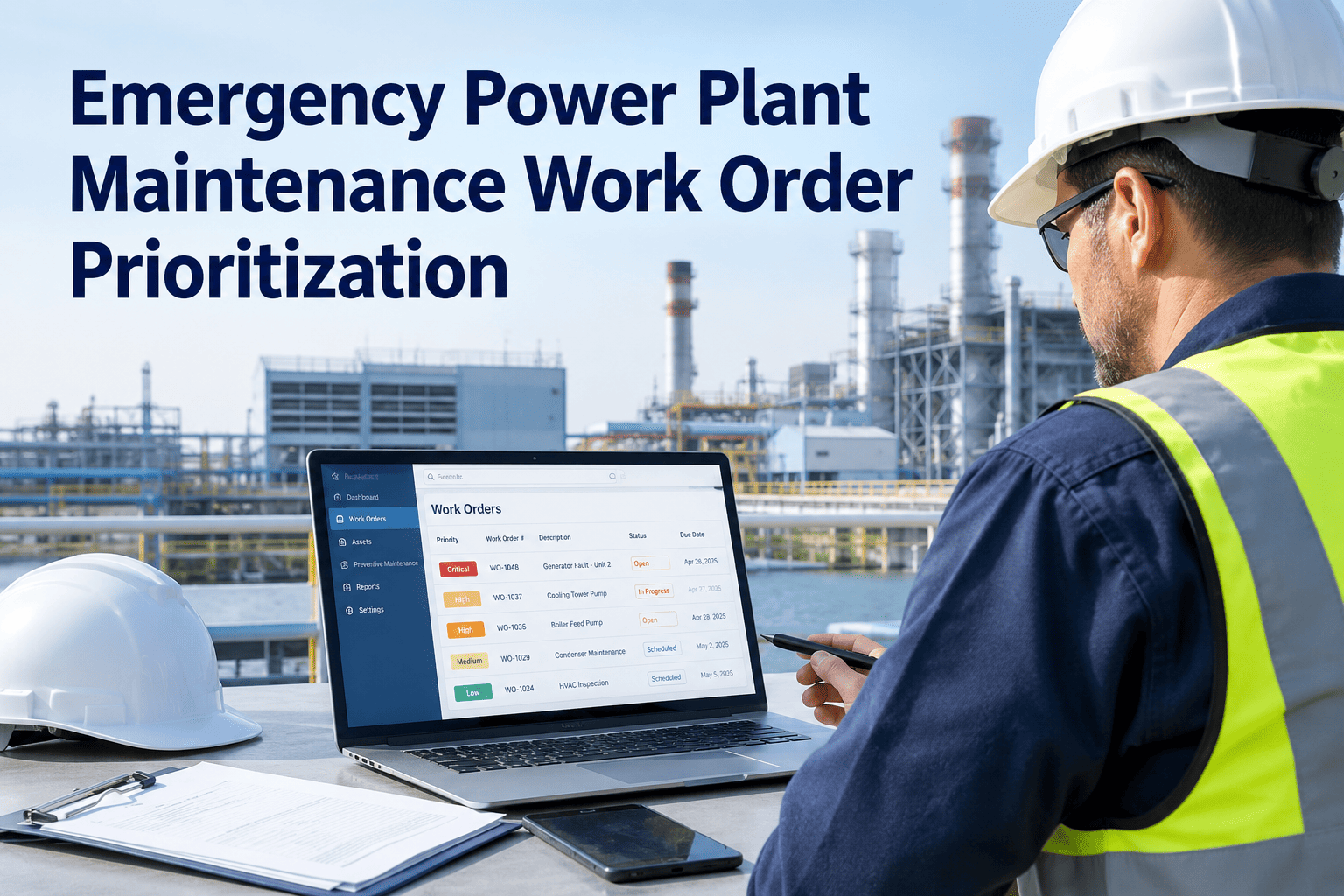
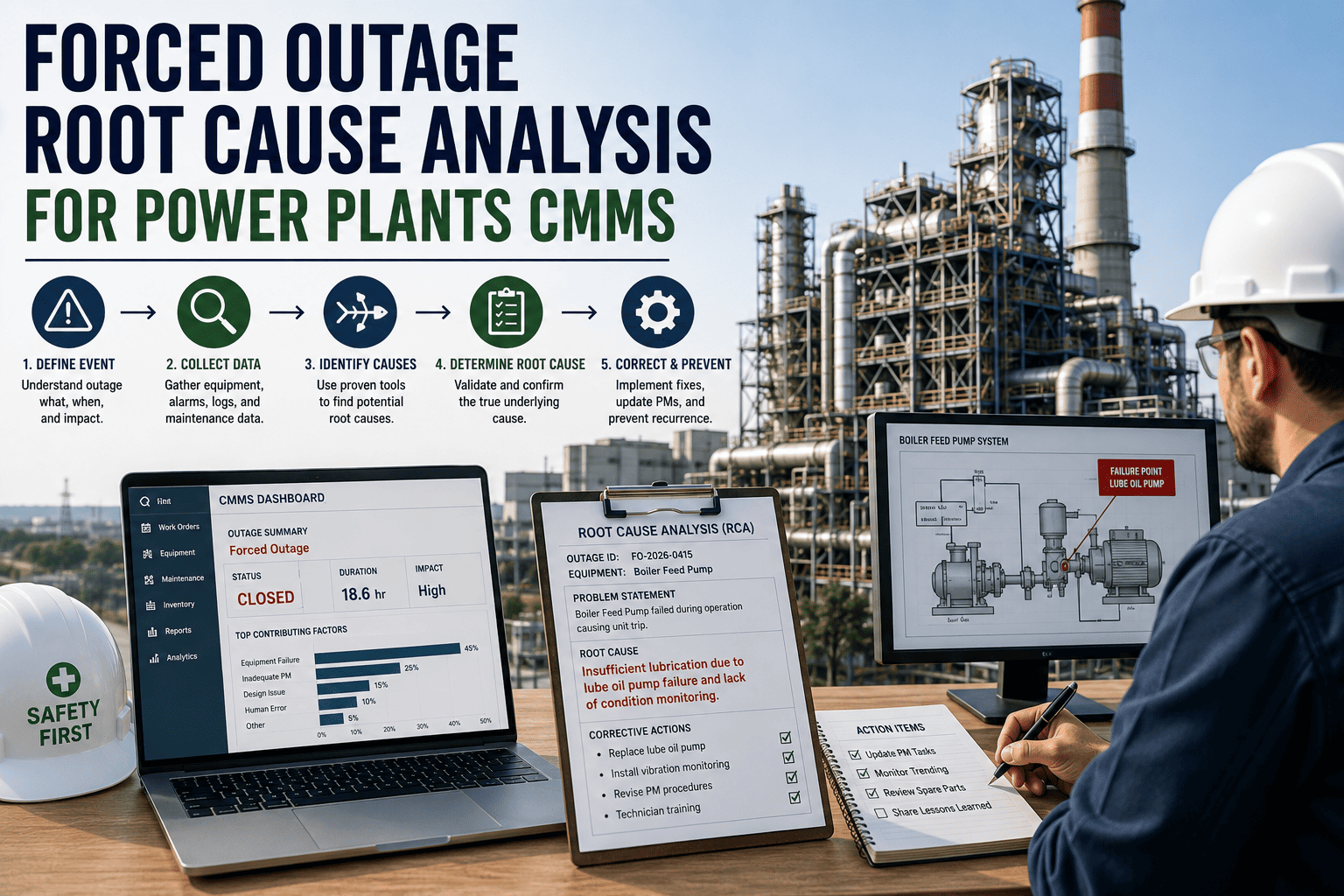
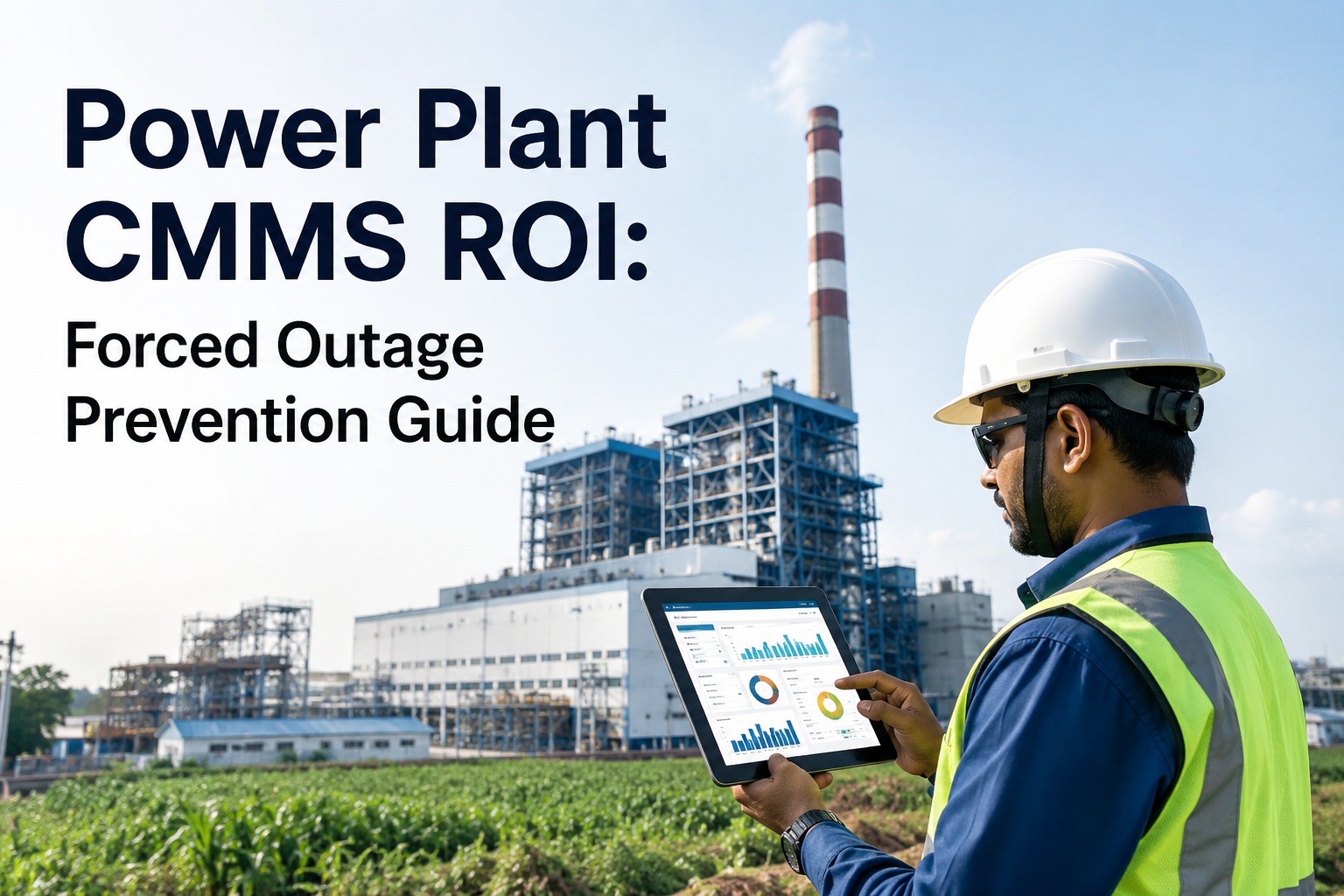
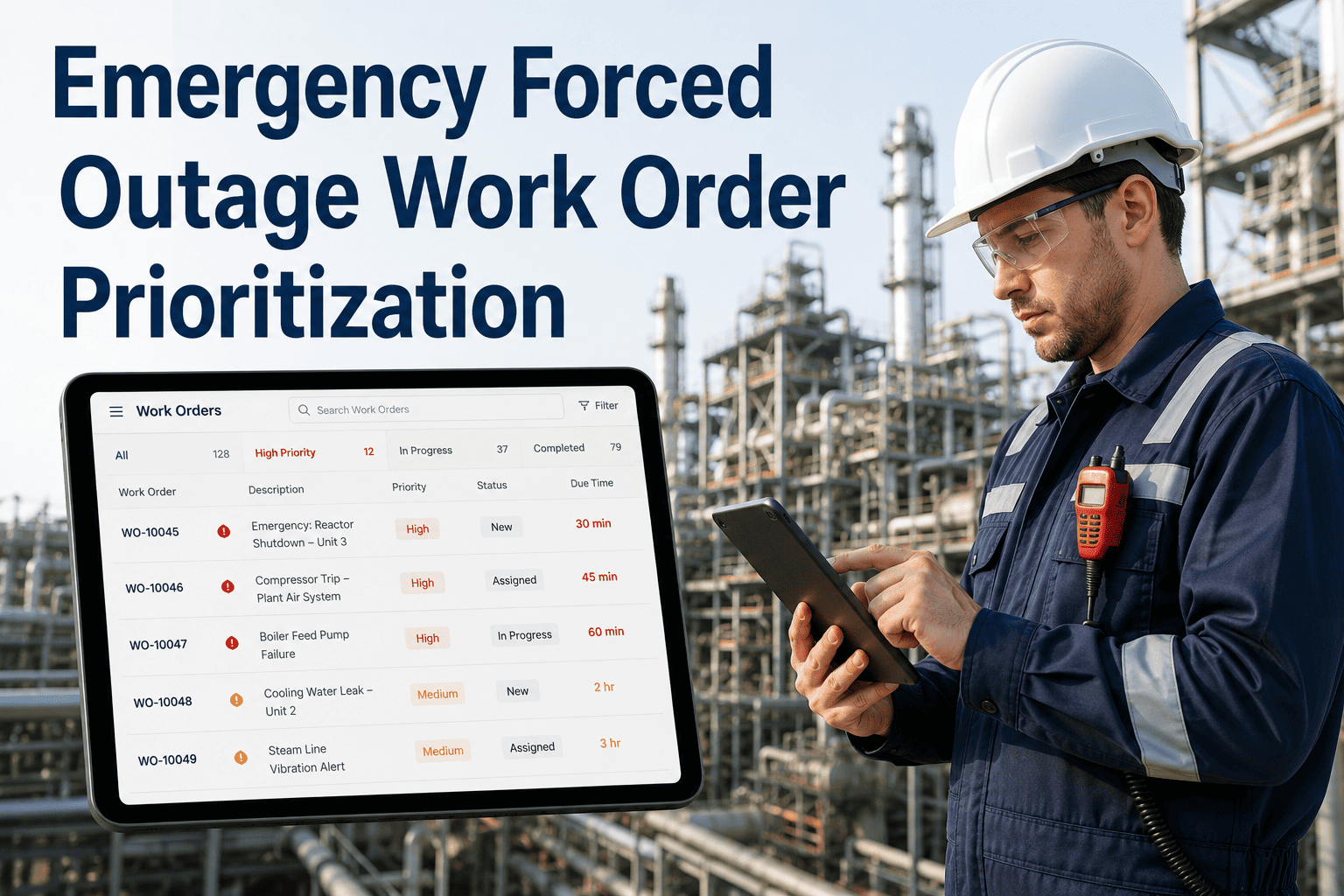
Every power plant runs with a work order backlog — and every backlog contains one or two items that, if left unaddressed, will cause a forced outage worth ten times the cost of the entire queue. The problem is not shortage of work orders; it is that most plants have no systematic way to distinguish a bearing showing early degradation signals from a routine lubrication route that could wait three weeks. Planners prioritize by familiarity, calendar sequence, or whoever calls loudest — not by failure risk, production impact, or actual asset condition. AI-driven work order prioritization changes that equation: every open work order is scored against failure probability, generation impact, safety urgency, and crew availability, and the queue is ranked accordingly. Forced outages that are currently surprises become planned interventions scheduled in advance, at planned cost. OxMaint's AI and Automation module connects your existing sensor data to an automated work order engine that keeps the highest-risk work at the top of the queue. Start your free OxMaint trial and see your first actionable anomaly within 60 days, or book a 30-minute demo to walk through the prioritization workflow on live generation data.
AI Work Order Prioritization — Impact by the Numbers
77%
Of forced outages caused by turbines, boilers, and generators — highest AI priority assets
$1.5M
Saved by preventing one HP turbine bearing failure 3 days early
60 days
Average time to first actionable anomaly after OxMaint sensor connection
30–50%
Reduction in unplanned downtime with AI-prioritized maintenance
The Prioritization Gap — Why Planners Cannot Do This Manually
A 200 MW combined cycle plant generates 300–600 work orders per month across turbines, HRSGs, cooling systems, electrical equipment, and auxiliary assets. A planner reviewing that queue manually has four data points at best: the work order description, the asset name, a priority flag set at creation, and a due date. What the planner cannot see manually — and what AI can — is the three-week vibration trend on Bearing 4A that crossed a degradation threshold last Tuesday, the DCS alarm pattern on the HRSG that has accelerated since the last boiler startup, and the correlation between that temperature excursion and two similar events that preceded a tube failure at 14 and 21 weeks respectively.
How OxMaint AI Scores Every Work Order
35%
Failure Risk Score
AI model evaluates sensor trend trajectory, rate of change, and historical failure signatures for the asset class. Bearing defects detected 4–12 weeks before failure. HRSG tube degradation flagged months ahead. Score updates in real time as sensor data arrives.
30%
Production Impact
Asset failure consequence modeled against generation capacity, dispatch commitments, and dispatch window. A trip during peak demand pricing carries a higher score than the same failure in a low-demand overnight window. Grid penalties and capacity market exposure factored in.
25%
Safety Urgency
Safety-classified assets — electrical isolation systems, pressure relief valves, fire suppression — receive automatic priority escalation when overdue or when condition data indicates degradation, regardless of production impact score.
10%
Crew Availability
Shift roster, skill certification match, and planned outage window alignment used to surface work that can be executed now versus work that must wait for a qualified crew or a generation gap in the dispatch schedule.
OxMaint AI and Automation
Stop Prioritizing by Calendar. Start Prioritizing by Failure Risk.
OxMaint scores every open work order against real sensor data, production impact, and crew availability — automatically. Your planners spend time on decisions, not data assembly.
From Sensor Alert to Scheduled Work Order — The Automated Loop
1
Continuous Sensor Monitoring
OxMaint connects to your existing DCS historian, vibration systems, and oil analysis feeds. Bearing vibration, exhaust temperature spread, hydrogen purity, and coolant flow are monitored continuously against asset-specific baselines — not generic thresholds.
2
Anomaly Scoring and Classification
When sensor data crosses configurable risk thresholds, the AI model scores the anomaly against failure probability and classifies the likely failure mode. A bearing showing phase-asymmetry vibration patterns is classified as early defect — not flagged as a generic alert that gets buried.
3
Automated Work Order Generation
A complete work order is created in seconds — pre-loaded with the sensor evidence, asset location, severity score, recommended corrective action, required skills, and a parts request. If the part is not in stock, procurement receives a standard lead-time purchase request immediately, not an overnight emergency order.
4
Priority-Ranked Queue Delivery
The work order enters the crew queue already ranked by composite score — failure risk, production impact, safety urgency, and shift availability. The planner sees a sorted list with rationale, not a flat backlog that requires manual judgment to sequence.
Priority Asset Categories — Where AI Delivers the Fastest Payback
| Asset Category |
Failure Share |
AI Detection Window |
Avg. Prevented Outage Cost |
Primary Signal |
| Gas and Steam Turbines |
43% of mechanical failures |
30–90 days |
$420K – $1.2M |
Bearing vibration, blade temp spread |
| HRSG and Boiler Tubes |
52% of thermal forced outages |
8–22 weeks |
$1M – $3M |
Stack temp trend, feedwater delta |
| Generators |
Longest MTTR of any asset |
Weeks to months |
$2M – $5M+ |
H₂ purity, PD activity, stator coolant |
| Cooling Towers and Pumps |
15% of auxiliary failures |
2–6 weeks |
$80K – $300K |
Flow rate, motor current, vibration |
| Transformers and Switchgear |
High consequence low frequency |
Months |
$500K – $2M |
DGA trends, thermal imaging, PD |
Frequently Asked Questions
How does AI prioritization differ from just setting work order priority flags manually?
Manual priority flags reflect the planner's judgment at creation — which is often calendar-driven or based on incomplete information. AI prioritization updates continuously as sensor data changes. A work order created as medium priority can be automatically escalated to critical if the associated asset shows accelerating degradation in the 72 hours after the order was written.
Start your trial to see dynamic re-prioritization in action on your asset data.
Does OxMaint require replacing existing DCS or SCADA systems?
No. OxMaint connects to existing DCS historians and sensor infrastructure through standard data feeds — it reads data without writing to control systems. Most plants achieve sensor connectivity within 10–14 days. Asset baselines begin establishing immediately, and first actionable anomalies typically surface within 60 days of connection.
Book a demo to walk through the integration for your specific control system environment.
What happens to work orders that AI identifies but are not immediately actionable?
OxMaint holds condition-based work orders in a monitored queue with escalation logic — if the sensor trend continues to worsen, the order automatically escalates in priority and triggers planner notification. Work that cannot be executed until the next planned outage window is held and surfaced at the right time, with the full supporting evidence trail intact, so nothing falls through the cracks between detection and execution.
How quickly does AI work order prioritization reduce forced outage frequency?
Most plants identify their first actionable anomaly within 60 days of full sensor connectivity. The first prevented major forced outage — typically worth $1M–$3M in avoided cost — generally occurs within the first six months for plants with a history of frequent unplanned events. Administrative efficiency improvements from automated work order creation are visible from the first week of deployment.
OxMaint for Reliability Operations
Your Next Forced Outage Is Already Showing Up in Your Sensor Data
4–12 wks
advance warning on bearing failures — enough time to plan, not react
Zero
manual data entry — sensor alert to complete work order in seconds
700%
first-year ROI documented at combined cycle plants after preventing one failure event
OxMaint's AI layer converts your sensor data into a ranked, evidence-backed work queue — so your crew always works on the right asset, at the right time, before the forced outage happens.