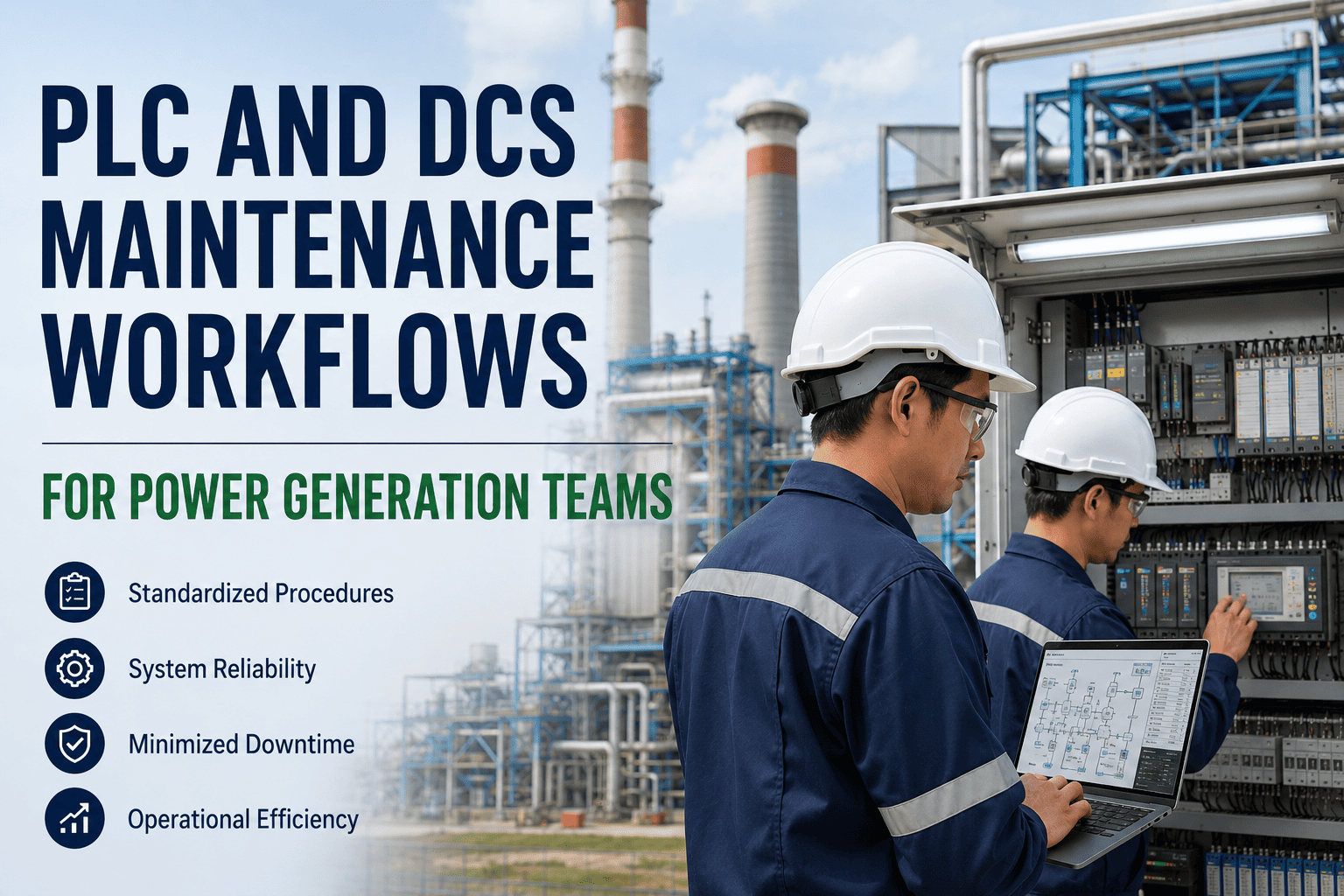
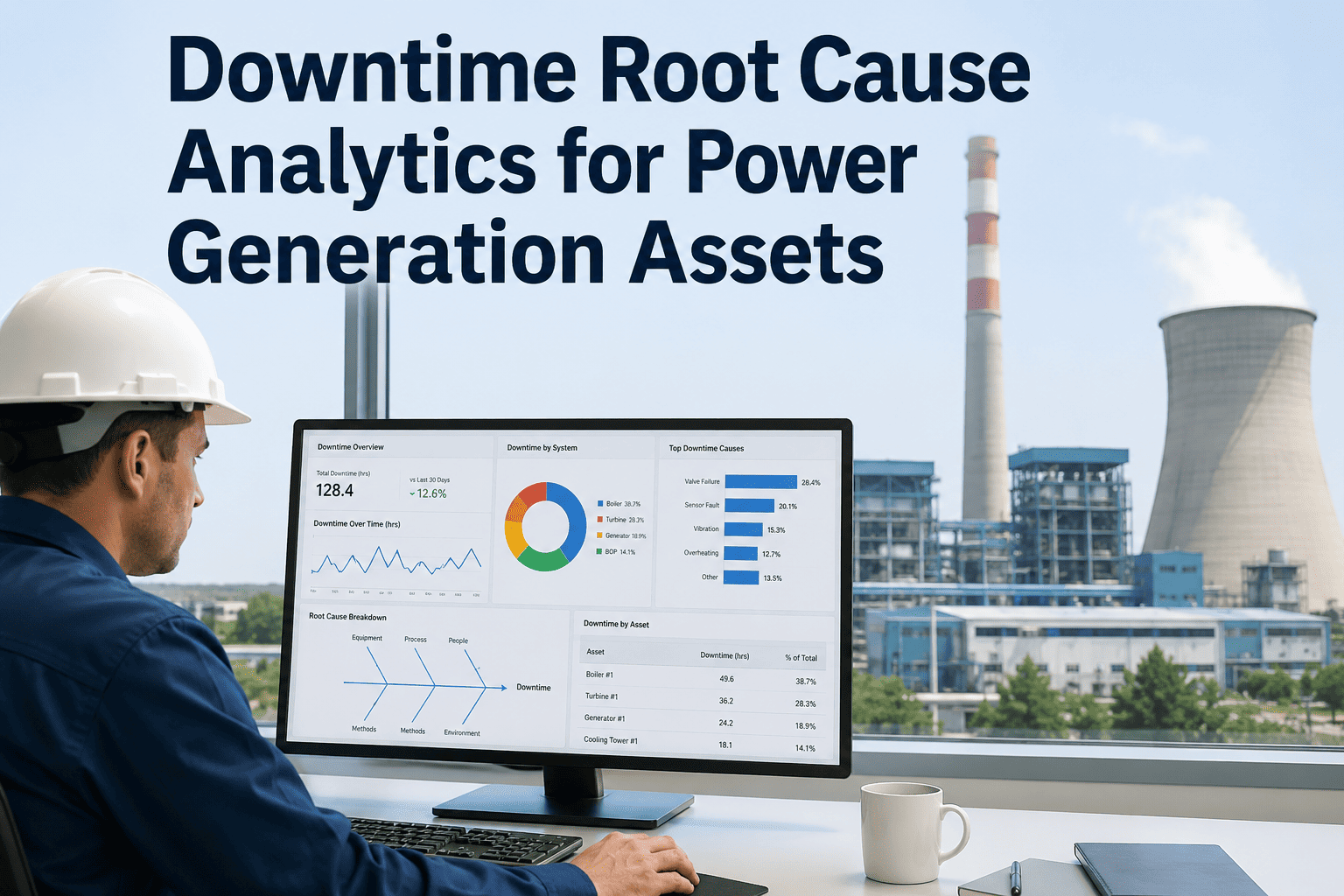
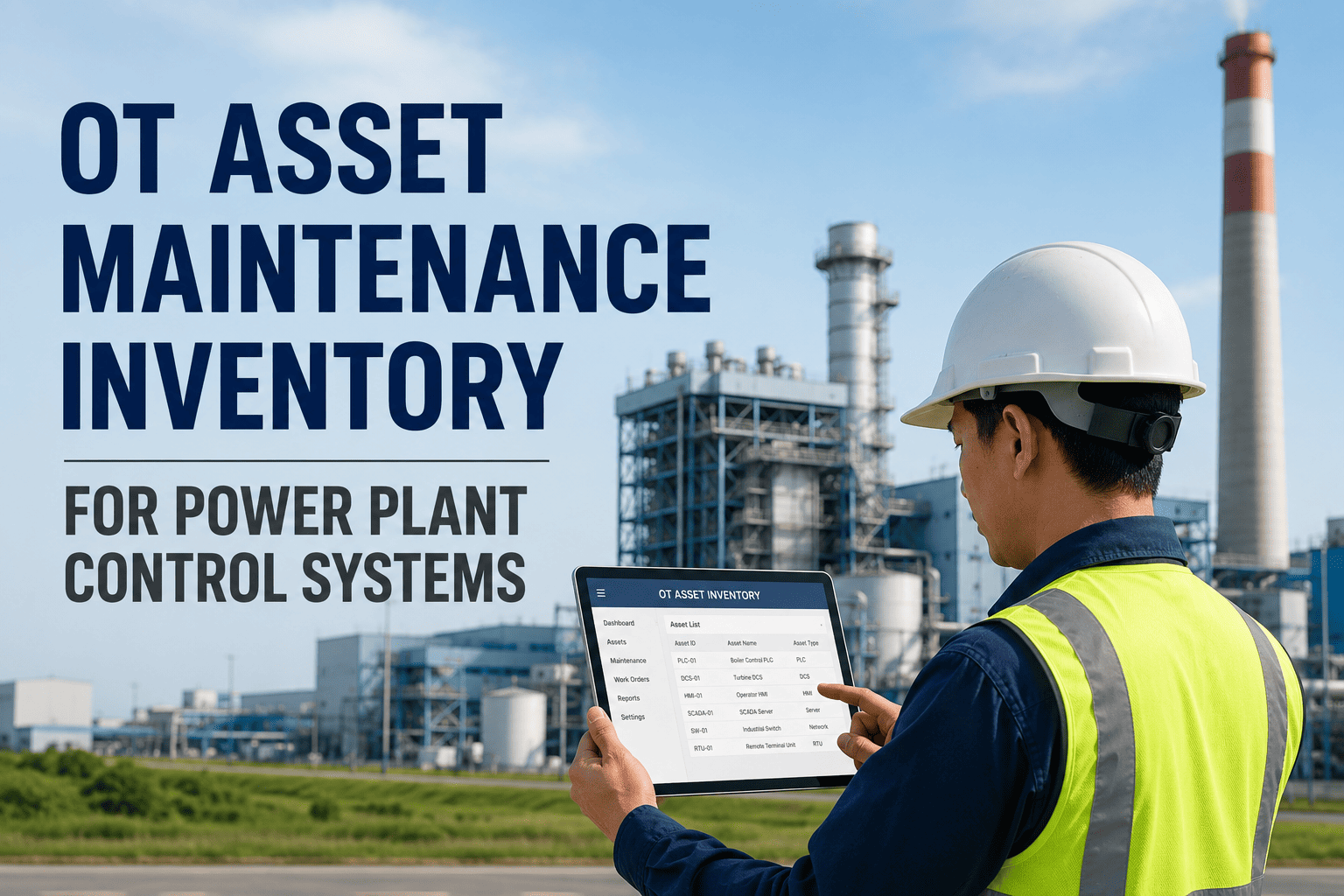
Programmable logic controllers and distributed control systems are the nervous system of power generation — they manage combustion sequences, coordinate protection trips, and execute the thousands of interlocks that keep equipment and personnel safe. When maintenance on these systems is poorly coordinated — verbal handoffs, undocumented logic changes, missed calibration intervals — the consequences range from nuisance trips to forced outages to reportable incidents. Structured PLC and DCS maintenance workflows standardize how technicians request, plan, execute, and close control system work across every shift, every unit, and every outage window. OxMaint brings those workflows into a mobile-first CMMS where operations teams manage PLC and DCS maintenance with the same rigor they apply to rotating equipment. Start your free trial and standardize your control system maintenance workflows today.
Control System Maintenance · Work Order Management · 2025
PLC and DCS Maintenance Workflows Built for Power Generation Teams
Every control system change, calibration, and repair deserves a documented workflow. Reduce trips caused by maintenance errors. Pass every NERC CIP audit. Get your team home safely.
43%
of control system-related forced outages involve a maintenance procedure gap or undocumented change
6x
longer MTTR when control system maintenance lacks structured troubleshooting workflow documentation
NERC CIP
requires documented change management and security patching workflows for BES Cyber Systems
Workflow Categories
Six Control System Maintenance Workflow Types That Every Plant Needs
PLC and DCS maintenance is not a single workflow — it is a family of distinct work types that each require different skill sets, approvals, isolation procedures, and documentation requirements. Treating all control system work as generic maintenance is where errors are introduced. Here are the six workflow types that structured CMMS management addresses.
01
Preventive Maintenance
Scheduled battery replacements, capacitor checks, fan cleaning, and hardware health inspections performed on calendar or runtime intervals to prevent unexpected failures before they cause trips.
Frequency: Monthly to Annual
02
Firmware and Software Updates
Vendor-issued patches, security updates, and control logic changes requiring cyber impact assessment, backup confirmation, change window coordination, and post-update functional testing before return to service.
Frequency: As released / Per NERC CIP cycle
03
I/O Card and Module Replacement
Hardware replacement for failed or degrading I/O modules, power supplies, and communication cards — requiring LOTO coordination, pre/post verification of field signal integrity, and loop check documentation.
Frequency: Corrective / Condition-based
04
Loop Calibration and Verification
End-to-end calibration of process loops from field transmitter through I/O card to controller input — documenting as-found and as-left readings to satisfy instrument calibration compliance requirements.
Frequency: Annual / After process changes
05
Logic and Configuration Changes
Control strategy modifications, setpoint changes, and interlock updates — requiring formal MOC review, cybersecurity impact assessment, staged implementation, and post-change testing with documented results.
Frequency: Project-driven / As-needed
06
Corrective Maintenance and Diagnostics
Emergency response to active faults — alarm conditions, communication failures, failed redundancy — requiring structured diagnostic workflow, root cause documentation, and corrective action tracking to closure.
Frequency: As-needed / Unplanned
Standard Workflow Structure
How a Structured PLC/DCS Work Order Flows Through OxMaint
Every control system maintenance activity in OxMaint follows a defined lifecycle that ensures the right people are involved at the right stages — from operations clearance through to technical closure. The workflow adapts by work type while maintaining consistent documentation requirements across all six categories.
Work request raised with asset tag
Work type classification
Priority and risk level
Required skills and resources
Operations clearance verification
Cybersecurity impact check (if OT)
MOC routing for config changes
Parts and tools reservation
LOTO and isolation confirmation
Step-by-step checklist execution
Test results and readings captured
Photo evidence attached
Post-work functional test sign-off
Operations return-to-service
Asset record updated
Records retained for compliance
Work Order Management · Control Systems · Free Trial
Stop Running PLC and DCS Maintenance on Verbal Handoffs. Start Running It on Documented Workflows.
OxMaint gives your control system team the structured work order framework that reduces maintenance-related trips, satisfies NERC CIP auditors, and creates the institutional knowledge record that survives technician turnover.
Platform Capabilities
OxMaint Features Designed for Control System Maintenance Teams
Generic maintenance management software was not designed for the approval complexity, cyber considerations, and documentation depth that PLC and DCS work demands. OxMaint is built around the workflows that power generation control system teams actually use.
OT-specific work type classification
No
Yes
Cyber impact assessment routing
No
Yes
LOTO integration in work order
No
Yes
As-found / as-left calibration capture
No
Yes
Mobile field execution with offline mode
Limited
Yes
NERC CIP audit report generation
No
Yes
Failure mode and root cause tracking
Basic
Yes
Frequently Asked Questions
Questions Power Plant Teams Ask About PLC and DCS Maintenance Workflows
How do you handle LOTO coordination within a PLC/DCS work order workflow?
OxMaint includes isolation and LOTO checklist steps directly within the work order execution flow. Technicians confirm isolation completion before the procedure steps are unlocked. The isolation record is attached to the closed work order for compliance evidence.
See how LOTO integrates with control system work orders.
Can OxMaint manage firmware patching workflows that require NERC CIP change management documentation?
Yes. Firmware update work orders in OxMaint trigger the CIP-010 change management workflow: security impact assessment routing, pre-change backup confirmation, post-update functional test capture, and final sign-off. All documentation is retained and exportable for audit evidence.
Walk through the CIP patching workflow in a demo.
How does OxMaint handle emergency corrective maintenance on a DCS that needs to happen faster than a standard approval workflow allows?
Emergency work orders in OxMaint use an expedited approval path that captures verbal authorizations with post-hoc documentation. The work begins immediately, and the full approval documentation is completed retroactively before the work order closes — maintaining a complete record without slowing emergency response.
Can calibration as-found and as-left data from PLC loop checks be stored in OxMaint?
Yes. Calibration work orders include structured data fields for as-found readings, as-left readings, acceptable tolerances, and pass/fail determination. This data is stored against the instrument asset record and included in calibration compliance reports. Calibration certificates can also be attached as PDF documents.
Start managing calibration records in OxMaint.
How does OxMaint handle maintenance workflows across multiple units or plants that share control system infrastructure?
OxMaint supports multi-site and multi-unit configurations with role-based access controls that restrict view and edit permissions by location. Shared assets can be managed centrally while each unit's maintenance team sees only their relevant work queue. Cross-unit visibility is available to plant managers and compliance teams.
Power Plant CMMS · PLC / DCS Maintenance · Free Trial
Control System Maintenance Is Too Critical for Informal Workflows. Build the Right Process Once.
OxMaint standardizes PLC and DCS maintenance across your entire generation fleet — every work type, every unit, every shift. When the next NERC CIP auditor or post-incident investigator asks for your control system maintenance records, you hand them a complete, structured history in minutes.