Ask a plant manager which of their 3,000+ assets are actually critical, and too often the honest answer is "the ones that broke last." A power plant runs on a maintenance program that's really six things stacked on top of each other — an asset register, a hierarchy, a criticality ranking, a documented maintenance basis, a failure-and-cost history, and the reliability KPIs that tell you if any of it is working. Skip a layer and the whole thing wobbles. This guide walks the strategy from the ground up, and shows where OXMAINT AI — the AI-powered maintenance management software built for power generation — does the heavy lifting, turning each of those six layers into live, connected data instead of six disconnected spreadsheets.
Power Plant Asset Management Strategy: From Asset Register to Reliability
A reliability program isn't a schedule — it's a structure. OXMAINT AI is the maintenance management software that holds all six layers in one place: every asset registered and hierarchy-linked, every asset carrying a criticality rank that drives PM frequency and spares policy, and every closed work order feeding MTBF, MTTR and availability that update in real time. No monthly spreadsheet reconstruction — just a live answer to "what's critical, what's failing, and what does it cost."
Why "We Have a CMMS" Isn't a Strategy
Plenty of plants own maintenance software and still run reactively. The tool alone isn't the strategy — the structure underneath it is, and whether the software actually enforces that structure. When the asset register is half-complete, criticality lives in a senior tech's head, and KPIs are calculated by hand once a month, even good software becomes an expensive work-order logbook. OXMAINT AI is built to hold the six layers together — each one only works because the software keeps the one below it solid. Start free and see your register laid out in OXMAINT AI.
- Asset register is a partial export nobody fully trusts
- "Critical" means whatever failed most recently
- Every asset gets the same generic PM interval
- Failures logged as free text — no fault codes to analyze
- KPIs hand-built in a spreadsheet after month-end
- Complete register — every tag with class, location, parent
- Criticality rank scored on consequence and probability
- PM strategy set by rank: predictive, preventive, or run-to-failure
- Every close-out carries a controlled failure code
- MTBF, MTTR and availability live from work-order data
The Six-Layer Reliability Build — and Where the Software Fits
Think of the strategy as a climb. You can't rank criticality on assets you haven't registered, and you can't trust a KPI built on failures nobody coded. Each layer rests on the one below — and at each step, OXMAINT AI is the software that captures the data, enforces the rule, and passes it upward so the top layer, reliability, becomes something you measure rather than hope for. Book a demo to map these layers onto your own plant.
Layer 1–2: A Register That Actually Rolls Up
A register is only useful if it's structured. A flat list of 3,000 tags tells you nothing; the same 3,000 tags arranged as a hierarchy in OXMAINT AI — site to unit to system to equipment — let a boiler-feed-pump failure roll up to its system and its unit, so history accumulates where it belongs. The ISO 14224 taxonomy gives power generation a common language, and the software models it directly. Sign up free and structure your hierarchy in OXMAINT AI.
OXMAINT AI can flag a newly created asset that's missing its equipment class, criticality rank or linked PM schedule — before it starts accepting work orders — so the register stays complete instead of quietly decaying.
Layer 3: Criticality — The Decision That Drives Everything
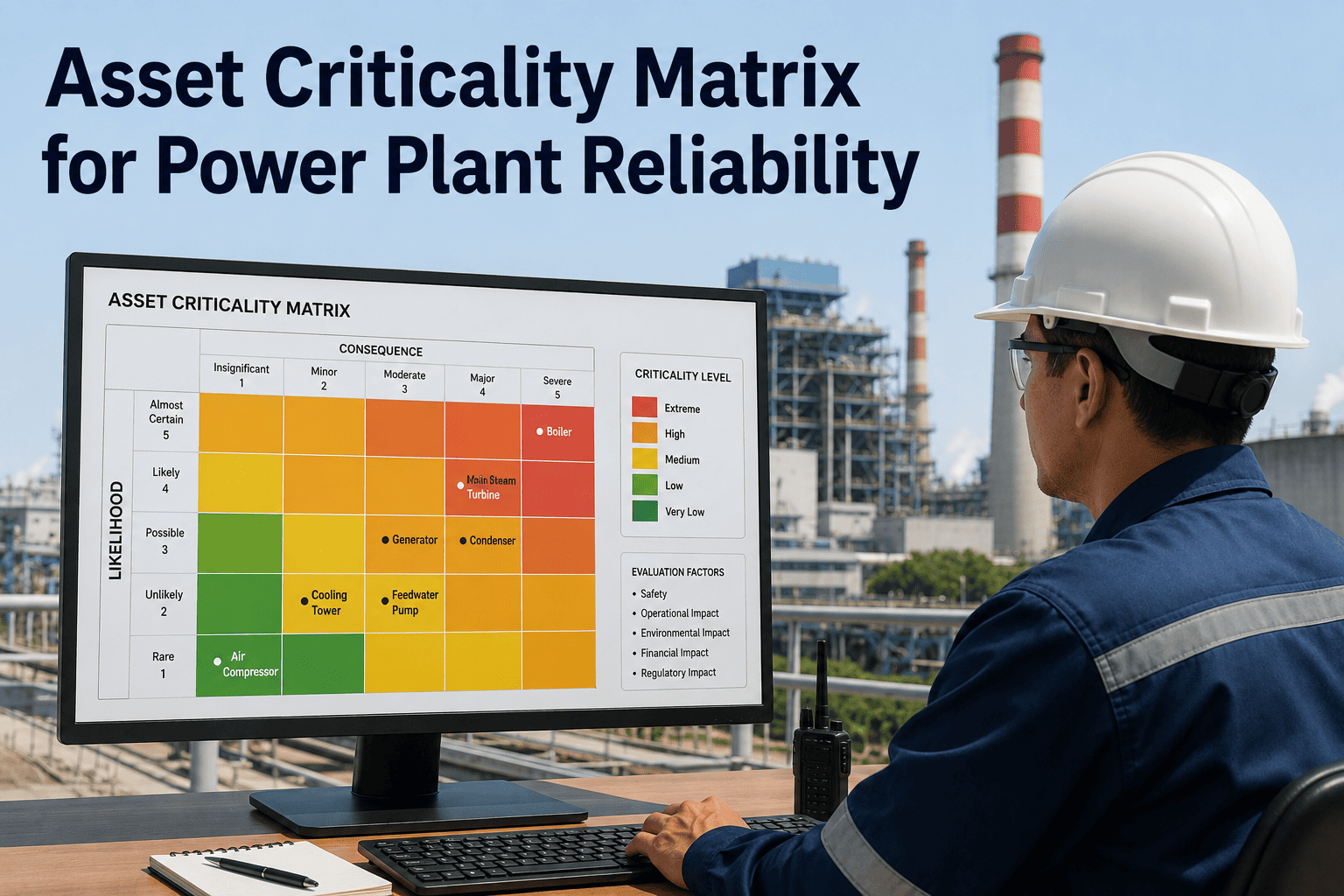
This is the layer most plants under-invest in and pay for later. Criticality isn't "how expensive is it" — it's consequence of failure combined with probability of failure, weighed against redundancy, safety and environmental exposure. Score it once inside OXMAINT AI, and the software uses that rank to drive PM frequency, work-order priority, and spares stocking automatically. Book a demo to set your own criticality scoring.
| Rank | Example assets | Maintenance strategy | Spares policy |
|---|---|---|---|
| A | Steam turbine, generator, boiler feed pumps, main transformer | Condition-based / predictive monitoring | Critical / insurance spares held |
| B | ID/FD fans, HP heaters, key motors, major valves | Time- or usage-based preventive PM | Stocked to defined min/max levels |
| C | Redundant small pumps, lighting, non-critical instruments | Run-to-failure or minimal PM | Ordered on demand |
OXMAINT AI stores criticality rank as an asset field — so the rank you assign here becomes the input the software uses to recommend PM frequency and work-order priority downstream, rather than a label sitting in a document nobody opens.
Most Plants Have a CMMS. Fewer Have a Criticality-Driven One.
When criticality lives inside the asset record — not in a binder — OXMAINT AI can drive PM frequency, spares, and priority from it automatically. That's the difference between software you just log work in and software that routes attention to what matters.
Layer 4–5: Maintenance Basis, Failure History & Cost
Two layers that separate a mature program from a busy one. A documented maintenance basis means every PM task in the software has a reason on record — regulatory, OEM, or risk-based — so the program can be defended and improved instead of blindly inherited. And OXMAINT AI's coded failure history plus cost-per-asset turns "that pump is always trouble" into a number you can act on. Start free and start coding failures against the asset record.
OXMAINT AI tags each task to its justification, so the program is auditable and reviewable:
- Regulatory — mandated inspection or test interval
- OEM — manufacturer-recommended service
- Risk-based — justified by criticality and failure mode
- Best practice — industry-standard reliability task
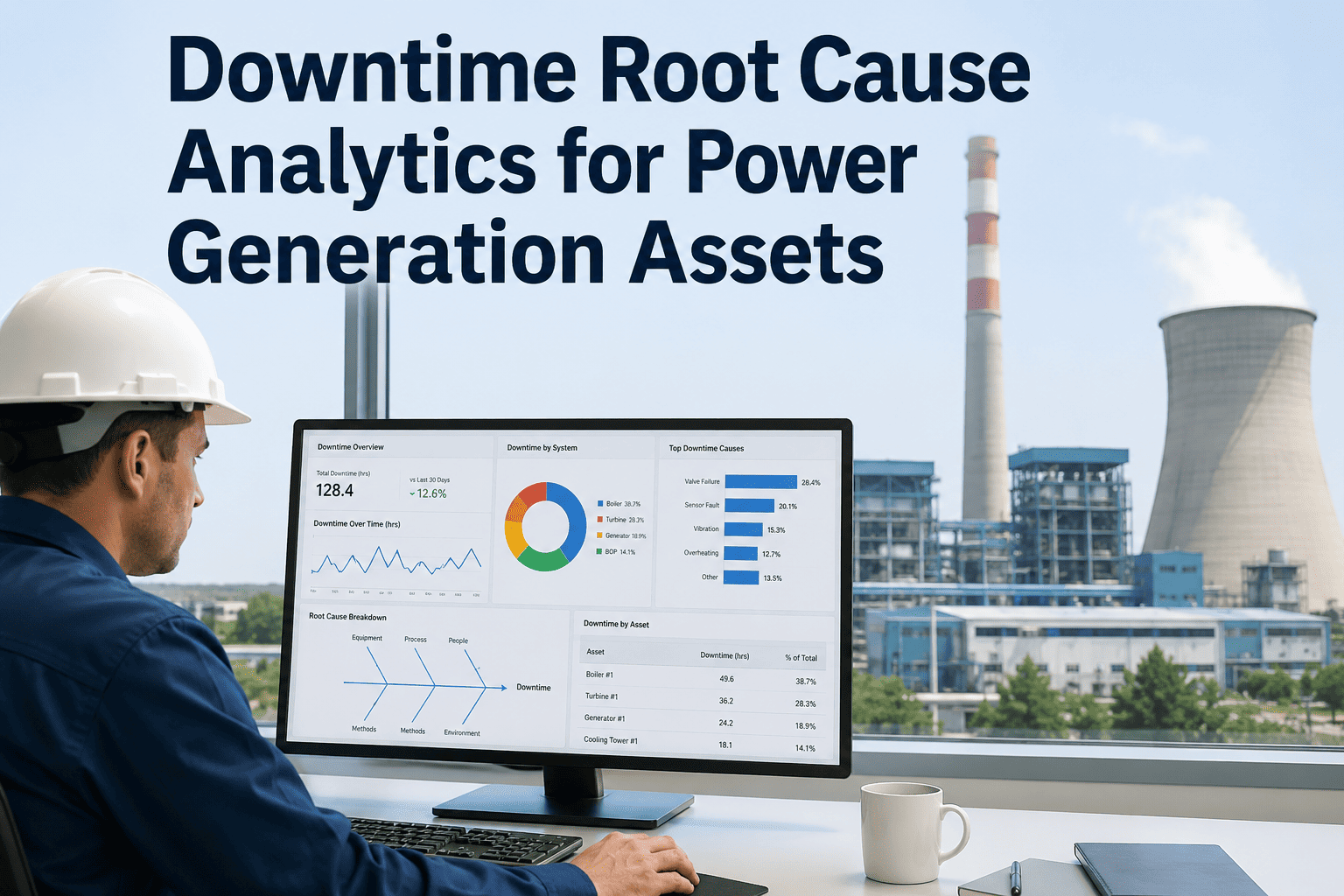
Every close-out in the software feeds the record, so patterns surface:
- Fault codes — controlled library, not free text
- Repeat offenders — bad actors ranked by frequency
- Cost per asset — labor, parts and downtime rolled up
- Repair vs. replace — evidence for capital decisions
True MTBF only counts unplanned failures, not scheduled shutdowns — which is exactly why OXMAINT AI's controlled failure coding at close-out matters. Without it, reliability figures understate the truth and mislead the next planning decision.
Layer 6: The Reliability Scoreboard
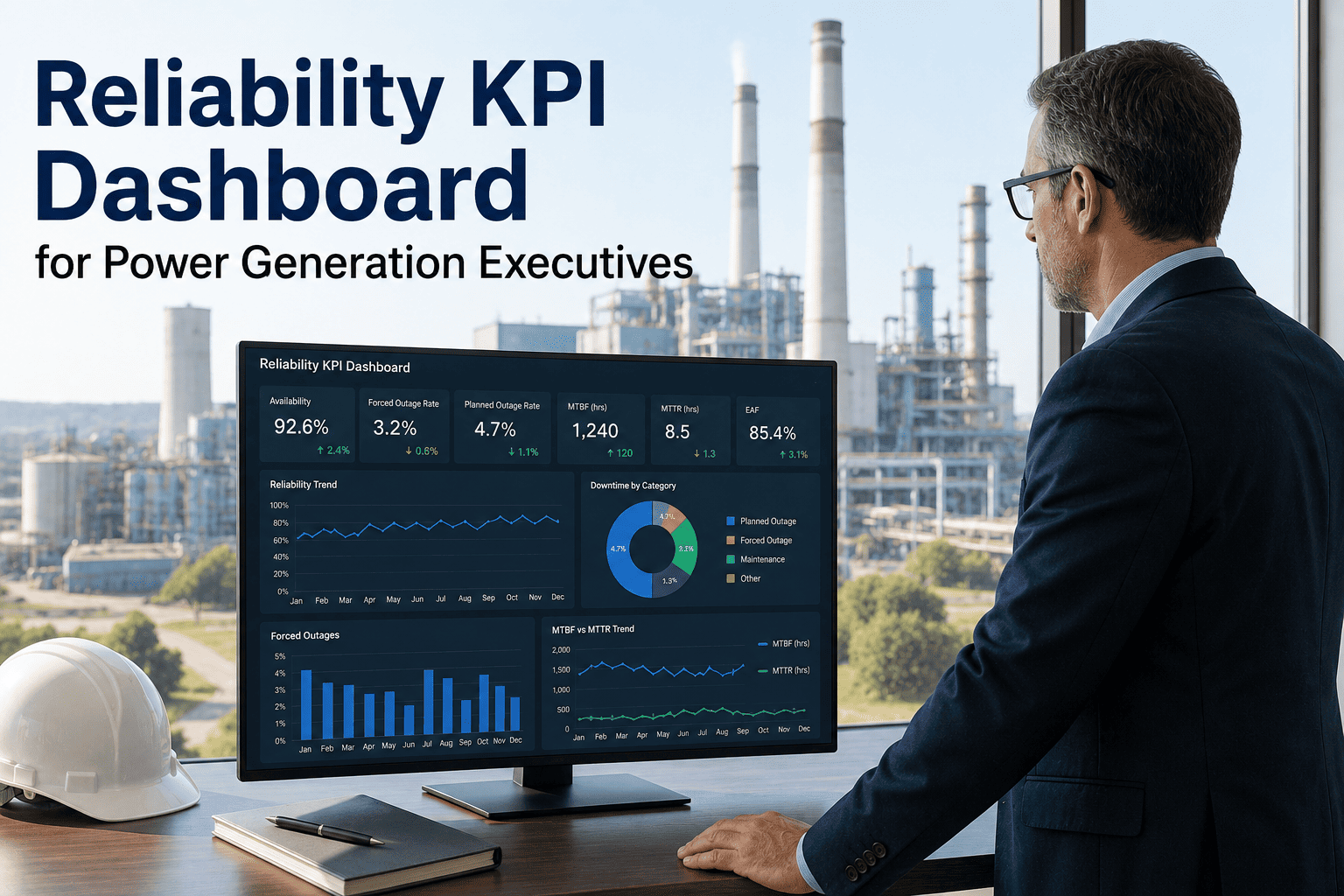
The top of the climb. When the five layers below are solid, OXMAINT AI calculates these numbers itself from work-order timestamps — no month-end spreadsheet sprint. Availability comes straight from the other two: Availability = MTBF ÷ (MTBF + MTTR). The software tracks the trend, not just the number — a sustained drop is the early warning. Book a demo to see these live for your fleet.
Benchmarks are common industry reference points, not guarantees — real targets are asset- and plant-specific. The signal that matters most is trend direction on a previously stable asset, not a single month's figure.
Where the Layers Lead: A Ranked Work Order
The payoff of the whole build is that OXMAINT AI turns one degrading reading into a prioritized, ready-to-assign work order — routed by the criticality you set two layers down. Sign up free and watch a signal become a ranked work order.
Frequently Asked Questions
Build the Strategy Once. Read Reliability Every Shift.
OXMAINT AI gets every asset registered and ranked, every failure coded, and every reliability KPI live from the work your team already closes — so "what's critical, what's failing, what does it cost" has one answer, always current.