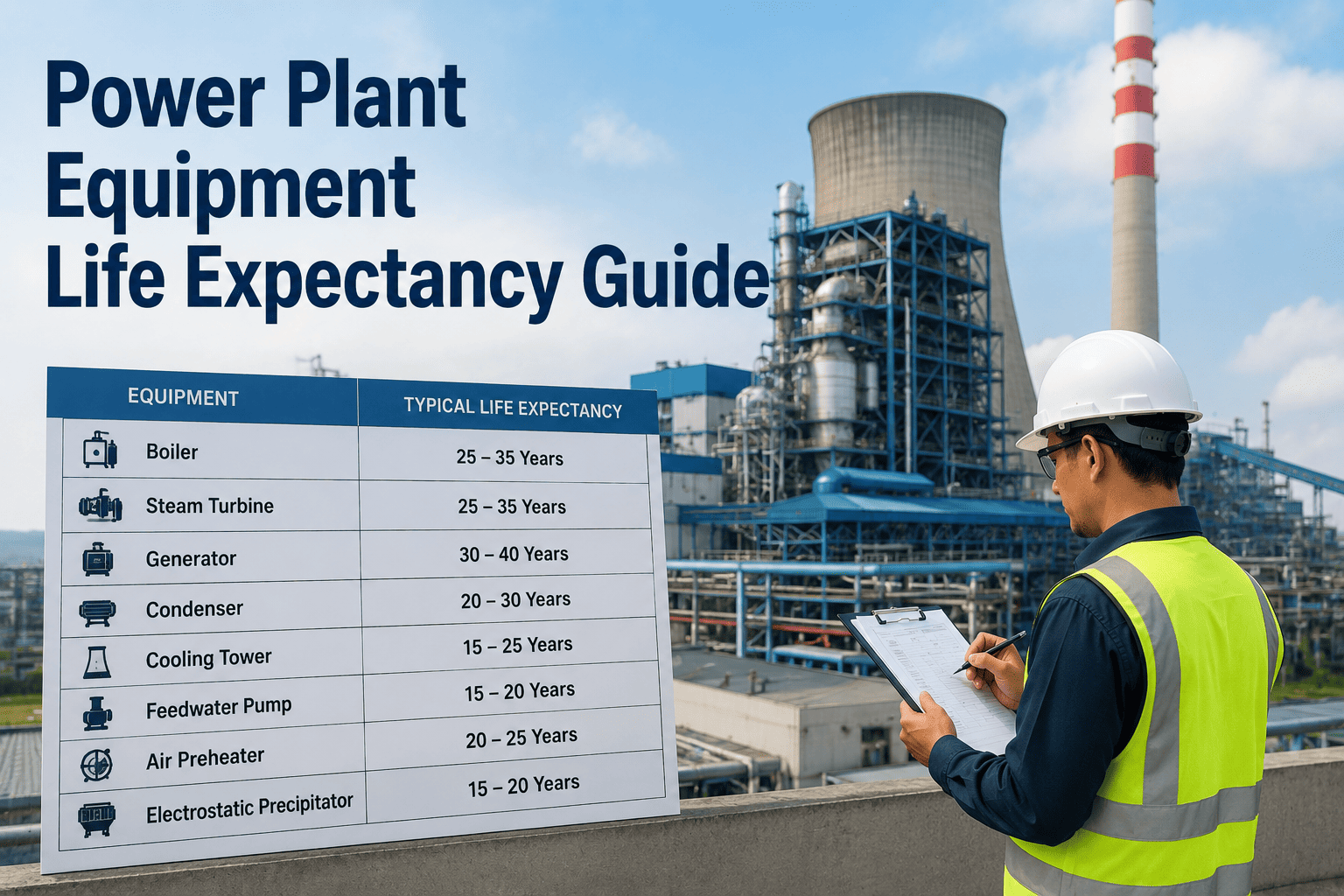
Ask five engineers how long a power transformer lasts and you will get five different answers, anywhere from 20 years to 60, depending on which standard, which duty cycle, and which maintenance program they are picturing. That spread is not sloppy research; it reflects a real truth about power plant equipment — published life expectancy figures are planning inputs, not predictions for any single asset sitting in your yard right now. The boiler that gets aggressive water treatment and the one that does not are not on the same retirement schedule, even if they came off the same production line. This guide lays out realistic service-life ranges for the major equipment categories in a thermal power plant, the factors that push an individual asset toward the long or short end of that range, and how to tell when an asset has genuinely reached the end of its useful life. See how OxMaint tracks asset age, condition, and remaining useful life across your entire equipment fleet.
Guide · Asset Management · Asset Lifecycle
Power Plant Equipment Life Expectancy Guide
55–65 Yrs
Technical operating life a well-maintained thermal plant can reach overall
20–40 Yrs
Typical reported range for power transformer service life
8
Major equipment categories covered in this guide
A realistic reference for asset managers and reliability engineers planning capital budgets, repair-versus-replace decisions, and long-term maintenance strategy across boilers, turbines, generators, transformers, pumps, and auxiliary systems.
A Better Question
Why "Expected Life" Is the Wrong Question to Start With
Average service life numbers describe a population of assets, not the specific transformer or turbine your plant actually owns. Four factors explain most of the spread between an asset that hits the low end of its range and one that comfortably beats the high end.
Duty Cycle & Load Pattern
Equipment that cycles frequently — frequent starts and stops — typically wears faster than equipment running continuously at steady load, due to repeated thermal and mechanical fatigue with every transition.
Water, Fuel & Oil Chemistry
Boiler tube life, transformer insulation life, and turbine blade life are all heavily influenced by water treatment quality, fuel contaminants, and oil condition — not just calendar age.
Environmental Exposure
Coastal salt air, high ambient temperatures, and dusty environments accelerate corrosion and insulation breakdown well beyond the manufacturer's baseline rating.
Maintenance Program Quality
The biggest lever a plant actually controls. Well-lubricated, well-calibrated, well-inspected equipment routinely outlasts its rated design life, while neglected equipment fails well short of it.
Service Life Ranges
Life Expectancy by Equipment Type
These ranges reflect typical industry-reported figures for well-maintained equipment under normal duty. Treat them as a planning framework, not a guarantee for any individual asset.
01020304050 yrs
Boiler Pressure Parts & Structure
Steam Turbine-Generator Set
Switchgear & Circuit Breakers
Pumps & Rotating Equipment
Control & Instrumentation Systems
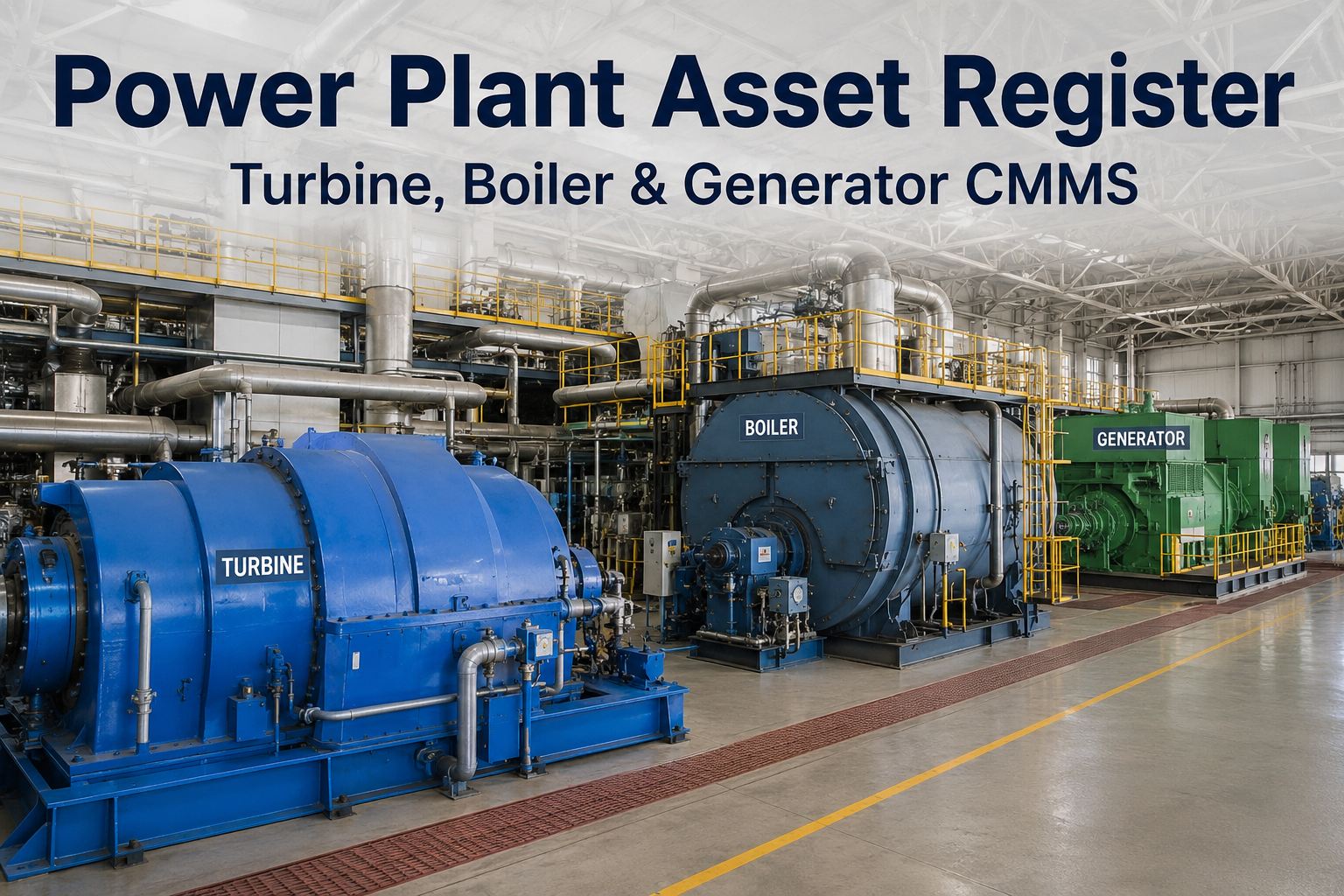
OxMaint tracks installation date, runtime, and condition data for every asset in this chart, so your team works from your plant's actual degradation trend instead of an industry-average guess.
Warning Signs
Signs an Asset Is Approaching End of Life
None of these signs alone is conclusive, but two or more appearing together on the same asset is a strong signal it is time to start planning, not reacting.
Rising Failure Frequency
The same asset generating repeat work orders for different failure modes, not just the same recurring one, is the clearest sign that broad degradation has set in across the whole unit.
Declining Efficiency or Heat Rate
Gradual efficiency loss that survives every cleaning and tune-up usually points to underlying degradation rather than a fixable operating issue.
Parts Becoming Hard to Source
When OEM spare parts move to long lead times or get discontinued entirely, the asset has effectively entered its obsolescence phase regardless of how it performs today.
Repair Cost Approaching Replacement
Once major repair quotes routinely reach 50–70% of replacement cost, the decision has crossed from routine maintenance into capital planning territory.
The Decision
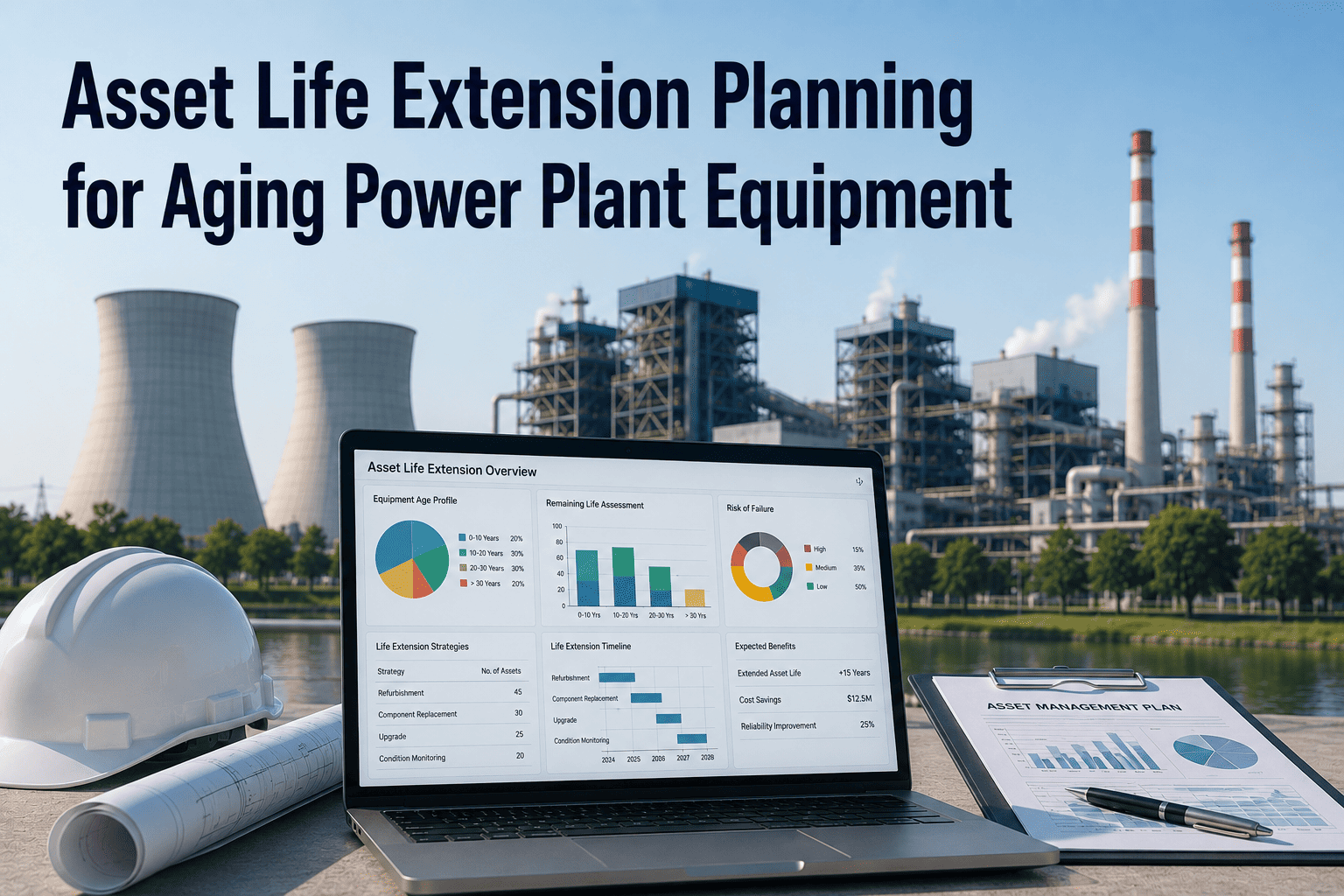
Repair, Refurbish, or Replace: A Decision Framework
Every aging asset eventually forces this decision. These criteria help separate a genuine end-of-life asset from one that just needs a focused repair.
| Criteria |
Favors Repair / Refurbish |
Favors Replacement |
| Failure Frequency |
Isolated, infrequent events |
Repeated failures across multiple subsystems |
| Spare Parts Availability |
Readily available, short lead time |
Long lead time or discontinued by OEM |
| Efficiency Trend |
Stable or recoverable with service |
Persistent decline despite maintenance |
| Repair Cost vs. Replacement |
Well under 50% of replacement cost |
Approaching or exceeding 50–70% |
| Remaining Plant Horizon |
Asset will outlast the plant's economic life |
Plant itself nearing end of economic life |
“
Every utility I've worked with eventually asks the same question: should we trust the manufacturer's design life or our own condition data? The answer is always the condition data. I've seen transformers comfortably pass 40 years because the oil chemistry and loading were managed carefully, and I've seen others fail at 15 because they sat in a hot, poorly ventilated room running near nameplate capacity every day. The published range tells you where to start planning. Your own inspection and condition history tells you where you actually are.
Asset Lifecycle & Reliability Advisor
20+ Years in Power Generation Asset Management · Capital Planning & Replacement Strategy Specialist
Frequently Asked Questions
Is "expected life" the same thing as how long my specific equipment will actually last?
Why do power transformers have such a wide reported life expectancy range?
Transformer life is largely governed by insulation aging, which accelerates sharply with operating temperature. A transformer kept well within its thermal rating and properly oil-tested can comfortably exceed 30 to 40 years, while one regularly overloaded or poorly cooled can show significant insulation aging in half that time, which is why the reported range spans from roughly 20 years to well beyond 40.
What typically wears out first in a power plant — mechanical or electrical equipment?
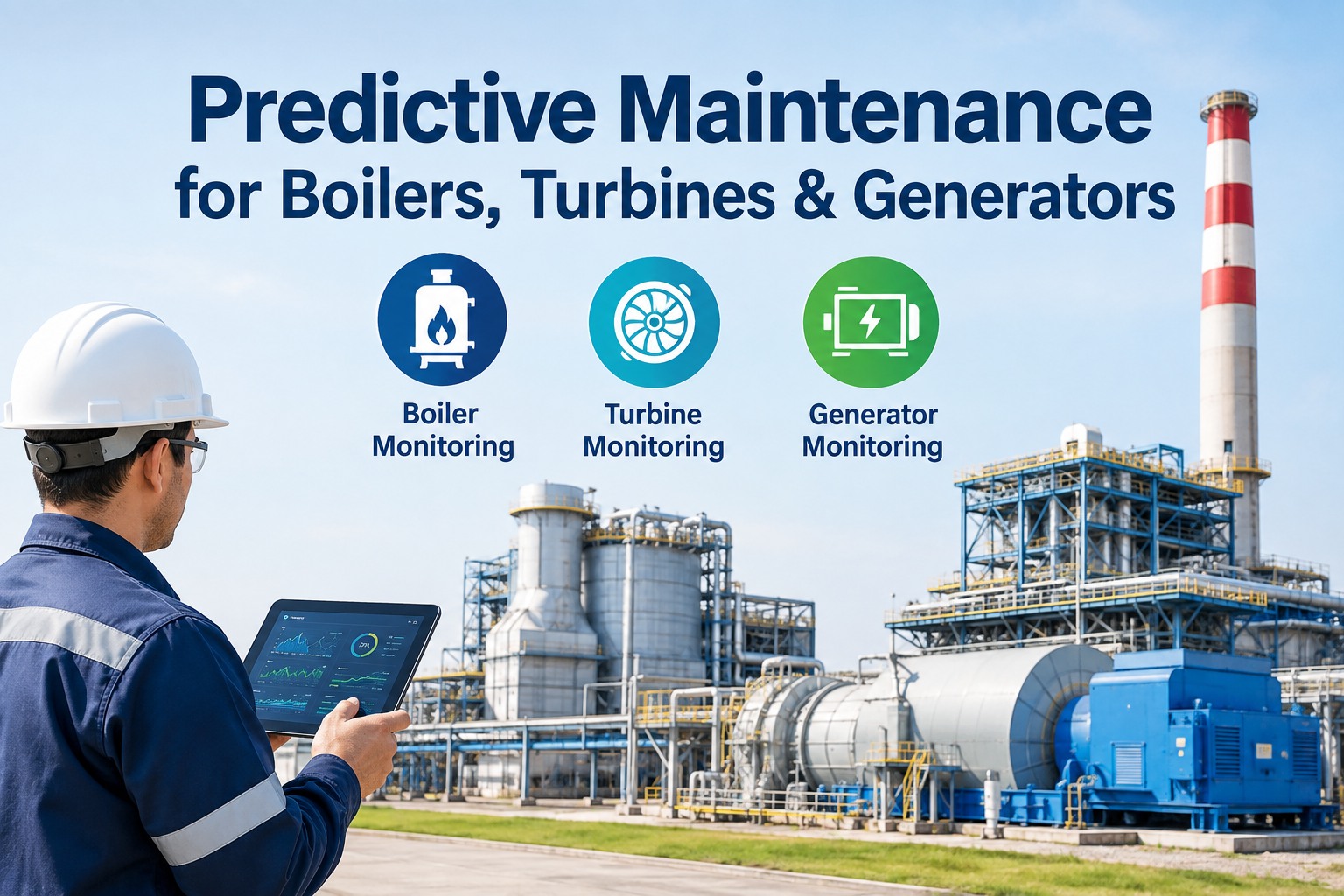
Can predictive maintenance actually extend an asset's useful life, or does it just detect failure earlier?
Both, in practice. Catching a developing fault early often allows a targeted repair instead of a full failure event, and avoiding the secondary damage that comes with run-to-failure operation is itself a meaningful extension of usable life, even though predictive maintenance cannot change the underlying physical aging process.
How does OxMaint help decide whether to repair or replace an aging asset?
Asset Lifecycle · OxMaint · Power Plant Maintenance
Know Exactly Where Every Asset Sits in Its Lifecycle.
OxMaint tracks age, runtime, condition data, and repair cost history for every boiler, turbine, transformer, and pump in your fleet — turning the repair-versus-replace decision into a data-backed call instead of a guess.