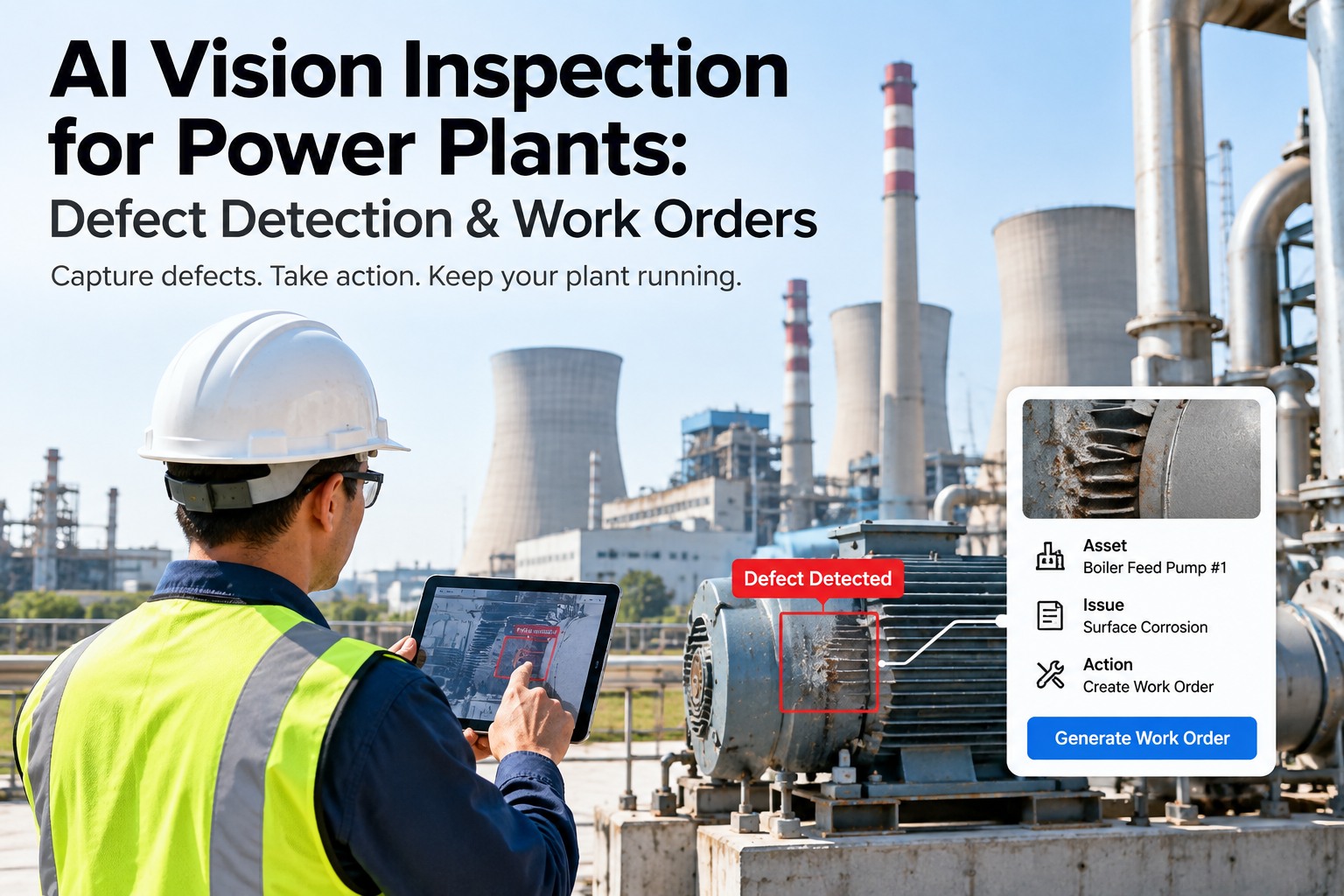
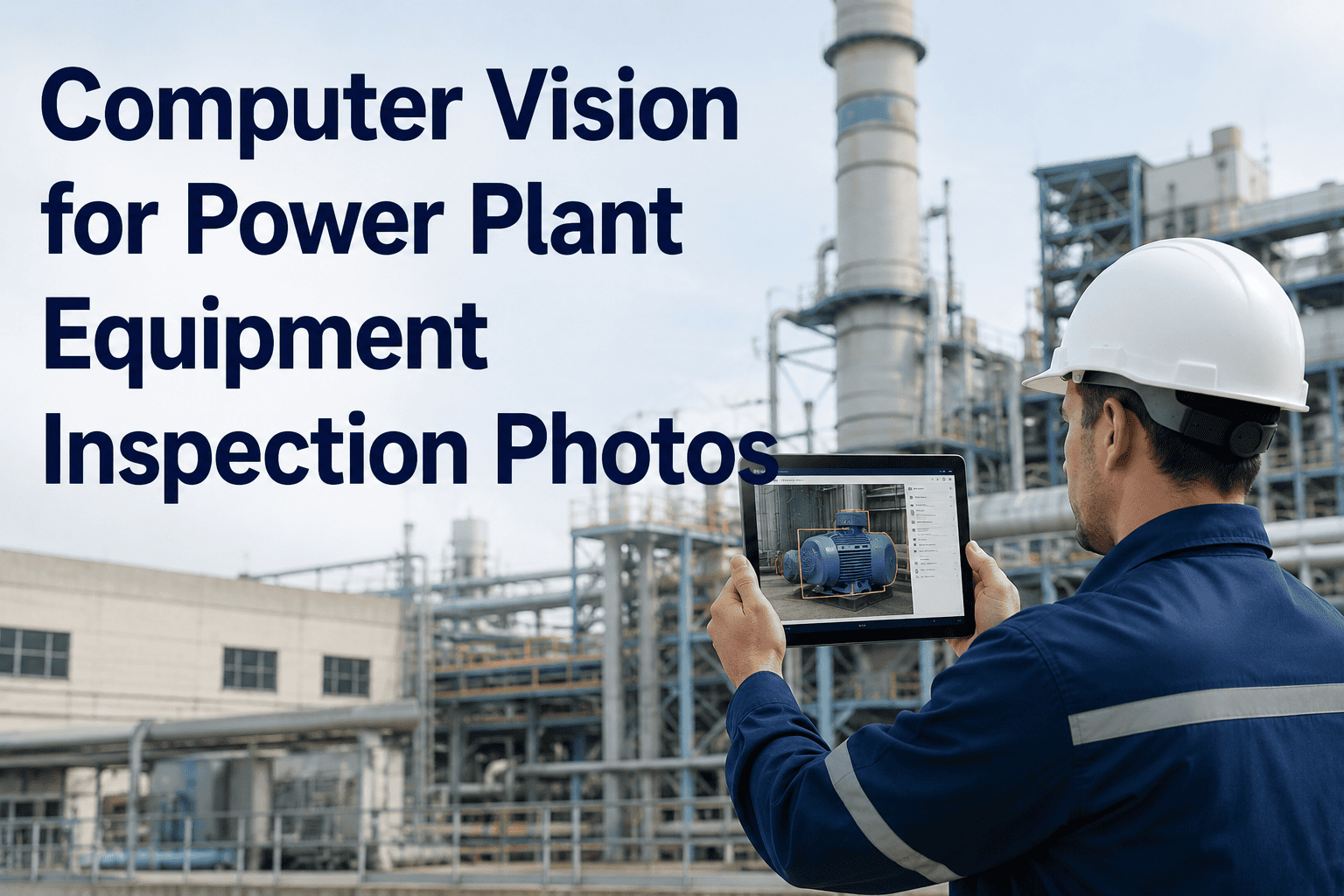
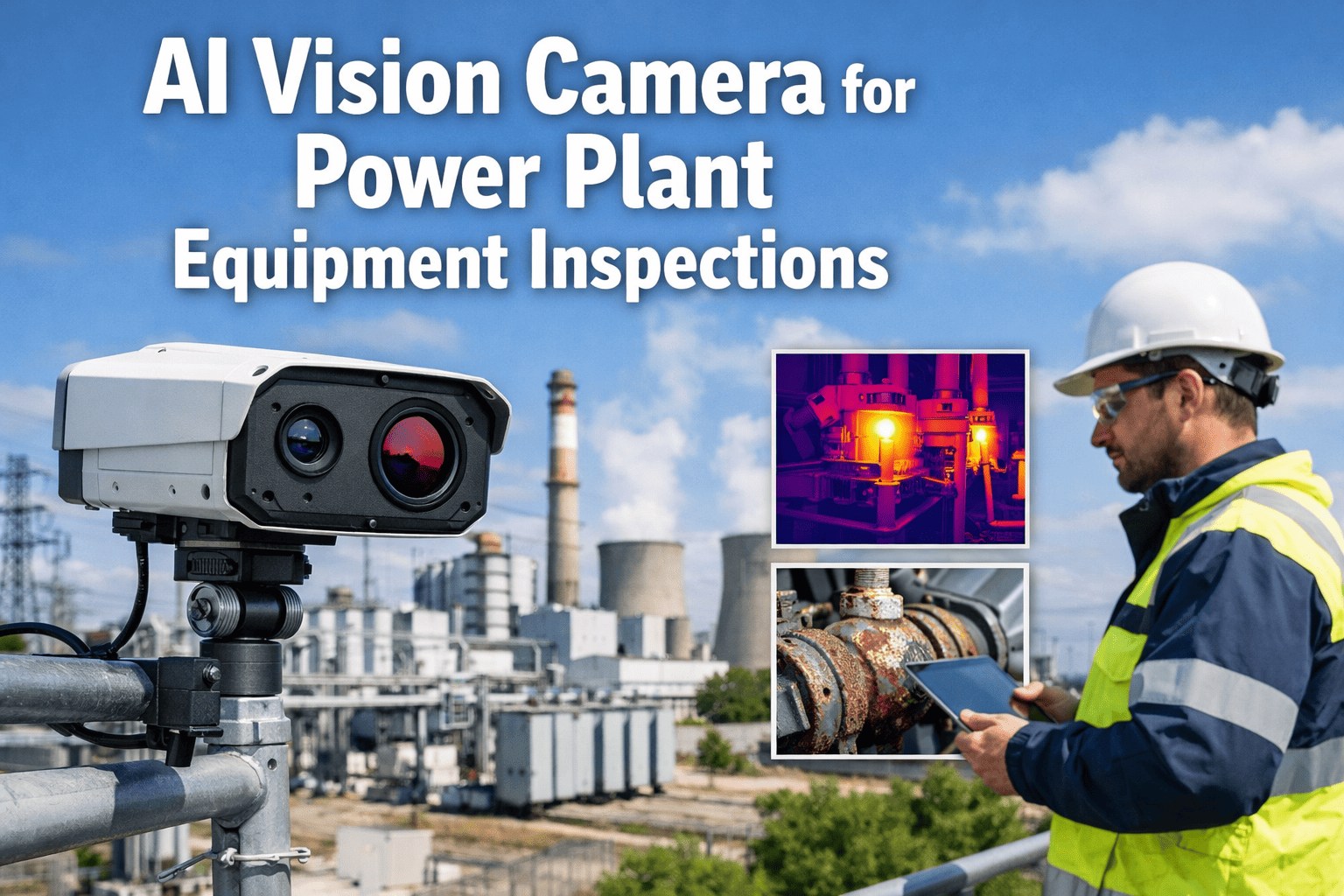
A hairline crack on a turbine blade—invisible to the naked eye—grows silently for 6,000 operating hours. Then, without warning, it propagates through the blade root, liberating a 2-pound fragment at 15,000 RPM. The resulting catastrophic failure destroys adjacent stages, damages the casing, and forces an emergency shutdown costing your facility $4.2 million in repairs and lost generation. But here's what makes this preventable: that crack was detectable at 0.2mm depth using AI-powered surface inspection technology. OXmaint’s integrated vision detection platform identifies microscopic cracks, corrosion patterns, and coating degradation weeks before they become critical—transforming reactive crisis management into proactive asset protection.
AI-POWERED INSPECTION
See Defects Before They See You
Computer vision technology that detects cracks, corrosion, and wear at the microscopic level
The Critical Role of Surface Inspection in Power Generation
Power plant equipment operates under extreme conditions that relentlessly attack material surfaces. Turbine blades endure temperatures exceeding 1,300°C while spinning at thousands of RPM. Boiler tubes face continuous thermal cycling and corrosive combustion gases. Heat exchanger surfaces battle erosion from high-velocity steam. Every surface defect—from microscopic pitting to hairline cracks—represents a potential failure point that can cascade into catastrophic equipment damage. Research shows that 70% of severe turbine damage originates from cracks that were detectable early but missed during manual inspections. See how an AI-powered inspection demo works in real plant conditions, and why OXmaint’s vision detection captures what human inspectors cannot.
Surface Defects OXmaint Vision Technology Detects
Surface Cracks
Thermal fatigue, stress corrosion, creep damage
Detectable at 0.1mm width
Corrosion Pitting
Chemical attack, chloride contamination, oxidation
Detectable at 0.2mm depth
Coating Degradation
TBC loss, spallation, delamination, erosion
Detectable at 5% loss
Surface Erosion
Particle impact, steam cutting, flow wear
Detectable at 0.05mm loss
How AI Vision Inspection Transforms Defect Detection
Traditional surface inspection relies on periodic manual examinations—technicians using dye penetrant testing, visual borescope reviews, and ultrasonic spot checks to identify surface-level issues. While these methods are effective for detecting obvious defects, they often miss subtle surface changes that develop gradually and precede major equipment failures. AI-powered computer vision fundamentally changes this equation by enabling continuous, high-resolution inspection at scale. Advanced cameras capture thousands of detailed surface images during planned outages or through robotic crawlers while equipment remains in operation. Deep learning algorithms, trained on millions of real-world defect patterns, analyze every pixel to identify anomalies invisible to the human eye. These AI-generated findings flow directly into OXmaint’s CMMS system, where they are automatically converted into prioritized inspection reports and actionable maintenance work orders without manual intervention.
Manual vs. AI-Powered Surface Inspection
Traditional Manual Inspection
✗4-8 hours per turbine stage
✗60-70% defect detection rate
✗Inspector fatigue affects accuracy
✗Subjective severity assessment
✗Paper-based documentation
VS
OXmaint AI Vision Inspection
✓45 minutes per turbine stage
✓97% defect detection rate
✓Consistent 24/7 accuracy
✓Quantified defect measurements
✓Automated CMMS integration
Critical Equipment Where Surface Inspection Prevents Failures
Not all power plant surfaces carry equal operational risk, and effective inspection strategies require intelligent prioritization. OXmaint helps facilities focus inspection resources on equipment where surface defects pose the greatest threats to reliability, safety, and production continuity. High-temperature turbine components, pressure-bearing boiler systems, and steam path hardware each demand different inspection techniques and defect recognition models. Each application requires specialized imaging approaches combined with AI models trained on asset-specific defect behavior—capabilities delivered through industry-specialized OXmaint inspection modules engineered specifically for power generation assets and operating conditions.
Gas Turbine Blades
TBC spallationLeading edge erosionCreep cracks
Missed defect cost
$500K - $2M
Boiler Tubes
Fireside corrosionThermal fatigueWall thinning
Missed defect cost
$200K - $800K
Steam Turbine LP Blades
Corrosion pittingStress corrosionErosion grooves
Missed defect cost
$300K - $1.5M
Detect Surface Defects Before They Become Failures
See how OXmaint's AI vision inspection integrates with CMMS to transform your maintenance approach from reactive repairs to predictive protection.
Surface defect detection creates real operational value only when inspection findings translate into timely and effective maintenance actions. OXmaint’s platform closes this critical gap by seamlessly connecting AI vision detection with execution-ready maintenance workflows. When AI models identify a defect, the finding is enriched with defect classification, dimensional measurements, precise location mapping, and severity scoring based on asset criticality and operating context. Maintenance teams can immediately review visual evidence, assess risk, and initiate corrective actions using mobile-ready workflows after signing up for OXmaint, ensuring informed decisions are made quickly—without delays, paperwork, or data silos.
OXmaint Surface Inspection Workflow
01
Image Capture
High-res cameras capture surface data via borescope, drone, or robotic crawler
02
AI Analysis
Deep learning models detect, classify, and measure surface anomalies
03
Risk Assessment
System calculates severity and remaining useful life based on defect progression
04
Work Order Generation
CMMS creates prioritized maintenance tasks with visual documentation
05
Trend Tracking
Historical comparison monitors defect growth and validates repairs
Frequently Asked Questions
What types of surface defects can AI vision detection identify?
OXmaint's AI vision systems detect a comprehensive range of surface defects including cracks (thermal fatigue, stress corrosion, creep), corrosion (pitting, general wastage, intergranular attack), coating degradation (thermal barrier coating loss, spallation, delamination), erosion patterns, surface deposits, and geometric deformations. The deep learning models are trained on power plant-specific defect databases, enabling detection of anomalies as small as 0.1mm that would be invisible during standard visual inspections. The system continuously improves accuracy as it analyzes more inspection data from your facility.
How does AI surface inspection integrate with existing maintenance programs?
OXmaint's platform connects AI vision detection directly to your maintenance management workflows. Inspection findings automatically generate work orders with defect images, measurements, and location data. The system integrates with outage planning tools to schedule repairs during optimal maintenance windows. Historical inspection data enables trending analysis that validates repair effectiveness and predicts when components will require intervention. Most plants implement AI inspection alongside traditional NDT methods initially, gradually expanding coverage as teams gain confidence in the technology's accuracy.
What ROI can power plants expect from AI-powered surface inspection?
Power plants typically achieve ROI within 6-12 months through multiple value streams: reduced inspection time (85% faster than manual methods), higher defect detection rates preventing costly failures, optimized maintenance scheduling that extends component life, and reduced outage duration through faster inspection completion. Preventing a single major failure—such as a turbine blade liberation or boiler tube rupture—typically saves $500,000 to $2 million in direct costs plus avoided generation losses. OXmaint's ROI calculator can model specific returns based on your equipment fleet and operating profile.
Can AI inspection replace traditional NDT methods entirely?
AI vision inspection complements rather than replaces traditional NDT methods. While AI excels at surface defect detection across large areas quickly, ultrasonic testing remains essential for subsurface flaw detection, and specialized techniques like eddy current testing provide superior crack sizing accuracy. The optimal approach combines AI vision for rapid screening of all surfaces with targeted NDT on areas where AI identifies concerns. OXmaint's platform coordinates both AI and traditional inspection findings in a unified workflow, ensuring comprehensive coverage while maximizing inspection efficiency.
Transform Your Surface Inspection Program
Join power plants using OXmaint's AI vision detection to identify defects earlier, reduce inspection costs, and prevent equipment failures. Schedule a demo to see real detection capabilities on actual plant components.