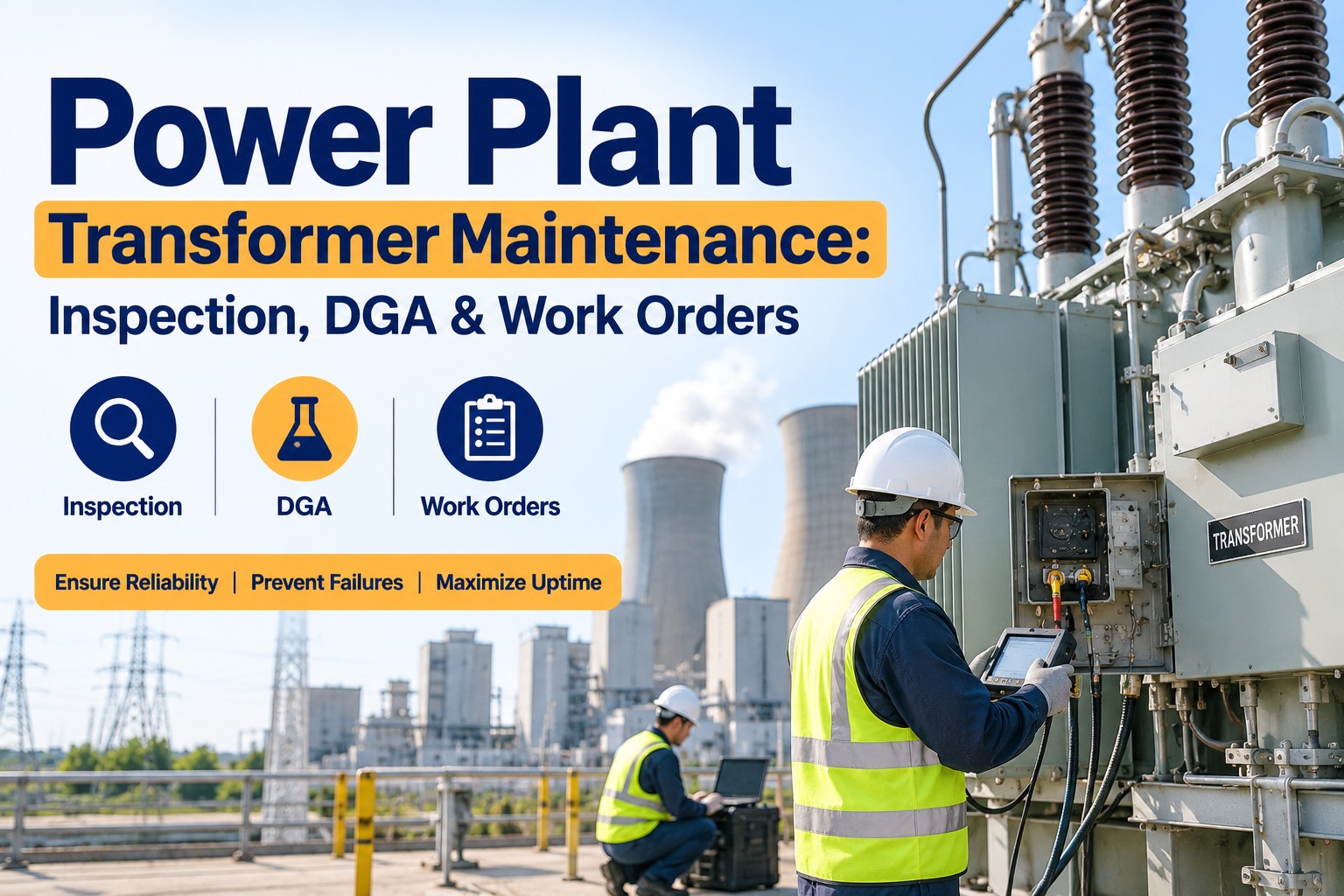
A transformer fire at a power station is not a maintenance failure — it is a failure of the maintenance program that preceded it. Oil-filled power transformers carry anywhere from 2,000 to 50,000 gallons of mineral insulating oil; when a fault occurs without adequate monitoring, inspection history, or suppression readiness, the consequences are catastrophic and unrecoverable within the outage window. The average probability of a serious transformer fire sits at 0.06% to 0.1% per service year, which translates to a realistic 2.4%–4% chance across a 40-year service life — odds no plant manager can afford to ignore. A structured fire prevention maintenance program, tracked and enforced through a purpose-built CMMS, is the single most effective intervention available before fire suppression systems are ever needed. If your transformer inspection records, oil test results, and thermal data live in spreadsheets or paper binders, start a free Oxmaint trial and put your fire prevention program on a system built for power station realities.
Power Station Safety Guide — 2026
Transformer Fire Prevention Maintenance Program
From oil quality testing to thermal monitoring and suppression readiness — the complete maintenance playbook for power station transformer reliability.
0.1%
Annual fire probability per transformer service year
40 yrs
Typical transformer service life — fire risk compounds over time
300°C
Fire point of ester-based fluids vs 170°C for mineral oil
72%
Of transformer failures preceded by detectable early warning signs
Why Power Station Transformers Are a Distinct Fire Risk Category
The Combustion Chain
Large oil-filled power transformers combine high voltage, high current, and thousands of gallons of combustible mineral insulating oil in a confined steel enclosure. A single insulation fault — caused by moisture ingress, bushing degradation, or winding contamination — can create an arc temperature exceeding 6,000°C, vaporizing oil into combustible gas within milliseconds. Once ignition occurs, the fire is self-sustaining and capable of spreading to adjacent equipment within minutes.
The Maintenance Gap
Most power station transformer fires are preceded by months of warning signals that an untracked or paper-based maintenance program fails to connect: rising dissolved gas levels in oil samples, bushing power factor trending upward, cooling system alarms that clear without investigation, and load tap changer operations that exceed acceptable counts without triggered inspection. A CMMS that correlates these signals in one asset record turns a catastrophic event into a planned repair.
The Regulatory Exposure
NFPA 850 (Recommended Practice for Fire Protection for Electric Generating Plants) and NERC FAC-001/002 both establish expectations for transformer maintenance programs. A post-incident review that finds no documented inspection history, no oil testing records, and no suppression system maintenance log creates liability exposure far beyond the equipment replacement cost itself. Documented CMMS records are your audit defense.
The 6-Layer Transformer Fire Prevention Framework
01
Dissolved Gas Analysis (DGA) Scheduling
DGA is the earliest warning system available for transformer internal faults. Gases produced by overheating or arcing — hydrogen, acetylene, ethylene — dissolve into transformer oil before any external symptom appears. A CMMS-managed DGA program schedules oil samples at defined intervals (annual for healthy units, quarterly for aging or loaded transformers), tracks trending across sample sets, and auto-generates inspection work orders when key gas concentrations exceed IEC 60599 or IEEE C57.104 thresholds.
02
Insulating Oil Quality Management
Insulating oil degrades through oxidation, moisture absorption, and contamination. When dielectric strength drops below 30 kV (ASTM D1816), breakdown risk increases sharply. Fire point deterioration follows: mineral oil that entered service with a 170°C fire point may drop significantly as acid number increases and inhibitor depletes. A structured oil quality maintenance program in CMMS tracks dielectric strength, moisture content (ppm), acid number, and interfacial tension — each result linked to the transformer asset record and flagging automatic work orders when values approach action limits.
03
Thermal and Load Monitoring Integration
Transformer winding temperature is the most direct indicator of insulation aging rate and fire risk. Every 6°C increase above rated temperature approximately halves the remaining insulation life (the Montsinger Rule). A CMMS connected to real-time thermal monitoring flags sustained over-temperature events, correlates them with load data, and creates documented inspection records. Cooling system preventive maintenance — fan testing, radiator cleaning, oil pump checks — is scheduled and tracked alongside thermal performance history on the same asset record.
04
Bushing and Tap Changer Maintenance
Bushings represent 20% of transformer failures and the highest single ignition risk point in a fire scenario. Routine power factor and capacitance testing at scheduled intervals detects internal moisture or carbonized paths before fault current is reached. Load tap changers (LTCs) accumulate contact wear and oil contamination with every operation. CMMS tracks cumulative operation counts and triggers inspection at manufacturer-specified intervals — not based on calendar time, but on actual service exposure — preventing the most common LTC failure mode: contact burn at a deferred inspection.
05
Fire Suppression System Maintenance Readiness
A fire suppression system that fails during a transformer fire is worse than no system at all — it provides false confidence during design and failed evidence during investigation. NFPA 850 recommends annual inspection and testing of water spray deluge systems, Nitrogen Injection Fire Protection Systems (NIFPS), and drainage pits. CMMS schedules, records, and timestamps every suppression system maintenance event — nozzle flow tests, valve actuations, drain pit inspections, and detector calibration — with technician sign-off and test data attached to the work order.
06
Fire Barrier and Site Condition Inspections
Physical fire barriers — walls extending at least 1 foot above and 2 feet beyond transformer dimensions — require periodic inspection for integrity. Oil spill containment pits accumulate debris that can wick oil toward ignition sources. CMMS schedules and records quarterly site condition walkthroughs covering barrier condition, pit drainage clearance, combustible debris in the 25-foot exclusion zone, and oil leak detection. Each finding creates a corrective work order with a closure deadline and photographic record attached.
Transformer Fire Prevention
Put Every Inspection, Test, and Alert on One System
Oxmaint CMMS tracks DGA schedules, oil test results, thermal alarms, bushing maintenance, and suppression system readiness on a single platform. When any parameter approaches action limits, work orders generate automatically — before a developing fault becomes a fire.
Fire Risk Indicators: What Your CMMS Should Be Tracking
| Parameter |
Normal Range |
Action Level |
CMMS Trigger |
Fire Risk Link |
| Acetylene (DGA) |
< 1 ppm |
> 5 ppm |
Urgent inspection WO + engineer notify |
Active arcing — highest fire precursor |
| Winding Temperature |
< 98°C (oil), < 120°C (winding) |
Sustained > 110°C |
Cooling PM + load review work order |
Accelerated insulation aging |
| Dielectric Strength |
> 40 kV |
< 30 kV |
Oil treatment or replacement WO |
Reduced breakdown resistance |
| Bushing Power Factor |
< 0.5% |
> 1.0% |
Bushing replacement assessment WO |
Internal moisture / carbon tracking |
| LTC Operation Count |
Per OEM spec |
At OEM threshold |
Tap changer maintenance WO |
Contact burn risk at tap change |
| Hydrogen (DGA) |
< 100 ppm |
> 300 ppm |
Follow-up DGA + inspection WO |
Partial discharge or hot metal |
Ester Fluid Retrofilling: The Fire Safety Upgrade CMMS Should Track
Mineral Oil
170°C
Fire point of standard mineral insulating oil. Once ignited, mineral oil fires are extremely difficult to suppress and sustain combustion even against water spray.
vs
MIDEL Ester Fluid
300°C+
Fire point of natural and synthetic ester fluids. Retrofilling aging mineral oil transformers with ester dielectrics is the highest-impact single-action fire risk reduction available outside of full transformer replacement.
Retrofilling projects must be tracked in CMMS as a linked asset event — fluid type, date, contractor, pre/post oil quality test results, and updated fire risk classification — to ensure maintenance schedules are adjusted to ester fluid parameters going forward.
Frequently Asked Questions
How often should transformer oil be tested for fire prevention purposes?
Annual DGA and oil quality testing is the standard baseline for healthy, in-service transformers. Units showing elevated gas levels, aging insulation, or high load utilization should move to semi-annual or quarterly sampling. All test results should be trended in CMMS to detect deterioration between samples — a single data point is less useful than a three-year trend.
Oxmaint automates DGA scheduling and trending based on asset age and previous results.
What is the most common cause of transformer fires at power stations?
Internal electrical faults — arcing from insulation failure, bushing breakdown, or load tap changer contact failure — are the primary causes, typically preceded by DGA warning signs that went undetected or unacted upon. External causes include lightning, severe weather, and overloading. Cooling system failures that accelerate thermal aging are the most preventable contributing factor and the one most directly controlled by a structured CMMS maintenance program.
Does NFPA 850 require a documented transformer maintenance program?
NFPA 850 recommends comprehensive maintenance for oil-filled transformers, including fire suppression system testing, oil quality management, and thermal monitoring. While it is a recommended practice rather than a mandatory code in most jurisdictions, insurance underwriters and post-incident investigations treat documented CMMS maintenance programs as evidence of due diligence.
Book a demo to see how Oxmaint produces NFPA 850-aligned maintenance records on demand.
How does a CMMS reduce transformer fire risk compared to a paper-based system?
A CMMS eliminates the most common failure mode in paper programs: deferred inspections that stay deferred. Automated work order generation at DGA thresholds, overdue PM alerts, and cross-asset trending of oil quality and thermal data catch developing faults weeks before they reach ignition risk. Paper systems generate records; a CMMS generates early warnings. The difference is preventable losses versus unrecoverable losses.
Can Oxmaint integrate transformer sensor data for real-time fire risk monitoring?
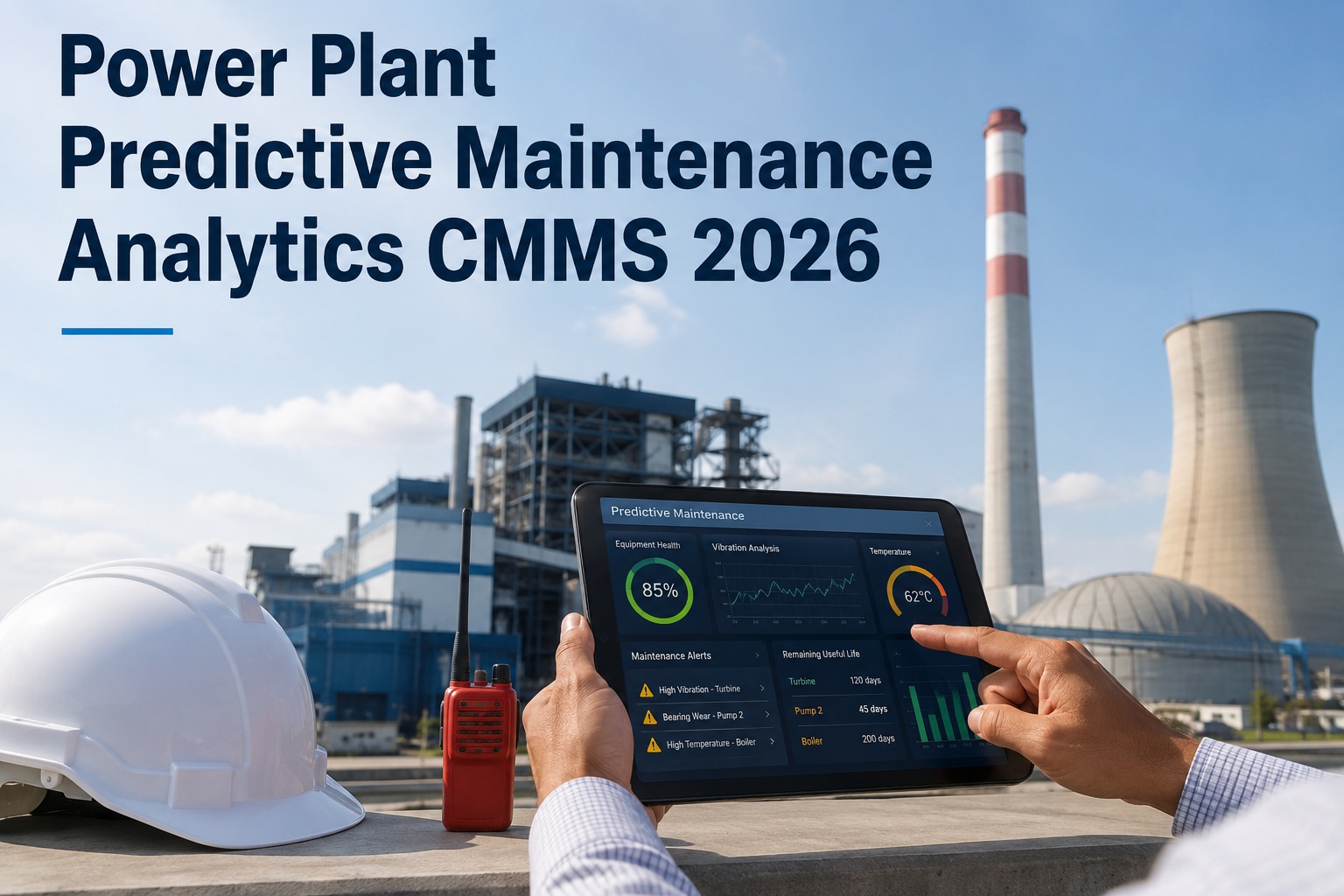
Yes. Oxmaint connects to plant DCS, SCADA, and online DGA monitors via API, Modbus, or OPC-UA. When winding temperature, dissolved gas, or bushing power factor sensors cross configured thresholds, the platform auto-generates inspection work orders with the current condition data attached — no manual monitoring required.
Start a free trial to configure your transformer monitoring thresholds.
CMMS for Power Station Transformer Safety
Turn Warning Signs Into Work Orders — Before They Turn Into Fires
Oxmaint gives your maintenance team scheduled DGA tracking, oil quality trending, thermal alert integration, bushing PM automation, and suppression system readiness — all linked to the same transformer asset record. Every test. Every result. Every work order. Audit-ready from day one.
6 layers
of fire prevention tracked in one asset record
Auto WO
generated on threshold breach — no manual monitoring
1-click
NFPA 850 audit-ready maintenance history export