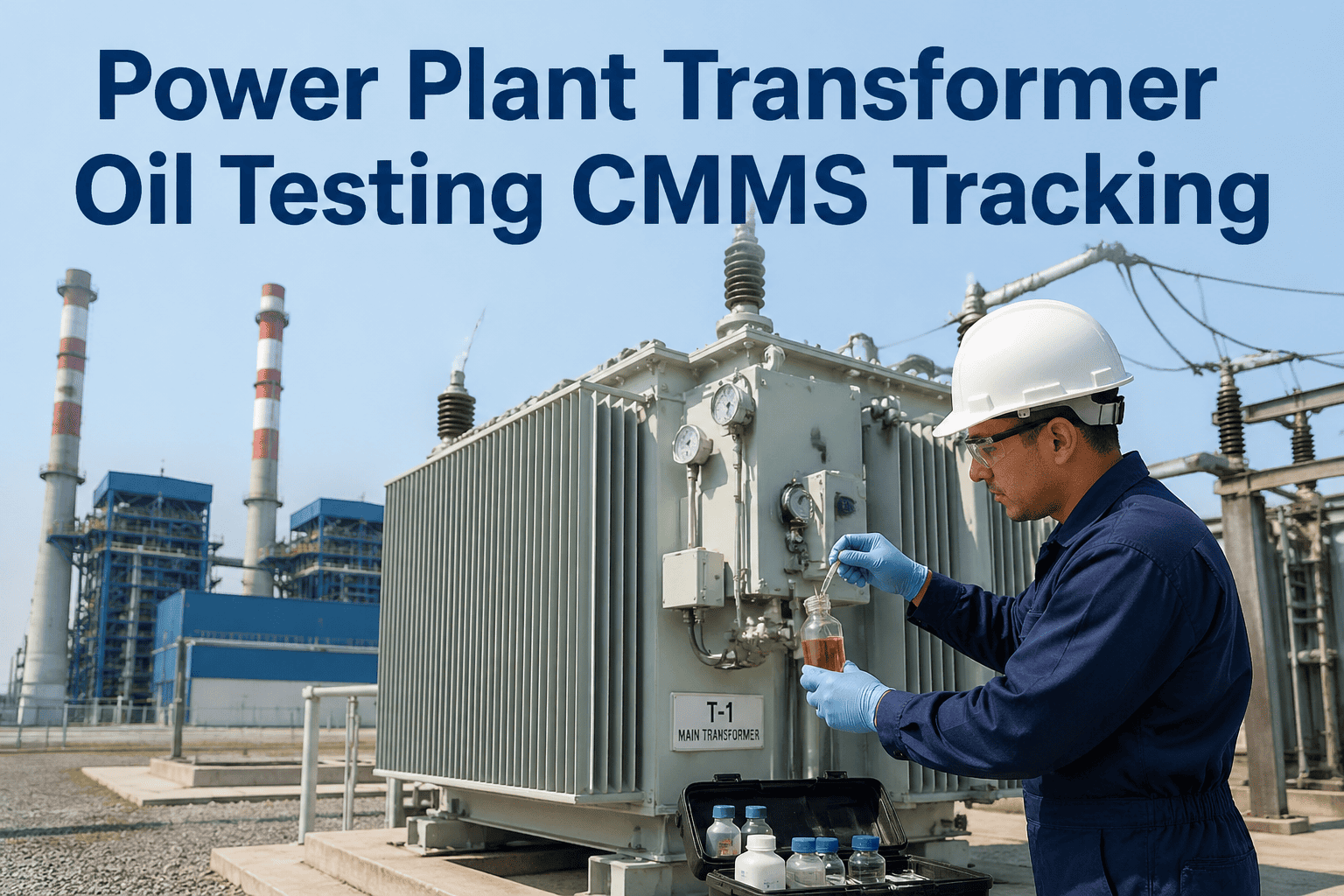
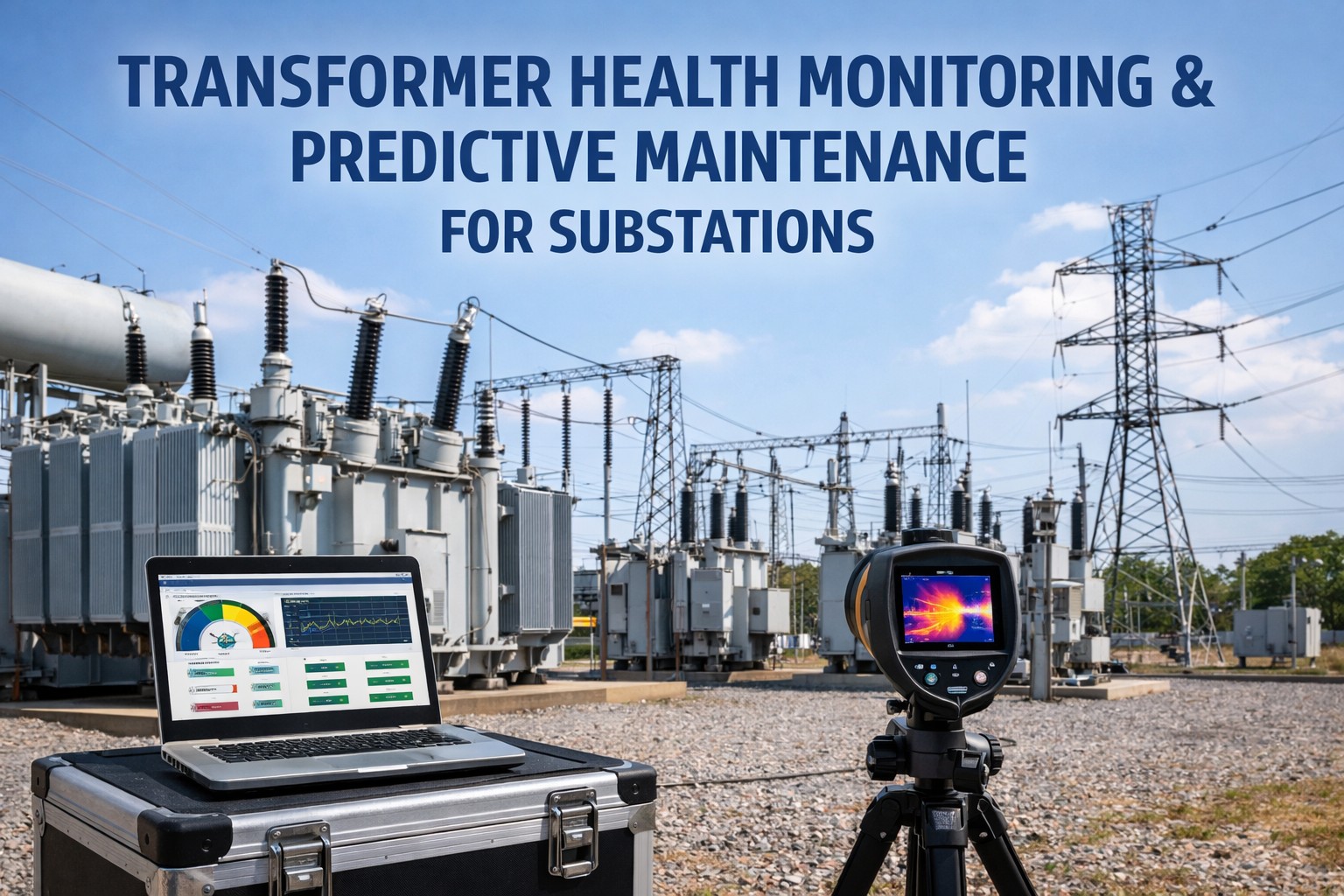
A power transformer can absorb years of electrical and thermal stress in complete silence — no vibration, no visible sign, no alarm — while gases dissolve steadily into its insulating oil, each one a fingerprint of a developing fault that will eventually become a catastrophic failure costing millions in equipment replacement, outage penalties, and grid disruption. OxMaint's transformer maintenance platform integrates DGA trending data with predictive work order automation, giving substation and utility teams a single connected system to track dissolved gas concentrations, identify fault signatures before thresholds are breached, and schedule intervention exactly when the asset requires it. Book a free OxMaint demo to see how transformer asset teams are preventing failures before they appear on a SCADA alarm screen.
Transformer Health · DGA Monitoring · Predictive Alerts · OxMaint CMMS
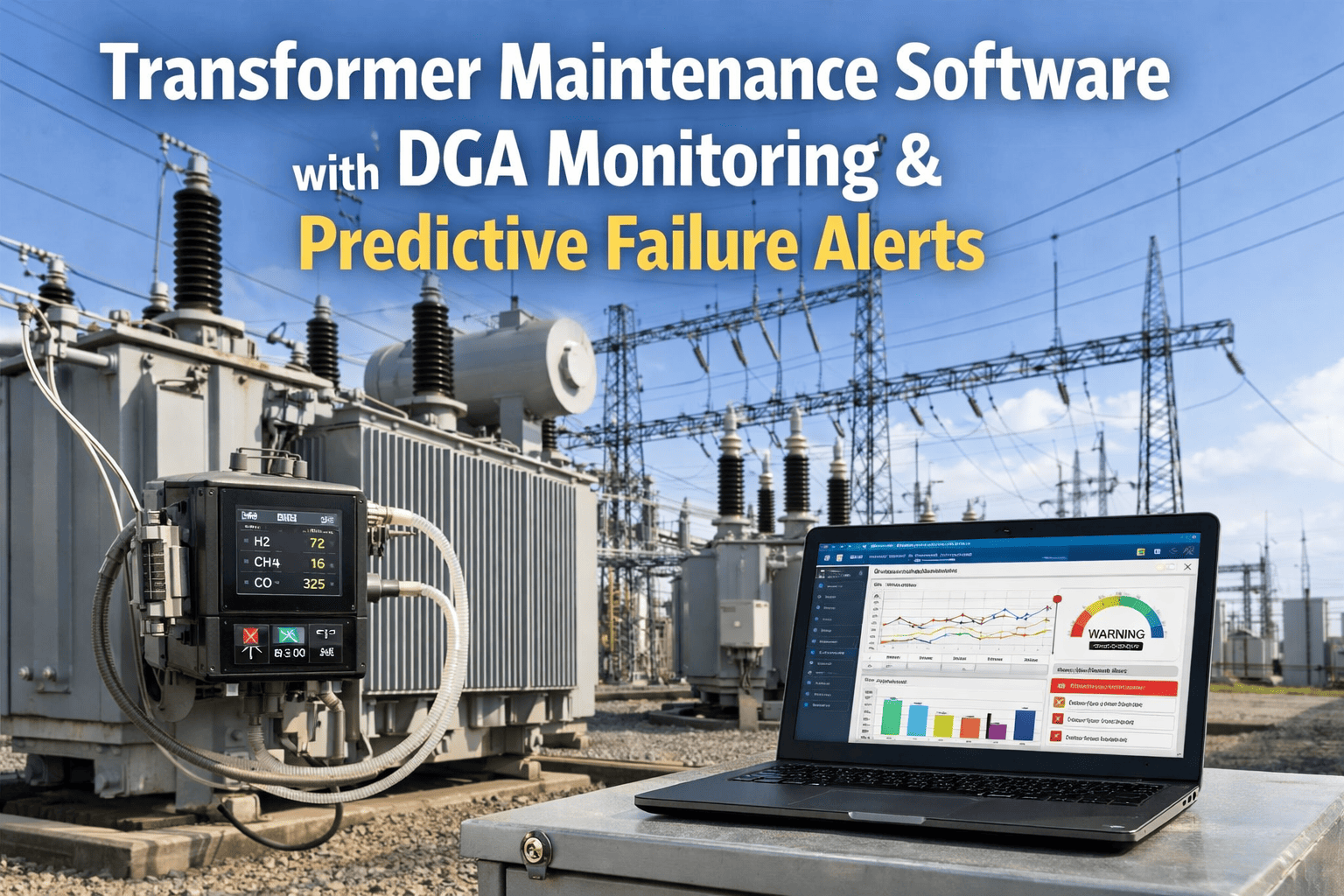
Transformer Maintenance Software with DGA Monitoring and Predictive Failure Alerts
Dissolved Gas Analysis is the most reliable early-warning system ever developed for transformer health — but it only prevents failures when the data is connected to a maintenance action. OxMaint closes that gap: DGA trends trigger structured work orders, not just notifications that expire unread.
$3.77B
Global transformer monitoring market by 2025 — driven by DGA adoption across utility fleets
70%
Of transformer failures are detectable weeks to months in advance via DGA gas trending
5–15×
Cost difference between planned transformer intervention and emergency replacement
20 ppm
Acetylene threshold where critical deterioration requires immediate maintenance intervention
What DGA Actually Tells You
The 7 Fault Gases — What Each One Means for Your Transformer
Every fault developing inside a transformer leaves a chemical signature in its insulating oil. The type of gas, its concentration, and its rate of change together paint a precise picture of what is happening internally — long before the fault becomes visible, audible, or terminal. Understanding the language of these gases is the foundation of predictive transformer maintenance.
C₂H₂
Acetylene
High-energy arcing — most urgent fault signal
Severity: Critical
H₂
Hydrogen
Partial discharge and low-energy arcing
Severity: High
C₂H₄
Ethylene
Severe thermal fault — oil overheating above 700°C
Severity: High
CO
Carbon Monoxide
Paper insulation thermal decomposition
Severity: Medium-High
CH₄
Methane
Low-temperature oil decomposition — moderate thermal fault
Severity: Medium
C₂H₆
Ethane
Slightly elevated oil temperature — early thermal aging
Severity: Medium
CO₂
Carbon Dioxide
Cellulose insulation oxidation — tracked in CO₂/CO ratio
Severity: Monitor Trend
A single gas reading establishes a baseline. A trend across multiple readings reveals a developing fault. Rate-of-change analysis — how fast each gas is rising — is what separates a stable aging transformer from one approaching a failure event. OxMaint tracks both.
The Problem OxMaint Solves
Why DGA Data Alone Does Not Prevent Transformer Failures
Most utilities and industrial operators already have DGA data coming from online monitors or periodic lab results. The problem is not data availability — it is the disconnection between what the data shows and whether a maintenance action actually happens. This is where transformer failures occur.
01
DGA readings logged in a monitoring dashboard, not a maintenance system
Online DGA monitors and lab results flow into condition monitoring platforms that generate alerts — but those alerts live in a separate system from work orders, technician assignments, and maintenance scheduling. The gap between alert and action is where weeks of warning time are lost.
02
Trending analysis done manually — if it is done at all
Rate-of-change analysis across multiple gas readings requires consistent sampling, baseline comparison, and active review. In most maintenance programs, this happens during scheduled reviews — not continuously. A gas that starts rising between review cycles can cross a critical threshold before anyone looks.
03
No asset history when failures occur and claims are filed
When a transformer fails, insurers and OEM warranty teams request the complete maintenance and DGA history. Without a CMMS linking every oil sample, inspection, and intervention to the transformer asset record, that history is reconstructed from disconnected emails and lab reports — or it does not exist at all.
Your DGA data is already telling you what is going wrong. Is your maintenance system listening?
OxMaint connects transformer DGA trending directly to predictive work order generation — so every gas anomaly that matters becomes a tracked, assigned, and documented maintenance action. Free to start.
How OxMaint Works
From DGA Reading to Resolved Work Order — How OxMaint Closes the Loop
OxMaint does not replace your DGA monitoring hardware or lab analysis process. It connects those inputs to your maintenance execution system — so every significant gas reading becomes a tracked, documented maintenance event with an assigned owner and a closed-loop outcome.
1
DGA Data Ingestion via API or Manual Log
Online DGA monitor readings and periodic lab results are ingested into OxMaint via webhook API or structured manual entry — attached directly to the transformer asset record with timestamp, gas concentrations, and sample method. Both online and offline DGA inputs are supported.
2
Threshold and Trend Alert Configuration
Each transformer in OxMaint carries configurable alert thresholds per gas — aligned to IEEE C57.104-2019 or your internal engineering limits. Alerts fire on absolute concentration breaches and on rate-of-change anomalies — the latter being the more sensitive early warning signal for developing faults.
3
Predictive Work Order Generation
When a configured threshold or trend condition is met, OxMaint auto-generates a predictive maintenance work order — pre-populated with the transformer asset ID, gas type, current and baseline concentration, trend rate, and recommended inspection scope. No manual intervention required between alert and work order creation.
4
Mobile Inspection Execution and Evidence Capture
Field technicians receive work orders on mobile, complete inspection checklists against the transformer, capture photo evidence and oil sample results, and close the work order with timestamped records — all linked permanently to the transformer asset history in OxMaint.
5
Asset Health History and Audit Trail
Every DGA reading, every alert, every work order, and every inspection result builds a permanent, timestamped asset history per transformer — queryable in seconds for insurance claims, OEM warranty documentation, regulatory audits, or asset sale due diligence.
DGA Alert to Action Matrix
What OxMaint Does When Each Fault Gas Triggers an Alert
Different gas readings require different response priorities. OxMaint's predictive alert framework is configurable per transformer and per gas type — generating work orders with the right urgency, right scope, and right documentation requirements for each fault signature.
| Fault Gas |
Fault Type Indicated |
OxMaint Alert Level |
Work Order Generated |
Response Window |
| Acetylene (C₂H₂) |
High-energy internal arcing |
Critical |
Immediate inspection — same-day response, de-energisation assessment required |
Same day |
| Hydrogen (H₂) rising trend |
Partial discharge developing |
High |
Detailed inspection work order — power factor test, bushing check, DGA retest in 30 days |
Within 72 hrs |
| Ethylene (C₂H₄) |
Severe thermal fault — oil overheating |
High |
Thermal imaging work order — cooling system inspection, load review, oil sample escalation |
Within 48 hrs |
| Carbon Monoxide (CO) rising |
Paper insulation degradation |
Medium-High |
Insulation condition assessment — CO/CO₂ ratio tracked, moisture test scheduled |
Within 1 week |
| Methane (CH₄) elevated |
Moderate thermal fault |
Medium |
Cooling system inspection work order — fan and pump checks, load factor review |
Within 2 weeks |
| Multiple gases rising |
Complex or accelerating fault |
Critical |
Engineering review work order — Duval Triangle analysis, load reduction consideration |
Same day |
Measured Results
What Transformer Teams Measure After 12 Months on OxMaint
Outcomes measured across substation and utility transformer fleets where OxMaint replaced standalone DGA monitoring with a connected predictive maintenance program — tracked across the first full year of deployment.
85%
Reduction in Unplanned Failures
DGA-triggered predictive work orders identify developing faults weeks before they reach failure thresholds — converting emergency replacements into planned interventions.
3 wks
Average Fault Detection Lead Time
Rate-of-change trending on key gases surfaces developing faults an average of three weeks before they would have reached critical alert thresholds on point-in-time monitoring.
100%
Asset History Completeness at Audit
Every DGA reading, inspection, and intervention linked permanently to the transformer record — complete documentation available for insurance, warranty, and regulatory review on demand.
60%
Reduction in Reactive Maintenance Spend
Planned repairs on transformer assets cost 5–15× less than emergency replacement. Shifting even a fraction of interventions from reactive to predictive compounds significantly across a transformer fleet.
Preventive Maintenance Schedule
The Transformer Preventive Maintenance Calendar OxMaint Automates
DGA trending works alongside a structured preventive maintenance program — not instead of it. OxMaint automates work order generation for the full transformer PM schedule, ensuring DGA results are always interpreted against the background of a well-maintained asset.
Quarterly
Oil sample collection and lab submission
Scheduled DGA lab analysis — results logged directly to the transformer record in OxMaint, trending against previous samples automatically.
Cooling system inspection
Fan and pump operation, radiator condition, oil flow indicators — clogged cooling causes ethylene elevation that appears in DGA weeks later.
Bushing visual and thermographic check
Infrared imaging of bushing terminals identifies hotspots linked to hydrogen and ethylene generation — documented with photo evidence in the work order.
Annual
Full dielectric oil analysis
DGA plus moisture content, acidity, interfacial tension, and dielectric breakdown — complete oil condition report linked to the transformer asset in OxMaint.
Power factor and insulation resistance test
Winding insulation condition assessment — test results captured on mobile and stored against the transformer record for trend comparison across years.
Tap changer inspection and contact resistance test
On-load tap changers are a leading source of CO generation in transformer DGA — annual mechanical inspection and contact resistance measurement prevents this fault class.
Condition-Based
Accelerated DGA sampling on alert
When a DGA alert fires in OxMaint, the system schedules a follow-up oil sample at a shortened interval — confirming whether gas levels are stable, rising, or accelerating.
Duval Triangle fault classification review
When three or more key gases are elevated simultaneously, OxMaint generates an engineering review work order — supporting Duval Triangle and Key Gas interpretation against IEEE C57.104.
Load reduction assessment work order
Thermal fault gases trigger an operational review — OxMaint generates a load factor assessment work order with current DGA readings pre-attached for the engineering team.
DGA Trending · Predictive Alerts · Transformer CMMS · OxMaint
Your Transformer Is Already Sending Signals. OxMaint Makes Sure They Become Maintenance Actions.
Dissolved gas analysis is only as valuable as the maintenance system connected to it. OxMaint links every DGA reading, every threshold alert, and every inspection result to a permanent, auditable transformer asset record — and turns developing fault signals into predictive work orders before they become failure events.
Frequently Asked Questions
Transformer DGA Monitoring and OxMaint — What Asset Teams Ask
Does OxMaint replace our existing online DGA monitoring hardware?
No — OxMaint integrates with your existing DGA hardware and lab analysis workflow, not replaces it. Online DGA monitor readings are ingested via API or webhook, and periodic lab results are logged manually or via structured import directly against the transformer asset record. OxMaint functions as the maintenance execution and asset history layer that your monitoring hardware currently lacks.
Book a technical call to confirm your DGA system's integration path before committing to any configuration work.
How does OxMaint handle rate-of-change trending versus absolute gas thresholds?
OxMaint supports both alert types per transformer per gas. Absolute threshold alerts fire when a gas concentration crosses a defined limit aligned to IEEE C57.104-2019 or your engineering standards. Rate-of-change alerts fire when the slope of gas increase across successive readings exceeds a configured trend threshold — which is typically the more sensitive early warning signal for developing faults. Both alert types auto-generate predictive work orders.
Start a free OxMaint account to configure your transformer gas thresholds and begin trend tracking against your first oil sample results.
Can OxMaint manage transformer assets across multiple substations and sites?
Yes. OxMaint supports multi-site transformer fleet management with location-specific asset registers, substation-level work order routing, and a consolidated portfolio dashboard that gives asset managers visibility across all transformers simultaneously. Field technicians see only their assigned site's active work orders.
Book a demo to see multi-substation configuration mapped to a fleet size matching your portfolio.
What documentation does OxMaint generate for insurance and warranty claims after a transformer failure?
Every DGA reading, predictive alert, inspection work order, and maintenance action in OxMaint creates a timestamped, asset-linked record that is permanently stored against the transformer. When an insurance claim or OEM warranty review requires maintenance history documentation, OxMaint exports the complete asset record — DGA trends, inspection completions, oil sample results, and all interventions — in a structured package in under ten minutes.
Start building your transformer asset history today — the earlier documentation begins, the stronger every future claim becomes.