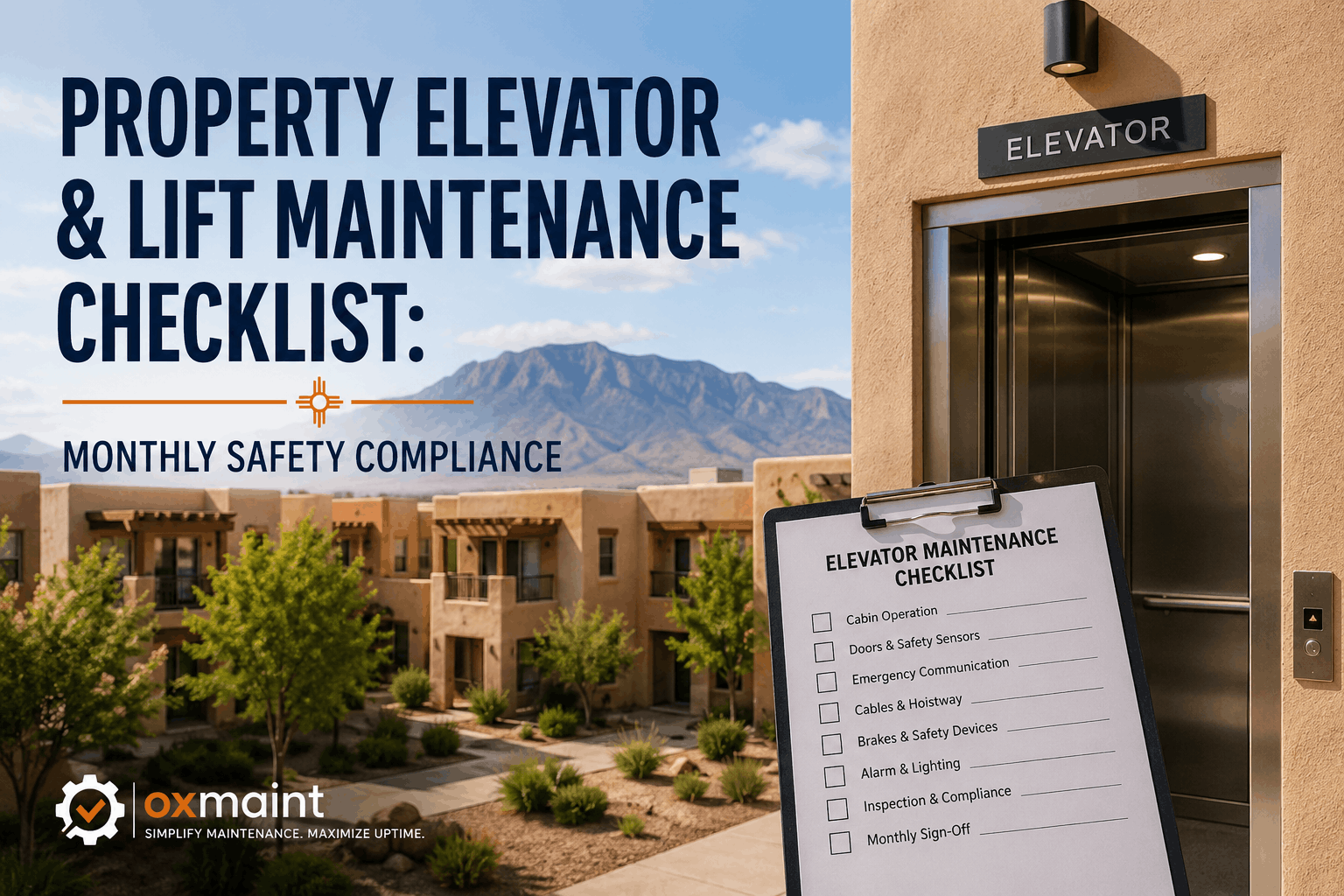
Door faults cause 80% of elevator service calls. Doors that won't close, reopen repeatedly, or slam shut create tenant complaints, entrapment risks, and expensive emergency callouts. Most door issues start small—a misaligned track, worn rollers, dirty contacts—but without systematic inspection, minor problems become major failures that take elevators offline for days.
A structured door fault checklist ensures technicians diagnose issues completely the first time. Digital checklists guide inspection sequence, capture photo documentation, and create maintenance history automatically. Properties using standardized door inspections reduce callback rates by 45% and cut door-related downtime in half. Start free to digitize your elevator inspections.
The Hidden Cost of Incomplete Door Inspections
Without a structured checklist, technicians fix the obvious symptom and miss the root cause. The door works temporarily, then fails again—another callout, another invoice, another frustrated tenant stuck waiting.
Repeat Service Calls
Fix the sensor, miss the worn roller. Door fails again in two weeks. You pay twice for what should have been one visit.
Impact: 30% of calls are callbacksEntrapment Risk
Door safety edge failures trap passengers. Fire department extraction, liability exposure, and traumatized tenants.
Impact: $10,000+ per incidentCode Violations
Inspectors find door safety devices not functioning properly. Failed inspection, shutdown order, emergency repairs.
Impact: $5,000+ fines + remediationExtended Downtime
Wrong diagnosis means wrong parts ordered. Elevator sits offline while waiting for correct components.
Impact: 2-5 days additional downtimeCore Door Fault Checklist Sections
Comprehensive door inspection covers mechanical, electrical, and safety systems. Digital checklists ensure nothing is missed. Book demo to see digital elevator checklists in action.
Door Operator
Motor condition, belt/chain tension, clutch adjustment, speed settings, and reversing mechanism functionality.
Track & Rollers
Track alignment, roller condition, hanger plates, gibs clearance, and sill groove cleanliness on car and landing doors.
Safety Edge/Sensors
Mechanical edge activation, infrared curtain alignment, 3D sensor coverage, and nudging operation verification.
Interlocks & Contacts
Door lock engagement, electrical contact condition, interlock roller adjustment, and bypass detection.
Retiring Cam & Clutch
Cam roller condition, clutch vane engagement, pickup timing, and car-to-landing door synchronization.
Controller & Wiring
Door controller board diagnostics, wiring connections, fault code retrieval, and parameter settings.
Digitize Your Door Inspections
Stop callbacks and missed diagnoses. Oxmaint checklists guide technicians through complete inspections with photo documentation.
Key Door Fault Metrics
Track these KPIs to measure door system health and inspection effectiveness.
Monthly service calls for door issues per elevator. Lower indicates effective preventive maintenance.
Door repairs requiring return visit within 30 days. Lower means complete diagnosis first time.
All door safety edges and sensors functioning properly. Critical for code compliance and tenant safety.
Average time to resolve door fault from arrival. Faster with proper diagnosis and parts availability.
Passengers trapped due to door malfunction. Must always be zero for safe elevator operation.
Standard door cycle time. Variations indicate operator issues or mechanical resistance.
Sample Checklist: Door Fault Inspection
See what a comprehensive digital door inspection looks like—systematic diagnosis from symptom to root cause.
Benefits by Role
Digital door fault checklists deliver value across elevator maintenance teams.
Property Managers
- Verify complete inspections performed
- Photo documentation for disputes
- Track callback rates by vendor
- Compliance records for audits
Elevator Supervisors
- Standardize inspection quality
- Train new technicians faster
- Review work remotely in real-time
- Identify recurring failure patterns
Elevator Technicians
- Guided diagnosis sequence
- Never forget inspection steps
- Photo capture within workflow
- Access to equipment history
State Inspectors
- Clear maintenance documentation
- Safety device test records
- Timestamped inspection history
- Quick compliance verification
ROI of Digital Door Checklists
Calculate your potential savings from implementing structured door fault inspections for a 10-elevator portfolio.
Typical Savings Sources
Fix Door Faults Right the First Time
Join elevator teams who have reduced door callbacks by 45% and eliminated entrapments with systematic digital checklists.