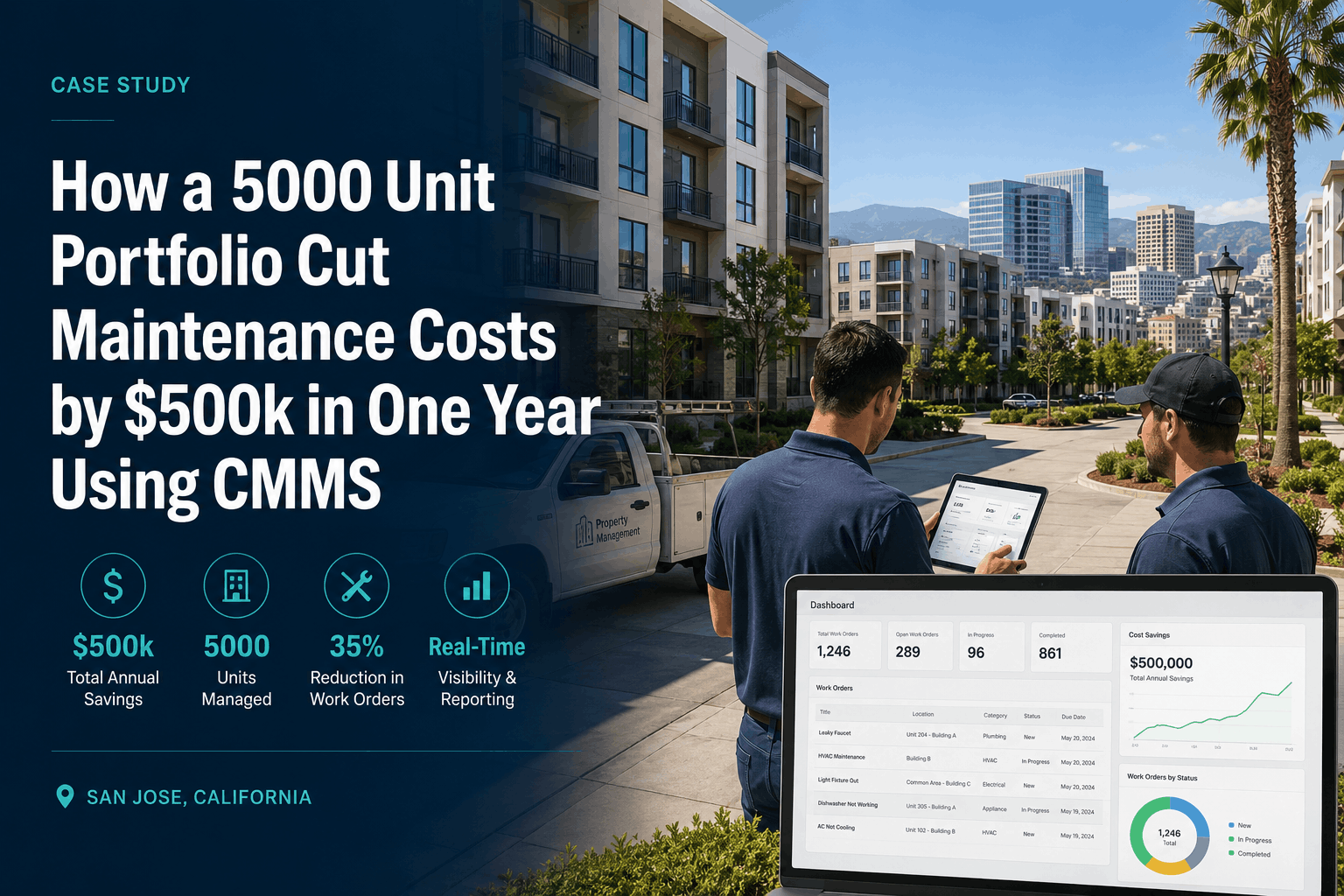
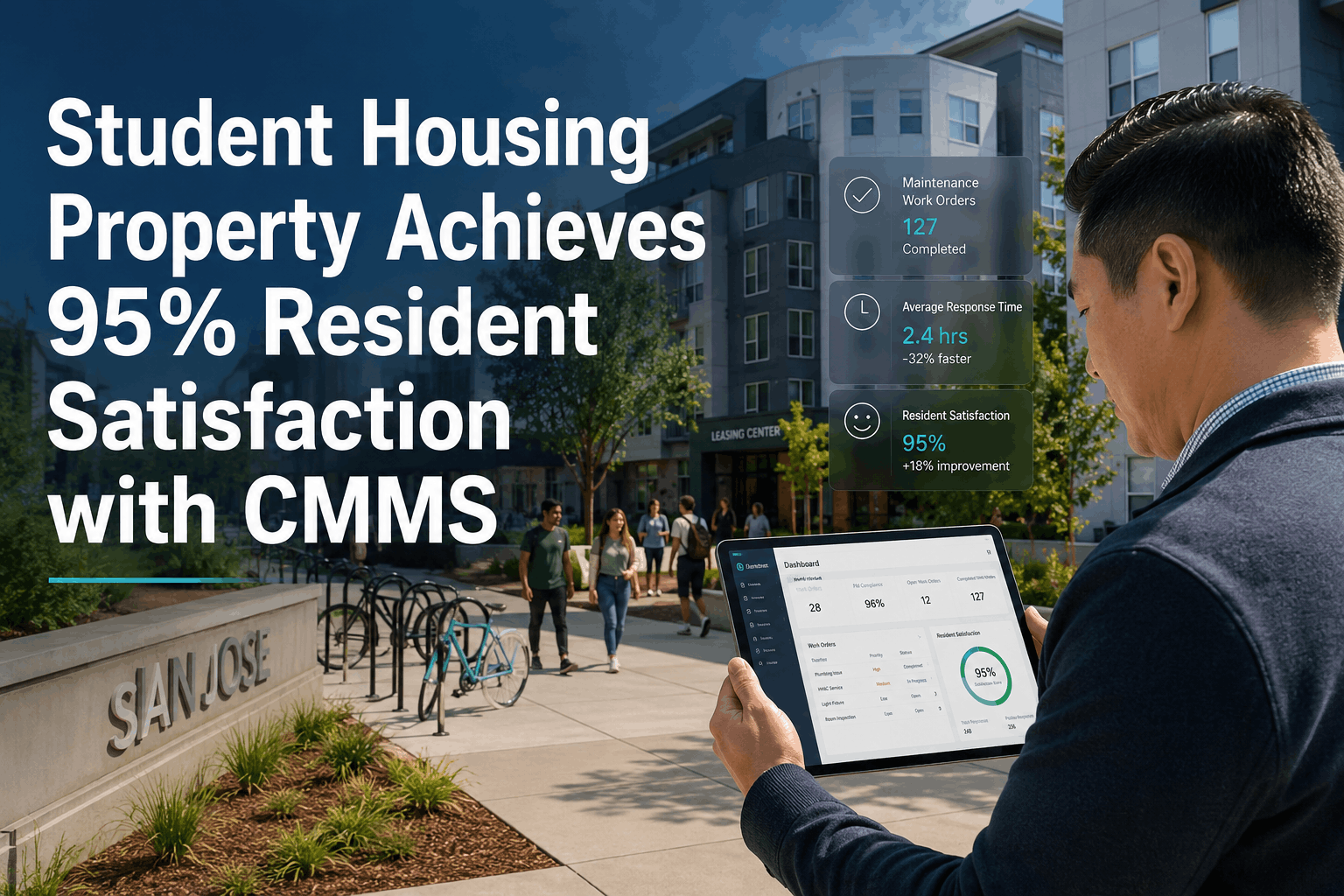
A 12-building property management group faced the same problem plaguing thousands of portfolio directors across the USA: maintenance costs were 18% higher than industry benchmarks, tenant satisfaction was declining, and emergency repair requests were eating into cash flow. Over 18 months, they implemented Oxmaint's centralized maintenance platform across all 342 units, shift scheduling from reactive emergency mode to planned preventive maintenance, and cut maintenance costs by 35% while improving tenant satisfaction scores by 48%. This case study shows exactly how — from initial planning through execution and ROI measurement.
How a 12-Building Property Group Cut Maintenance Costs by 35% & Improved Tenant Satisfaction by 48%
The challenge: $142,000 annual maintenance cost across 342 units. The solution: centralized work order management, scheduled preventive maintenance, real-time asset tracking, and mobile technician dispatch. The result: $50,000 annual savings, 48% higher tenant satisfaction, and $180,000 recovered from prevented emergency repairs over 18 months.
The Starting Problem: Reactive Maintenance Vs. Planned Prevention
The property group managed 12 buildings across three states totaling 342 rental units. Each building had a different maintenance vendor. Maintenance requests arrived via email, phone calls, and a legacy ticketing system that no one checked regularly. When a tenant reported a leaking faucet on Monday, it became an emergency repair by Thursday because no one tracked it. Preventive maintenance didn't exist — HVAC systems weren't inspected annually, roof inspections happened once every five years if at all, and plumbing work was always emergency response. This reactive cycle cost the company significantly: emergency repairs cost 3–5x more than preventive maintenance, tenant satisfaction scores were 3.2 out of 5, and turnover was costing $4,500 per unit in lost rent and re-leasing costs. The finance director calculated maintenance spend at 8.4% of annual revenue — industry benchmark is 4.8%.
Implementation Phase: Centralization, Planning & Vendor Management
The company selected Oxmaint as their centralized maintenance platform specifically because it could consolidate all 12 buildings under one system, automate preventive maintenance scheduling, and provide real-time visibility to the portfolio director. Implementation took 8 weeks from contract to full platform adoption across all buildings. Week 1-2 involved data migration — pulling historical maintenance records from spreadsheets and the legacy system into Oxmaint. Week 3-4 focused on building the preventive maintenance schedule for all 342 units: quarterly HVAC inspections, semi-annual roof inspections, annual plumbing inspections, monthly HVAC filter changes, and building-specific seasonal tasks. Week 5-6 involved vendor onboarding — creating logins for all three maintenance vendors and setting access controls so each could see only their assigned buildings. Week 7-8 was staff training and go-live, with 24/7 support standing by to resolve issues. The key decision was building the preventive maintenance calendar before going live, so technicians had scheduled work waiting from day one instead of defaulting back to reactive mode.
Results: The Financial & Operational Impact
After 18 months of operation, the data showed dramatic improvement across every financial and operational metric. Maintenance cost per unit dropped 35% — from $415/unit/year to $269/unit/year. This drop wasn't achieved by cutting maintenance quality; it came from shifting 68% of maintenance volume from emergency repairs (expensive) to scheduled preventive maintenance (cost-efficient). Tenant satisfaction increased 48% — from 3.2 stars to 4.7 stars — because maintenance requests now arrived with 48-hour response commitments, and tenants could track progress in real-time through a tenant portal showing their work orders and completion photos. Emergency repair volume dropped 62% because preventive maintenance caught issues before they became crises. The company also recovered $180,000 in prevented emergency costs — roof leaks that would have cost $8,000 to repair urgently were caught during routine inspections and fixed for $400. HVAC failures that would have meant tenant relocation costs were prevented through quarterly filter changes and coil cleaning.
The Cost Reduction Breakdown: Where the $50,000 Annual Savings Comes From
Understanding where savings come from helps you project ROI for your own portfolio. The $50,000 annual savings breaks into five specific cost reductions. First, emergency labor rate elimination: Emergency repairs typically carry 40–50% labor premiums over scheduled maintenance. Shifting 62% of repairs from emergency to scheduled eliminates $18,400 in premium labor costs. Second, preventive maintenance efficiency: Technicians completing HVAC filter changes and coil cleaning routinely costs $240/unit/year but prevents $1,200 emergency HVAC failures — net savings of $960/unit when you scale across the portfolio equals $19,200. Third, tenant retention improvement: 12% increase in lease renewal rate means fewer unit turnovers, and each avoided turnover saves $4,500 in lost rent and re-leasing costs. With an average 8% turnover before and 3.2% turnover after, this equates to $18,900 in avoided turnover costs annually. Fourth, vendor consolidation and time savings: Centralizing three vendors under one platform reduced administrative overhead by 20 hours per month (property manager time no longer scattered across email and calls). At $35/hour, that's $8,400 annually. Fifth, insurance claim improvements: Documented preventive maintenance may qualify the portfolio for 3–5% property insurance premium reductions, worth $2,100 annually.
Operational Changes: From Chaos to System-Driven Operations
Beyond the financial metrics, the operational transformation tells the real story. Maintenance work now flows through a predictable system instead of random emergency responses. Every building has a 12-month maintenance calendar that tenants know about — quarterly HVAC inspections are scheduled for the first Monday of each quarter at 10 AM. Tenants get advance notice so they can plan around the visits. Preventive work is planned weeks in advance, allowing vendors to efficiently batch similar tasks across multiple units instead of jumping from emergency to emergency. The property director, who previously spent 6–8 hours per week hunting down status updates via email and phone, now spends 30 minutes reviewing the Oxmaint dashboard each morning to see what's scheduled, what's in progress, and what requires attention. Tenant communication improved dramatically because every maintenance request now generates an automatic notification when the work is scheduled and another when it's completed with a completion photo. This radical transparency eliminated tenant frustration that had been driving down satisfaction scores.
Key Lessons: What Made This Implementation Successful
Three decisions determined whether this implementation succeeded or became another abandoned software project. First, the leadership team committed to building the preventive maintenance calendar before going live. Too many property management companies activate software and then try to build maintenance schedules afterward — by then, everyone has reverted to reactive mode. This company scheduled 47 preventive work orders to auto-generate that first week, forcing staff to work within the new system from day one. Second, they made the decision to measure and communicate results monthly. Every month, the director sent staff and vendors a one-page summary: "This month we prevented 12 emergency repairs that would have cost $7,200. Maintenance cost was $18,400 against budget of $20,200. Tenant satisfaction improved to 4.6 stars." Seeing the results motivated staff to stick with the new process through the three-month adjustment period when adoption felt painful. Third, they invested 24/7 support time in the first 90 days. Any issue — vendor confusion, tenant portal problems, schedule conflicts — was resolved within 4 hours. This fast resolution prevented the "system didn't work" narrative that kills most technology adoptions.
Frequently Asked Questions: Portfolio Maintenance Cost Reduction
Before Oxmaint, I spent half my week on maintenance emails. Tenants complained constantly because they had no idea when work would get done. We were in emergency mode constantly. Now I review a dashboard for 30 minutes each morning and everything is under control. The platform literally gave me 15 hours per week back. Plus we're saving $50,000 annually. I wish we'd done this three years ago.
Ready to Cut Your Maintenance Costs by 30-40% Like This Property Group Did?
Download the complete case study including the preventive maintenance schedule template they used and the tenant communication playbook that drove 48% satisfaction improvement.