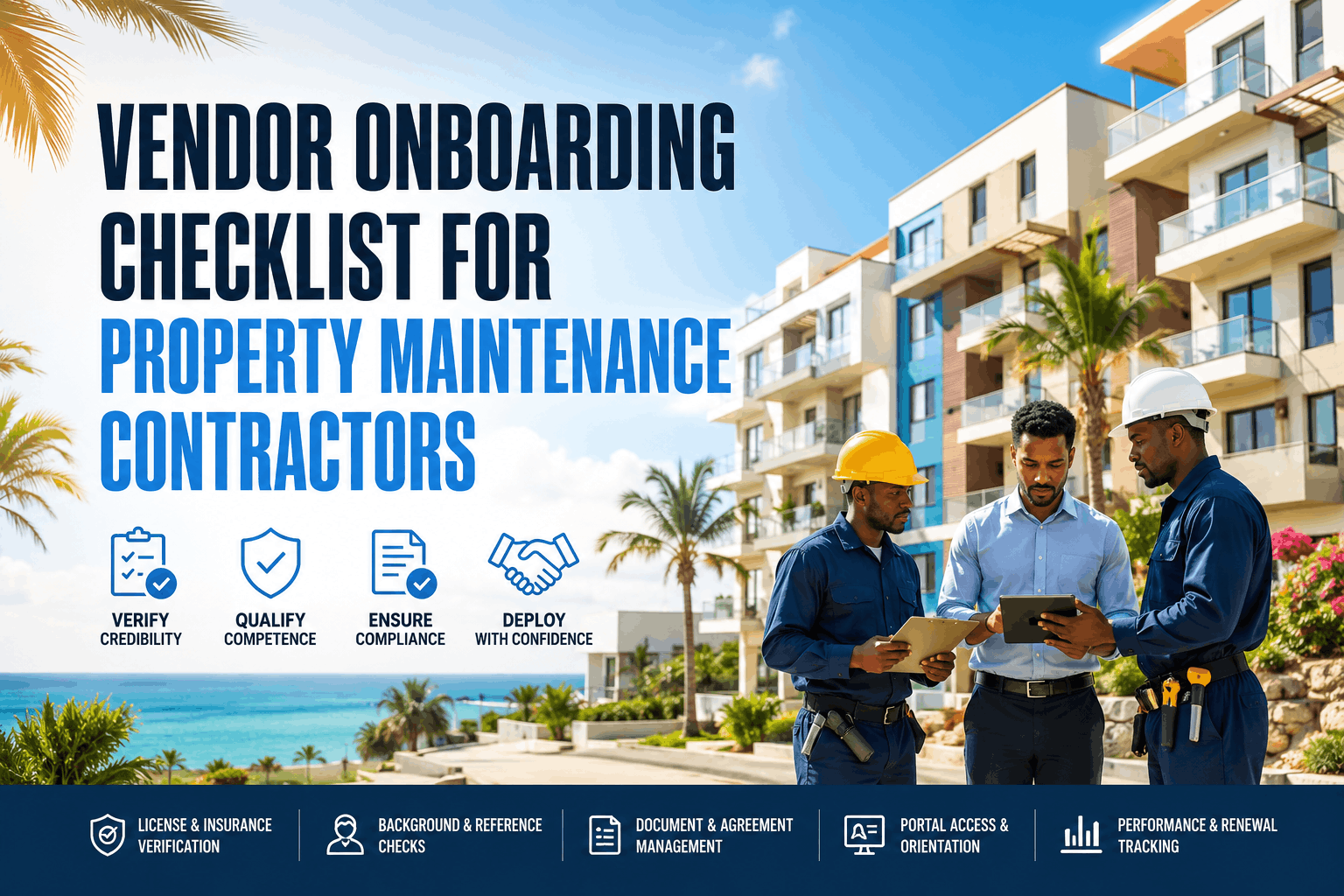
Vendor Onboarding Checklist for Property Maintenance Contractors
By Alex Jordan on June 30, 2026
Vendor onboarding is a critical risk management function in property management, not just an administrative task. Organizations that implement structured vendor onboarding checklists—covering insurance verification, license validation, background checks, safety orientation, and system training—reduce compliance incidents by 38%, minimize legal exposure, and build stronger vendor relationships. A robust onboarding process ensures that every contractor meeting your property standards delivers quality work consistently while remaining fully compliant with insurance, safety, and legal requirements throughout their engagement.
Streamline Vendor Onboarding & Compliance TrackingDigital vendor onboarding portal with automated compliance verification, COI tracking, and real-time insurance renewal alerts—all integrated with your property management workflow.
Before engaging any contractor, establish clear vendor selection criteria and screen candidates against minimum standards for experience, financial stability, and service quality—this prevents poor fits from entering your approval workflow.
2. Insurance & Financial Compliance Verification
Insurance verification is the single most critical onboarding step. Organizations that verify Certificates of Insurance (COI), validate Additional Insured endorsements, and set up automated renewal tracking prevent the majority of vendor-related financial and legal exposures.
Trade-specific licensing and background checks ensure that vendors have the legal authority to perform work and meet your safety and security standards. Verification requirements vary significantly by trade category and jurisdiction.
4. Service Agreements, Safety Training & System Setup
Contractual agreements and safety orientation create binding commitments and ensure vendors understand your operational expectations, communication protocols, and safety requirements before beginning work.
Onboarding completion is just the beginning of vendor management. Continuous compliance monitoring, performance tracking, and automated renewal reminders sustain vendor accountability throughout the relationship.
Automate Vendor Compliance & Reduce RiskOxmaint's vendor management module tracks insurance, licenses, certifications, and performance metrics—automatically alerting you before compliance expires and work orders are blocked.
Frequently Asked Questions — Vendor Onboarding for Property Management
What are the minimum insurance requirements for property maintenance contractors?
General Liability $1M per occurrence, $2M aggregate; Workers' Compensation as required by your state; Auto Liability $1M per occurrence if vehicle-based work. All policies must list your management company and property owner as Additional Insured. Without Additional Insured endorsements, your insurance may not cover vendor incidents.
How often should we verify vendor insurance certificates?
Verify insurance at initial onboarding, then monitor continuously via automated expiration tracking with renewal reminders at 60, 30, and 7 days before expiration. Prohibit any new work orders if a vendor's COI has expired on or before the scheduled work date. This prevents working without proper coverage.
Should we do background checks on all contractors?
Background checks are mandatory for any vendor with keys or unsupervised access to occupied units (cleaners, locksmiths, maintenance workers). For external contractors doing work only during business hours or with supervision, background checks are lower-risk but still recommended. Document consent from vendors and retain results for audit purposes.
What is an "Additional Insured" endorsement and why does it matter?
An Additional Insured endorsement extends the vendor's liability insurance to cover your organization and property owners, so if the vendor causes injury or property damage on your site, their insurance pays first. Without this endorsement, your organization absorbs the liability. Always verify endorsement copies are on file—check-box notation on the COI is insufficient.
How do we handle contractors with subcontractors?
Require the primary contractor to confirm all subcontractors meet the same compliance standards (insurance, licenses, background checks). Include audit rights in your contract so you can verify compliance. Document subcontractor names, their assigned trade categories, and verification dates in your vendor file.
What happens if a vendor's insurance or license expires mid-engagement?
With automated renewal tracking, you send reminders before expiration so vendors can renew proactively. If a renewal lapses, your system should block new work order assignments to that vendor immediately. Contact the vendor and resolve the lapse before reassigning work. Document the lapse and your follow-up for compliance records.
How should we track vendor compliance across a large property portfolio?
Use a centralized CMMS or vendor management platform with portfolio-wide visibility into compliance status. Generate monthly reports showing which vendors are compliant, which have expiring credentials, and which are flagged for renewal. Set escalation rules so operations managers are notified if compliance gaps arise. This prevents fragmented tracking across individual properties.
What should our vendor onboarding process timeline be?
Best practice vendor onboarding takes 2–4 weeks from initial contact to work-ready status: week 1–2 for documentation collection (insurance, licenses, W-9, background checks), week 3 for legal review and MSA execution, week 4 for safety orientation and system training. Urgent vendors can be onboarded faster if they meet critical compliance requirements immediately.