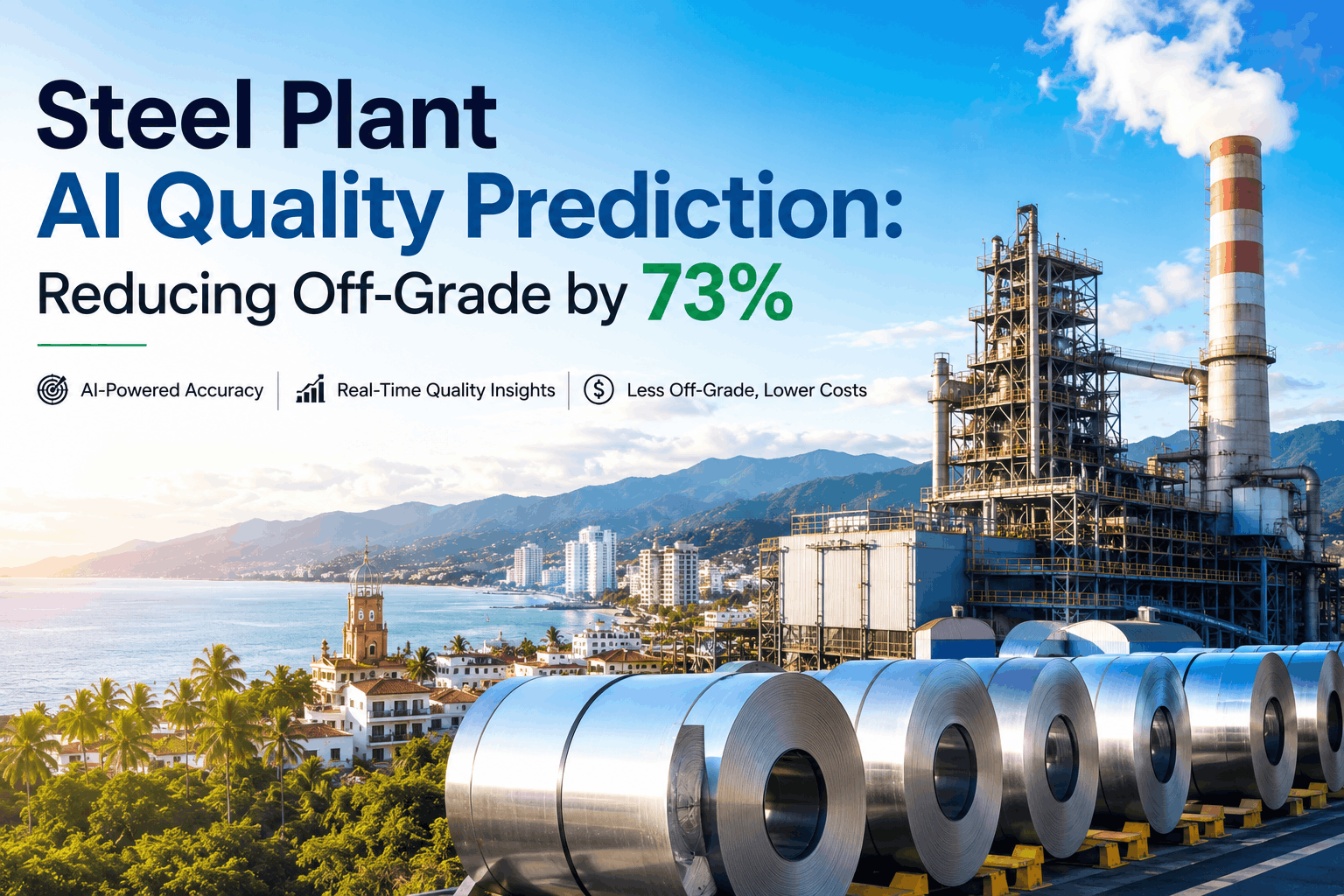
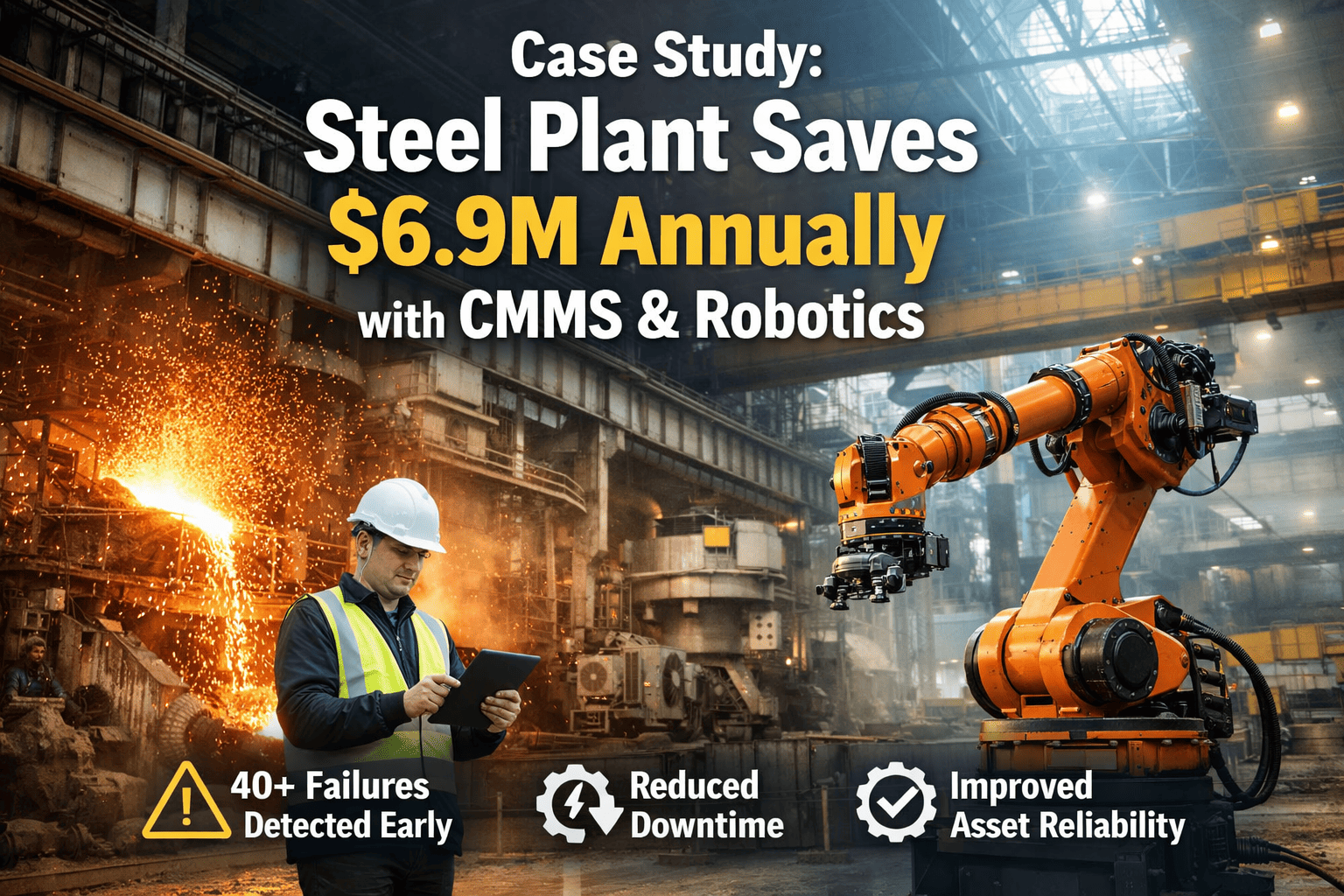
An integrated steel plant achieved a remarkable 73% reduction in off-grade production by implementing OxMaint’s AI-powered quality prediction and analytics. By leveraging real-time process data and intelligent chemistry adjustment recommendations, the plant significantly improved grade compliance and first-pass yield while minimizing defects. This transformation not only enhanced product quality but also delivered substantial cost savings of $4.2 million annually, demonstrating the powerful ROI of AI-driven quality optimization in modern steel manufacturing. Manufacturing teams using OxMaint AI-powered CMMS are cutting unplanned downtime by up to 40% — and the numbers behind this shift are impossible to ignore.
How Generative AI Is Transforming Manufacturing Maintenance in 2025
78% of manufacturing executives report measurable ROI from AI. Here is what is actually working on the floor — and how fast you can capture it.
Why Traditional Maintenance Is Costing You More Every Year
Most manufacturing facilities still operate on calendar-based schedules and threshold alarms — a system that was designed for a world without real-time data. The result is reactive firefighting: failures that were predictable, downtime that was preventable, and technicians spending more time searching for information than fixing equipment.
The global AI in manufacturing market is growing at 41% annually, projected to reach $155 billion by 2030. Manufacturers who deploy AI in maintenance today are compounding advantages in reliability, cost, and workforce efficiency that competitors cannot easily replicate.
6 Ways AI Delivers Measurable Results in Maintenance
AI Copilot for Technicians
When a technician opens a fault work order, OxMaint surfaces the last three similar failures, the steps that resolved them, the parts used, and OEM torque specs — all in under 10 seconds. Newer technicians perform at the level of your most experienced engineers from day one.
Automated SOP Generation
AI analyzes thousands of completed work orders to draft standard procedures automatically. What once took a senior engineer 4 to 6 hours now takes under 30 minutes — and the procedures stay accurate as practices evolve on the floor.
Predictive Failure Forecasting
By combining vibration, temperature, pressure, and current draw data with historical failure records, AI identifies which assets are trending toward breakdown — before the failure occurs. Renault saved 270 million euros in a single year using this approach.
Intelligent Troubleshooting
For unusual fault combinations, AI reasons across the full maintenance knowledge base to propose probable causes and verification steps — with confidence levels. No more waiting for the one senior engineer who knows this machine.
Condition-Based Scheduling
Replace fixed-interval PMs with schedules driven by actual runtime, load, and sensor data. A leading auto parts supplier cut unplanned downtime by 27% without adding headcount or equipment using this single change.
Knowledge Capture and Transfer
Every work order, repair note, and technician observation becomes searchable institutional knowledge. When an experienced engineer retires, their expertise stays in the system. Toyota has invested billions in exactly this capability — OxMaint makes it accessible for any facility.
Ready to see these capabilities inside your facility?
What the Numbers Show Across Real Deployments
| Outcome | Industry Average | Top Performers | Time to Value |
|---|---|---|---|
| Maintenance Cost Reduction | 15 – 25% | 25 – 40% | 6 – 12 months |
| Unplanned Downtime Reduction | 20 – 30% | Up to 50% | 8 – 14 months |
| Mean Time to Repair (MTTR) | 25 – 35% faster | 40% faster | Immediate |
| PM Completion Rate | +30 percentage points | From 40% to 90%+ | 30 – 60 days |
| SOP Creation Time | 70% reduction | 85%+ reduction | Immediate |
| Overall Equipment Effectiveness | 10 – 20% gain | 25% gain | 12 – 18 months |
A major processed food manufacturer achieved a 25% improvement in overall equipment effectiveness and a 30% reduction in maintenance costs through AI-driven condition monitoring — without adding any new machinery or headcount.
Your 4-Step Checklist to Getting AI Running in Maintenance
Audit your data foundation
AI is only as accurate as the data it learns from. Review your asset registry, work order history, PM records, and sensor feeds. Even 6 months of clean, structured data is enough to begin generating useful AI insights.
Consolidate systems before layering AI
When CMMS, ERP, and sensor data live in separate silos, AI cannot access full context. Choose a platform with native integrations that brings asset data, work orders, and sensor feeds into one place first.
Deploy AI as a copilot, not a replacement
Technician skepticism is the number one adoption blocker. Frame AI as a reference tool that supports their decisions — not one that overrides them. Teams that use AI as a copilot typically adopt it within days once they see its accuracy.
Set realistic ROI timelines for leadership
First measurable value typically appears in 6 to 10 weeks. Full payback comes in 6 to 18 months. Track leading indicators — MTTR, PM completion rate, emergency repair ratio — not just cost savings in the early months.
What Holds Teams Back — and How to Clear It
Frequently Asked Questions
Start Making Maintenance Smarter Today
OxMaint brings AI-powered work orders, condition-based scheduling, and technician copilot capabilities into a single CMMS built for manufacturing teams. No complex setup — measurable results in weeks.