When a major integrated steel producer in the Great Lakes region analyzed their maintenance costs, they discovered that unplanned downtime across their blast furnace, caster, and rolling mill operations exceeded $14 million annually. Emergency repairs consumed 62% of maintenance labor, leaving insufficient resources for preventive work that could have avoided many failures. Traditional inspection methods couldn't access hazardous areas during operation, meaning problems went undetected until catastrophic failure. After implementing Oxmaint CMMS integrated with robotic inspection systems, the facility achieved $6.9 million in annual savings, detected over 40 developing failures before they caused unplanned downtime, and transformed their maintenance culture from reactive firefighting to proactive reliability management.
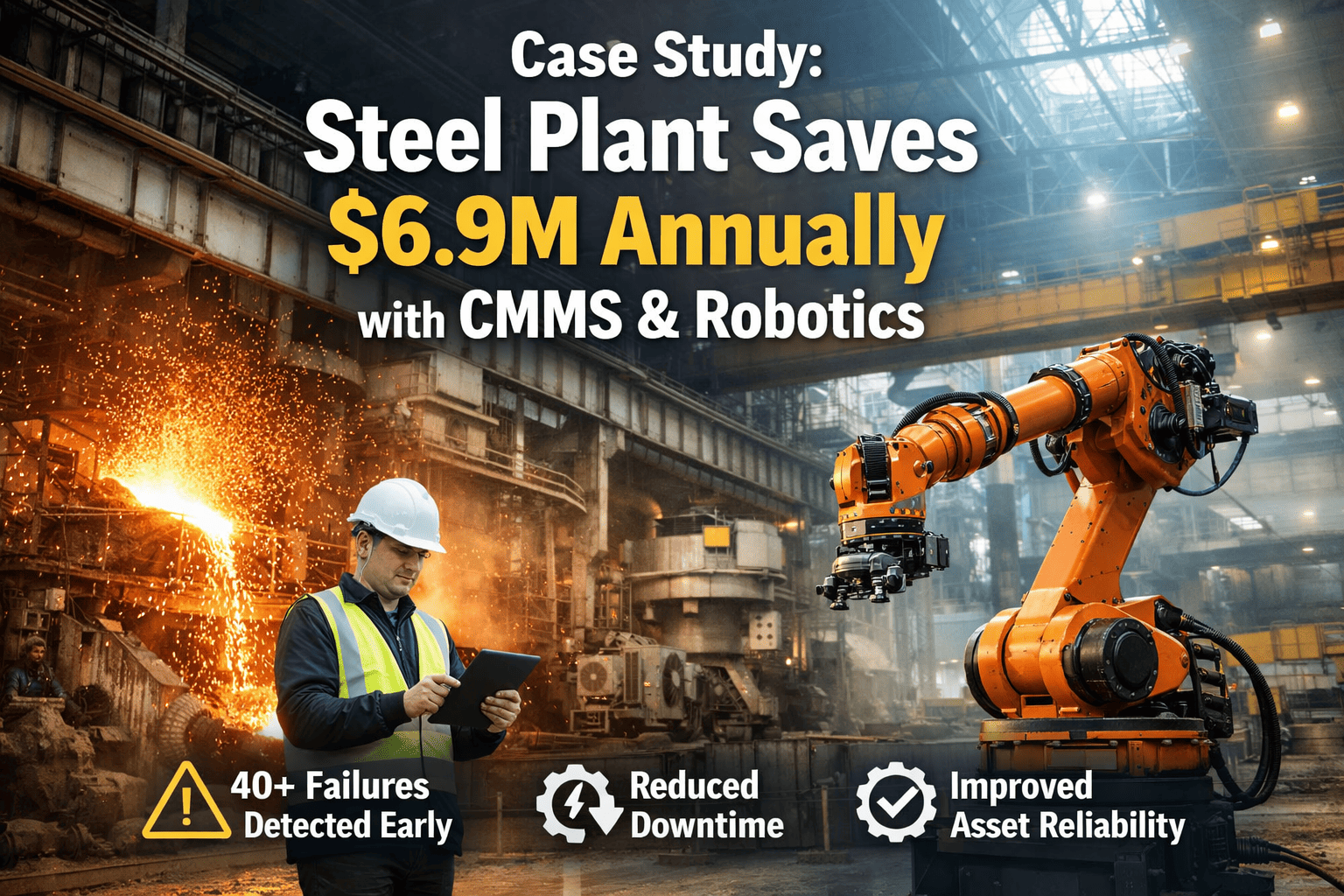
Case Study: Steel Plant Saves $6.9M Annually with CMMS & Robotics
How an integrated steel producer transformed maintenance operations through digital CMMS implementation and robotic inspection technology, achieving dramatic cost savings and reliability improvements.
Company Profile
Background on the integrated steel manufacturing facility.
The Challenge
Multiple interconnected problems created a cycle of reactive maintenance and escalating costs.
Annual Unplanned Downtime Cost
Production losses from emergency shutdowns across all major process areas. Each hour of blast furnace downtime cost $47,000 in lost production value, caster delays created scheduling cascades affecting downstream operations, and rolling mill failures caused customer delivery penalties.
Reactive Maintenance Ratio
Nearly two-thirds of maintenance work orders were emergency or urgent repairs. Technicians constantly responded to breakdowns rather than executing preventive work. PM completion rates averaged only 54% as scheduled work was deferred to address emergencies.
Hazardous Area Visibility
Traditional inspection couldn't access operating blast furnace exteriors, caster segments during casting, or rolling mill areas during production. Problems developed undetected in these critical zones until failure forced emergency shutdown.
Spreadsheets & Paper Systems
Maintenance data scattered across 47 different spreadsheets, paper logs, and departmental databases. No unified view of asset health, maintenance history, or failure patterns. Analysis required manual data gathering that rarely happened.
Transform Your Maintenance Operations
Oxmaint combines CMMS work order management, robotic inspection integration, and predictive analytics in a unified platform. Our implementation team has helped steel plants across North America achieve similar transformations—reducing downtime, improving reliability, and delivering measurable ROI within the first year.
The Solution
A phased implementation combining Oxmaint CMMS with robotic inspection technology.
CMMS Foundation
Deployed Oxmaint across all maintenance operations, consolidating 47 disconnected systems into a single platform. Configured asset hierarchies for 2,400+ equipment items, established failure coding standards, and migrated historical work order data for trend analysis.
Robotic Integration
Integrated thermal imaging robots for blast furnace shell inspection, crawler robots for caster segment monitoring, and drone systems for overhead crane and structural inspection. Robot findings flow directly into Oxmaint work orders.
Predictive Analytics
Activated AI-powered failure prediction using combined CMMS history and robotic inspection data. System learned failure signatures for major equipment categories and began generating early warning alerts for developing problems.
Culture Transformation
Retrained maintenance teams on proactive reliability practices. Established RCA protocols for significant failures. Created reliability engineer roles focused on failure prevention rather than repair. Implemented KPI dashboards tracking leading indicators.
Failures Detected Early
Robotic inspection integrated with Oxmaint identified developing problems before they caused unplanned downtime.
Shell Hot Spots Detected
Thermal imaging robots identified refractory wear areas showing elevated shell temperatures before breakthrough. Each detection enabled scheduled repair during planned outages—avoiding emergency blowdown that would have cost $2.1M+ per incident.
Segment Issues Identified
Crawler robots detected roll bearing degradation, water leak initiation, and alignment drift in caster segments during operation. Problems addressed during scheduled segment changes rather than forcing mid-cast stoppages.
Drive System Problems Found
Predictive analytics flagged abnormal vibration signatures in main mill drives weeks before failure. Bearings and couplings replaced during scheduled outages. Two gearbox problems identified early enough for rebuild rather than replacement.
Crane Issues Prevented
Drone inspection revealed crane runway misalignment, trolley wheel wear, and wire rope degradation across overhead crane fleet. Problems corrected before any crane caused production delay or safety incident.
Measurable Results
Quantified outcomes after 18 months of full system operation.
Annual Savings
Combined value of avoided downtime, reduced emergency repair costs, optimized parts inventory, and improved labor productivity. Savings verified by finance team comparing pre/post implementation costs.
Downtime Reduction
Unplanned downtime hours dropped from 847 hours annually to 279 hours. Most remaining unplanned events were minor issues resolved quickly rather than major equipment failures.
Proactive Work Ratio
Preventive and predictive maintenance work orders increased from 38% to 78% of total maintenance activity. Emergency work dropped correspondingly, freeing technicians for planned work.
PM Completion Rate
Preventive maintenance completion improved from 54% to 94%. With fewer emergencies interrupting schedules, planned work actually gets executed as scheduled.
Payback Period
Total implementation investment—including CMMS software, robotic systems, integration, and training—achieved full payback in 14 months. Ongoing annual savings now exceed initial investment.
Safety Incidents
No maintenance-related safety incidents during implementation or subsequent operation. Robotic inspection eliminated human exposure to hazardous inspection tasks in operating areas.
Calculate Your Potential Savings
Every steel plant has different equipment, failure patterns, and cost structures—but most facilities operating with reactive maintenance cultures have significant improvement potential. Our team can analyze your current downtime costs, maintenance ratios, and asset criticality to estimate achievable savings with Oxmaint implementation.
Implementation Insights
Key lessons from the transformation that apply to other steel operations.
Start with Data Foundation
CMMS implementation before robotics created the data infrastructure needed to maximize robotic inspection value. Work order history, failure codes, and asset hierarchies provide context that makes inspection findings actionable. Without CMMS, robotic data would have added to the scattered information problem rather than solving it.
Focus on Critical Assets First
Robotic inspection deployment prioritized assets with highest downtime consequences—blast furnace, caster, and main mill drives. Early wins on critical equipment built organizational confidence and demonstrated ROI that justified expanded deployment. Trying to inspect everything immediately would have diluted focus and delayed results.
Invest in Culture Change
Technology alone doesn't transform maintenance. The facility invested heavily in training, created new reliability engineering roles, and changed performance metrics to emphasize prevention over repair speed. Maintenance technicians needed to understand why proactive work matters and how to use new tools effectively.
Track and Communicate Results
Monthly reporting on avoided failures, cost savings, and reliability improvements maintained management support and technician engagement. When teams see concrete evidence that their work prevents problems, they embrace proactive practices. Celebrate wins and share lessons from failures that were avoided.
Testimonial
We spent years talking about becoming proactive, but we couldn't break the reactive cycle—every time we tried to focus on prevention, the next emergency pulled resources away. Oxmaint and the robotic inspection integration finally gave us the tools and visibility to make proactive maintenance real. The $6.9 million in savings is significant, but what really changed is that our people now believe prevention works. That cultural shift is worth more than any single year's cost savings.
Frequently Asked Questions
Write Your Own Success Story
This steel plant isn't unique—they faced the same challenges many facilities face and achieved transformation through systematic implementation of proven approaches. Oxmaint provides the CMMS foundation, robotic integration capabilities, and predictive analytics that made this success possible. Your facility's specific numbers will differ, but the opportunity for dramatic improvement exists in any operation still trapped in reactive maintenance cycles.