AR Maintenance Training for Steel Plants: Hands-On Learning
By Lebron on February 22, 2026
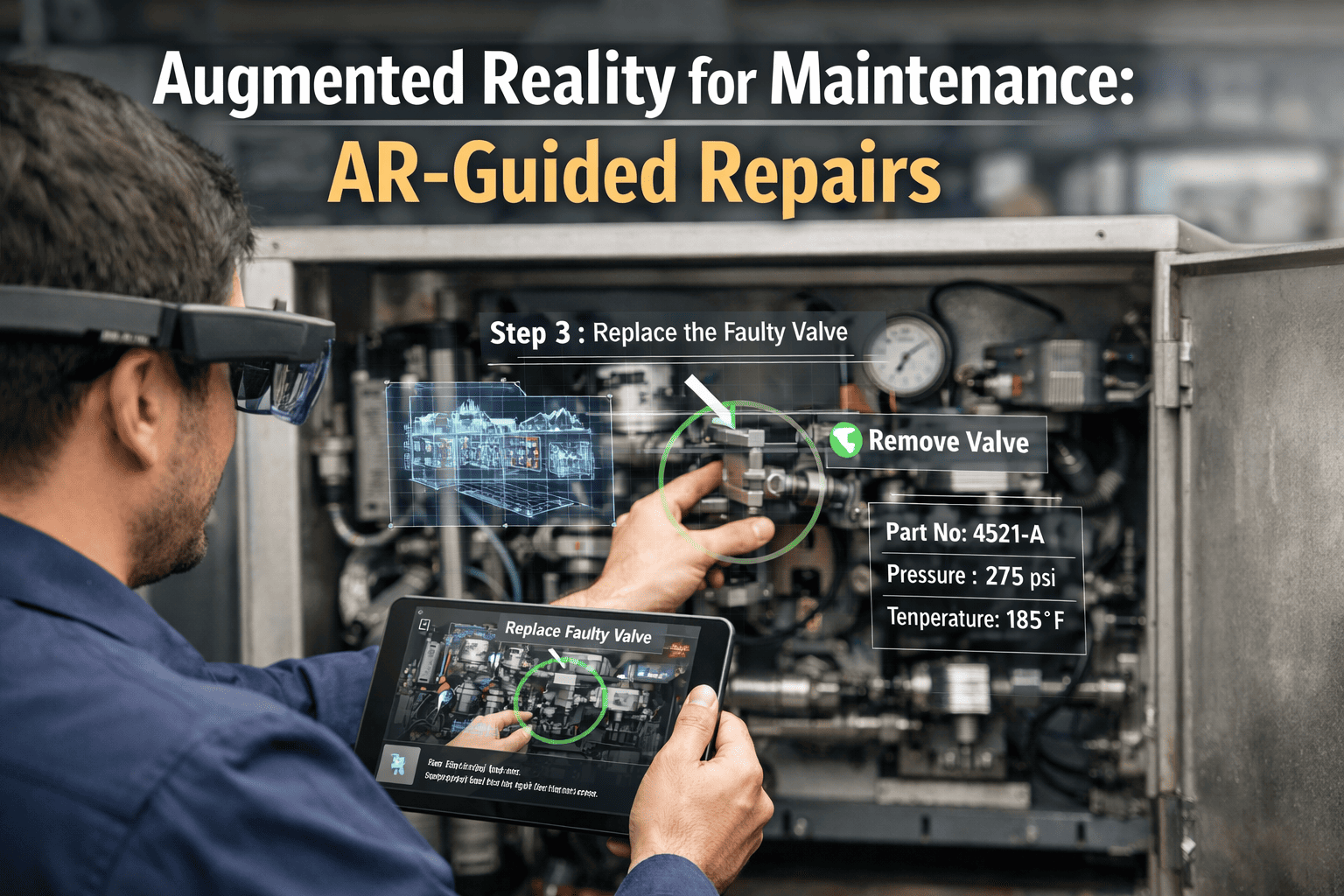
Your best furnace maintenance technician just retired. He took 32 years of pattern recognition, diagnostic intuition, and repair knowledge with him — none of it documented in a way that anyone else can learn from. His replacement is a 24-year-old trade school graduate who's never seen the inside of a blast furnace cooling system. The traditional training path — shadow a senior tech for 18 months, absorb what you can, and hope you remember it when you're standing in front of a failing tuyere at 2 a.m. — doesn't work when there are no senior techs left to shadow. The steel industry is losing 10,000 maintenance technicians to retirement annually while simultaneously adding complexity through predictive analytics, robotic systems, and advanced metallurgical processes that didn't exist when the current workforce was trained. Augmented reality maintenance training closes both gaps at once. AR overlays step-by-step repair procedures directly onto the equipment the trainee is looking at. It simulates failure scenarios without risking production equipment. It captures expert knowledge in interactive 3D models that any technician can access at any time, on any piece of equipment, from anywhere in the plant. The apprenticeship model isn't dead — it's been digitized, scaled, and made available 24/7 without requiring a senior technician to stand next to every trainee.
10,000
per year
Steel maintenance technicians lost to retirement annually — the single largest knowledge drain in heavy industry
62%
faster
Time to competency for new technicians trained with AR-assisted procedures vs. traditional classroom-then-shadow methods
4.1x
retention
Knowledge retention rate at 30 days for AR-trained procedures vs. classroom instruction alone
$3.2M
saved
Average annual training cost reduction for integrated mills that deploy AR across maintenance skill development programs
How AR Training Works on the Steel Plant Floor
AR maintenance training isn't a video game overlay on safety glasses. It's a precision instructional system that anchors digital information to physical equipment — showing the trainee exactly what to look at, what to do, in what sequence, with real-time validation that each step was completed correctly. Here's what a technician actually sees and experiences during an AR-guided training session on a continuous caster segment change.
Live procedure trackingError flaggingPerformance trendingRemote trainer view
Steel operations that sign up for AR-integrated training management link every training session, competency assessment, and certification to the technician's profile in the CMMS — so you always know who's qualified to work on what, and where skill gaps exist across your workforce.
Training Modules: What AR Covers in Steel Plant Maintenance
AR training isn't limited to one type of maintenance task — it covers the full spectrum of skills a steel plant technician needs, from basic safety procedures through advanced diagnostic techniques. Each module combines spatial instruction (showing where on the equipment), procedural guidance (showing what to do in sequence), and validation (confirming each step was completed correctly).
Equipment Lockout/Tagout
AR guides technician through equipment-specific LOTO procedures, highlighting each isolation point, verifying energy state, and documenting lockout sequence — different for every machine.
8 modulesSafety-critical
Hydraulic System Maintenance
Step-by-step overlay for hydraulic pump rebuilds, valve replacements, cylinder reseal procedures, and contamination diagnostics across casters, mills, and furnace charging systems.
12 modulesMechanical
Electrical Troubleshooting
AR overlays circuit diagrams on actual equipment, highlights test points for voltage/continuity checks, and walks through fault isolation procedures for drives, PLCs, and motor controls.
10 modulesElectrical
Bearing & Rotating Equipment
Full rebuild sequences for bearings, gearboxes, couplings, and alignment procedures on rolling mill drives, conveyor systems, fans, and pumps — with torque values and clearance specs overlaid in AR.
15 modulesMechanical
Refractory Inspection & Assessment
AR teaches visual inspection techniques for refractory lining damage, overlaying wear pattern classifications, measurement standards, and reporting templates directly onto furnace and ladle interiors.
6 modulesSpecialized
Predictive Maintenance Interpretation
Training technicians to understand vibration spectra, thermal anomaly patterns, and oil analysis results — with AR overlaying real diagnostic data onto the equipment and explaining what each pattern means.
9 modulesAnalytics
Train Faster. Retain More. Qualify with Confidence.
OXmaint links AR training modules to your CMMS — every completed procedure, competency assessment, and certification is recorded in the technician's profile. Know exactly who's qualified for every task on every piece of equipment, and where your workforce needs development.
Knowledge Retention: AR vs. Traditional Training Methods
The fundamental problem with traditional maintenance training isn't the content — it's the retention. Classroom instruction and manual reading produce knowledge that decays rapidly. AR training produces knowledge that sticks because the learning is spatial, procedural, and experiential rather than abstract.
30-Day Knowledge Retention by Training Method
Manual / SOP Reading
15%
Classroom Instruction
25%
Video-Based Training
40%
Hands-On Shadowing
55%
AR-Guided Training
82%
Skill Progression: From Novice to Expert
AR training isn't a one-time event — it's a structured progression system that takes a technician from basic equipment familiarization through independent complex repairs. Each level builds on the previous one, with AR adapting the amount of guidance to the trainee's demonstrated competency. Facilities that book a free demo to see the skill progression framework can walk through how competency data feeds workforce planning.
Technician Skill Progression Framework
LEVEL 5
Expert / Content Creator
Creates AR training content for others. Captures expert knowledge in interactive 3D procedures. Mentors Level 1–3 technicians remotely via AR.
AR Role: Content authoring tools — records procedures for the next generation
LEVEL 4
Advanced / Independent Complex
Handles multi-system diagnostics, emergency repairs, and non-standard procedures independently. AR available as reference only — not required.
AR Role: On-demand reference for rare procedures and specifications
LEVEL 3
Proficient / Independent Standard
Completes standard maintenance procedures independently. AR provides checkpoint validation — confirms critical steps without full guidance.
AR Role: Checkpoint mode — validates critical torques, clearances, and sequences
LEVEL 2
Developing / Guided Execution
Performs procedures with AR step-by-step guidance. Each step must be completed and verified before proceeding. Trainer monitors remotely.
AR Role: Full guided mode — every step overlaid with instructions and validation
LEVEL 1
Novice / Familiarization
Equipment identification, safety zones, basic component naming, and orientation. AR provides interactive 3D equipment tours and safety boundary visualization.
AR Role: Exploration mode — 3D labels, safety zones, component identification
ROI of AR Training in Steel Plant Maintenance
AR training delivers measurable returns across four dimensions: faster time to competency, reduced training-related incidents, lower dependency on senior technician availability, and improved first-time fix rates from better-trained workers. Operations evaluating AR training can sign up to connect training competency data to their maintenance workforce planning.
AR Training ROI — 24-Month Model
62%
Faster Time to Competency
New technicians reach independent work status in 7 months vs. 18 months. Each month saved is $8,000–$12,000 in supervision and reduced productivity costs.
78%
Reduction in Training Incidents
Trainees working with AR guidance have near-zero safety incidents during learning phases — AR enforces correct procedure sequence before the trainee can proceed.
340%
Training Scalability Improvement
One senior tech's captured knowledge trains unlimited technicians simultaneously. Eliminates the 1:1 shadow ratio that limits training throughput.
23%
First-Time Fix Rate Improvement
AR-trained technicians follow correct procedures more consistently, reducing rework from missed steps, incorrect torques, or wrong parts — even after training is complete.
Expert Perspective: AR Training Is Knowledge Management, Not Just Training
Everyone focuses on the "training" part of AR training. The bigger value is the "capture" part. When your best furnace tech walks a trainee through a tuyere inspection using AR, the system isn't just teaching the trainee — it's recording the expert's procedure, their decision points, their inspection sequence, their judgment about what "normal" looks like vs. what needs attention. That captured knowledge becomes a permanent organizational asset. It doesn't retire. It doesn't call in sick. It doesn't forget details after a two-week vacation. Every AR training session creates a better training resource for the next person. The knowledge compounds. After two years of AR-assisted training, you don't just have better-trained technicians — you have a comprehensive, equipment-specific knowledge library that represents the collective expertise of every senior person who contributed to it. That's not training. That's institutional knowledge management — and it's the only solution to the retirement crisis that's emptying steel plant maintenance departments across the country.
Capture Before They Leave
Start AR knowledge capture with your most experienced technicians — now, not after they give their two-week notice. Every procedure they record is knowledge preserved permanently.
Link Training to Work Authorization
A technician who hasn't completed the AR module for a specific procedure shouldn't be assigned to that work order. The CMMS should enforce this automatically.
Measure Competency, Not Completion
Finishing a training module isn't competency. AR systems measure execution accuracy, error rates, time to completion, and consistency across attempts — real performance data, not just attendance.
Capture Expertise. Train at Scale. Qualify with Data.
OXmaint connects AR training outcomes to your complete maintenance workforce management — competency profiles, work order authorization, skill gap analysis, and training compliance tracking. One platform from learning to execution.
Augmented reality maintenance training uses head-mounted displays, tablets, or smart glasses to overlay digital instructions, 3D models, safety zones, and procedural guidance directly onto the physical equipment a technician is working on. Unlike classroom or video training, AR training is spatial and contextual — the trainee sees exactly which bolt to loosen, what torque to apply, and in what sequence, while looking at the actual equipment. The system validates each step before allowing the trainee to proceed, records performance data, and adapts guidance based on the technician's skill level. For steel plants, AR training is particularly valuable because the equipment is complex, the environment is hazardous, the skilled workforce is shrinking, and traditional shadow-based training requires experienced technicians who are increasingly unavailable.
How does AR training improve knowledge retention compared to traditional methods?
AR training improves retention by engaging multiple learning pathways simultaneously. Visual-spatial learning occurs as the trainee sees digital overlays anchored to physical equipment. Procedural learning occurs as they execute steps in the correct sequence. Kinesthetic learning occurs as their hands are on the actual equipment during instruction. Research shows that this multi-pathway approach produces 30-day retention rates of 75–85%, compared to 15% for reading manuals, 25% for classroom instruction, and 40% for video training. Additionally, AR training provides immediate error correction — if a trainee begins an incorrect sequence, the system intervenes before the error is reinforced, preventing the formation of incorrect procedural memories that are extremely difficult to overwrite with conventional retraining.
What equipment is needed for AR training in a steel plant environment?
AR training in steel plants typically uses one of three hardware approaches. Industrial-rated smart glasses (like RealWear or Microsoft HoloLens with hardhat mounts) provide hands-free AR overlays and are suitable for heat-resistant, dust-resistant field use. Ruggedized tablets offer a lower-cost entry point where the trainee holds or mounts the device to view AR overlays through the camera. Purpose-built AR headsets with custom industrial housings are used in the most extreme environments. The AR content is hosted on a local server or cloud platform, with equipment-specific 3D models, procedure libraries, and assessment engines. Integration with the plant's CMMS connects training records to technician profiles and work order authorization. Most steel plants start with tablet-based AR for classroom-adjacent training and progress to smart glasses for on-equipment field training.
How does AR training help with the steel industry workforce shortage?
AR training addresses the workforce shortage on three fronts. First, it accelerates time to competency — new technicians reach independent work status 50–65% faster because they learn by doing with guided support rather than passively observing for months. Second, it captures and preserves expert knowledge — when senior technicians record AR training procedures, their knowledge becomes a permanent organizational asset that outlasts their employment. Third, it scales training without requiring more trainers — one captured procedure can train unlimited technicians simultaneously, eliminating the 1:1 shadow ratio that limits training throughput. For steel plants losing 10,000 maintenance technicians annually to retirement while struggling to recruit replacements, AR training is the only approach that allows the remaining workforce to transfer knowledge at the scale and speed the crisis demands.
How does AR training integrate with a CMMS for workforce management?
AR training integrates with the CMMS to create a closed loop between learning and work authorization. Each technician's profile in the CMMS includes a competency matrix showing which AR training modules they've completed, their assessment scores, and their skill level for each equipment type and procedure. When work orders are created, the CMMS can verify that assigned technicians have completed the required training modules for the specific procedure — preventing unqualified assignments. Skill gap analysis reports show managers where workforce development is needed across the team. Training records satisfy regulatory requirements for documented competency verification. Over time, the CMMS builds a comprehensive picture of each technician's capabilities, training progression, and readiness for increasingly complex assignments — turning training from an event into a continuously managed workforce development program.