Technicians in steel plants are working in some of the most hazardous, information-dense environments in industry — near blast furnaces exceeding 1,000°C, through coke oven corridors with toxic gas exposure, and inside rolling mill areas where equipment weighing hundreds of tonnes never fully stops. Augmented reality changes the maintenance equation in these environments by putting real-time work instructions, live sensor data, and remote expert guidance directly in the technician's field of vision — without requiring them to break concentration to consult a manual or call a colleague. When paired with Oxmaint's CMMS and IoT integration, AR transforms how work orders are received, executed, and verified across the entire plant floor.
Augmented Reality for Steel Plant Maintenance & Training: AR-Guided Operations
What Augmented Reality Actually Means for a Steel Plant Maintenance Team
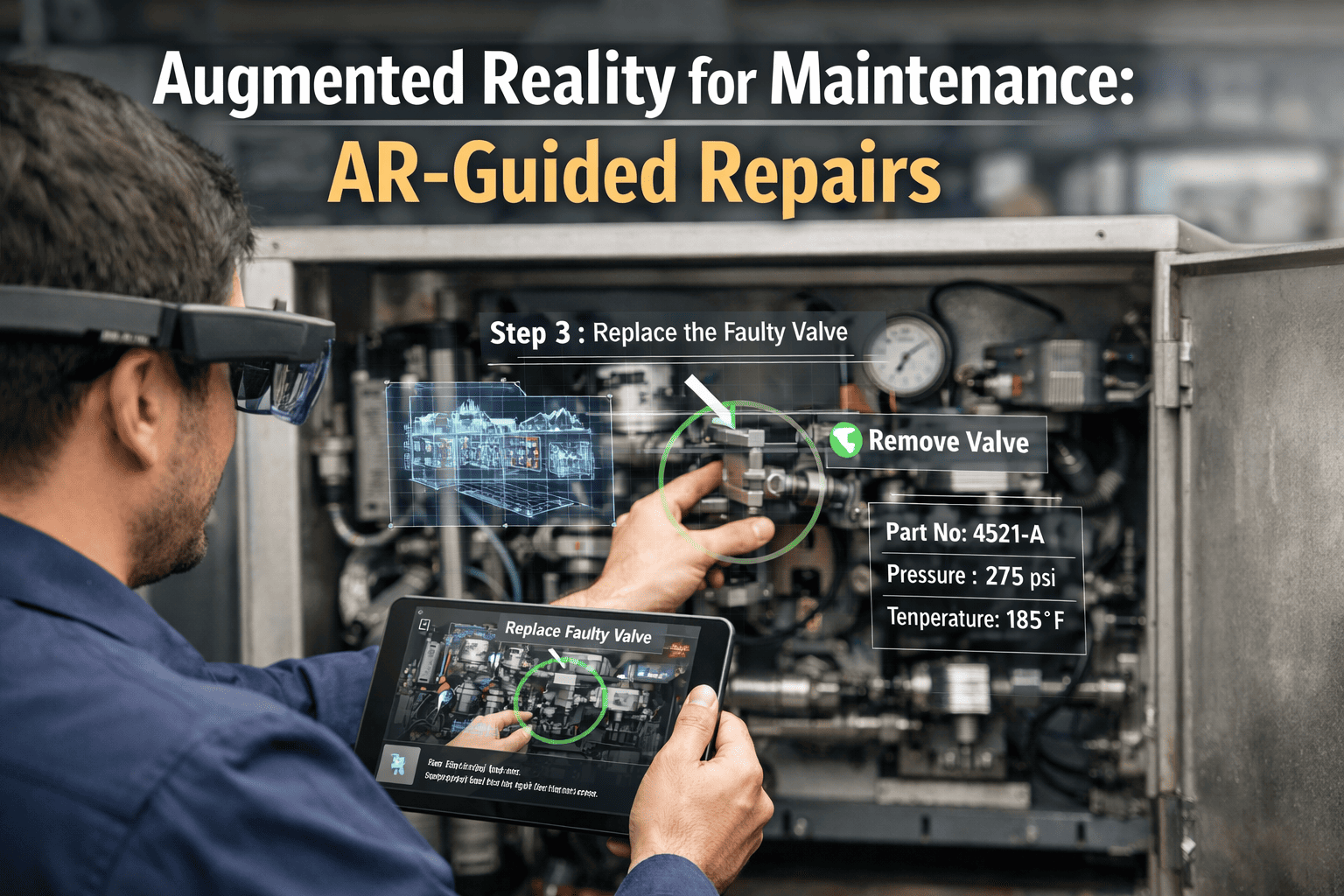
Augmented reality in industrial maintenance is not a consumer technology concept repurposed for the factory floor. It is purpose-built wearable hardware — smart glasses or head-mounted displays with integrated cameras, microphones, and displays — that overlays digital information onto the technician's real-world view of the equipment in front of them. The overlay can be step-by-step repair instructions that update as each step is completed, live sensor readings from the asset being worked on, 3D component models showing exactly which fastener to remove and in which sequence, or a live video connection to a remote expert who can see exactly what the field technician sees and annotate the view in real time.
In a steel plant context, this matters enormously. A technician servicing a rolling mill gearbox at 2 AM on a Sunday, with the correct OEM manual three floors away and the plant expert on call from home, now has both the manual content and the expert's guidance projected directly onto the gearbox they are working on. A junior technician performing their first bearing replacement on a continuous caster receives step-by-step torque specifications and component identification overlaid on the actual hardware, not on a laminated sheet they have to hold in one hand while working with the other. Sign up for Oxmaint to see how AR work instruction delivery connects to CMMS work order management.
Where AR Delivers the Most Value in Steel Plant Maintenance
Not every maintenance task benefits equally from AR overlay. The applications below represent the six use cases where AR produces the most measurable impact in steel and heavy industrial environments.
Visual Work Instructions for Complex Repairs
Step-by-step repair procedures overlaid on the actual equipment being serviced — with component identification, torque specifications, and assembly sequence displayed at the correct location on the physical asset. Reduces procedure errors and eliminates the manual-handling problem of consulting paper instructions in confined or hot environments.
25% faster repair timeRemote Expert Support in Real Time
When a field technician encounters an unexpected condition — a component that does not match the schematic, an unusual sound during reassembly — they connect a remote specialist who sees exactly what the technician's camera sees. The expert annotates the live view with arrows, labels, and highlights visible only to the technician. Specialist expertise is delivered to any location in the plant instantly. Book a demo to see remote expert integration.
Expert access without travel costLive Sensor Data Overlay on Equipment
Real-time bearing temperatures, vibration amplitude, motor current draw, and process parameters from Oxmaint's IoT integration are overlaid directly on the physical asset in the technician's field of view. A technician walking the rolling mill floor sees each drive motor's current status and anomaly flags without needing to check a separate dashboard — condition data appears at the equipment itself.
Condition context at point of workHazardous Area Entry Risk Reduction
AR guidance enables technicians to perform preliminary inspection and condition assessment from outside hazardous zones — thermal camera feeds, gas detection readouts, and structural monitoring data overlaid on their view of the zone perimeter before entry is authorised. When entry is necessary, AR delivers safety zone boundaries, emergency evacuation routes, and real-time gas level readings throughout the procedure.
80% reduction in hazardous exposure achievableImmersive Training Without Stopping Production
New technicians complete training scenarios on actual plant equipment without the risk or production disruption of a live repair attempt. AR overlays guide them through the procedure, highlight incorrect steps before they produce consequences, and record completion data for competency tracking. Onboarding time for complex procedures reduces by up to 40% compared to classroom-then-observe-then-do approaches.
40% faster technician onboardingDigital Twin Maintenance Visualisation
When Oxmaint's asset data is connected to a digital twin model, AR glasses display the 3D internal structure of equipment through its physical casing — showing internal component arrangement, material flow paths, and failure mode locations overlaid on the real-world view. Maintenance engineers can identify the location of a developing fault before disassembly begins, reducing diagnostic time on complex mechanical systems.
Digital twin data at the assetSteel Industry Fatalities in 2024 — Most in Zones Where AR Can Help
The World Steel Association recorded 67 fatalities across its member companies in 2024, with falls from height and contact with hazardous substances among the leading causes — many during routine inspection and maintenance procedures in high-risk zones. The same technology shift happening in autonomous robotics (Outokumpu's ANYmal robots reducing hazardous worker exposure by 80%) is mirrored in AR: both eliminate or reduce the need for humans to physically enter the most dangerous environments to gather information or execute procedures.
AR does not make steel plants without risk. But it meaningfully reduces the number of entries into hazardous zones required to maintain production equipment — by enabling information gathering, condition assessment, and procedure guidance from safer positions. Connect AR work instructions to Oxmaint work orders to begin building AR-guided maintenance capabilities.
AR-Guided Maintenance vs. Traditional Approaches
The operational difference between paper-based and AR-guided maintenance is most visible in complex, infrequent procedures where knowledge currency matters most.
Without AR — Traditional Approach
With AR + Oxmaint Integration
Connect AR Work Instructions to Oxmaint Work Orders
Visual work instructions, remote expert support, and live sensor data overlay — all connected to Oxmaint's CMMS for automatic work order completion tracking.
How Oxmaint's Platform Connects to AR-Guided Maintenance Operations
Oxmaint provides the CMMS and IoT data layer that AR glasses and connected worker platforms need to deliver contextually relevant information at the point of work.
Visual Work Instructions from CMMS Work Orders
When a work order is assigned to a technician in Oxmaint, the associated procedure — with attached diagrams, OEM reference documents, and step-by-step instructions — is available to their AR headset at the point of work. Each step is presented in the AR overlay as the technician progresses, and step completion is automatically logged back to the Oxmaint work order without manual data entry. Sign up to configure work instruction delivery.
Remote Expert Support Connected to Asset History
When a remote expert joins a live AR session, they have access to the asset's complete Oxmaint maintenance history — previous work orders, past failure modes, sensor trend data, and the current anomaly that triggered the repair — alongside the live video feed from the technician's headset. This context dramatically improves the quality and speed of remote diagnosis. Book a demo to see remote expert workflows.
Live Sensor Data Overlay from Oxmaint IoT Integration
Oxmaint's IoT sensor integration provides the real-time data layer for AR condition monitoring overlays. Bearing temperatures, vibration amplitude, motor current, and process parameters from connected sensors are surfaced at the physical asset location in the AR display — giving technicians immediate condition context without leaving the work area or consulting a separate monitoring terminal.
Training Scenario Management and Competency Tracking
AR training scenarios are linked to Oxmaint asset records, meaning trainees practice on the actual procedures and equipment configurations relevant to your specific plant — not generic industry simulations. Completion data and competency records are logged in Oxmaint per technician, per procedure, creating the training audit trail required for compliance and skill gap analysis.
"Use of AI and robotics for safety management is one of the cornerstones of our safety strategy. The robot technology helps us increase safety by reducing employee exposure to hazardous substances and environments, optimise production through preventive maintenance, and decrease environmental impacts."
Frequently Asked Questions
Bring AR-Guided Maintenance to Your Steel Plant Operations
Visual work instructions connected to CMMS work orders, remote expert support with full asset history context, and live IoT sensor data overlay at the point of work — all integrated through Oxmaint's platform for steel plant maintenance teams.