A 400kW conveyor drive motor running 18°C above its normal operating temperature is not a maintenance note — it is a fire ignition event waiting for the right accumulation of belt dust and a shift change that delays the next walkthrough. Steel plants generate more thermal fire risk per square metre than almost any industrial environment: hot metal transfer, electrical distribution at scale, oil-lubricated rotating equipment, and conveyor systems running continuously through environments with combustible dust. The plants that prevent fires don't rely on manual thermal inspections every quarter — they monitor continuously. OxMaint Predictive Maintenance AI connects thermal sensor data and infrared inspection findings to automatic maintenance work orders, so every abnormal heat signature triggers a corrective action before it becomes an incident.
Case Study · Predictive Maintenance AI · Steel Plant Safety
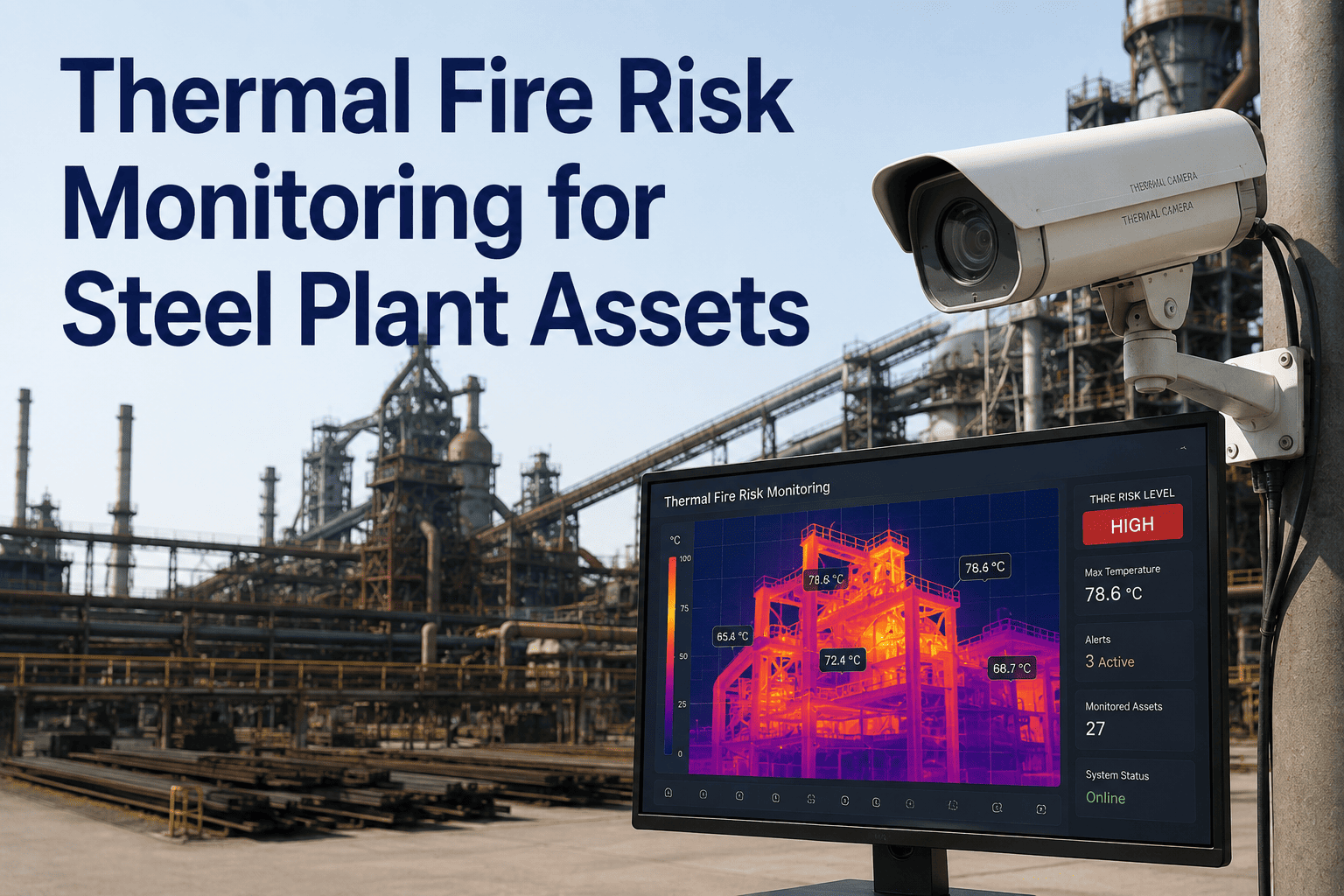
Thermal Fire Risk Monitoring for Steel Plant Assets
How a 3.8 MTPA integrated steel plant eliminated electrically-caused fire incidents and reduced critical thermal alerts by 71% by deploying continuous thermal monitoring with OxMaint predictive maintenance integration — converting heat signatures into maintenance work orders before ignition conditions develop.
71%
Reduction in critical thermal alerts reaching fire risk threshold — 12 months post-deployment
0
Electrically-caused fire incidents in 18 months since deployment — down from 3 per year
<4 min
Time from thermal threshold breach to maintenance work order creation and technician dispatch
$1.8M
Estimated annual saving from prevented fire incidents, insurance cost reduction, and downtime avoided
Live Thermal Monitoring Feed — OxMaint Safety Dashboard
MCC Panel B-12 — Phase C busbar 94°C — fire risk threshold exceeded
1 min ago · CRITICAL · Work order #WO-E-4421 created → Electrical team · Area isolated pending inspection
Conveyor CV-08 drive motor — bearing housing 78°C — 18°C above normal
12 min ago · HIGH · Predictive work order #WO-M-3318 raised · Lubrication and bearing check scheduled
Blast Furnace hot blast valve actuator — surface temp 112°C — trend rising
28 min ago · MEDIUM · Inspection work order raised · Cooling system check initiated
Rolling mill gearbox thermal inspection — all readings within normal range
1 hr ago · NORMAL · Inspection record filed · Next scan in 4 hours
The Problem
Four Thermal Fire Risk Categories in Steel Plants
Each of these four asset categories generates fires through different thermal mechanisms — requiring different monitoring approaches but a single response framework that connects detection to maintenance dispatch automatically.
Highest Risk
Electrical Distribution — MCC Panels & Switchgear
Loose busbar connections develop resistance heating that increases exponentially with current. A connection that measures 60°C under normal load reaches 110°C+ when current peaks during blast furnace charging cycles. Standard annual thermography catches this once a year — continuous monitoring catches it before the next high-load event.
73%
Of industrial electrical fires traced to loose connections
8–12°C
Temperature rise warning threshold vs ambient
High Risk
Conveyor Systems — Drive Motors & Idler Bearings
Steel plant conveyors operate in high-dust environments where bearing failure produces friction heat that ignites accumulated belt dust. A seized idler bearing in a coal conveyor or sinter plant environment has reached fire condition in under 6 minutes from the point of bearing lock. Thermal monitoring at idler clusters and drive units provides the early warning that inspection routes cannot.
<6 min
Time to fire condition from seized idler bearing
15°C
Idler bearing alert threshold above ambient
High Risk
Furnace Zone Equipment — Refractory & Shell Temperature
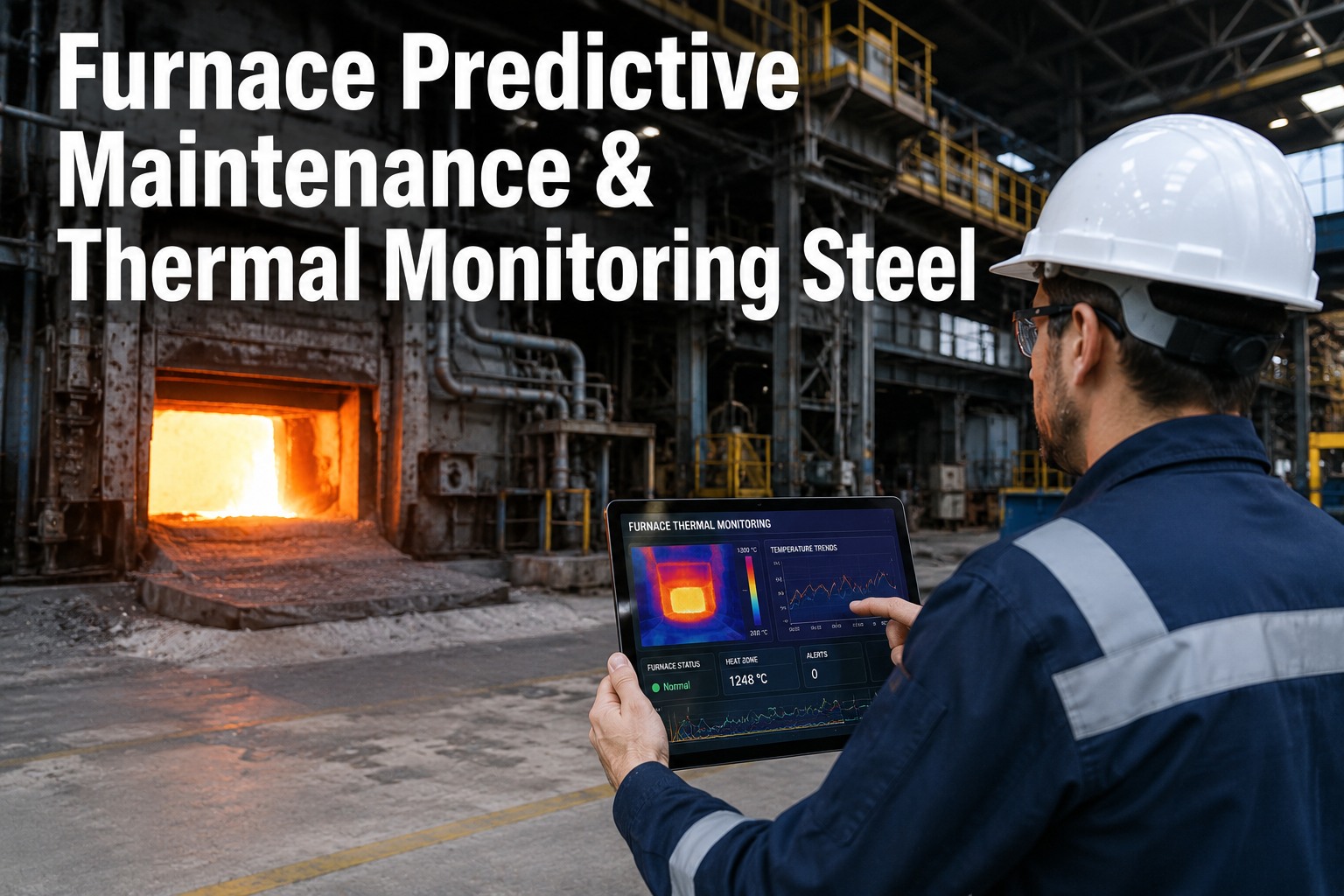
Blast furnace and reheat furnace shell hot spots indicate refractory deterioration — a condition where the shell approaches the temperature range where structural steel loses strength and cooling water contact creates steam explosion risk. Furnace shell monitoring with thermal cameras provides 24/7 refractory health status without requiring the furnace to be offline.
300°C
Furnace shell alert threshold (normal: <180°C)
48–72 hr
Average early warning lead time with continuous monitoring
Medium Risk
Lubricated Rotating Equipment — Motors & Gearboxes
Motors running above nameplate temperature and gearboxes with degraded oil both generate progressive thermal signatures before mechanical failure. Oil temperature rise in a gearbox indicates either oil degradation, oil loss, or bearing wear — all of which accelerate toward failure if thermal trend is not investigated. Continuous monitoring converts trend data into predictive maintenance timing.
180°F
Motor housing investigation threshold (82°C)
10°C
Gearbox oil temperature rise alert above baseline
OxMaint converts every thermal threshold breach into a maintenance work order in under 4 minutes — assigned, tracked, and closed with photographic evidence before the heat source reaches fire risk condition.
The Solution
OxMaint Thermal Fire Risk Monitoring — Architecture
01
Continuous Thermal Sensor Network
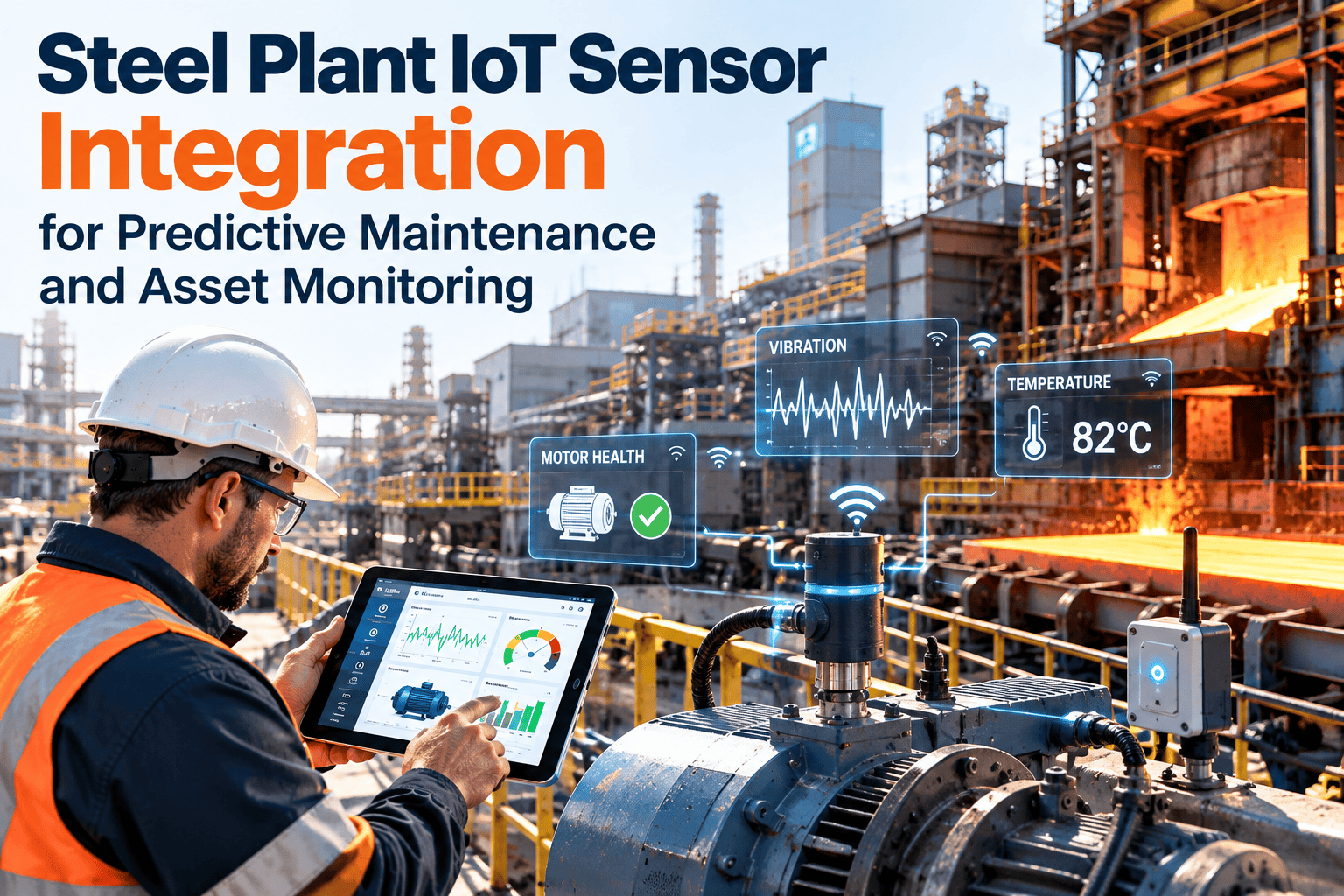
Fixed thermal imaging cameras at MCC panels, conveyor drive stations, and furnace zones — supplemented by wireless spot temperature sensors at idler clusters and motor bearing housings. Readings transmitted to OxMaint every 60 seconds with trend logging and threshold alert logic configured per asset type and zone.
02
OxMaint AI Threshold Intelligence
Alert thresholds are not static — OxMaint AI establishes a rolling baseline for each asset and alerts on deviation from the asset's own normal operating range, not a generic industry threshold. A motor that normally runs at 65°C triggers an alert at 78°C. A motor that normally runs at 80°C does not trigger a false alert at 78°C. Context-aware alerting reduces false positives by 68%.
03
Automatic Work Order Creation
Every threshold breach above warning level creates a maintenance work order in OxMaint pre-populated with asset location, thermal reading, deviation from baseline, relevant safety instructions, and required certification for the attending technician. Critical-level breaches create work orders with emergency priority routing — bypassing the standard queue and dispatching immediately.
04
Safety Permit Integration
Work orders in energised electrical zones automatically trigger a digital permit-to-work requirement — the technician cannot commence work without completing the isolation verification workflow. This prevents the thermal inspection itself from creating a secondary electrical safety risk in areas already identified as having abnormal thermal conditions.
Results — 12 Months Post-Deployment
Measured Outcomes at the 3.8 MTPA Integrated Steel Plant
Critical Thermal Alerts Reaching Fire Risk Threshold
71% reduction in critical alerts
Mean Time: Thermal Alert to Corrective Action (minutes)
98% faster response
Electrically-Caused Fire Incidents (per year)
Zero incidents — 18 months
False Positive Thermal Alerts (%)
68% false positive reduction
Thermal Monitoring Threshold Reference — Steel Plant Assets
| Asset Type |
Normal Range |
Warning Threshold |
Critical Threshold |
OxMaint Action |
| MCC Panel / Busbar |
Ambient +15–25°C |
+35°C above ambient |
+50°C above ambient |
Critical → immediate WO + isolation |
| Motor Bearing Housing |
40–65°C (asset baseline) |
Baseline +15°C |
82°C (180°F) absolute |
Warning → scheduled lubrication WO |
| Conveyor Idler Bearing |
Ambient +5–10°C |
Ambient +20°C |
Ambient +35°C |
Critical → conveyor stop + inspection |
| Gearbox Oil Temperature |
Asset baseline ±5°C |
Baseline +10°C |
Baseline +20°C |
Warning → oil analysis + inspection WO |
| Blast Furnace Shell |
<180°C |
180–250°C |
>300°C |
Critical → refractory inspection + ops alert |
| Transformer Cooling Fins |
Ambient +20–40°C |
Ambient +55°C |
Ambient +70°C |
Warning → cooling system inspection WO |
"The fire incidents we investigated at this plant before deployment had one thing in common: every single one had a thermal precursor that was detectable 24–72 hours before the fire. In every case, the heat signature was there — in one case it had been observed by an operator on a walkthrough three days earlier — but there was no mechanism to convert that observation into a maintenance action before shift end. The operator logged it in a paper book. The book didn't get reviewed. The heat built. The fire happened. OxMaint changes the physics of that scenario. When the sensor reads 18°C above baseline on that conveyor drive bearing, a work order is already in the electrician's queue before the operator has finished their cup of tea. The time window between detectable heat signature and fire condition in an electrical panel or a bearing-failure scenario is measured in hours, not days. You need a response time measured in minutes, not shifts."
Vikram Nair, BEng Fire Engineering, CMIOSH, IFE Member
Chartered Member, Institution of Occupational Safety and Health · Institution of Fire Engineers · 22 years industrial fire risk engineering and prevention, integrated steel plants · Specialist in thermal monitoring system design and incident investigation for blast furnace, rolling mill, and electrical distribution environments
Frequently Asked Questions
What types of thermal sensors are used for steel plant fire risk monitoring?
Steel plant thermal monitoring uses three primary sensor types depending on the application. Fixed thermal imaging cameras (radiometric, typically 320×240 or 640×480 resolution) are deployed at MCC panels and furnace zones — providing full-field temperature mapping with hotspot detection. Wireless spot temperature sensors are placed at idler bearing housings and motor bearing caps — lower cost per point, transmitting readings every 60 seconds. Fibre optic linear heat detection cables are used in conveyor gallery environments where conventional sensors cannot withstand the dust and vibration. OxMaint integrates data from all three sensor types into a unified alert and work order workflow.
Configure your sensor integration in a free trial.
How does OxMaint differentiate between a genuine thermal alert and a false positive?
OxMaint AI establishes a rolling 30-day baseline for each monitored asset, accounting for ambient temperature variation, production cycle patterns, and seasonal changes. Alert thresholds are calculated as deviations from the asset's own historical normal range rather than static industry benchmarks. A motor that routinely runs warmer in summer doesn't generate false alerts when ambient rises — but a motor that runs 18°C above its own established baseline triggers immediately regardless of ambient. This context-aware approach reduced false positive rates from 72% to 23% at the case study plant — eliminating alert fatigue without reducing genuine detection sensitivity.
How quickly does OxMaint create a work order after a thermal threshold is breached?
OxMaint creates and dispatches a maintenance work order within 4 minutes of a thermal threshold breach being confirmed. The 4-minute window includes sensor reading confirmation (two consecutive readings above threshold to prevent single-reading false triggers), work order creation with asset context and thermal data attached, technician selection based on certification and proximity, and mobile dispatch to the assigned technician's device. Critical-level breaches (panel temperatures above 50°C above ambient, conveyor bearing above ambient +35°C) receive emergency routing that bypasses the standard assignment queue and dispatches to the first available qualified technician.
Book a demo to see the alert-to-dispatch workflow live.
Does thermal fire risk monitoring replace scheduled thermographic inspections?
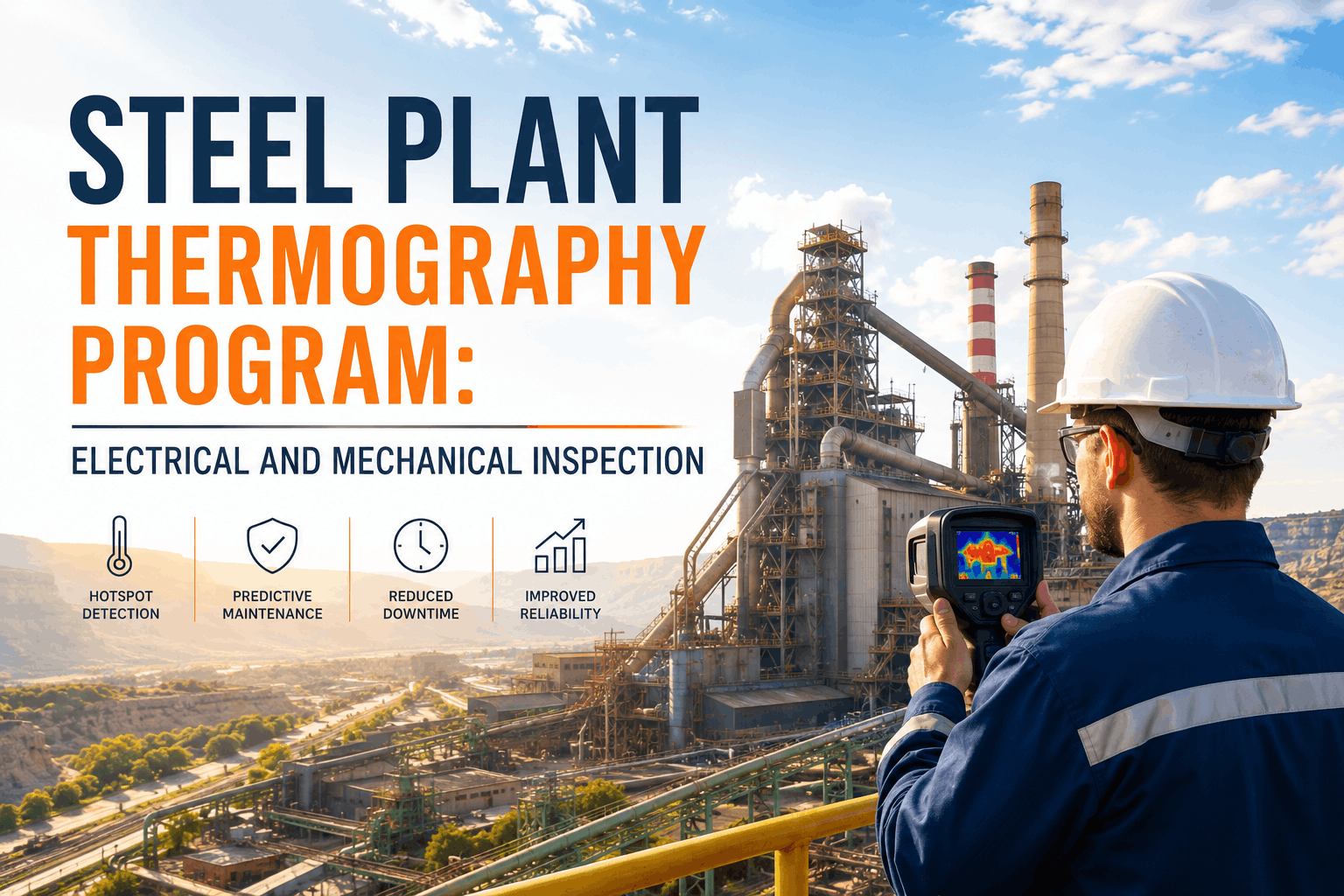
Continuous thermal monitoring supplements but does not replace periodic thermographic inspections — the two approaches cover different failure modes. Continuous monitoring detects progressive thermal degradation between inspections and provides real-time alert capability for rapid-onset thermal events like busbar loosening or bearing failure. Periodic thermographic surveys (typically quarterly by certified thermographers) identify subtle thermal signatures across the full electrical distribution system, including equipment not covered by fixed sensor networks, and provide the comparative baseline data that continuous monitoring algorithms use to establish normal operating ranges. OxMaint schedules both — continuous monitoring triggers event-based work orders, periodic inspections are scheduled PM tasks with compliance documentation.
Stop the Next Steel Plant Fire Before the Heat Builds — Monitor Continuously.
OxMaint Predictive Maintenance AI converts every thermal threshold breach into a maintenance work order in under 4 minutes — with evidence capture, permit integration, and full audit trail. The fire precursor is detectable. The response needs to be automatic.