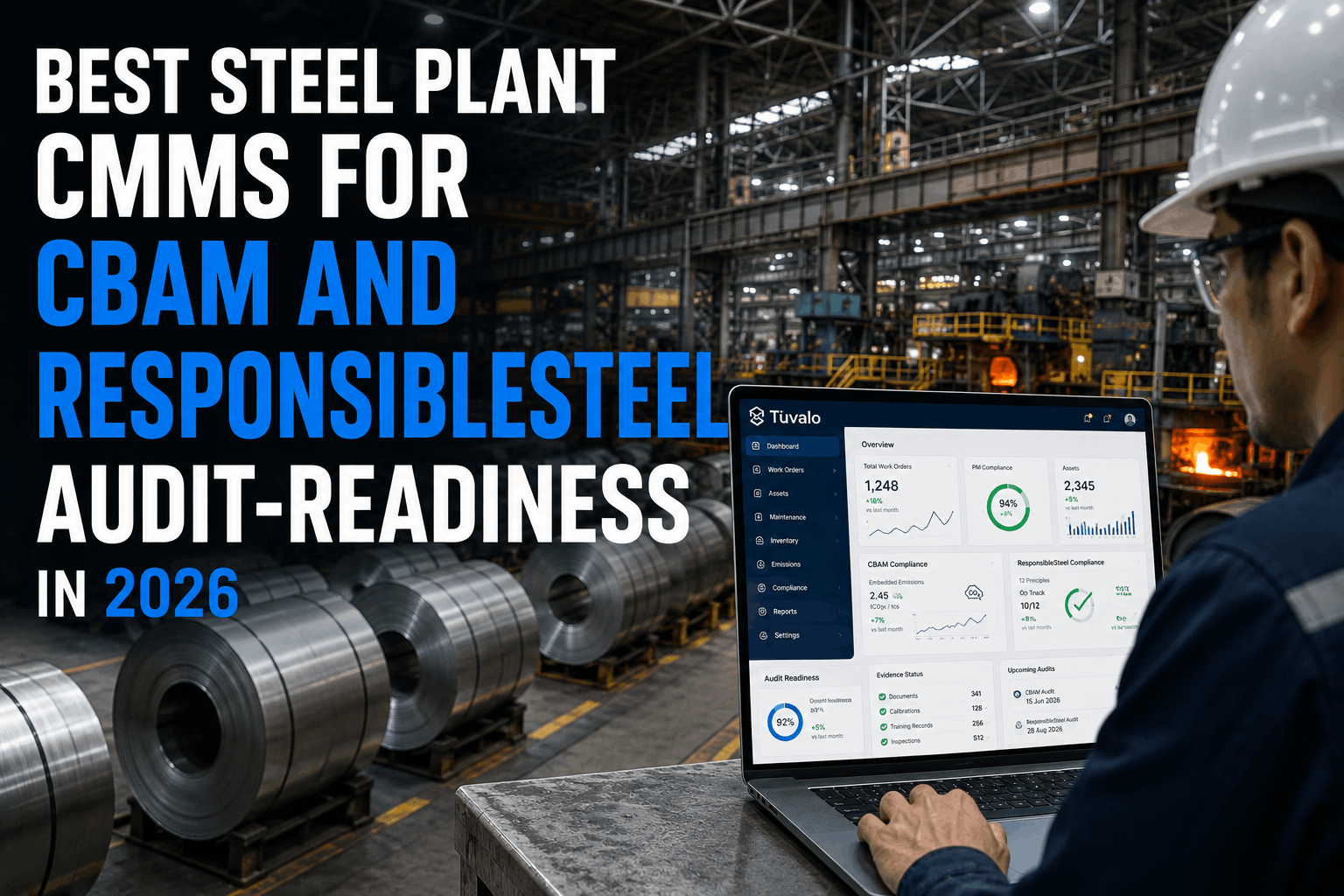
Best Steel Plant CMMS for NESHAP and OSHA Audit-Readiness 2026

By Alex Jordan on May 21, 2026

best-steel-plant-cmms-for-neshap-and-osha-audit-readiness-2026

An EPA inspector requesting five years of CEMS calibration records, SSM logs, and corrective action documentation for a blast furnace cast house doesn't give you two weeks to find the files. The records must be produced immediately, completely, and in a format that demonstrates a continuous, unbroken chain of compliance — and if your CMMS doesn't generate those records automatically from every maintenance work order, your audit outcome depends on a file-cabinet search and the memory of technicians who may not still be at the facility. Under 40 CFR Part 63 Subpart FFFFF, the NESHAP MACT standard for integrated iron and steel manufacturing, the EPA requires a minimum five-year retention window for all CEMS data, exceedance records, corrective actions, SSM events, and performance test documentation — with civil penalties under Section 113 of the Clean Air Act reaching $37,500 per day per violation for recordkeeping failures. Meanwhile, OSHA's steel-specific enforcement under 29 CFR 1910 — covering LOTO, confined space, machine guarding, PSM, and crane inspection — produced over 2,500 LOTO citations alone in 2023, almost universally traceable to documentation gaps rather than non-compliance with the underlying standard. The difference between a steel plant that walks out of an audit with no findings and one that receives a Notice of Violation is almost never an emissions or safety performance difference. It is a records and work-order tracking difference. Oxmaint is the CMMS built to close that gap — connecting CEMS maintenance schedules, OSHA inspection workflows, corrective action tracking, and structured PM programs into a single, audit-ready platform that generates compliance documentation automatically from every maintenance action taken at your facility.

Oxmaint · Steel Plant CMMS · NESHAP & OSHA Audit-Readiness 2026
Your Next EPA or OSHA Inspector Isn't Waiting. Oxmaint Keeps Every Steel Plant Compliance Record Audit-Ready — Every Day.
CEMS maintenance records, SSM logs, crane inspection history, LOTO procedure libraries, PSM documentation, and 5-year corrective action archives — exportable in hours, not weeks. Built for Subpart FFFFF, Subpart CCC, and 29 CFR 1910 steel compliance.
$37,500
Per-day civil penalty under Clean Air Act Section 113 for NESHAP recordkeeping violations at steel facilities
5 Years
Minimum CEMS record retention under 40 CFR Part 63 Subpart FFFFF — every exceedance, SSM event, and corrective action
2,554
LOTO citations issued industry-wide in 2023 — almost all traceable to documentation gaps, not procedure non-compliance
3 hrs
Time to export a full 5-year NESHAP compliance package with Oxmaint — vs. 2+ weeks with paper-based systems

The NESHAP Audit-Readiness Gap: Why Steel Plants Fail Inspections They Technically Pass

The most common finding in EPA multi-media inspections at integrated iron and steel manufacturing facilities is not an emissions exceedance. It is a records failure — CEMS calibration logs that are incomplete for required periods, SSM events that were managed correctly but never documented to the standard the regulation requires, corrective action work orders that were completed but not tied to the deviation record they were initiated to address, or performance test documentation that exists in a physical file cabinet in an office that no one can access in the 30 minutes an inspector allocates for record review. Under Subpart FFFFF, every regulated source in your facility — sinter plant, blast furnace, BOPF shop — has independent CEMS maintenance record obligations. Under Subpart CCC for steel pickling HCl process facilities, scrubber performance records and reagent addition logs carry their own documentation requirements. Under Subpart CCCCC for coke oven batteries, the record burden for pushing emission controls and door-seal inspections is equally specific and equally unforgiving.

Oxmaint addresses this structurally. CEMS calibration and maintenance are scheduled as recurring PM work orders in the system, executed by technicians using digital checklists on mobile devices, and archived as timestamped, technician-signed records in the asset history — automatically. SSM events generate corrective action work orders at the moment they are logged, creating a real-time record chain that connects the anomaly, the response, and the resolution in a single searchable thread. Deviation reports pull data directly from work order records rather than requiring manual reconstruction from shift logs weeks after the event. And when an EPA inspector arrives — scheduled or unannounced — Oxmaint exports the full five-year compliance package for any regulated source, organized by date, event type, and regulatory subpart, in a format that has been described by inspectors as the most complete and accessible records encountered at integrated steel facilities. Connect your CEMS integration and your regulatory exposure drops to documentation quality alone — and Oxmaint makes that a solved problem.

NESHAP Compliance Coverage: What Oxmaint Tracks Across All Three Steel Subparts

COMPLIANCE MATRIX TABLE
NESHAP STEEL SUBPART COMPLIANCE — OXMAINT COVERAGE MATRIX
NESHAP Subpart
Regulated Sources
Key Record Obligations
Oxmaint Coverage
Risk Without CMMS
Subpart FFFFF
40 CFR Part 63
Sinter plant, blast furnace, BOPF shop
CEMS calibration logs, SSM records, deviation reports, corrective actions, performance tests (5-yr retention)
Full — auto-generated from every PM & work order
$37,500/day per violation; NOV; consent decree
Subpart CCC
40 CFR Part 63
Steel pickling HCl process facilities
Scrubber performance logs, HCl concentration records, reagent addition, corrective actions
Full — scrubber PM schedules linked to CEMS outputs
Permit revocation; shutdown order; civil penalty
Subpart CCCCC
40 CFR Part 63
By-product coke oven batteries
Door seal inspections, pushing emission records, door repair logs, quarterly reports
Full — door inspection rounds as scheduled PM rounds
Citizen suit exposure; community enforcement actions
OSHA PSM
29 CFR 1910.119
Process equipment with threshold hazardous chemicals
PHA revalidation, MI inspection records, operating procedures, training logs, MOC documentation
Full — PHA schedules, MI work orders, procedure library
Willful citation up to $156,259; program shutdown
OSHA LOTO
29 CFR 1910.147
All energy isolation points across the facility
Machine-specific written procedures, training records, annual inspection documentation
Full — LOTO library linked to every asset work order
$9,500–$156,259 per citation; stop-work order
OSHA Crane/Hoist
29 CFR 1910.179
Overhead cranes, hoists, ladle cranes, charging cranes
Pre-shift inspection logs, periodic inspection records, load test documentation, repair history
Full — daily crane rounds as recurring PM tasks
Serious citation; production halt; insurance void

OSHA Audit-Readiness for Steel: The Six Standards That Generate the Most Citations

Steel mills operating under NAICS 3311–3312 face a concentration of OSHA enforcement requirements unmatched in almost any other industrial environment. Molten metal exposure, confined space entry, arc flash hazards, and active furnace operations are present simultaneously on every shift — and OSHA inspectors arriving at a steel facility know exactly where to look for documentation gaps. The six standards that generate the majority of citations at U.S. steel plants are LOTO (29 CFR 1910.147), Confined Space Entry (1910.146), Process Safety Management (1910.119), Machine Guarding (1910.212), HazCom/GHS (1910.1200), and Crane/Hoist Operations (1910.179). In every case, the citation pattern is the same: the physical hazard was controlled, but the documentation proving the control was implemented was incomplete, missing, or not immediately retrievable. Oxmaint's steel plant CMMS eliminates each of these documentation gaps through structured digital workflows that generate compliance evidence automatically at the point of work.

HORIZONTAL PROGRESS BAR CHART: OSHA citation categories
OSHA CITATION FREQUENCY AT U.S. STEEL PLANTS — TOP CATEGORIES (DOCUMENTATION FAILURES)
Lockout/Tagout (29 CFR 1910.147)
92% of facilities cited had written procedures — records proved non-adherence
Machine Guarding (1910.212)
78% — inspection logs missing or incomplete
Confined Space Entry (1910.146)
71% — permit records incomplete; atmospheric readings missing
Crane & Hoist (1910.179)
64% — pre-shift inspection logs absent or unsigned
Process Safety Management (1910.119)
58% — PHA revalidation overdue or MI records incomplete
HazCom / GHS (1910.1200)
49% — training records not current per affected chemical roster

How Oxmaint Builds a 5-Year NESHAP-Compliant Record Archive — Automatically

The most operationally powerful thing about Oxmaint's CMMS architecture for steel plants is that compliance documentation is not a separate workflow. It is the maintenance workflow. Every CEMS calibration run is a PM work order. Every corrective action after a deviation event is a linked work order with a mandatory resolution field. Every SSM event log entry is a timestamped work order record in the asset history. When the five-year retention obligation under Subpart FFFFF requires that every exceedance, every corrective action, and every monitoring system outage be retained and accessible, Oxmaint satisfies that requirement simply by functioning as the plant's maintenance management system. There is no separate EPA compliance log to maintain, no parallel filing system to update, and no annual scramble to reconstruct records from shift notes. The preventive maintenance schedule that keeps your CEMS in calibration is the same system that produces your audit package — because the work orders that executed the maintenance are the audit records.

THE OXMAINT NESHAP AUDIT-READINESS WORKFLOW — FROM DAILY MAINTENANCE TO INSPECTION-READY EXPORT
01
CEMS PM Scheduled
Calibration, QA runs, and maintenance intervals for every CEMS instrument auto-scheduled per EPA protocol. Overdue alerts fire before the compliance window closes.
02
Work Order Executed & Documented
Technician completes digital checklist on mobile. Results, readings, pass/fail status, and photos recorded in real time — timestamped and geo-tagged to the regulated source.
03
Deviation Triggers Corrective Action
Any exceedance or CEMS anomaly auto-generates a corrective action work order linked to the deviation record. Resolution tracked to closure with mandatory documentation fields.
04
5-Year Archive Maintained
All records retained in searchable asset history with no purge window. Organized by regulated source, subpart, date, and event type — the exact structure EPA auditors request.
05
Audit Export in Hours
Inspector requests records — Oxmaint generates a complete, organized compliance package for any regulated source, any date range, any subpart, in a matter of hours — not weeks.

Crane Inspection and OSHA 1910.179 Compliance: Zero Gaps, Zero Paper

Overhead cranes — ladle cranes, charging cranes, casting cranes, and maintenance shop hoists — are among the highest-consequence assets in any steel plant, and 29 CFR 1910.179 imposes specific, non-negotiable inspection and documentation obligations. Pre-shift inspections must be performed before each shift where the crane is operated, with findings documented and deficiencies corrected before operation continues. Periodic inspections at monthly to annual intervals must be performed by qualified inspectors with complete written records retained. Load testing documentation, repair history, and operator qualification records must all be accessible on demand during an OSHA inspection. In a steel plant with dozens of overhead cranes across melt shop, caster, and rolling mill areas, managing this documentation manually through paper log books creates inevitable gaps — a missed shift-log entry, a periodic inspection record lost in a supervisor's desk, a load test certificate that expired and no one was alerted. Oxmaint replaces every paper crane log with a structured digital workflow: daily pre-shift inspection rounds as recurring PM tasks, periodic inspection templates linked to crane asset records, automated expiry alerts 30/60/90 days before certification deadlines, and complete inspection history searchable by crane ID, date, finding category, and inspector identity.

"We had an EPA multi-media inspection under Subpart FFFFF that requested five years of CEMS calibration, SSM, and corrective action records for our blast furnace cast house and sinter plant. Before Oxmaint, assembling that package would have been a two-week exercise involving every department. With Oxmaint, we exported the full five-year asset record for each regulated source — including all PM work orders, deviation events, and corrective actions — in about three hours. The inspector commented that our records were the most complete and accessible she had encountered at an integrated steel facility. We received zero findings on environmental records."

Environmental Compliance Manager
Integrated Iron and Steel Manufacturing Facility — Midwest USA

Citation Defense: How Oxmaint Documentation Reduces Penalty Exposure

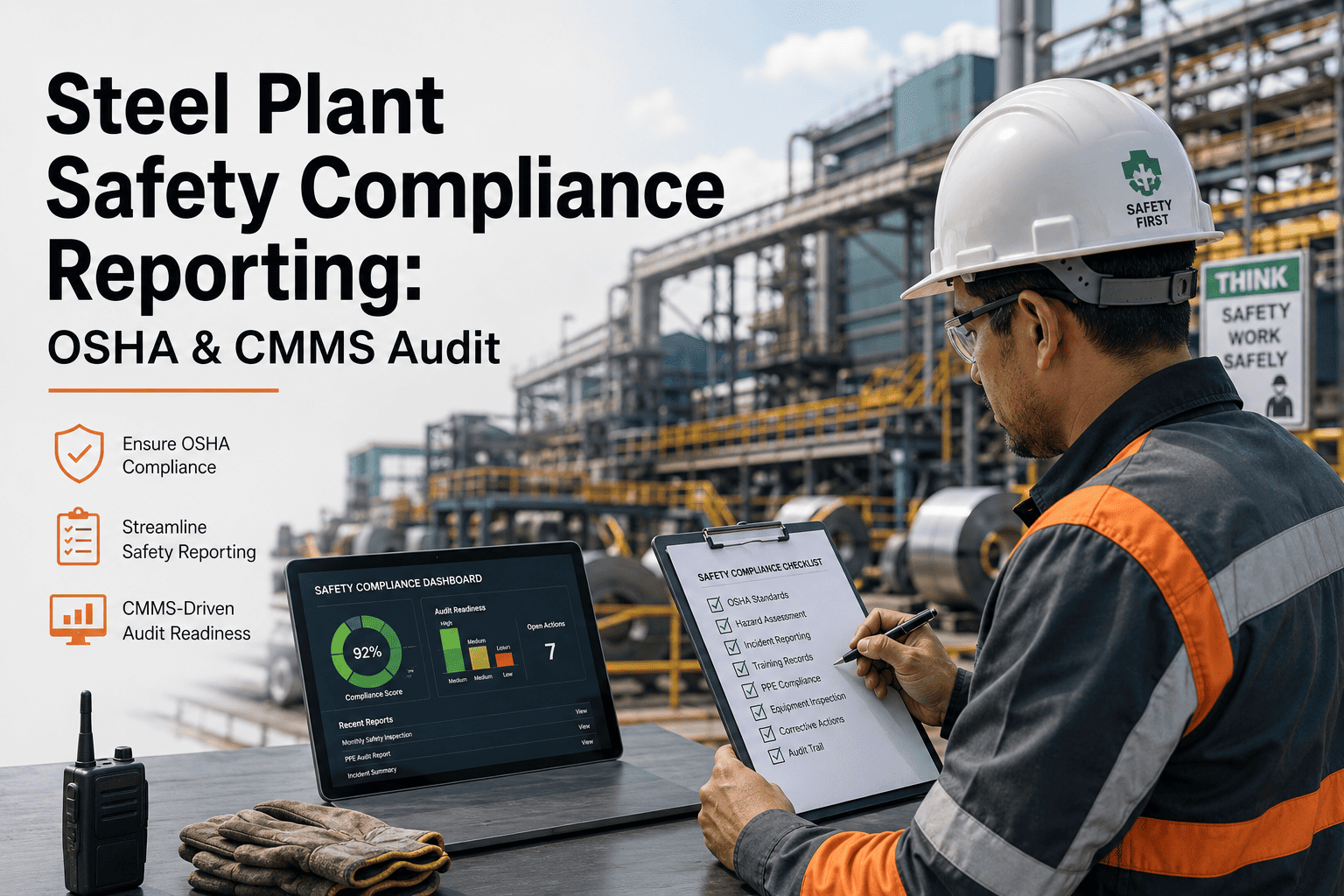
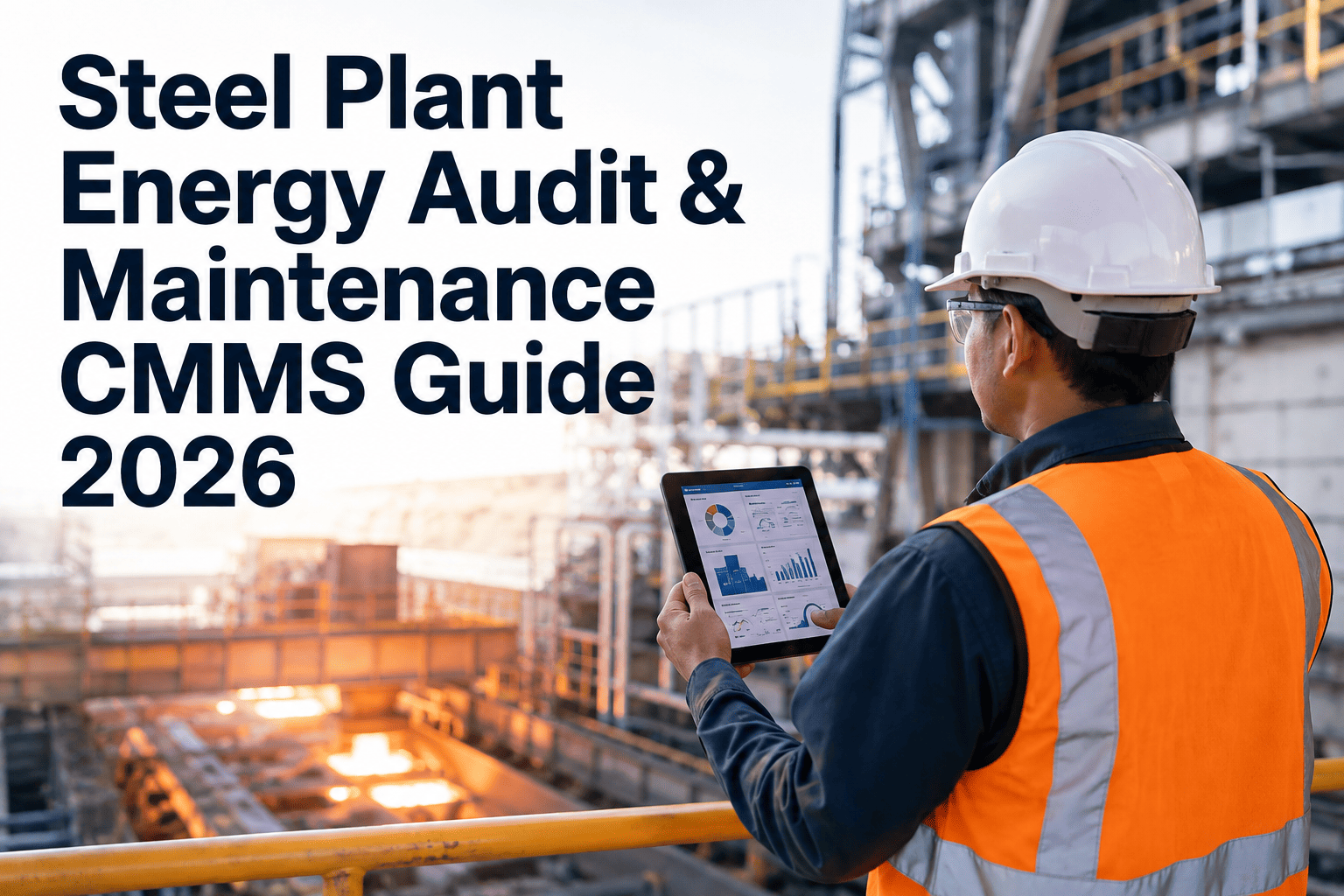
When an OSHA citation is issued, the difference between a serious violation with a $16,131 maximum and a willful violation with a $156,259 maximum often comes down to whether the employer can demonstrate that they knew about the hazard and took documented corrective action. Oxmaint's corrective action tracking system does exactly this — every safety deficiency identified during an inspection round generates a work order with a mandatory assigned owner, due date, and completion requirement. When corrective action is completed, the closure is timestamped and photo-documented. If an OSHA inspector arrives after a deficiency was identified and corrected, you have documented evidence of a proactive safety management program — the strongest possible defense against willful classification and failure-to-abate penalties. For facilities that have already received citations, Oxmaint's corrective action records demonstrate abatement completion with the level of specificity and verifiability that reduces repeat-violation risk for subsequent inspections.

GROUPED STAT CARDS: Penalty comparison
OSHA PENALTY STRUCTURE — STEEL PLANT CITATION DEFENSE WITH OXMAINT
Serious Violation
Up to $16,131
Hazard existed and employer knew or should have known. Documentation of awareness + corrective action can reduce to $0 with informal settlement.
Oxmaint: Corrective action work orders with timestamped closure demonstrate proactive response
Repeat Violation
Up to $161,323
Same or substantially similar violation cited within 5 years. Prior corrective action documentation is primary defense against repeat classification.
Oxmaint: 5-year work order history proves each prior citation was abated with documented evidence
Willful Violation
Up to $156,259
Intentional or plain indifference. Documented safety programs, inspection records, and PM schedules are the primary defense against willful classification.
Oxmaint: Active PM programs, inspection logs, and training records demonstrate structured compliance culture
Failure to Abate
Up to $16,131/day
Continuing operation after citation deadline without completing corrective action. Automated escalation and mandatory closure fields prevent this entirely.
Oxmaint: Mandatory corrective action closure with SLA alerts eliminates the missed-abatement-deadline failure mode

Frequently Asked Questions

Q1 What NESHAP subparts apply to U.S. integrated steel manufacturing facilities?
The three primary NESHAP standards for U.S. steel are 40 CFR Part 63 Subpart FFFFF (sinter plants, blast furnaces, and BOPF shops), Subpart CCC (steel pickling HCl process facilities), and Subpart CCCCC (coke oven batteries). Each has independent CEMS maintenance, SSM recordkeeping, corrective action tracking, and five-year retention requirements that Oxmaint addresses through a single integrated compliance workflow.
Q2 How does Oxmaint generate NESHAP-compliant CEMS records automatically?
Oxmaint schedules CEMS calibration and QA maintenance as recurring PM work orders with checklists matched to EPA protocol requirements. Every completed work order becomes a timestamped, technician-signed CEMS record archived in the asset history — producing the five-year retention archive Subpart FFFFF requires without any parallel documentation workflow or manual compilation.
Q3 What OSHA standards generate the most citations at U.S. steel plants in 2026?
LOTO (1910.147), machine guarding (1910.212), confined space entry (1910.146), crane and hoist (1910.179), PSM (1910.119), and HazCom (1910.1200) are the six standards generating the majority of U.S. steel plant citations. In virtually every case, citations result from documentation gaps rather than the absence of a safety program — and Oxmaint closes each documentation gap through automated, mandatory-field work order workflows.
Q4 Can Oxmaint manage OSHA 1910.179 crane inspection records for overhead cranes in a melt shop?
Yes — Oxmaint manages pre-shift inspection rounds, periodic inspection schedules, load test documentation, and repair history for every overhead crane asset in a steel plant. Automated certification expiry alerts fire 30/60/90 days before deadlines. Every inspection record is archived with technician identity, timestamp, findings, and corrective actions — exactly the documentation 1910.179 requires inspectors to produce.
Q5 How does Oxmaint support OSHA PSM compliance for steel plants with threshold chemical processes?
Oxmaint manages the six most documentation-intensive PSM elements: Mechanical Integrity inspection schedules, PHA revalidation countdown and tracking, Management of Change review workflows, operating procedure version control with annual certification enforcement, training record maintenance with expiry alerts, and corrective action tracking for deficiencies identified during audits or incident investigations.
Q6 How quickly can a steel plant export compliance records for an unannounced EPA or OSHA inspection?
Oxmaint's records are searchable by asset, date range, regulatory subpart, event type, and technician identity from any device on-site. A complete five-year compliance package for a regulated source can be filtered, exported, and printed in hours — compared to the multi-week paper record assembly that typically precedes enforcement inspections at plants without a structured CMMS.
Q7 Does Oxmaint help reduce OSHA penalty exposure after a citation has already been issued?
Yes — Oxmaint's corrective action tracking system documents abatement completion with timestamped, photo-verified work order closures that satisfy failure-to-abate requirements and reduce repeat-violation risk. For informal settlement negotiations, demonstrated active safety management programs — visible in Oxmaint's PM completion rates, inspection logs, and training records — consistently support penalty reduction outcomes.
Q8 Is OSHA's acceptance of digital CMMS records established for steel plant inspections?
Yes — OSHA accepts electronic records provided they are readily accessible, retrievable, and printable on demand during an inspection. Records stored in Oxmaint can be filtered, exported, and printed within minutes from any device on-site. The key compliance requirement is immediate retrievability — which Oxmaint delivers by design, with all records searchable by standard, asset, date, and technician without a dedicated IT resource.
Make Your Next EPA or OSHA Inspection a Non-Event
Start your free Oxmaint trial and have CEMS PM schedules, crane inspection workflows, LOTO libraries, and corrective action tracking active for your steel plant within one week — no setup fees, no specialist configuration required.

Share This Story, Choose Your Platform!