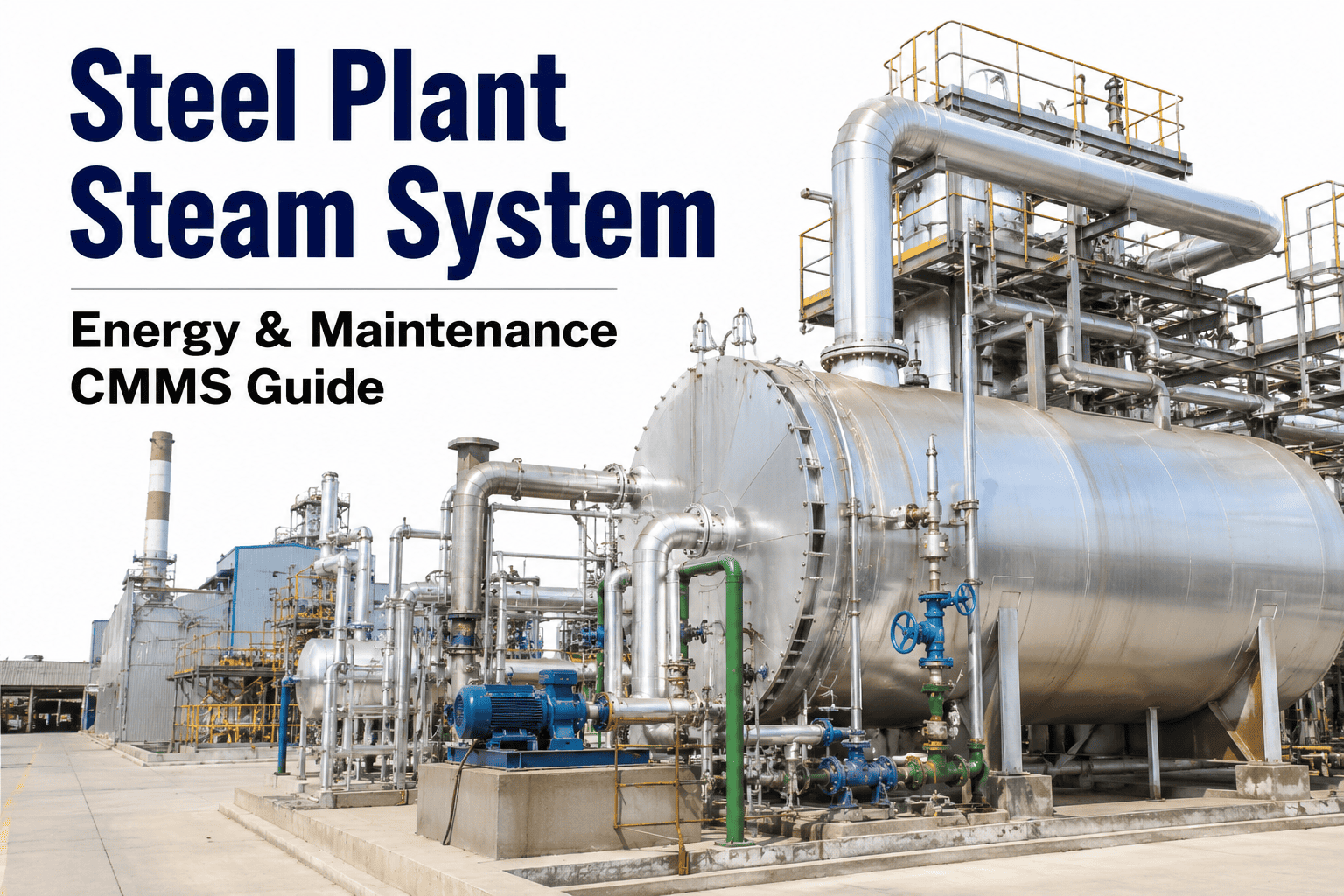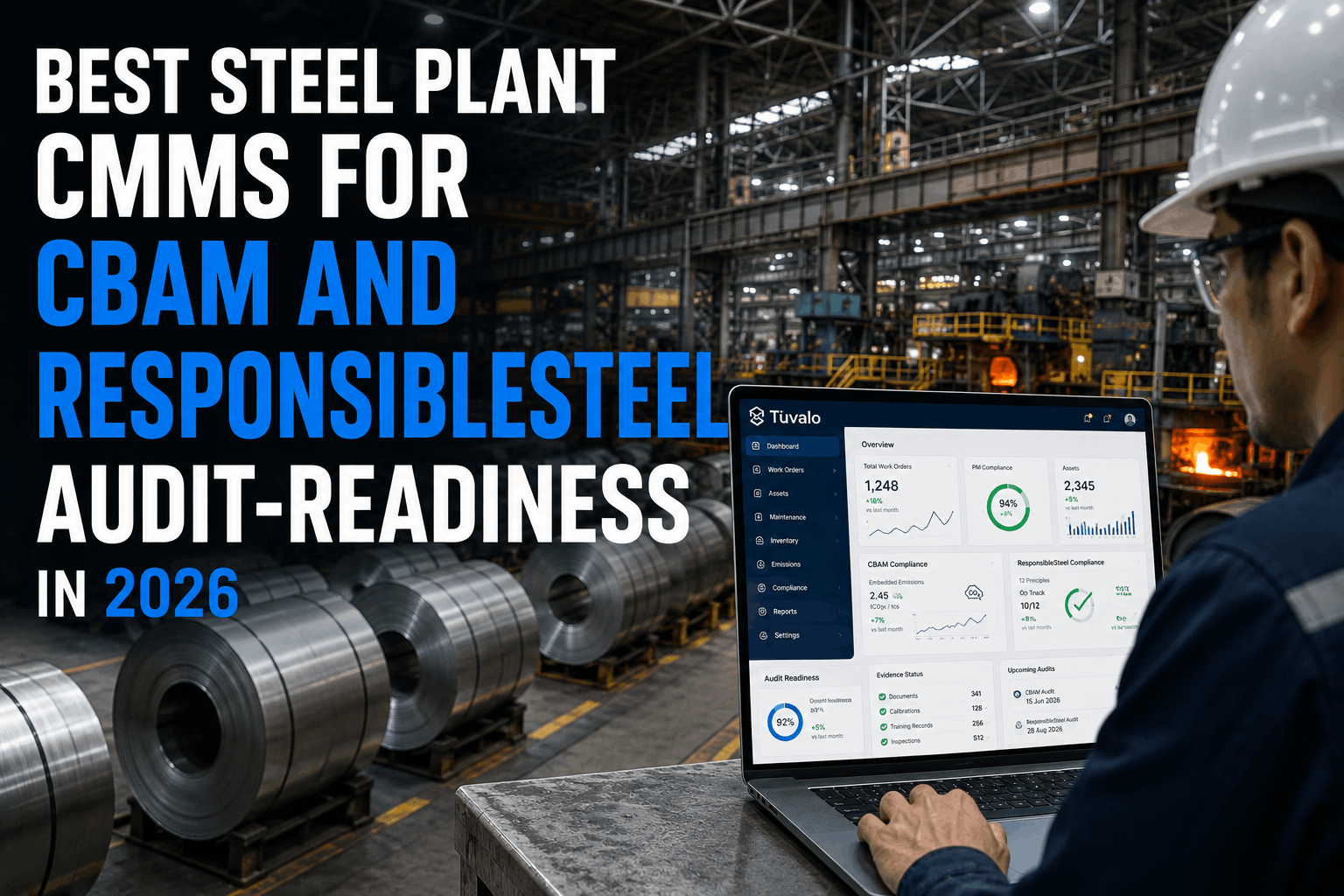
Energy audits at steel plants routinely uncover five to fifteen percent in recoverable savings, and a large share of that opportunity sits inside maintenance's own backlog rather than in expensive process upgrades. Furnace thermal leakage, compressed air leaks, misaligned motors, and cooling water inefficiencies rarely show up on a utility bill — they show up as a slightly elevated coke rate, a slightly noisy compressor, and a work order that never got written. This guide walks through how to scope a maintenance-led energy audit, run a structured equipment walkdown, quantify losses in real terms, and rank improvement projects so findings turn into completed work orders instead of a report that sits in a binder. Ready to see where your plant is losing energy? Start Free Trial and connect your first meter today.
Your last energy audit found the losses. Did maintenance ever fix them?
Most steel plant energy audits stop at the report. The savings identified on paper never turn into a work order, a technician assignment, or a closed ticket — so the same losses show up again next year, in the same equipment, at the same cost.
The losses your utility bill never shows you
A single monthly kWh number tells you nothing about which system, which shift, or which piece of equipment is responsible. Sub-metering and a structured walkdown are what turn one invisible number into a list of fixable assets.
Where a typical mill's energy spend actually breaks down
Once sub-metering and audit instrumentation make the breakdown visible, the spend rarely matches what plant teams assume before the audit starts.
A five-step audit maintenance teams can actually run
This is not a once-a-year consultant exercise. Each step below is designed to be repeatable by an in-house maintenance team, quarter after quarter.
Define the Audit Scope
Map consumption by production area, major feeder, transformer, and high-load process before touching a single asset. A scope that skips this step ends up auditing whatever is easiest to reach, not what actually consumes the most.
Walk the Equipment
Thermal imaging on furnace shells, ultrasonic checks on compressed air lines, and flow readings on cooling water — a structured walkdown catches what a monthly utility bill physically cannot.
Quantify Each Loss
Convert every finding into kWh, tonnes of fuel, or currency per year. A finding without a number attached rarely survives the next budget meeting.
Rank by Payback
Score each opportunity on savings, implementation cost, and payback period. No-cost and low-cost fixes — leak repairs, schedule changes — should always be actioned before capital projects are even proposed.
Close the Loop in CMMS
Every ranked finding becomes a work order tied to an asset record, not a line item in a report. This is the step most audits skip — and the reason the same losses reappear next year.
Six places maintenance should look first
Compressed Air Leaks
A single quarter-inch leak at typical mill pressure can waste enough compressed air to run a small workshop. Ultrasonic leak surveys usually find dozens per plant, most from fittings that were never re-torqued after the last shutdown.
Motor Efficiency Drift
Bearing wear, misalignment, and rewinding after failure all quietly push a motor below its rated efficiency long before it actually breaks down. Vibration trending catches this months before the energy bill does.
Furnace Thermal Leakage
Refractory wear and stave cooler fouling raise coke and fuel rates gradually enough that operators adjust around it instead of flagging it — until the drift is too large to ignore.
Cooling Water & Pumps
Oversized pumps running at fixed speed against a throttled valve are one of the most common and cheapest-to-fix losses in a steel plant, usually solved with a variable frequency drive.
Idle & Off-Hours Running
Equipment consuming near-full power during production stoppages or weekends is one of the simplest findings to catch and the easiest for operations to dismiss without hard metering data.
Insulation & Piping Heat Loss
Missing or degraded insulation on steam and hot-water lines bleeds heat continuously. Thermal imaging during the walkdown makes this loss visible in minutes rather than months.
Turning a finding into a defensible number
A finding without a currency value attached rarely gets funded. These two calculations are what auditors use to turn a walkdown observation into a project business case.
Applies to leaks, idle running, and continuous losses. A compressed air leak measured at 4 CFM running 6,000 hours a year at a typical industrial power cost adds up to a real recurring line item, not a rounding error.
Anything under one year should be actioned immediately. One to three years belongs in the next capital cycle. Beyond three years, only pursue it if a compliance or safety driver also applies.
A rolling mill's energy walkdown flagged a cooling water pump running at fixed speed against a 40% throttled control valve. Flow data showed the pump was oversized for current demand by roughly a third. Installing a variable frequency drive cost under six months of the pump's own annual energy spend to pay back, and the work order was logged, assigned, and closed inside a single maintenance cycle — instead of sitting in an audit report until the next annual review.
Stop losing the same energy every year
Connect your meters to asset records, auto-generate the corrective work order, and track every finding from walkdown to closed ticket in one system.
Ranking findings so budget goes to the right project first
Not every finding deserves the same urgency. A simple ranking matrix, scored consistently across every finding, keeps the conversation about payback instead of politics.
| Finding | Annual Savings | Implementation Cost | Payback | Priority |
|---|---|---|---|---|
| Compressed air leak repair | Moderate | Low | < 3 months | Immediate |
| Pump VFD retrofit | High | Medium | 6-9 months | Next Cycle |
| Idle-time shutdown schedule | Moderate | None | Immediate | Immediate |
| Refractory / stave cooler repair | High | High | 12-18 months | Planned Shutdown |
| Motor efficiency upgrade (IE2 to IE3) | Moderate | Medium | 9-14 months | Next Cycle |
Low-cost, fast-payback findings should never wait behind a capital project simply because they were discovered on the same walkdown. Rank and release them independently.
Why most audit findings never get closed
Ask any maintenance manager why last year's audit findings are still open, and the answer is rarely disagreement — it's that the finding never left the report and entered a work order system.
No Owner Assigned
A finding listed under "facilities" with no named technician or due date is a finding that will not close. Every audit line item needs an owner the day the report is issued.
No Link to the Asset
Findings written against a process area instead of a specific asset ID have nowhere to live inside a CMMS, so they get filed as a document instead of tracked as a task.
No Recheck Scheduled
A closed work order without a follow-up measurement just confirms the fix was attempted, not that the loss actually stopped. Build the recheck into the same work order.
No Visibility for Leadership
If savings recovered from closed findings aren't reported back to plant leadership in currency terms, next year's audit budget gets harder to justify — regardless of how much was actually saved.
What changes when findings actually close
The audit itself was never the hard part. The hard part was that findings lived in a PDF while work orders lived somewhere else entirely, so nothing connected. Once we started linking every energy finding directly to the asset record and tracking it as a normal work order, our closure rate on audit recommendations went from under a third to nearly all of them within two quarters.
Steel plant energy audits, answered
How often should a steel plant run an energy audit?
A full instrumented walkdown once a year is standard, but leak surveys, motor checks, and thermal imaging on high-load equipment should run quarterly. Continuous sub-metering closes the gap between annual audits entirely.
Should the audit be done in-house or by an external firm?
External audits are strong on capital-intensive technology recommendations. In-house audits tend to surface lower-cost, operations-focused fixes because the team already knows the equipment. Most mills benefit from both, run on different cycles. You can Start Free Trial to run your first internal walkdown with guided checklists.
What's the fastest win after a first energy audit?
Compressed air leak repair and idle-time shutdown scheduling almost always top the list — both are low or no-cost and typically pay back within a single quarter, well ahead of any capital project.
How do I stop audit findings from getting lost after the report is issued?
Convert every finding into a work order tied to a specific asset record on the day the audit closes, with an owner and a recheck date attached. A finding without both rarely survives the next quarter. Book a demo to see this workflow in action.
Which equipment typically holds the largest energy savings in a steel plant?
Thermal and furnace systems combined with motors and drives usually account for well over half of recoverable savings, ahead of compressed air, cooling water, and lighting — though the exact split depends on process mix.
Turn your next energy audit into closed work orders, not a report
Connect meters to asset records, auto-generate corrective work orders from every finding, and track closure rate from a single dashboard.
Free 14-day trial · No credit card